

Finding & Selecting a Farrier By Doug Butler, PhD, CJF, Fwcf Butler Professional Farrier School © 2010 All rights reserved.
To find a good farrier, ask for referrals from other horse owners, horse trainers, and your equine veterinarian, or contact the American Farriers Association for a list of local certified farriers. Visit and interview more than one candidate when possible, check their work on another person’s horses, and talk with one or more satisfied clients. Base your final decision on the farrier’s skill level and experience with your horse’s needs—not merely on price and personality.
Choosing a qualified, competent farrier is one of the most important decisions you will make regarding horse care.
Hopefully, you live in an area where there are several good farriers to choose from. Sometimes if there is only one farrier available, a horse owner will choose to attend a farrier school himself and learn how to shoe his horses. However, most people would rather employ a professional farrier, and they will usually switch to a skilled, dependable farrier as soon as one is available.
There are several ways for horse owners to find a farrier to consider, including asking for referrals from other horse owners, horse trainers and equine veterinarian(s); looking in the yellow pages and classified ads; and calling the American Farriers Association (AFA) for a list of local certified farriers. It’s important to visit and interview more than one potential farrier, if possible, before making your final decision on who to choose to care for your valuable animals.
The selection criteria listed below apply to a situation where you have a choice of one or more farriers to select from and can compare them. You should also check out the farrier’s work on another person’s horse(s), talk to one or more satisfied clients, and observe their appearance and demeanor with clients and with the animals. Is their truck neat and clean and well equipped with the proper tools and products to properly complete the job? Is their language, manners, health habits and horsemanship professional? Are they able to communicate well and present suggestions for care?
What skills should a competent Farrier have?The preferred farrier of today should be capable of: 1. Balancing a foot by trimming and dressing the hoof. 2. Fitting and applying standard horseshoes securely while retaining the horse’s soundness. 3. Discussing foot conditions and diseases with a veterinarian; referring to specialists when necessary. 4. Following the client’s or veterinarian’s directions.
5. Reaching a consensus when client and/or veterinarian don’t agree with the farrier or each other. 6. Evaluating a horse as a whole in its environment – considering its conformation, temperament, use, condition, nutrition and management. 7. Shoeing the horse as an individual according to its breed, type or specific use – in a reasonable amount of time for the task. 8. Recognizing that a small change can make a big difference in soundness and performance. 9.
Altering and enhancing the horse’s movement within limitations. 10. Making and applying therapeutic horseshoes to solve foot problems. 11. Thinking through and analyzing a situation to provide a solution that will benefit the horse, the client and the farrier. 12. Making and keeping appointments by being dependable. 13. Managing a business that is profitable and successful year after year.
Don’t select a farrier based solely on a certificate of completion hanging on his or her wall. This can be risky business because that piece of paper indicates only that the person attended a particular school – it doesn’t tell you what type of training they received, how well they did in the class, or how experienced and/or competent they are now. (Remember, only half of any class graduates in the upper half of the class.)
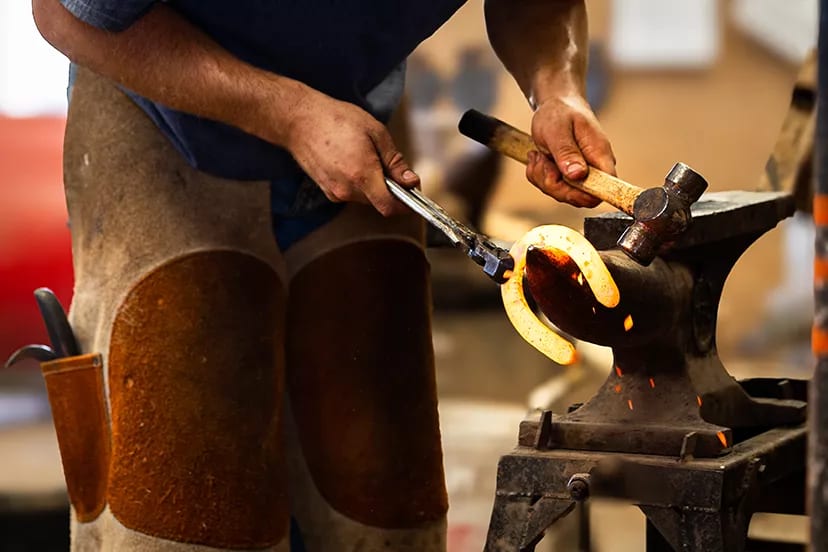
Farrier schools vary greatly in length and curriculum, their use of qualified, experienced instructors, and the requirements for successfully completing the course. Schools are only the beginning – additional experience is necessary to develop the skill level required of a competent farrier. It is important that farriers regularly attend continuing education clinics to keep their skills and knowledge current. Plus, people vary in their ability to absorb and apply information and develop the hand-eye coordination necessary to become an accomplished farrier. Experience is a valuable commodity only if it relates to the specific needs of your horse(s).
The highest certification given in the United States is the Certified Journeyman Farrier (CJF), awarded by the American Farriers Association (AFA). Certification by a regional farrier organization or the AFA indicates that the person is trying to improve and is willing to subject his or her skill to peer review. There are no skill tests required by government agencies in America.
Remember, it’s your responsibility to care for your horse from the feet up – so make a wise choice when it comes to selecting a farrier. Base your decision first and foremost on the farrier’s skill level and experience with your horse’s needs – not merely upon price and personality.
Learn more about caring for horses’ feet with Horse Foot Care: A Horse Owners Guide to Humane Foot Care written by Dr. Doug Butler, one of the leading farrier educators in the world. This indispensable little book helps horse owners gain a better understanding of proper care for their horses’ feet, which in turn helps them when observing and selecting the best farrier for their animals.
The book contains clear, concise illustrations and explanations of common foot problems and diseases (including a convenient chart that defines each condition, lists the symptoms, causes, treatment and prevention); plus basic vocabulary and definitions that will help you effectively communicate with farriers and veterinarians. You’ll also receive additional tips on how to select a qualified farrier.
Available from dougbutler.com or call 1-800-728-3826 (press 1). Or contact Doug Butler Enterprises, Inc., 495 Table Road, Crawford, NE 69339, 308-665-1510. For information on Butler Professional Farrier School, visit butlerprofessionalfarrierschool.com.
Contact: Butler Professional Farrier School 495 Table Road Crawford, Nebraska 69339 Phone: 800-728-3826 or 308-665-1510 Email: [email protected] Website: dougbutler.com