

Affordable Horseshoeing Schools
by Doug Butler PhD, CJF, Fwcf
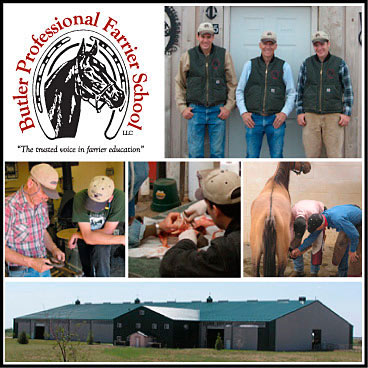
The most affordable horseshoeing school is not necessarily the cheapest one—it’s the school that teaches the foundational principles of the farrier’s craft well in the least amount of time, because the real cost includes tuition, tools, housing, and the income lost while you are away from work. Veteran farrier educators who have taught courses ranging from two days to two years have found that six weeks of focused study is the minimum needed to gain a solid foundation in the craft. Choosing a school on location or a friend’s spur-of-the-moment decision often leads to expensive retraining later, so weigh value per dollar over sticker price.
When deciding which farrier school is the most affordable, remember – you can’t afford to settle for anything less than the best foundational farrier education possible.
What makes a horseshoeing school “affordable” and the best value for your time and investment? The most affordable horseshoeing school will be the one that provides you the best opportunities to learn, apply and practice the foundational principles required to become a knowledgeable, skilled and successful farrier - in the least amount of time.
We believe that a career in farriery is the best opportunity for an equine enthusiast to make a living in a traditionally low-paying industry. However, you must be a self-starter with an entrepreneurial mindset. Horseshoeing is piece work. If you don’t work, you don’t get paid.
The importance of a firm foundation In today’s fast-paced, technology driven, litigious society, getting a firm foundation for your farrier career is more important than ever.
School is where you learn the basic principles, where you develop attitudes toward learning, and where you begin to incorporate the basics of the farrier’s craft into your important bank of knowledge and experience. Your school experience should be well rounded and instill in you the desire to become a better person, as well as a skilled craftsman who can offer superior service.
How you start out (which farrier school you attend) will set the stage for how you will end up (your success as a farrier). If you have a strong desire to learn and fully accept total responsibility for wise use of your time while in school, your chances are greater for success after school.
It’s important to recognize that you will not learn all you need to know about being a farrier while in school. On-the -job training and continuing education are essential for farriers who desire to become lifelong, skilled practitioners.
The cost is more than the tuition The cost of attending a farrier school includes more than tuition, tools and housing. Time lost from working and generating income is also an important consideration. You need to be sure that the farrier school you attend does not waste your learning time. Your time away from home should be the least amount of time necessary to learn the basics well.
When deciding which farrier school is the most affordable, remember – you can’t afford to settle for anything less than the best foundational farrier education possible. Here’s why ...
Retraining later in life is expensive and embarrassing. Admitting after the fact that you made a poor choice with the farrier school you attended can be very painful – and expensive – to retrain with better qualified instructors. Don’t choose a school based on a friend’s spur-of-the-moment decision, because it provides a great opportunity to party away from home, or because the school is located nearby.
Later in your career you will not be proud that you made such an important decision based solely on these reasons. It’s important you choose a school that provides solid foundational knowledge and skills and uses sequential learning techniques that will help you learn more in a shorter period of time.
Horse owners expect you to know more than they do about horses. The school you choose should teach you about horses as well as shoeing. You should be comfortable answering questions from clients about their horses, so it’s important that you know the basics of horse care. You need to understand what can go wrong with the horse’s feet and the best way(s) to remedy the situation. You should be able to advise your clients on what needs to be done for various horse foot problems. You also need to select a veterinarian you can recommend and work with effectively.
Enjoying horses is dependent upon a horse’s soundness. A big part of your success in the farrier business will be determined by how well you educate your clientele to do business with you. You want people to manage their horses well between your visits and have them prepared for your next appointment. Your discussions with clients should be informative and helpful so they enjoy their horses more and will retain you as their service provider. You must make owners aware of the services you offer that make you a better choice than your competitors.
The whole horse is affected by the balance of the feet. Horse shoeing involves more than just foot shoeing. Short -term soundness is linked to detailed balance of the feet. Long-term soundness is linked to consistent, regular hoof care. You must know your job well and be capable of doing what needs to be done. Your horsemanship skill should be such that you can recognize and intelligently solve problems. If necessary, you should be able to recommend someone else who can handle more complex problems.
The owner trusts you to take care of their cherished companion. You must be worthy of the trust placed in you by the horse owner. The welfare of the horse and the owner should be your first priority. People are more likely to trust those who own horses and have had experience in maintaining them. Be prepared to stop work if the situation becomes dangerous for you or for the horse. The school you choose should teach you horse skills as well as horseshoeing.
Shoeing horses requires a great deal of self-discipline. Choose a school that prepares you before you arrive, teaches you while you are there, and follows through with you after you leave to help ensure your success in a tough business. You need a school that runs on a consistent, workable schedule, just as you will have to do when you start your own business. The instructors should encourage your personal self-discipline while at school, which will help you develop good habits for your own business.
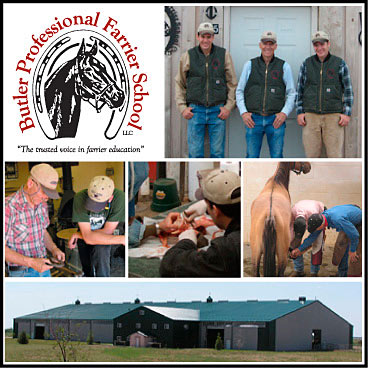
The curriculum at Bpfs At Butler Professional Farrier School we have designed a basic curriculum that will teach you the foundation of a lucrative and rewarding career – in the least amount of time. Our experience as teachers includes teaching horseshoeing courses ranging in length from two days to two years. We have found that six weeks of focused study is the minimum time in which one can gain a solid foundation in the horseshoeing craft. Don’t settle for less.
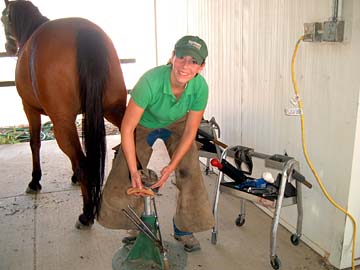
We prepare our students by supplying you with learning materials before you come. We require illustrated as well as written homework assignments while you are here. Most of our local shoeing clients bring their horses to the school. In addition, the school owns numerous horses with all kinds of foot problems that students can practice on.
We have high expectations for our students. If a student has little desire to learn and work hard at improving his or her skills, this is not the right school to consider. Committed students at Bpfs are taught the easiest way to learn a hard craft. Our mission is to help students forge firm foundations for horses, for business, and for life. We expect a focused effort by our students to learn and apply the information and skills being taught while they are here.
Remember, the best farrier school may also end up being the most affordable. Look us over, compare us to other schools. Call 1-800-728-3826 (press 2) to discuss your questions, fill out an application, and enroll. Get your start as a farrier today at one of the most affordable schools in the country – the one that gives you the most value for your dollar – Butler Professional Farrier School.