

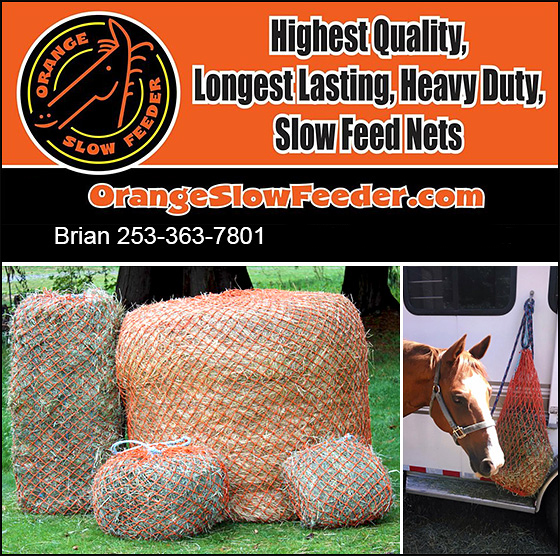
 Orange Slow FeederThe Orange Slow Feeder can hold up to the beating that a determined horse can deliver! Save money and help your horses stay busy doing what they do best (eating)— but no more replacing "chewed up" slow feeders!How Did The ORANGE Slow Feeder Come To Be? Horses !! Isn’t that how all good stories start? Horse owner Brian Leary was trying to find a way to help his horses enjoy the benefits that a slow feeder had to offer, but his horses were destroying every net he tried. Finally, in desperation, Brian contacted a factory specializing in Marine Grade netting. The result was amazing! When their friends and neighbors heard about these incredible results, they wanted nets for their own horses. They would call Brian and say, “Hey, can you get me one of those Orange Slow Feeders too?" Before you know, it, years were going by with people using the same nets and giving rave reviews to other horse owners. Soon, the orders became significant enough that Brian had to dedicate hours every week to the creation and shipping of their now famous “Orange Slow Feeders” and a company was born! What Makes The Orange Slow Feeder Different?The Orange Slow Feeder Line of products has been created as an alternative to other products available on the market today. All of the products are made of Factory New Marine Grade materials. Nothing is used, or reclaimed, it’s all new materials. We created our slow feeder nets to be sturdy, long-lasting, and easy to use. With a life expectancy to rival other nets we reduce the frequency and cost associated with feeder net replacements. Our nets reduce hay waste; provide a more natural and healthy way to feed livestock and as a side effect they save You Money!! See why our Slow Feed Nets are a step above the competition:Note: The Orange slow feeders use thick finely braided Polyethylene Twine which lasts considerably longer than our competitor's products which usually use a lighter weight non-braided twine. Our current square size is 1-3/4 inch, with different sizes up and coming. In the future we will be offering 1-3/8”, 1-1/2” as well as 2” squares Marine Grade Netting— Does That Really Make a Difference? It sure does! We have been using the Same Orange Slow Feeder nets with our horses for almost 4 years— and so have our clients and in this industry, that is something amazing! Our Orange Slow Feed Nets use the highest quality materials utilized in the Fishing industry. They have the ability to be over-stuffed, are abrasion resistant and are UV inhibited, thus insuring a longer product life than most other feed net materials on the market today. 1200 lb Breaking Point Netting— Means Big Savings On Slow Feeder Nets For You! Are you tired of wasting your hard earned money on a product that may last only a short period of time? One of the many benefits that slow feeders have to offer is the fact that they can save you money on hay, colic bills, ulcer prevention and more. But if you are replacing your slow feeder nets every 30-90 days, your savings can literally be “eaten way”! The long life of our extremely strong material will reduce your long term replacement costs for hay nets and saves you money!!! Are Orange Slow Feeders Easy To Use? Absolutely! Horse owners are busy people, often working jobs off the farm or ranch. We know you live busy lives and so we have designed our Orange Slow Feed Nets to be compact for easy storage and transport, but also have a wide opening so that they can be easily utilized— and even over stuffed! So What Do The Orange Slow Feeders Cost?The real benefit is on the savings in lost hay and potential health problems to your horse. Horses were designed to eat small batches of food, nearly continuously. Orange Slow Feeder makes that possible. Our pricing is so affordable and our nets are Built TO Last Years!* Small Trailer Feeder: $42.50 * Large Trailer Feeder: $57.50 * Pumpkin Net: $72.50 * West Coast Net: $92.50 * Round Bale Net: $215 to $345 (depending on size selected) * Small 3/4/8/Square Bale Net: $330 * Large 4/4/8 Square Bale Net: $390 Note: Remember, unlike competitors that are “eaten up” and destroyed in months- our nets have been lasting for years on end! OK.. So What Do Horse Owners SAY About Their “Orange" Slow Feeders? Diane L -- Renee G Terri R Ron Copple of Copple Show Horse's. -- I thought I would take a moment and say how much I love these hay net's. When we were presented with one the Pumpkins to tryout, I put it to the ultimate test. I filled it with hay and hung it the stall with the worst hay net eater I have. "Sarj", as he's called at the barn. He's eaten through every hay net I put in front of him. I've even double them up. Hay bags, nets, doubling them nothing stopped this horse from eating a large hole in them in a matter of an hour, until now. He still has the same net in front of him for the last 18 months. I strongly suggest these hay nets or anything they make. Don’t Get Eaten Up With Slow Feeder Costs, Order The Orange Slow Feeder And Save! You’ll love the way they last and last and last. You’ll love the way they save you time, money and feed. Call, or Click to order your Orange Slow Feeder today!! |
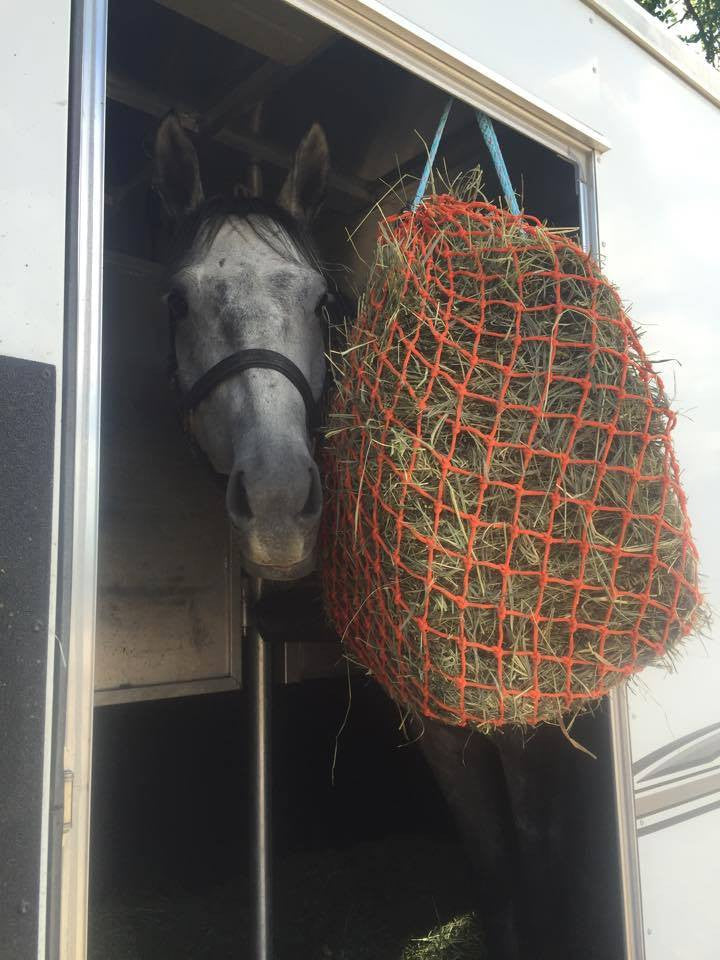
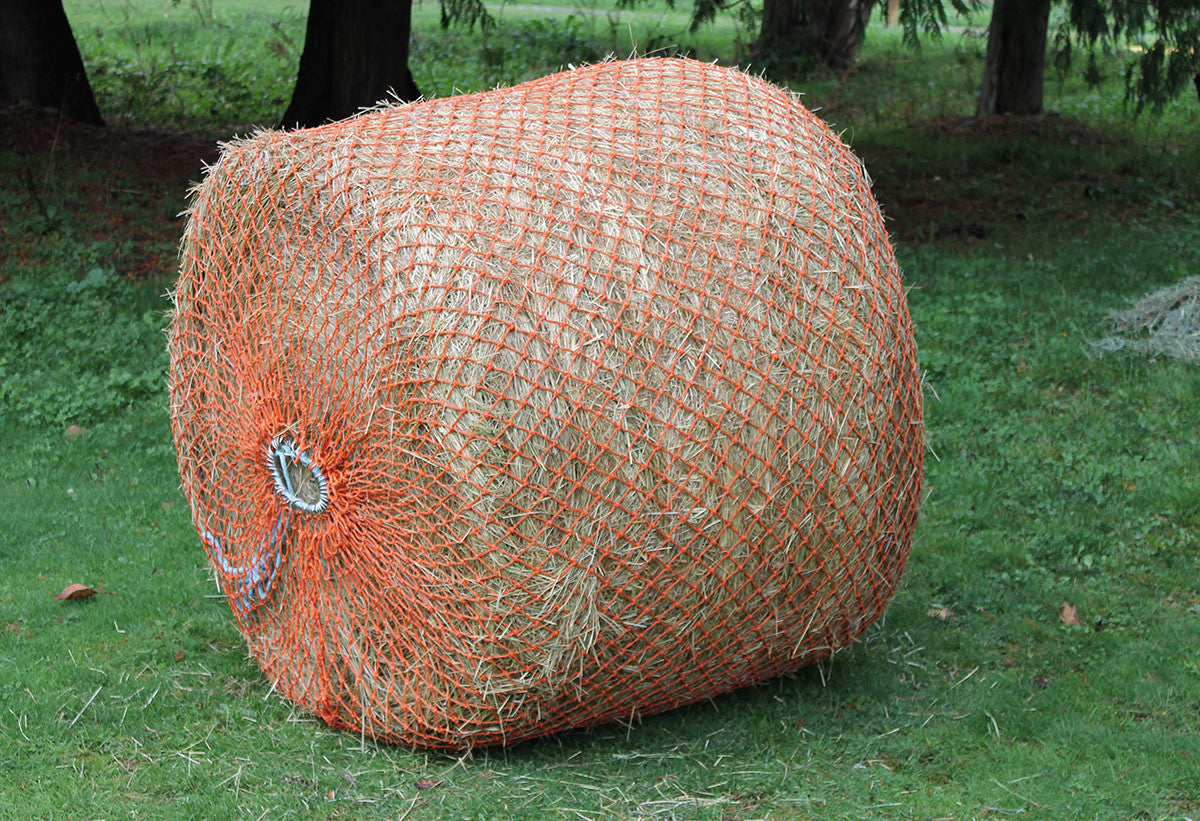
The Orange Slow Feeder is a family of heavy-duty slow-feed hay nets built to make a horse work for every bite, mimicking the slow, near-constant grazing that horses are designed for. The lineup spans Round Bale Nets sized 4' x 4', 4' x 5', 5' x 5', 5' x 6' and 6' x 6'; square-bale options including the Square Bale Net - Large, the West Coast Bale Net and The Colorado Bale Net; and smaller stall-and-trailer nets such as the Pumpkin Net, the Hoop Net and the Horse Trailer Net. The standard mesh is a 1-3/4" square opening, with 1-1/4" and 2-1/2" options on select nets so you can dial the slow-feed rate to your horse.
Orange Slow Feeder is a woman- and veteran-owned small business based in the Pacific Northwest, founded in 2014. As the company puts it, "The Original Orange Slow Feeders were built for our use with our horses" — owner Brian Leary set out to solve a real barn problem rather than chase a product line. Brian still answers the phone personally at (253) 363-7801, and the company sells direct through orangeslowfeeder.com with a FAQ, reviews and a media gallery for buyers doing their homework.
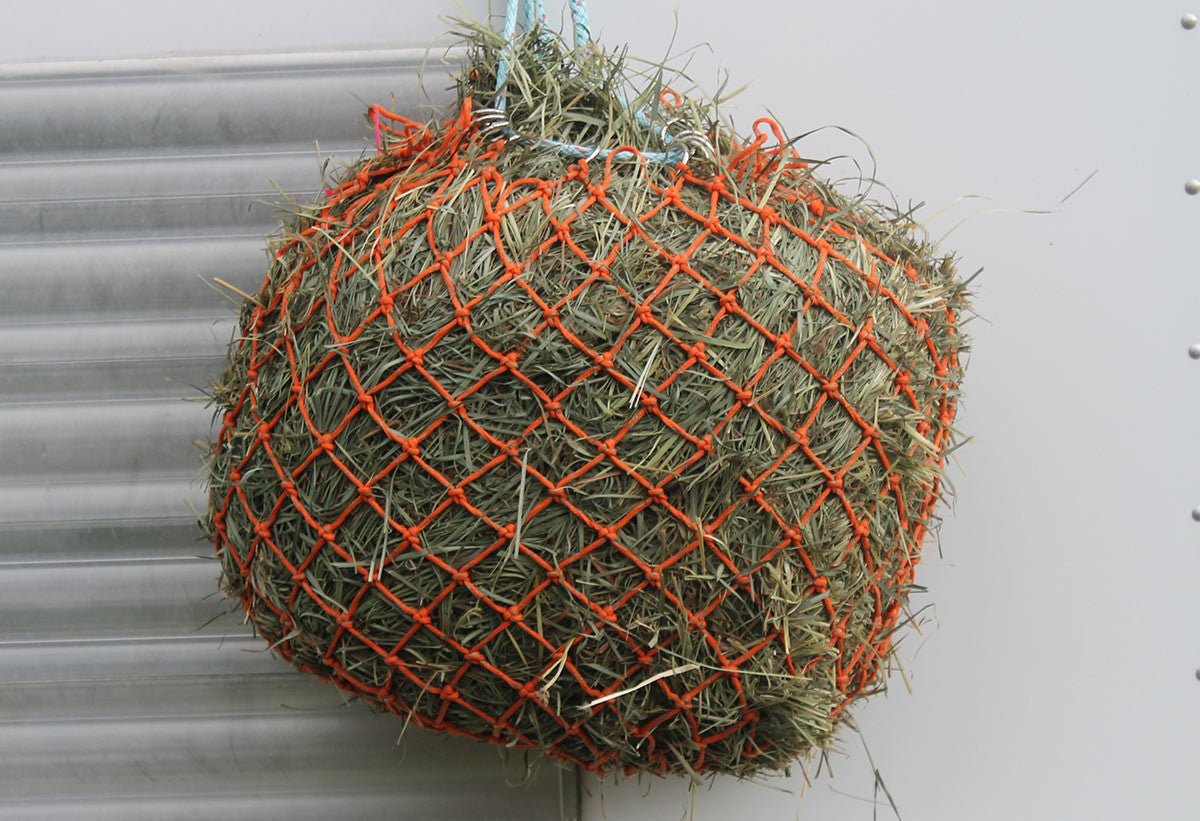
Every net is cut from factory-new marine-grade netting — finely braided, 4mm-thick, UV-inhibited polyethylene twine with a 1,200-lb breaking strength. This is the same class of material engineered to drag along the ocean floor in deep salt water under harsh conditions, which is why it shrugs off determined chewers and stands up to weather. The netting and ropes are manufactured in Washington State, and the rings are manufactured for the company in Rhode Island — an all-USA build.
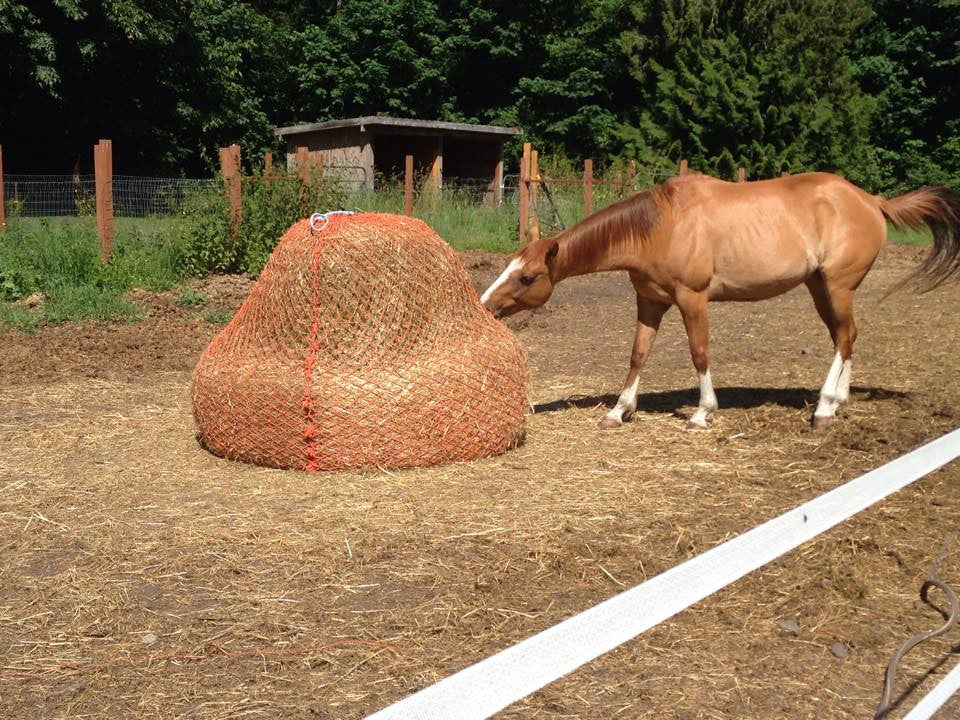
By forcing horses to nibble through the 1-3/4" mesh, the nets stretch a bale across far more hours and, per the company, "Reduce Waste by 98%" — no more hay trampled into the mud or blown across the paddock. The slower intake also keeps saliva working on the feed longer, which supports horses prone to ulcers, since "Horses are designed to graze 18 hours a day." Because the polyethylene "does NOT hold moisture so it will NOT freeze," the nets stay usable through hard Northwest winters, and they double as soaking nets for hay that needs to be wet down.
The Orange Slow Feeder is made from Factory New Marine Grade netting — the same high-quality material used in the fishing industry. Nothing is used or reclaimed; it is all new material. The twine is thick, finely braided Polyethylene, which lasts considerably longer than the lighter-weight non-braided twine many competitors use.
Marine Grade netting is abrasion resistant, UV inhibited, and built to be over-stuffed, which gives it a much longer life than typical feed-net materials. The Orange Slow Feeder uses netting with a 1200 lb breaking point. Brian Leary and his clients have used the same nets with their horses for nearly 4 years.
Slow feeders reduce hay waste and support a more natural, healthy way to feed, which can lower costs tied to hay, colic, and ulcer prevention. The bigger savings come from durability: if you replace cheaper nets every 30 to 90 days, those costs add up fast. Orange Slow Feeder nets are built to last years, reducing your long-term replacement cost.
The current square size is 1-3/4 inch. Additional sizes are planned, with 1-3/8", 1-1/2", and 2" squares listed as up-and-coming options.
The lineup includes the Small Trailer Feeder at $42.50, the Large Trailer Feeder at $57.50, the Pumpkin Net at $72.50, and the West Coast Net at $92.50. Larger options include the Round Bale Net at $215 to $345 depending on size, the Small Square Bale Net at $330, and the Large Square Bale Net at $390.
Yes. The nets are designed to be compact for easy storage and transport, while still offering a wide opening that makes filling simple — they can even be over-stuffed. That suits busy horse owners who often work jobs off the farm or ranch.
That is exactly the problem it was built to solve. Founder Brian Leary started the company after his own horses destroyed every net he tried, and customers report the nets are virtually indestructible. One client kept the same net in front of a known net-eater for 18 months.
You can call or click to order. Reach Brian Leary by phone at 253-363-7801, or visit the Orange Slow Feeder online at https://www.orangeslowfeeders.com to choose the net that fits your hay and your horses.
The standard mesh is a 1-3/4" square opening. Select nets like the Pumpkin Net also offer 1-1/4" and 2-1/2" square mesh, and the company can produce custom mesh sizes on request to match your slow-feed goals.
Orange Slow Feeder is a woman- and veteran-owned small business in the Pacific Northwest, founded in 2014 by Brian Leary. The netting and ropes are manufactured in Washington State, and the rings are manufactured for the company in Rhode Island, making it an all-USA build.
It started with horses. Owner Brian Leary was looking for a way to help his own horses, and as the company says, "The Original Orange Slow Feeders were built for our use with our horses." That personal need in 2014 turned into a product line of heavy-duty slow-feed nets.
On orangeslowfeeder.com, the Pumpkin Net is $75.00, Round Bale Nets start at $215.00, Square Bale Nets start at $82.50, and stall/trailer nets start around $42.50. Bulk netting and accessories begin near $17.00.
The company states the nets "Reduce Waste by 98%." Because the horse must nibble hay through the mesh instead of pulling it onto the ground, far less hay is trampled, soiled, or blown away, which is where most feed money is normally lost.
With everyday use, the nets are rated for roughly 1 to 6 years. Stationary nets that aren't moved around tend to last 1 to 3 years; rotating a stationary net to a fresh section of mesh about once a month helps extend its life.
Rarely. According to the company, "maybe a handful of horses chew through these nets," and that's typically only extremely aggressive chewers. The heavy 4mm marine-grade twine is built specifically to withstand the abuse of a determined or playful horse.
The netting has a 1,200-lb breaking strength, so as the company puts it, "The netting is NOT going to break. The shoes will get ripped off." Proper hanging is essential for shod horses, and for ground feeding with round bales, shod animals need the net protected or elevated.
Yes — they are ideal soaking nets. The netting does not hold water because, in the company's words, "The netting material is designed to drag along the bottom of the ocean," so it sheds moisture and drains rather than staying waterlogged.
The polyethylene material "does NOT hold moisture so it will NOT freeze" on its own, and stays pliable in cold weather even if it stiffens slightly. The one caution: if animals pack a ground net into wet ground, mud can freeze the net into the soil, so keep it off saturated dirt.
Pressure wash it, or soak or spray it with a vinegar-and-water solution. Cleaning out the dirt and grime that collects between the fibers also keeps the net from getting stiff, which is the usual cause of stiffness rather than the material itself.
For a single horse, the Pumpkin Net is the most versatile choice — it hangs in a stall, on a high line, or on the side of a trailer. For pasture or herd feeding, choose a Round Bale Net (4'x4' up to 6'x6') or a square-bale net like the West Coast or Colorado Bale Net to match your bale size.
The Pumpkin Net's open end is "large enough for one person to easily fill the net with 3 flakes of a 3-tie hay bale or 1/2 of a full compressed bale." Its top rope is strong enough to hang from a beam or eye-bolt for stall, high-line, or trailer-side feeding.
Yes. The company says, "Absolutely! Our usual mesh size 1-3/4" is a good size but you can always ask us for a larger size if needed." Custom larger mesh is available for livestock that need bigger openings.
Slowing intake keeps the horse chewing and producing saliva over a longer period, which buffers the stomach, and it spreads feeding across more of the day. As the company notes, "Horses are designed to graze 18 hours a day," so a slow feeder more closely matches a horse's natural grazing pattern than meal-style feeding.
Explore more from the InfoHorse.com directory

Explore expert guides on topics related to your business
By Ann Pruitt
By Bob Pruitt
By Bob Pruitt
By Bob Pruitt
By Ritchie Waterers
By Bob Pruitt