Helping Horse Owners Make Informed Decisions
Orange Slow Feeder — Barn Accessories (The Orange Slow Feeder can hold up to the beating that)

Orange Slow Feeder

Orange Slow Feeder The Orange Slow Feeder can hold up to the beating that

Looking for pasture feeders that hold up to barn life?

Reviewed by Ann Pruitt, InfoHorse.com · Updated May 2026
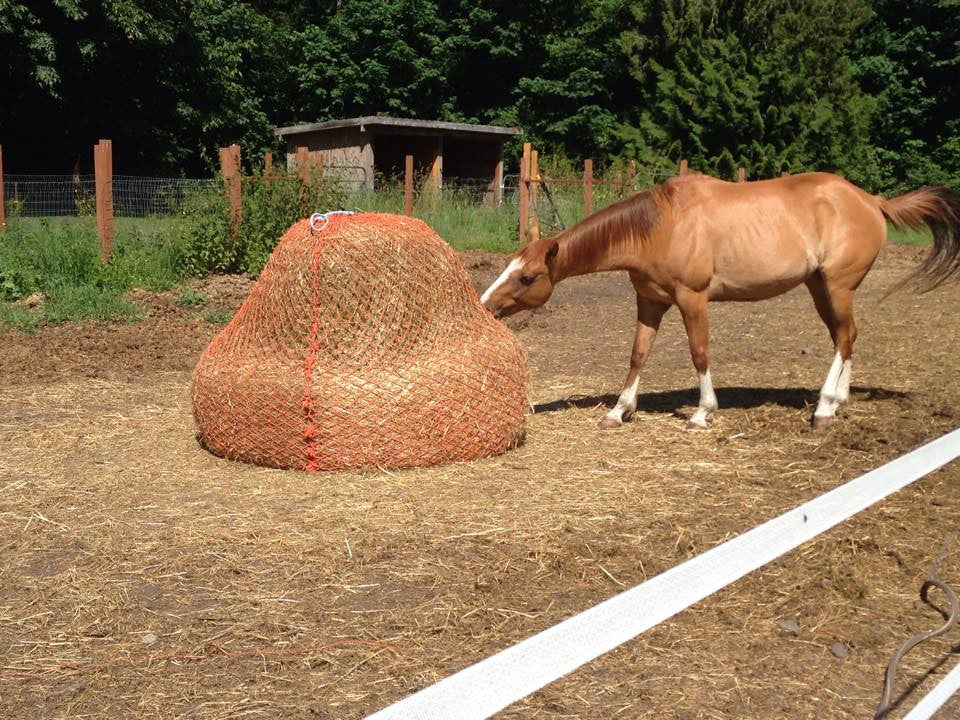
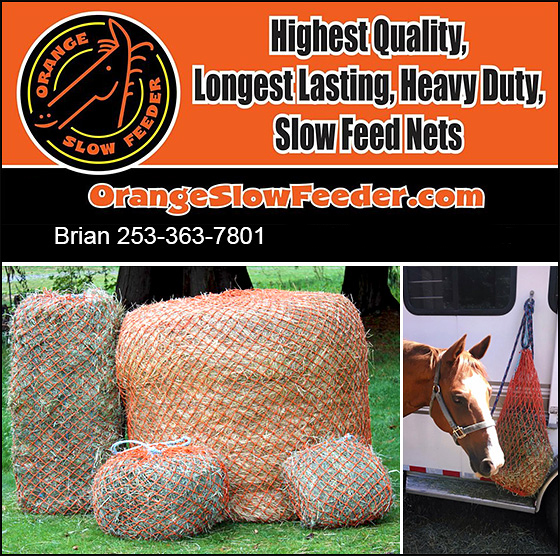
Orange Slow Feeder 4 by 5 round bale slow-feed hay net filled with hay
OrangeAd

Orange Slow Feeder

The Orange Slow Feeder can hold up to the beating that a determined horse can deliver! Save money and help your horses stay busy doing what they do best (eating)— but no more replacing "chewed up" slow feeders!

How Did The ORANGE Slow Feeder Come To Be?

Horses !! Isn’t that how all good stories start? Horse owner Brian Leary was trying to find a way to help his horses enjoy the benefits that a slow feeder had to offer, but his horses were destroying every net he tried. Finally, in desperation, Brian contacted a factory specializing in Marine Grade netting. The result was amazing! When their friends and neighbors heard about these incredible results, they wanted nets for their own horses. They would call Brian and say, “Hey, can you get me one of those Orange Slow Feeders too?" Before you know, it, years were going by with people using the same nets and giving rave reviews to other horse owners. Soon, the orders became significant enough that Brian had to dedicate hours every week to the creation and shipping of their now famous “Orange Slow Feeders” and a company was born!

What Makes The Orange Slow Feeder Different?

The Orange Slow Feeder Line of products has been created as an alternative to other products available on the market today. All of the products are made of Factory New Marine Grade materials. Nothing is used, or reclaimed, it’s all new materials. We created our slow feeder nets to be sturdy, long-lasting, and easy to use. With a life expectancy to rival other nets we reduce the frequency and cost associated with feeder net replacements. Our nets reduce hay waste; provide a more natural and healthy way to feed livestock and as a side effect they save You Money!! See why our Slow Feed Nets are a step above the competition:

Note: The Orange slow feeders use thick finely braided Polyethylene Twine which lasts considerably longer than our competitor's products which usually use a lighter weight non-braided twine. Our current square size is 1-3/4 inch, with different sizes up and coming. In the future we will be offering 1-3/8”, 1-1/2” as well as 2” squares


Marine Grade Netting— Does That Really Make a Difference?

It sure does! We have been using the Same Orange Slow Feeder nets with our horses for almost 4 years— and so have our clients and in this industry, that is something amazing! Our Orange Slow Feed Nets use the highest quality materials utilized in the Fishing industry. They have the ability to be over-stuffed, are abrasion resistant and are UV inhibited, thus insuring a longer product life than most other feed net materials on the market today.
1200 lb Breaking Point Netting— Means Big Savings On Slow Feeder Nets For You!
Are you tired of wasting your hard earned money on a product that may last only a short period of time? One of the many benefits that slow feeders have to offer is the fact that they can save you money on hay, colic bills, ulcer prevention and more. But if you are replacing your slow feeder nets every 30-90 days, your savings can literally be “eaten way”! The long life of our extremely strong material will reduce your long term replacement costs for hay nets and saves you money!!!


Are Orange Slow Feeders Easy To Use?

Absolutely! Horse owners are busy people, often working jobs off the farm or ranch. We know you live busy lives and so we have designed our Orange Slow Feed Nets to be compact for easy storage and transport, but also have a wide opening so that they can be easily utilized— and even over stuffed!

So What Do The Orange Slow Feeders Cost?

The real benefit is on the savings in lost hay and potential health problems to your horse. Horses were designed to eat small batches of food, nearly continuously. Orange Slow Feeder makes that possible. Our pricing is so affordable and our nets are Built TO Last Years!

* Small Trailer Feeder: $42.50

* Large Trailer Feeder: $57.50

* Pumpkin Net: $72.50

* West Coast Net: $92.50

* Round Bale Net: $215 to $345 (depending on size selected)

* Small 3/4/8/Square Bale Net: $330

* Large 4/4/8 Square Bale Net: $390

Note: Remember, unlike competitors that are “eaten up” and destroyed in months- our nets have been lasting for years on end!

OK.. So What Do Horse Owners SAY About Their “Orange" Slow Feeders?
Diane L --

Love the Orange Slow Feeder! We have used other products which did not hold up in our damp climate. These feeders work great and are virtually indestructible! We have 2 pumpkin feeders in each stall do our horses can munch all day long. Thank you for this great product!

Renee G
--

I would love to share my opinion on these feeders. They are Awesome! I bough two of the large ones over a year ago. Eliminated waste completely. We were able to cut back on time by filling them once a day and the horses were happier because they didn't eat all of their hay at once, or stomp it into the mud. I can't say enough about them. They are very durable, and our horses wintered much better with these vs the previous feeders where they could pull it out onto the ground.

Terri R
-- These are the best! I have two horses that need to slow down their feed intake, but continually rip bigger holes in the other slow feed hay nets I purchased. It also works for horses that like to throw the hay around and soil it. I highly recommend these products.

Ron Copple of Copple Show Horse's.
-- I thought I would take a moment and say how much I love these hay net's. When we were presented with one the Pumpkins to tryout, I put it to the ultimate test. I filled it with hay and hung it the stall with the worst hay net eater I have. "Sarj", as he's called at the barn. He's eaten through every hay net I put in front of him. I've even double them up. Hay bags, nets, doubling them nothing stopped this horse from eating a large hole in them in a matter of an hour, until now. He still has the same net in front of him for the last 18 months. I strongly suggest these hay nets or anything they make.

Don’t Get Eaten Up With Slow Feeder Costs, Order The Orange Slow Feeder And Save!
You’ll love the way they last and last and last. You’ll love the way they save you time, money and feed. Call, or Click to order your Orange Slow Feeder today!!


Orange Slow Feeder 4 by 5 round bale slow-feed hay net filled with hay

What is the Orange Slow Feeder?

The Orange Slow Feeder is a line of heavy-duty slow-feed hay nets built to outlast the most determined horse, mule, or head of cattle. Instead of letting animals gorge a loose bale in hours, the net forces them to nibble through small mesh openings, so a single bale lasts far longer and the herd grazes the way nature intended. The maker's headline claim is blunt and measurable: these nets help owners "Reduce Waste by 98%" while keeping horses busy doing what they do best — eating. The catalog spans everything from stall and trailer nets to full round-bale and square-bale covers.

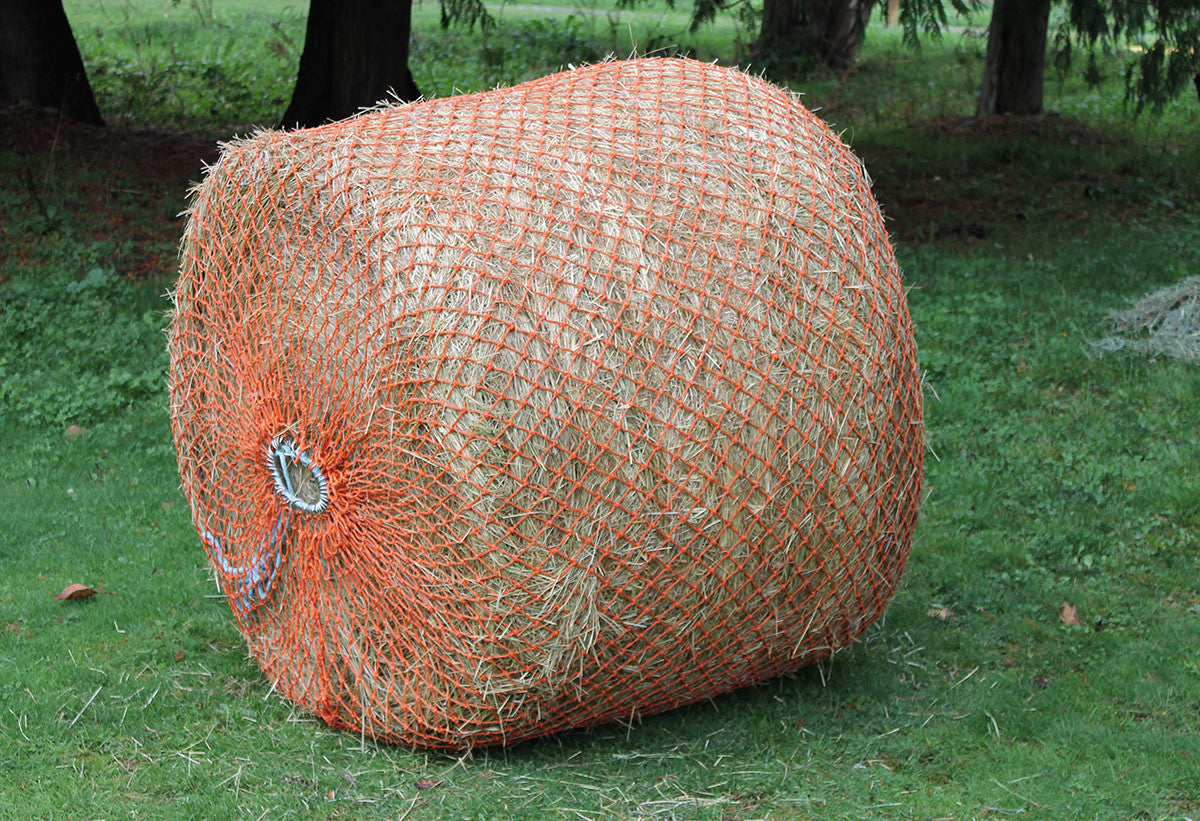
Orange Slow Feeder 4 by 4 round bale net wrapped around a hay bale

Who makes the Orange Slow Feeder?

The Orange Slow Feeder is a woman- and veteran-owned small business in the Pacific Northwest, started in 2014 by horse owner Brian Leary. The origin story is pure horse-people: "The Original Orange Slow Feeders were built for our use with our horses. They were so durable that our friends and neighbors were asking where we got the nets from." What began as a fix for their own pasture turned into a product line, and the company still answers the phone directly — Brian Leary can be reached at (253) 363-7801. Their motto sums up the pitch: "Highest Quality - Longest Lasting - Heavy Duty - Slow Feed Nets."

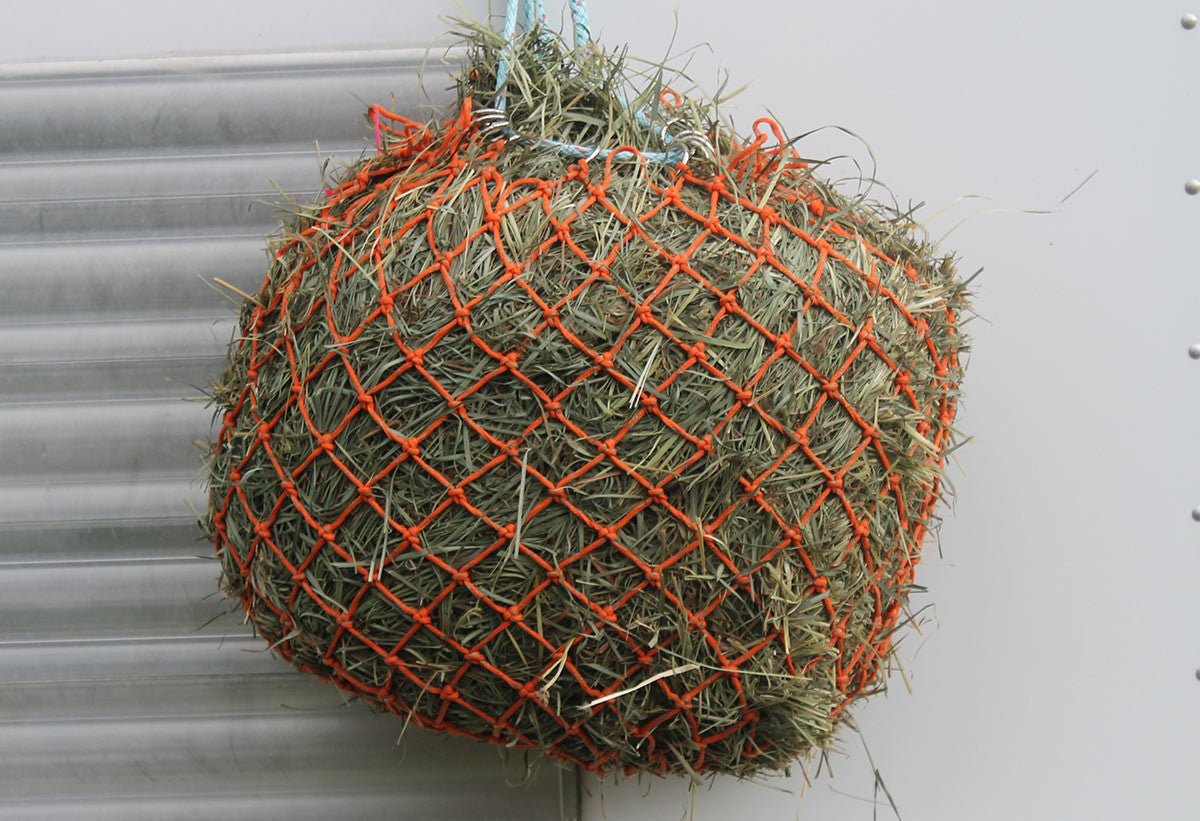
Orange Slow Feeder portable horse trailer slow-feed hay net

What are the nets made from?

The durability is no accident. The netting and ropes are manufactured in Washington State, and the rings are manufactured for the company in Rhode Island — proudly "Made With Pride in the USA." The standard 4mm netting is finely braided, UV-inhibited twine with a breaking strength of 1200 lbs, the same marine-grade material engineered for deep saltwater use. Because the twine does not absorb water, the nets resist freezing in winter and won't harbor the bacteria that plague water-logged fabric feeders.

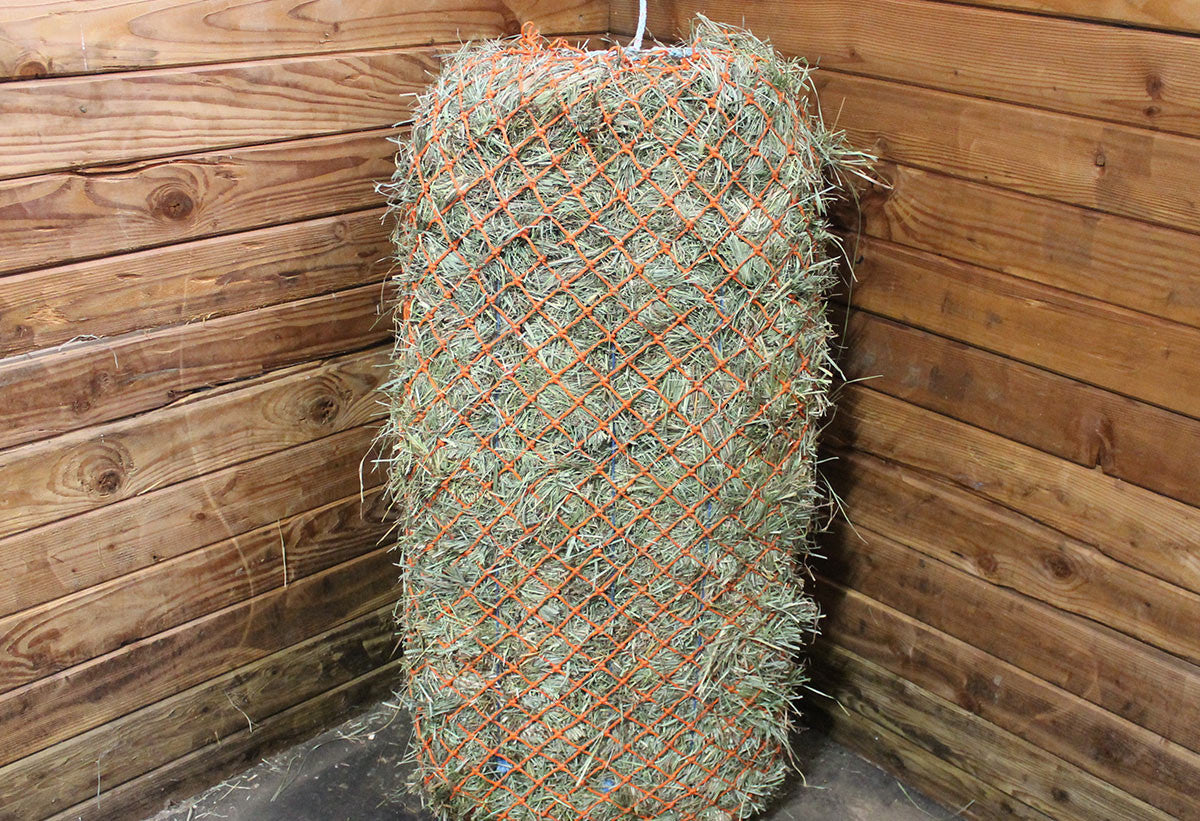
Orange Slow Feeder West Coast square bale slow-feed net

How does the slow feeder work?

You slide a hay bale into the net, cinch it closed, and the small mesh does the rest, metering forage so animals eat slowly and steadily through the day. The standard mesh is a 1-3/4" opening sized for horses and most livestock, with a wider 2-1/2" mesh available for cattle and custom sizes made on request. The round-bale nets feature a wide opening for easy application onto the bale; in the maker's own experience, a 4' x 5' net "can allow 3 horses to feed for up to 5 days or longer on a 4' x 5' bale."

Who is the Orange Slow Feeder for?

There is a net for nearly every feeding situation. Stall and trailer nets start at $42.50, with the Horse Trailer Net - Small at $45.00 and the Horse Trailer Net - Large at $60.00 for on-the-road feeding. Round Bale Nets run from $215.00 for the 4' x 4' up through $245.00 (4' x 5'), $285.00 (5' x 5'), $315.00 (5' x 6'), and $345.00 for the 6' x 6'. Owners who want to build their own can buy 1-3/4" bulk material starting at $44.00, and accessories like the SuperFly Locking Carabiner round things out at $17.00.

How do you buy an Orange Slow Feeder?

Orders go through the company's online store at orangeslowfeeder.com, where every net, bulk-material option, and accessory can be sized and purchased directly. Shoppers who want a recommendation or a custom mesh size can call Brian Leary at (253) 363-7801, and the brand maintains an active presence on Facebook and YouTube for setup tips and customer feedback. With nets manufactured to marine-grade spec, the promise is simple — no more replacing "chewed up" slow feeders season after season.

Share This Solution
The Solution Section (FAQ)
What is the Orange Slow Feeder made of?
The Orange Slow Feeder is made of Factory New Marine Grade materials — the same high-quality netting used in the fishing industry, never used or reclaimed. The nets use thick, finely braided Polyethylene Twine, which lasts considerably longer than the lighter-weight, non-braided twine many competitors use.
Why do Orange Slow Feeders last so much longer than other hay nets?
The netting is abrasion resistant, UV inhibited, and rated to a 1200 lb breaking point, so it stands up to even the most determined hay-net-eating horses. The company has used the same nets on its own horses for almost 4 years, and customers report nets lasting well over a year of hard daily use instead of being chewed up in 30 to 90 days.
What mesh sizes do the Orange Slow Feeder nets come in?
The current square size is 1-3/4 inch. Additional sizes are coming, with 1-3/8 inch, 1-1/2 inch, and 2 inch squares planned for the future.
How can a slow feeder save me money?
By making horses eat small batches nearly continuously — the way they were designed to eat — the nets sharply reduce hay waste and can help avoid colic bills and ulcer-prevention costs. Because the Marine Grade netting lasts for years rather than months, you also stop spending money on constant net replacements.
Are Orange Slow Feeders easy to use day to day?
Yes. The nets are designed to be compact for easy storage and transport, with a wide opening so they fill quickly and can even be over-stuffed. That makes them practical for busy horse owners who often work jobs off the farm or ranch.
How much do Orange Slow Feeders cost?
Pricing by net type is: Small Trailer Feeder $42.50, Large Trailer Feeder $57.50, Pumpkin Net $72.50, West Coast Net $92.50, Round Bale Net $215 to $345 depending on the size selected, Small 3/4/8 Square Bale Net $330, and Large 4/4/8 Square Bale Net $390. Because the nets are built to last years, the real savings come from less wasted hay and fewer replacements.
Will an Orange Slow Feeder hold up to a horse that destroys other hay nets?
That is exactly the problem it was built to solve — founder Brian Leary created it after his own horses destroyed every net he tried. Customers with notorious net-eaters report a single Orange net lasting 18 months and more on the same hard-chewing horse.
How do I order an Orange Slow Feeder?
You can call Orange Slow Feeder at 253-363-7801 or order online at https://www.orangeslowfeeders.com. The company is run by Brian Leary out of Kapowsin, Washington, and ships its Marine Grade slow feed nets to horse owners directly.
What is the Orange Slow Feeder?
It is a line of heavy-duty slow-feed hay nets that hold a bale of hay inside small mesh openings so horses and livestock must nibble rather than gorge. The result is forage that lasts much longer and far less wasted, trampled hay. The maker reports the nets help owners reduce hay waste by up to 98%.
Who founded Orange Slow Feeder and where are they located?
Orange Slow Feeder is a woman- and veteran-owned small business in the Pacific Northwest, started in 2014 by horse owner Brian Leary. The company began after Brian and his family built durable nets for their own horses and neighbors started asking where to buy them. The business operates out of Washington State.
What material are the nets made from?
The nets use heavy-duty, marine-grade netting originally engineered for deep saltwater use. The 4mm netting is made with finely braided twine that is UV-inhibited and has a breaking strength of 1200 lbs. Because the twine does not absorb water, the nets resist freezing in winter and won't grow bacteria the way water-logged feeders can.
Are Orange Slow Feeders made in the USA?
Yes. The netting and ropes are manufactured in Washington State, and the rings are manufactured for the company in Rhode Island. The brand describes its products as Made With Pride in the USA.
What mesh sizes are available?
The standard mesh opening is 1-3/4", which suits horses and most livestock. A wider 2-1/2" mesh is offered for cattle, and custom sizes are available upon request. Choosing the right mesh lets owners tune how slowly their animals feed.
How much do the round bale nets cost?
Round Bale Nets start at $215.00 for the 4' x 4' size. Pricing then runs $245.00 for the 4' x 5', $285.00 for the 5' x 5', $315.00 for the 5' x 6', and $345.00 for the 6' x 6'. Each size is built with the same marine-grade netting.
How long does one bale last in an Orange Slow Feeder?
It depends on herd size and net size, but the company shares a real-world example: in their experience and situation, a 4' x 5' net can allow 3 horses to feed for up to 5 days or longer on a 4' x 5' round bale. The slow-feed mesh stretches a bale far beyond how quickly horses would finish a loose one. Actual results vary with the number of animals and their appetite.
Do they make nets for square bales?
Yes. The Square Bale Net - Large starts at $330.00, and there are smaller square-bale options like The Colorado Bale Net at $85.00 and the West Coast Bale Net at $95.00. These give owners who feed square or three-string bales the same slow-feed benefit as round-bale users.
Is there a net for use in a horse trailer or stall?
Yes. Stall and trailer nets start at $42.50, with the Horse Trailer Net - Small at $45.00 and the Horse Trailer Net - Large at $60.00. These give horses something to nibble on the road or in the stall, which can help reduce travel stress and boredom.
Can I buy bulk netting material to build my own feeder?
Yes. The company sells 1-3/4" bulk material in a range of sizes; the 4'x8' to 8'x20' option starts at $44.00 and the larger 4'x12' to 24'x12' option starts at $64.00. This lets handy owners construct custom slow-feed setups using the same marine-grade netting that goes into the finished nets.
Why are slow feeders better for horses?
Horses are designed to graze nearly continuously, and large gaps between meals can contribute to ulcers, boredom, and unhealthy eating behavior. A slow feeder spreads the same amount of hay across far more of the day, mimicking natural grazing. It also keeps horses busy, which can reduce stall vices and stress.
Will the netting freeze or rot in wet weather?
No. Because the marine-grade twine does not absorb water, the nets resist freezing in cold, wet climates and do not harbor the bacteria that build up in water-logged fabric feeders. This is a key reason the nets hold up season after season in the Pacific Northwest, where they were designed.
How durable are these nets compared to ordinary hay nets?
Durability is the brand's central promise: the nets were originally built to withstand the beating a determined horse delivers, and the 4mm UV-inhibited twine carries a 1200 lb breaking strength. The whole company started because the founders' homemade nets outlasted everything their neighbors had tried. The pitch is no more replacing chewed-up slow feeders.
What accessories does Orange Slow Feeder offer?
Accessories start at $17.00, including the SuperFly Locking Carabiner for securing nets. The catalog also includes items like the Hay Hoop (from $40.00) and a Hoop Net replacement net at $45.50. These help owners hang, secure, and maintain their slow feeders.
What sizes of round bales will the nets fit?
The round-bale nets are sized to match common bale dimensions, with a wide opening for easy application onto the bale. The 4' x 5' net easily accommodates both 4' x 5' and 4' x 4' bales, the 5' x 5' net even fits a 5-1/2' x 5-1/2' bale with ease, and the larger nets handle 5' x 6' and 6' x 6' bales. Choosing a net rated for your bale size ensures a snug, easy fit.

Contact Orange Slow Feeder

Call Website
Ann Pruitt
Contact Ann Pruitt
InfoHorse.com