

Apparently, I’m Wenglish
What an English-Trained Morgan Is Teaching This Western Rider About Good Horsemanship
An English riding instructor recently described me with a word I had never heard before.
Wenglish.
I don’t know whether she meant it as a joke, a compliment, or simply the best description she could come up with on the spot, but I thought it was funny. And the more I thought about it, the more I decided she may have accidentally described something much bigger than the way I ride.
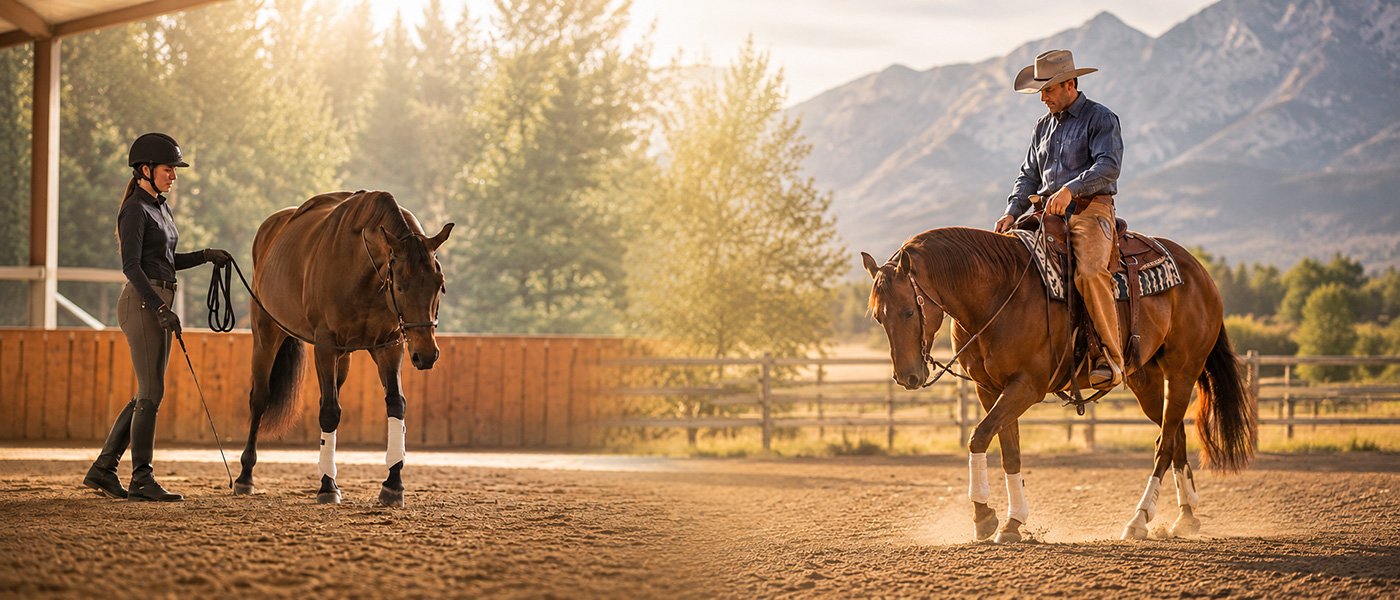
I have been a Western rider for a long time. I ride mostly from my seat and legs. I don’t want to carry constant contact with the bit. If I pick up a rein, I am asking for something: turn, stop, back up, move a shoulder, change direction. Then, when I get the answer, I want to leave the horse alone again.
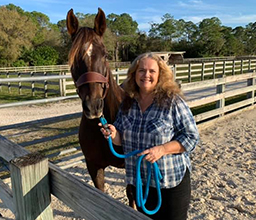
My new Morgan mare, Zoey, did not come from that world.
Zoey is 14 years old and, from what I know of her history, the little riding she had done was almost entirely English. She had been ridden in an English saddle, with contact, and in a more traditional English manner. She had also spent much of her life as a broodmare, so she was certainly not a finished riding horse who had seen every possible situation.
Then I showed up.
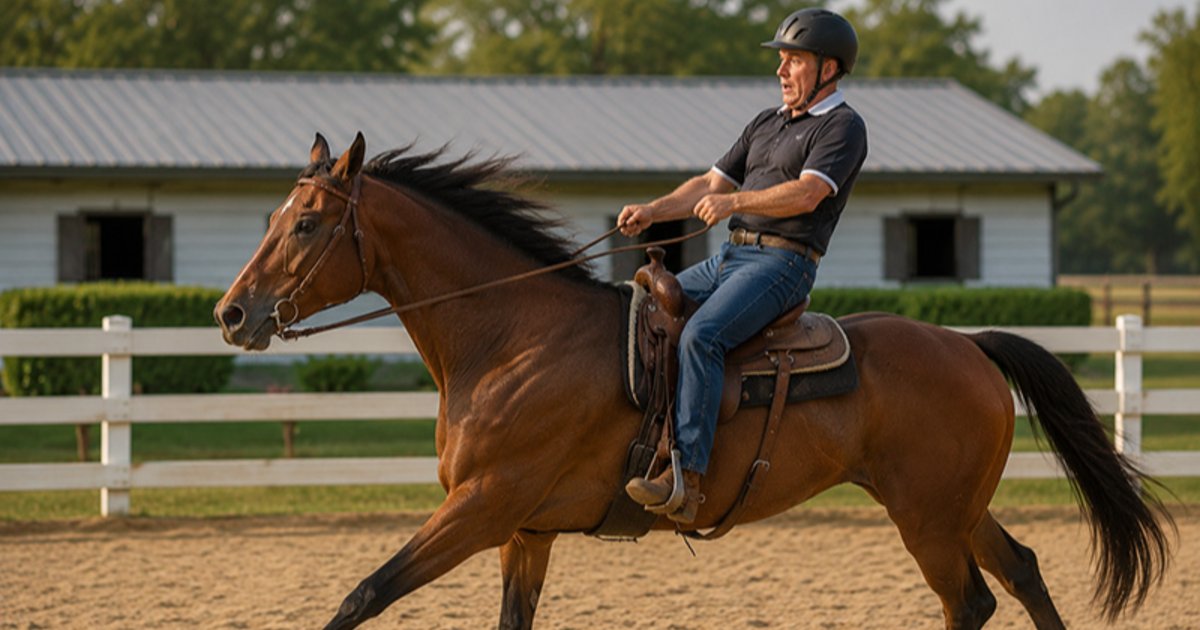
I bought my first riding helmet. I started wearing more English-looking polo shirts. I have lace-up riding boots, although they are still Western enough that nobody is likely to confuse me with a hunter rider at a horse show.
So maybe “Wenglish” really does fit.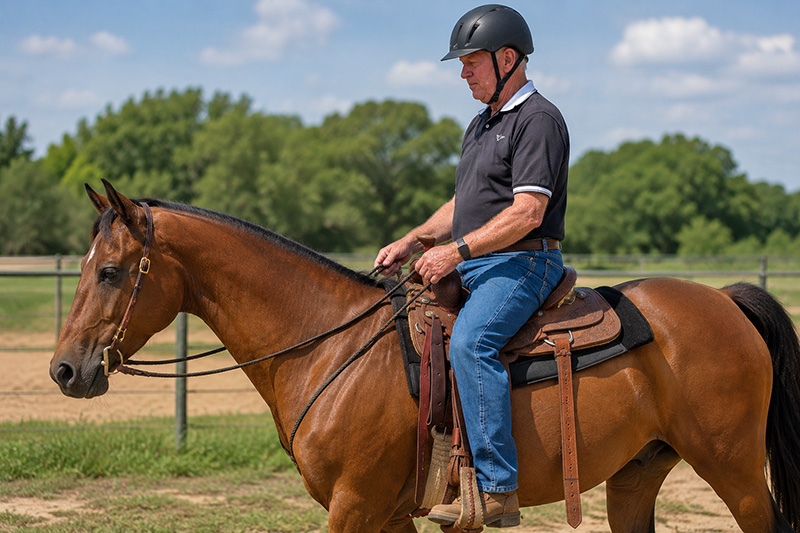
The funny part is that Zoey has become Wenglish too.
How Can a Horse Not Understand “Whoa”?
When I first started riding Zoey, I expected a few misunderstandings. I did not expect quite as many as we had.
One of the biggest surprises was stopping.
How can a 14-year-old horse not understand “whoa”?
At least, that was what I kept thinking.
When I released the reins and gave Zoey the kind of freedom I normally give a horse, she did not interpret that as, “Relax, carry yourself, and wait for my next signal.”
She seemed to interpret it as, “Great. I’m in charge now.”
And Zoey is a Morgan.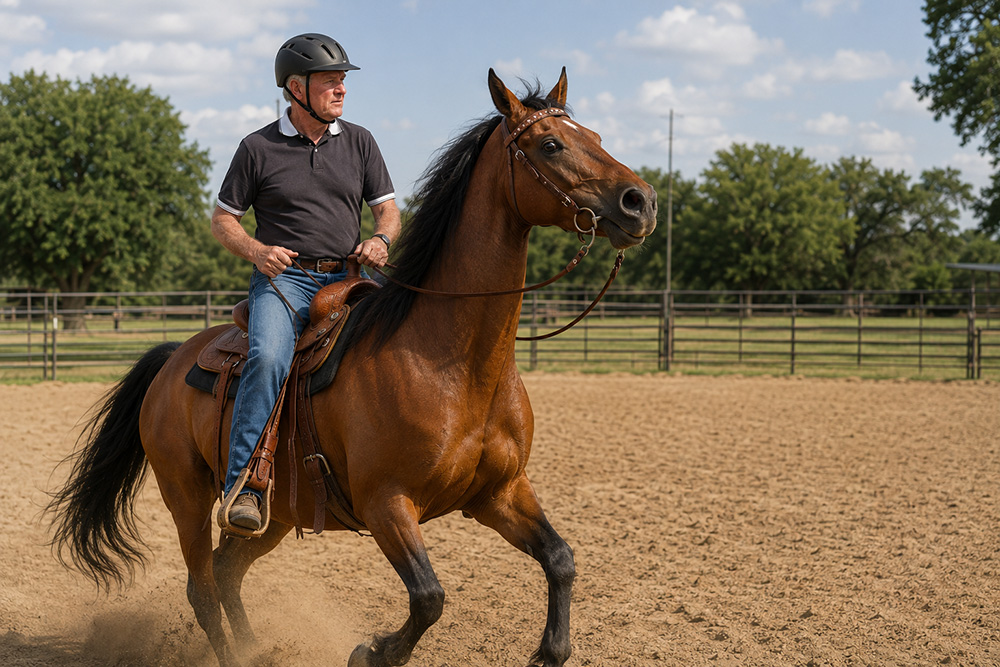
Morgans tend to have opinions, energy, intelligence and a fairly healthy belief that if somebody needs to make a decision, they are available for the job.
Zoey especially liked going forward.
Fast.
At first I thought I simply needed to teach her my signals. I worked on using my seat, my legs and lighter rein cues. I tried to explain that no contact did not mean no rider. I wanted her to understand that she could travel on a loose rein and still stay connected to me.
But progress was slow.
I kept thinking I had a training problem.
Eventually, I realized I may also have had a location problem.
The Arena Already Meant Something to Her
Zoey did not like the round pen.
The arena was a little different. She was more familiar with it, but that may have been part of the problem.
I began to realize that the arena had history for her.
This was where her previous English owner had ridden her. This was where she had been schooled. This was where she apparently believed she already knew what she was supposed to do.
I would ask one thing, and Zoey seemed to answer a question I had never asked.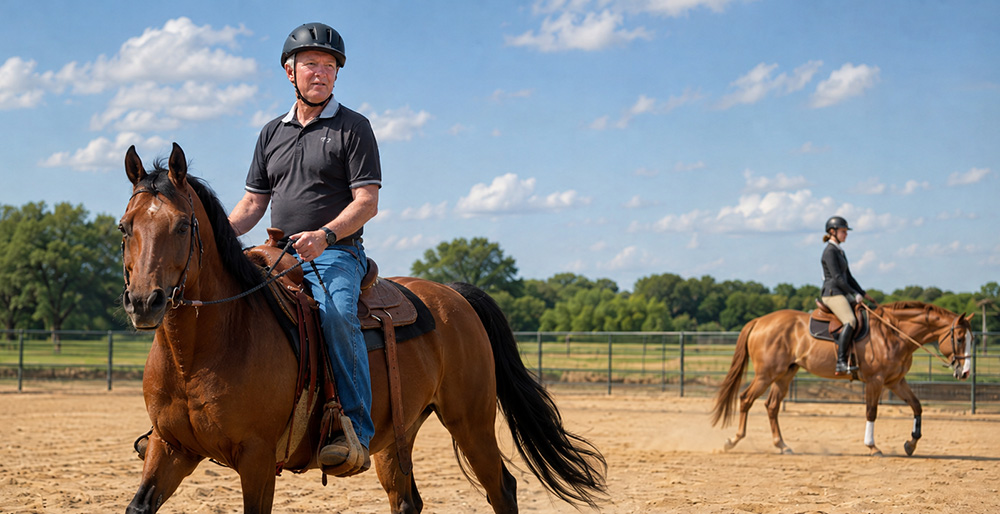
I would soften the reins, and she would speed up.
I would try to slow everything down, and she seemed to believe we were supposed to be doing something else.
The more I tried to explain my riding system inside the arena, the more I felt as if Zoey was working from an old set of instructions.
It took me longer than I care to admit to figure out that perhaps the problem was not that Zoey did not understand “whoa.”
Maybe Zoey and I simply were not speaking the same language.
And worse, I kept insisting on having the conversation in a place where she thought she already knew all the answers.
So I tried something different.
We left the arena.
The Breakthrough Was the Trail
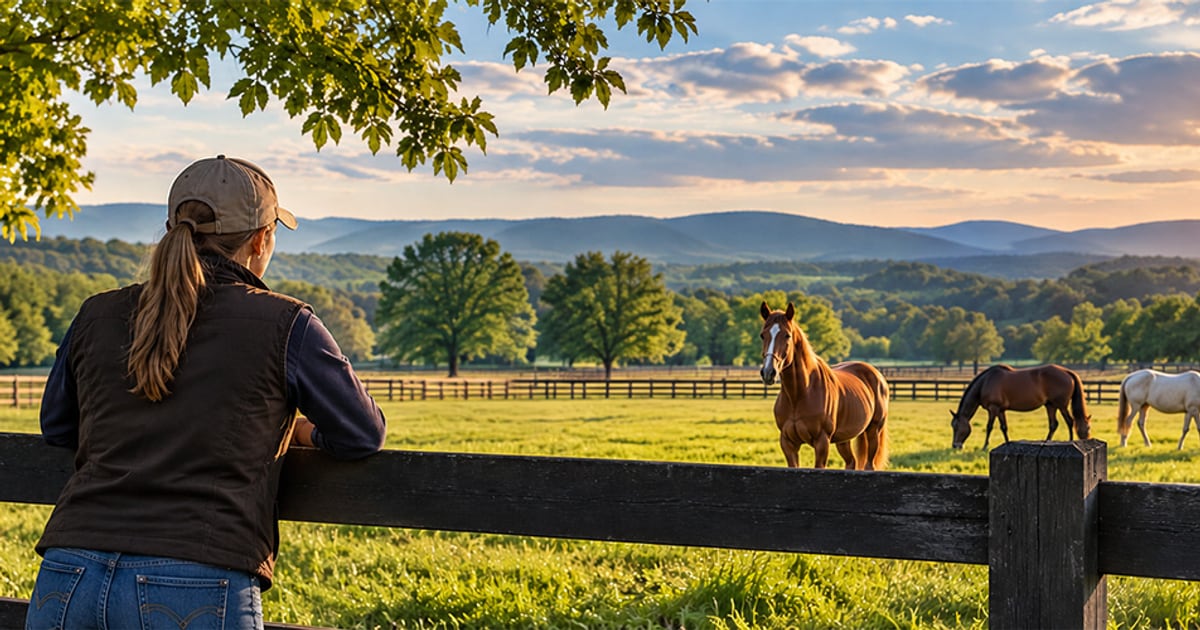
We are fortunate to have about 60 acres of trails to ride.
There are birds. There is water. There are trees, open areas and things to look at. There is always something a little different around the next bend.
Out there, something changed.
We were no longer training.
At least, Zoey did not think we were.
We were hacking.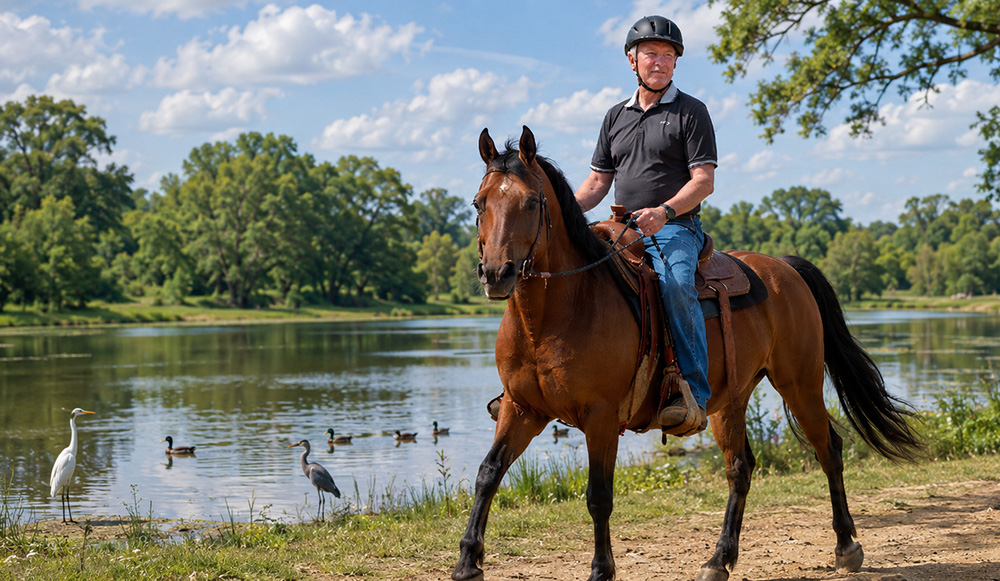
We were going somewhere.
There was no arena wall, no familiar pattern, no expectation that she was supposed to perform some exercise she had been taught years ago.
And there was no round pen she already disliked.
We were in what I started thinking of as a sort of horse-training no man’s land.
It was not her old English riding world.
It was not exactly my Western training world either.
It was simply the two of us riding down a trail.
And Zoey began to relax.
That may have been the real beginning of our relationship.
I Doubt She Knew She Was Being Trained
Almost all of Zoey’s real training with me happened outside the arena.
I doubt she thought of it as training at all.
We would walk down the trail. I would ask her to slow down with my seat. We would stop and look at something. We would turn around a tree. We would back a few steps. We would move off my leg. We would stand quietly.
If she got excited, we worked through it.
If she relaxed, I left her alone.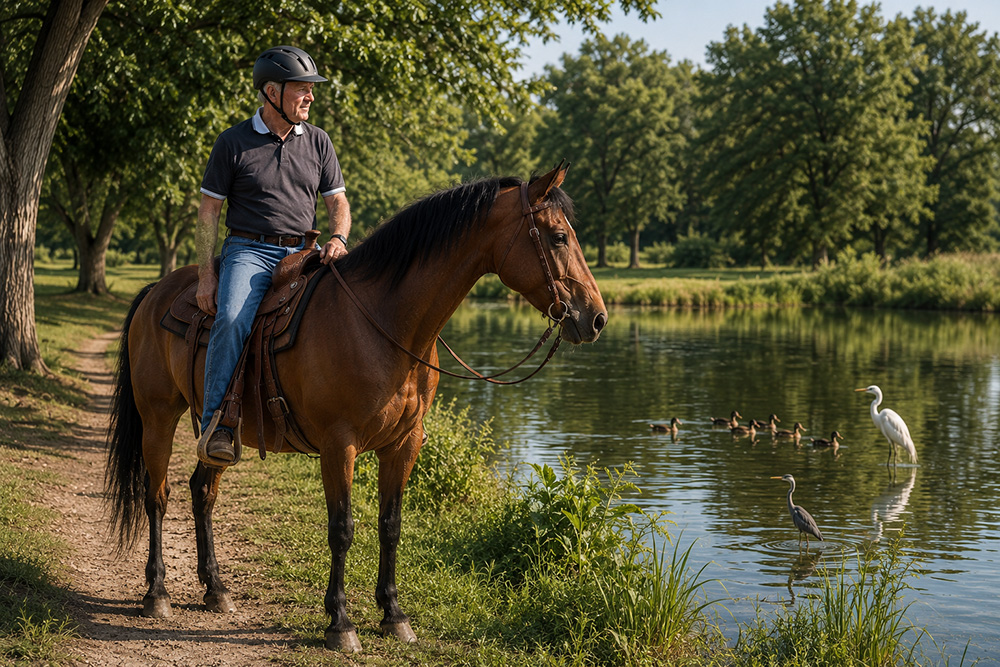
Little by little, she began understanding what I meant.
A loose rein stopped meaning she was now responsible for transportation.
She learned that I might not be carrying her face with the reins, but I was still riding.
She began paying attention to my body.
She started listening to my seat.
She became more responsive to small changes in my legs.
And I became better at understanding her.
That part matters.
I like to think I trained Zoey to my way of riding.
Zoey may have a different version of the story.
She may believe she finally figured out that her new human was not a very good English rider, so she adjusted her behavior to make things easier for both of us.
She may even be right.
Good horses have probably trained more people than we care to admit.
Somewhere Along the Trail, We Both Became Wenglish
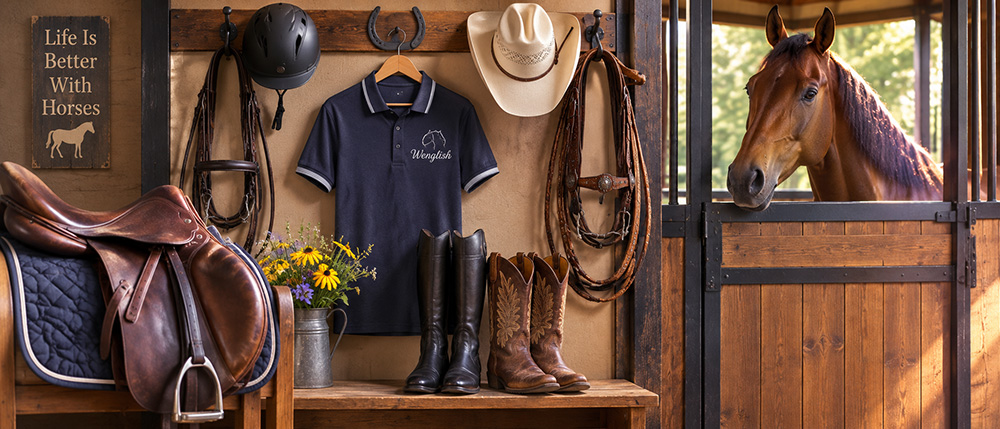
I am still a Western rider.
I still want a horse to carry herself without constant bit contact.
I still want most of my communication to come from my seat, my legs and my body.
I still believe the rein should mean something when I pick it up, and that when the horse gives me the right answer, I should release it.
But Zoey has made me think more about what English riders value too.
Straightness matters.
Balance matters.
How a horse uses her back matters.
How she carries herself through a transition matters.
The rider’s position matters.
Precision matters.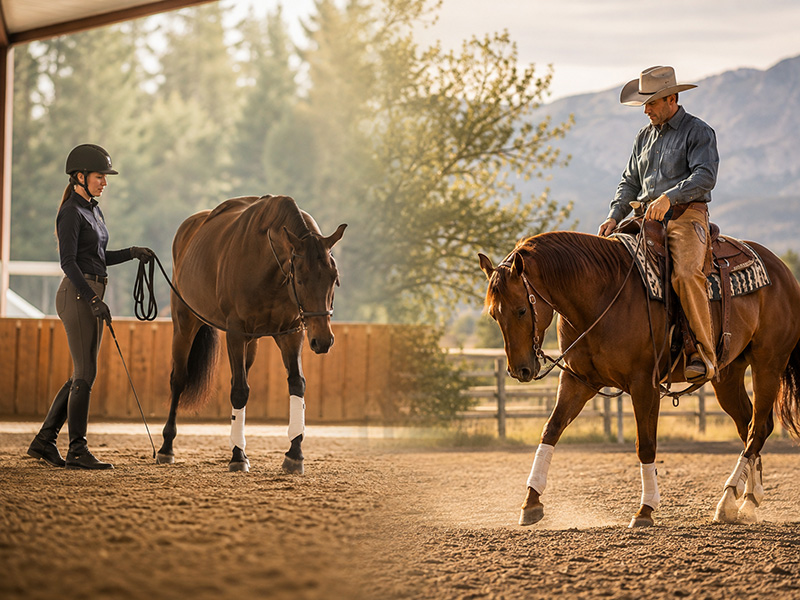
Those things do not suddenly stop being important because there is a Western saddle on the horse.
At the same time, I have watched English riders discover groundwork and communication techniques that Western riders and clinicians have used for years.
Monty Roberts was one of the horsemen who successfully crossed that line. His ideas about communication, pressure and release, reading the horse, and developing trust reached riders from virtually every discipline.
Etan Beth-Halachmy did something similar through Western Dressage.
Western Dressage has always interested me because it asks a very simple question:
Why should the principles of dressage belong only to riders sitting in English saddles?
Morgan horses have been especially successful in Western Dressage because they are athletic, intelligent, versatile and naturally suited to many kinds of work.
But the question works in the other direction too.
Why should softness, groundwork, riding from the seat, or allowing a horse to travel without constant rein contact belong only to Western riders?
Maybe they don’t.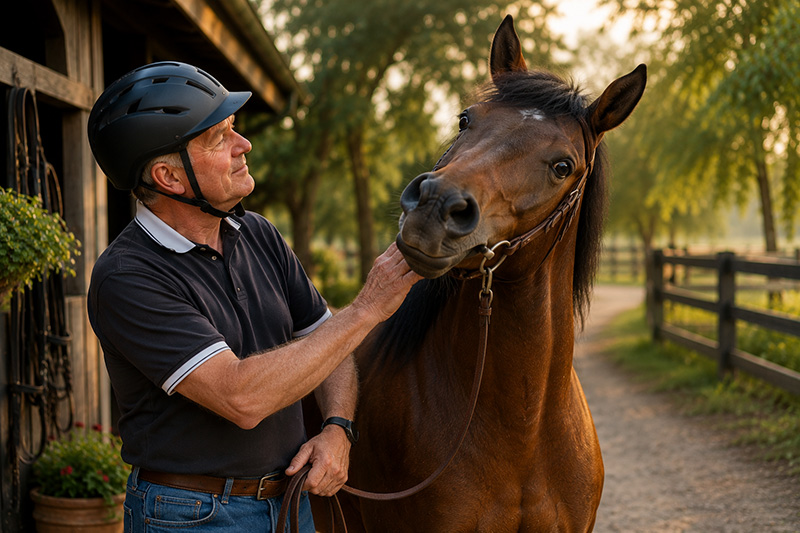
Maybe none of the best ideas belong exclusively to anybody.
Good Horsemanship Is Good Horsemanship
Horse people are very good at creating categories.
Western.
English.
Dressage.
Hunter.
Jumper.
Reining.
Cutting.
Trail.
Western Dressage.
We have different saddles, different clothes, different rules and sometimes completely different vocabulary.
The horse does not know any of that.
The horse does not know whether an idea came from a dressage instructor, a cowboy, a hunter trainer or a clinician.
The horse only knows whether the rider is clear.
Whether the request is fair.
Whether the release comes at the right time.
Whether the rider is balanced.
Whether the horse understands what is being asked.
And whether being with that person is a good deal.
That, to me, is where horsemanship gets interesting.
If an English trainer has an idea that makes my horse more balanced, comfortable or responsive, why would I reject it because I ride Western?
If a Western trainer has a way of explaining pressure and release that helps an English rider communicate more clearly, why would that rider reject it?
A good idea does not become a bad idea because it came from the other side of the arena.
Good horsemanship is good horsemanship, wherever you find it.
InfoHorse May Be Getting a Little Wenglish Too
There may be a little Wenglish going on at InfoHorse.com these days as well.
For many years, InfoHorse has been known primarily in the Western horse world. Now we have begun expanding much more seriously into English riding through The Bridleway, our English section of InfoHorse.com.
We are just getting started.
One of our first steps has been adding an English Riding section to InfoHorse.com, with articles and educational information for riders involved in disciplines such as hunters, jumpers, dressage, eventing, equitation and hacking.
In other words, InfoHorse may be learning to speak a little Wenglish too.
And I think that is a good thing.
The horse world becomes stronger when we are willing to learn from each other.
Zoey and I Meet Somewhere in the Middle
Today, Zoey is becoming a pretty nice Western riding horse.
Or perhaps a Wenglish horse.
She is much more comfortable traveling on a loose rein. She listens to my seat and legs better. She understands that a little rein pressure means something and that when she responds, I will leave her alone again.
And I have changed too.
I own a helmet now.
I wear polo shirts.
I ride an English-trained Morgan.
And apparently I am Wenglish.
 Somewhere out on those trails, Zoey and I stopped worrying about whose system was correct and simply started learning how to understand each other.
Maybe that is the real lesson.
You do not have to give up your discipline to learn from another one.
You do not have to ride English to appreciate dressage.
You do not have to ride Western to appreciate softness and release.
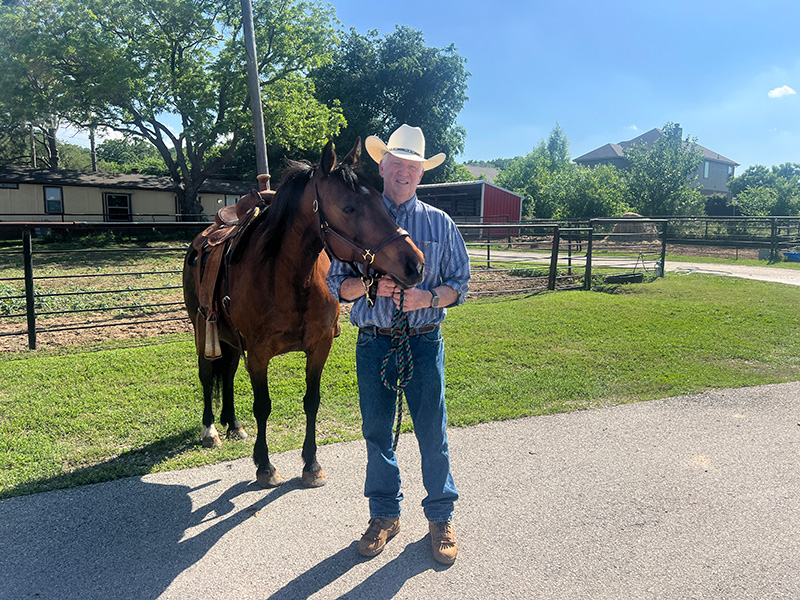 You do not have to choose sides every time somebody shows you a better way to communicate with a horse.
Take the good ideas.
Leave the bad ones.
Listen to the horse.
And if somebody calls you Wenglish?
I recommend taking it as a compliment.