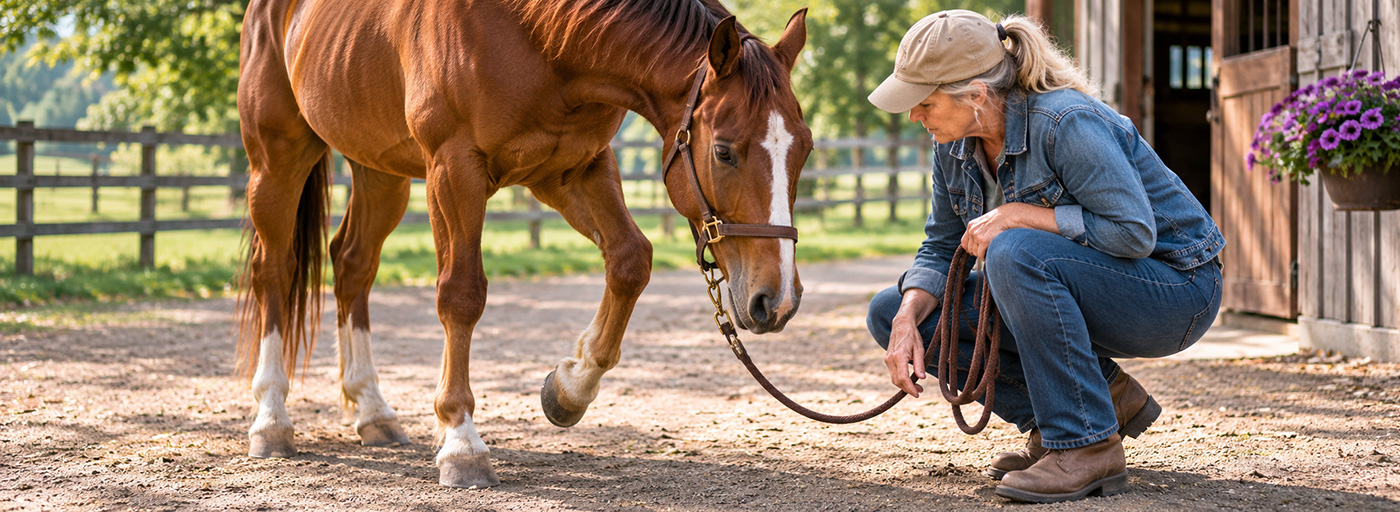


Yesterday, your horse walked comfortably across the paddock. Today, lifting one foot looks painful, and every step is a struggle. Few things unsettle a horse owner faster than sudden lameness.
A hoof abscess can cause exactly this kind of dramatic change. Understanding what is happening inside the foot helps you respond quickly. Just as valuable is knowing how to support the exposed skin during recovery, including when Dragon’s Blood Equine may have a place in your veterinarian’s aftercare plan.
Why a small infection can cause so much pain
A hoof abscess is a pocket of pus trapped within the foot. Pressure builds against sensitive tissues inside the firm hoof capsule, causing pain that can appear out of proportion to anything visible on the outside.
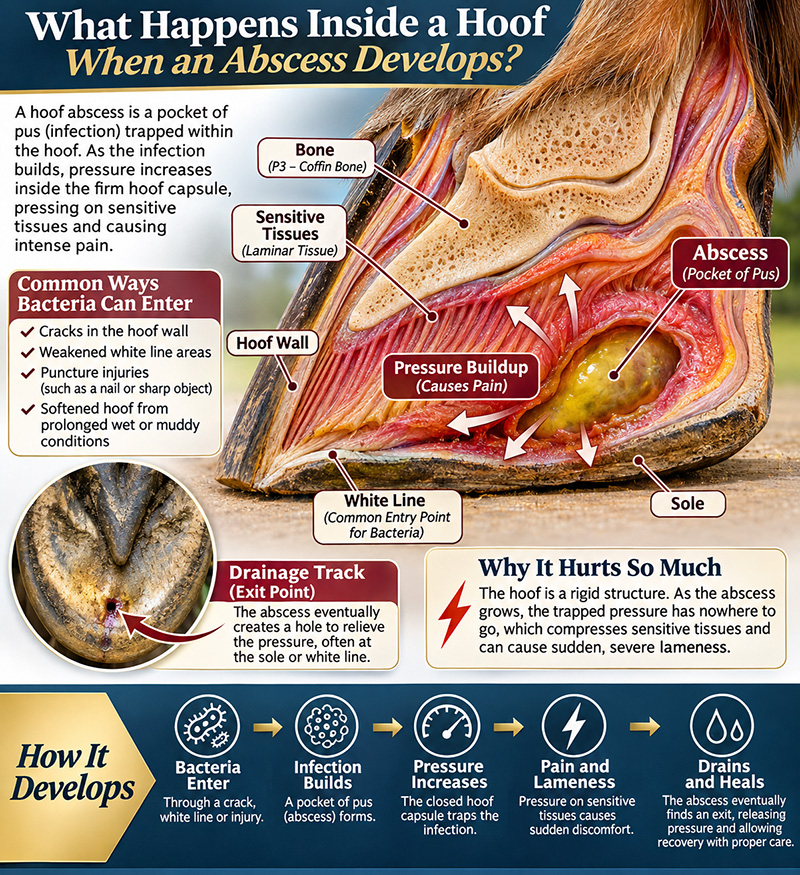
Bacteria can enter through cracks, weakened white line areas or puncture injuries. Mud, wet bedding, changes between wet and dry conditions, and poor hoof balance can make the hoof more vulnerable. Heat, a stronger digital pulse and sudden reluctance to bear weight are common warning signs.
Start with diagnosis and drainage
Call your veterinarian promptly for sudden, severe lameness. Laminitis, fractures and deep punctures can resemble an abscess. If a nail or another object is embedded in the foot, leave it in place and call immediately; its position can help the veterinarian assess which structures may be involved.
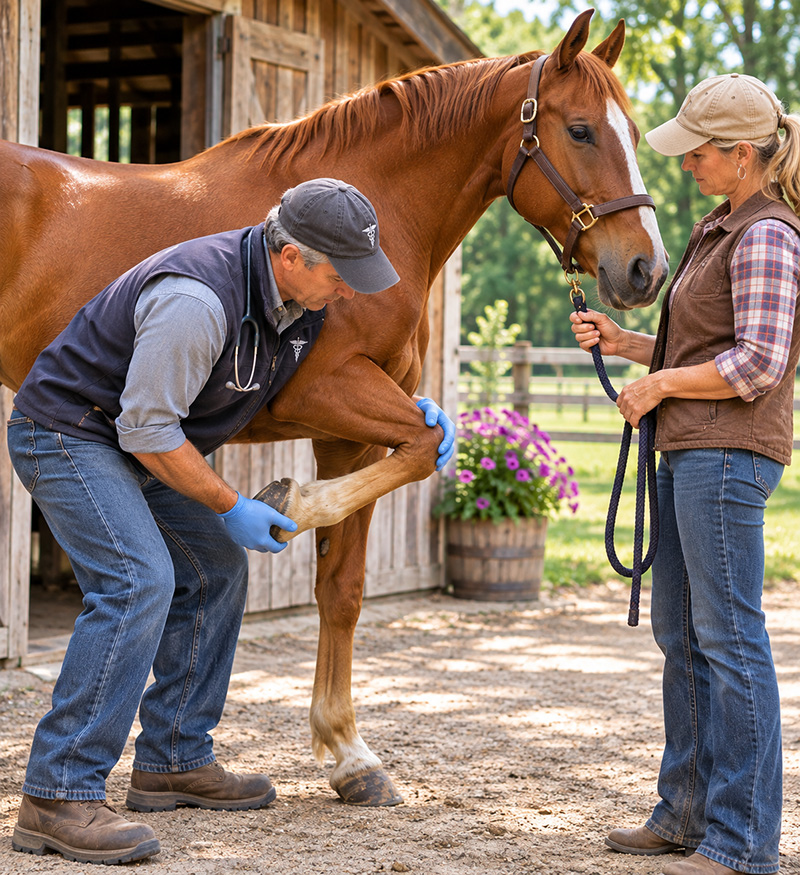
Once an abscess is located, your veterinarian or an experienced farrier working with them can establish drainage. Releasing the trapped pressure often brings substantial relief. Avoid digging into the sole yourself: removing healthy tissue can create further damage. Your veterinarian may recommend a poultice, protective bandaging, pain relief and a review of tetanus protection.
Support the whole horse through recovery
Most uncomplicated hoof abscesses have a good outlook with appropriate care. A whole-horse approach supports recovery by combining effective drainage with a clean environment, easy access to feed and water, and attention to comfort. These supportive measures work alongside veterinary treatment.
Warm water and Epsom salt soaks can soften the hoof horn and help encourage drainage. If your veterinarian recommends soaking, a common approach is about 15–20 minutes once daily, using comfortably warm water in a clean tub or soaking boot. Ask how long to continue; frequent or prolonged soaking can weaken the hoof. A medicated poultice may be recommended instead.
Comfort is part of recovery. Your veterinarian may prescribe phenylbutazone, commonly called Bute, or another pain reliever according to your horse’s needs. Although some practitioners question whether anti-inflammatory medication delays an abscess coming to a head, that claim is not established by the veterinary guidance cited here. Current guidance supports NSAIDs when needed; improved comfort can help the horse bear weight and encourage drainage. Do not withhold prescribed pain relief to encourage rupture.
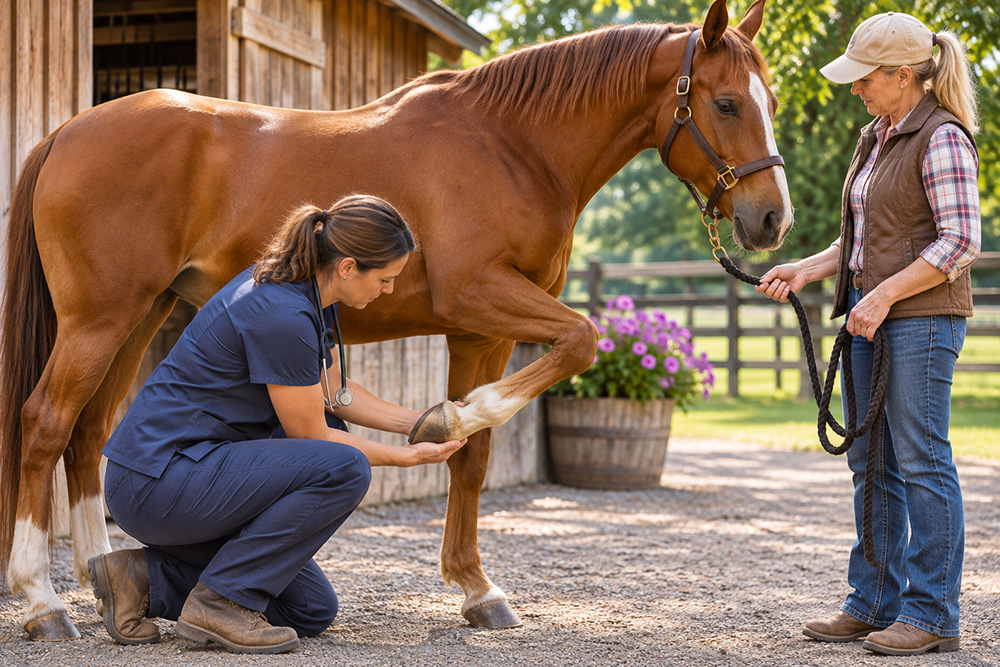
Once drainage is established, protect the opening from dirt while preserving an exit for discharge. Your veterinarian or farrier can assist with appropriate dressing or packing and explain how to change it without obstructing drainage.
Where Dragon’s Blood Equine fits
Typically studied for its remarkable benefits in skin and coat care, it has also received attention for its supportive role during abscess aftercare. Abscess aftercare is crucial and deserves attention even when your horse begins to look more comfortable. If an abscess has discharged at the coronary band or heel, there may be exposed or irritated skin requiring continued care.
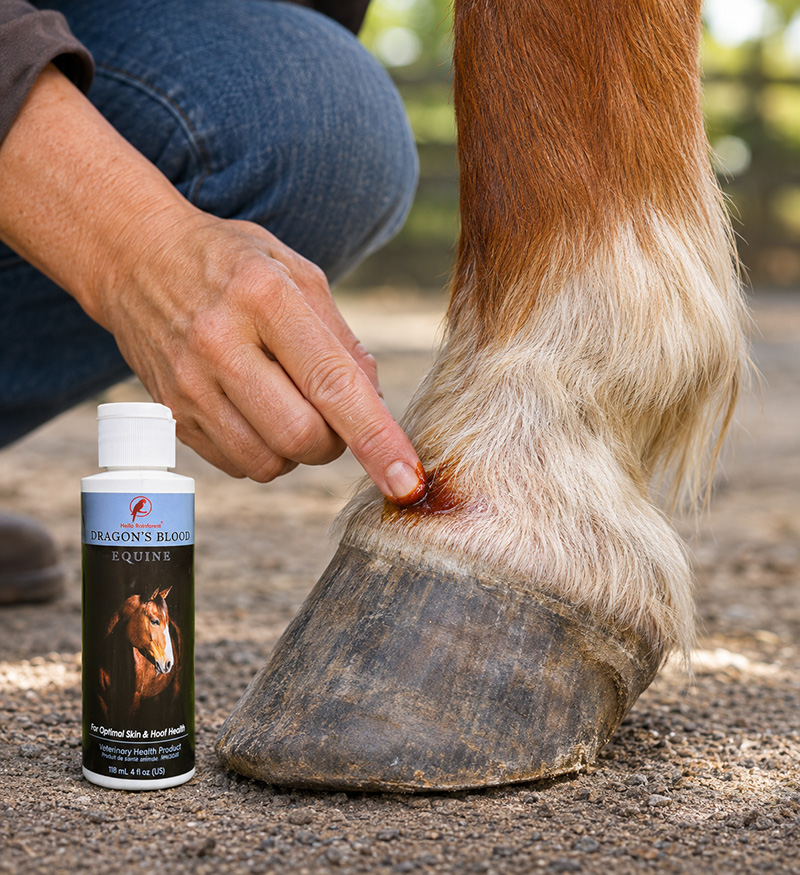
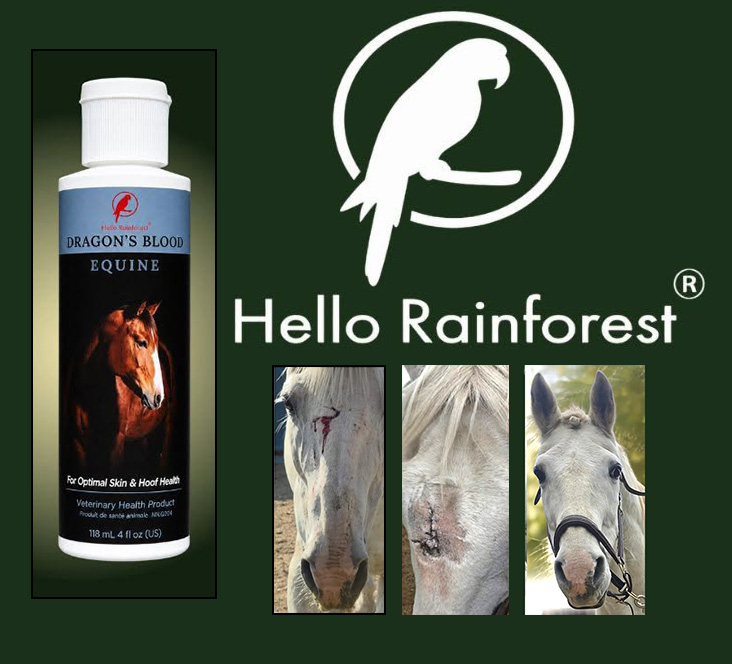
Hello Rainforest Dragon’s Blood Equine is made from pure Croton lechleri resin without added dyes or other additives. The botanical resin forms a light, breathable film on the skin and is intended to support the skin’s natural protective barrier and comfort. For owners looking for a simple product, that film forming quality is its practical appeal.
A Fascinating Fact: Research into Croton lechleri offers an interesting perspective on skin sensitivity. Substance P is a chemical messenger involved in pain signalling and inflammation triggered by sensory nerves. When skin becomes irritated, Substance P can heighten sensitivity in the surrounding tissue. Laboratory and dermatological investigations into Croton lechleri suggest that its naturally occurring compounds may help moderate processes linked to Substance P activity, which may explain why some horses appear calmer or less reactive after topical application.
This does not replace prescribed pain relief, but it helps clarify the comfort supporting role owners often observe and why more owners and care givers are choosing Dragon’s Blood Equine as a go to for their medical kit.
Using it thoughtfully during aftercare
Clean the area gently and pat dry. Dragon’s Blood can be applied in a number of different ways.
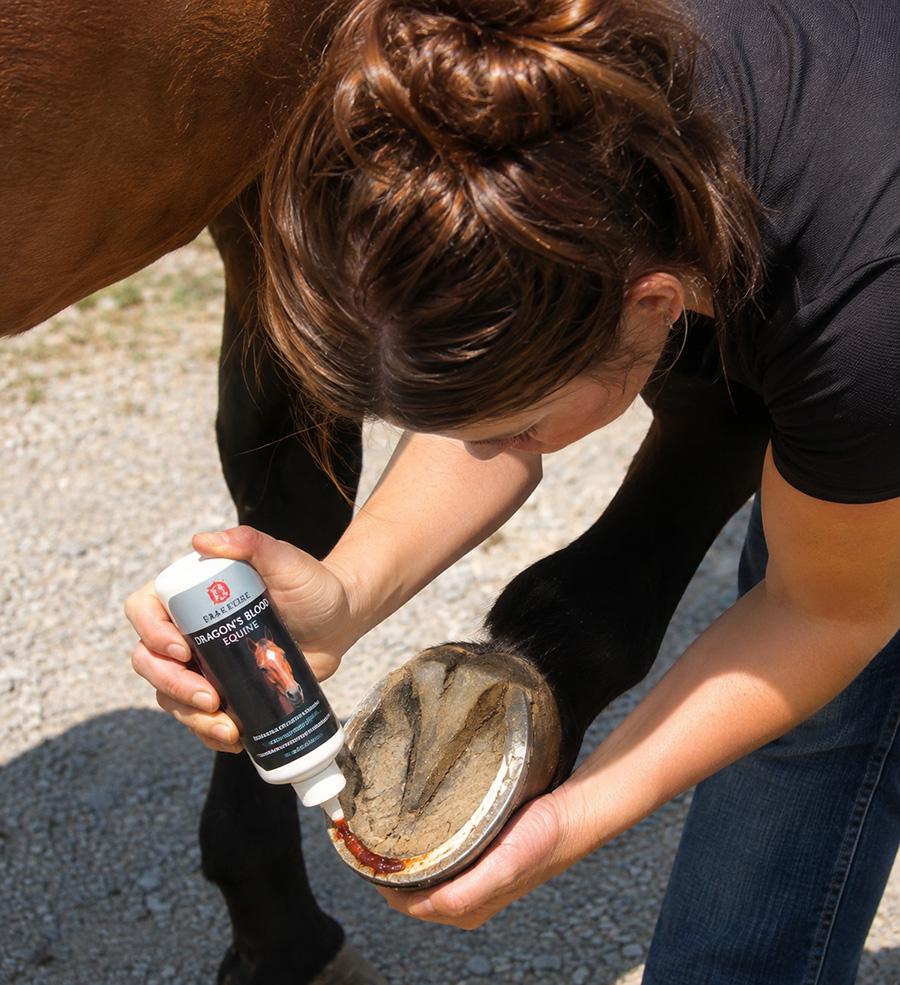
- Massage: Apply a few drops, massage gently until the resin changes colour, and allow it to dry. Reapply as needed. Avoid rubbing tender or damaged tissue.
- Spray: For awkward areas, transfer the resin to a clean spray bottle for light application. Ask your veterinarian how to coordinate it with any dressing or hoof protection already prescribed.
- Packing: Apply to the affected area and wrap the hoof. Change every 12–24 hours and monitor to ensure the abscess continues to drain properly.
- The “Slop On” Method: Some owners simply apply the resin generously without a specific technique. While not a formal method, many prefer this straightforward approach for ease of use. If choosing this option, ensure the area is clean and avoid obstructing drainage.
Keep the recovery environment working for your horse
Keep the horse on clean, dry footing and change dressings as directed. Contact your veterinarian if pain persists, drainage continues or increases after 48 hours, or your horse loses its appetite.
For the longer term, regular farrier care, daily hoof checks and better drainage around muddy gateways help reduce avoidable risks. Repeated abscesses deserve investigation rather than another round of the same home care.
Helping your horse through an abscess means responding to each stage: professional assessment, effective drainage and attentive aftercare. Dragon’s Blood Equine offers a simple botanical option for suitable external skin support as recovery progresses.
Educational information only. Dragon’s Blood Equine is a Veterinary Health Product and is not intended to diagnose, treat, cure or prevent disease. Veterinary advice takes priority.
Sources
- University of Minnesota Extension. Horse hoof abscesses.
- Riddell L. How to manage equine hoof abscesses. Western College of Veterinary Medicine, University of Saskatchewan, 2022.
- Merck Veterinary Manual. Puncture Wounds of the Foot in Horses.
- MSD Veterinary Manual. Hoof Abscesses in Horses.
- University of Minnesota. Subsolar hoof abscesses. Large Animal Surgery Supplemental Notes.