

Rein Management Part II with Richard Winters
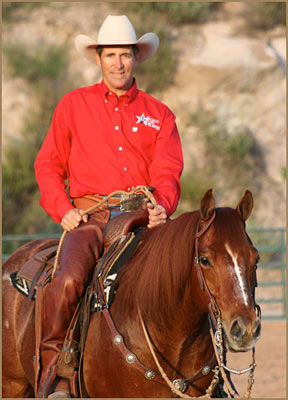
Trainer Richard Winters teaches four main rein positions—direct, supporting, indirect, and neutral—each communicating with a different part of the horse’s body. The direct rein guides the front end, the supporting rein lies along the neck to reinforce that direction and ultimately becomes the neck rein, the indirect rein disengages the hindquarters, and the neutral rein is a loose rein sending no signal. For a clear message, your legs should support what your reins are doing—a simple rule is that your left hand and left leg, and your right hand and right leg, almost always do the same thing.
Regardless of your riding discipline, you use your reins to communicate to your horses. In this article I’m going to explain how different rein positions communicate and control different parts of your horse’s body.
I’ll also describe how using your legs, in harmony with your reins and hands, will bring a clearer signal to your horse and thus a better response.
There are four main rein positions that I want you to consider: Direct Rein, Supporting Rein, Indirect Rein, Neutral Rein
You also have your legs for communication and you should use them to support what your reins are doing, not contradicting them. A simple rule to remember is that your left hand and left leg and your right hand and right leg will almost always do the same thing. Each of the following training techniques is in reference to the use of lateral type mechanisms such as a snaffle, halter, or hackamore. I’ll explain by starting with the first rein position.
Direct Rein: Controlling the front end with a left direct rein and a right supporting rein.
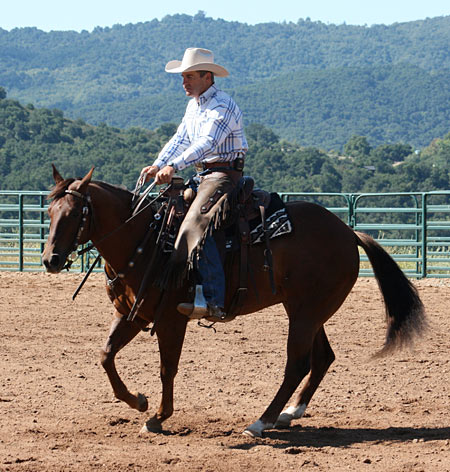
This rein position is exemplified when you extend your hand out to the side and away from your horse. It is called a direct rein because it directs and leads your horse where you want him to go. The direct rein controls the front end of your horse. This is the basic way in which we guide our horses where we want them to go. .
Supporting Rein: This rein is used in conjunction with a direct rein. If you guide your horse to the left with your left direct rein out to the side – you will use your right (supporting) rein, along your horse’s neck, to help bring your horse’s front end across to the left. This supporting rein is what will ultimately become a neck rein. You should not apply too much pressure with a supporting rein or you will counter bend your horse and cause him to look in the opposite direction of which you want to go.
The supporting (neck) rein is simply there to support the direction you have established with your direct rein. With consistent use of this supporting rein, you will teach your horse to respond and guide while neck reining without really ever trying.
Indirect Rein: Controlling the hind quarters with a left indirect rein and a right neutral rein.
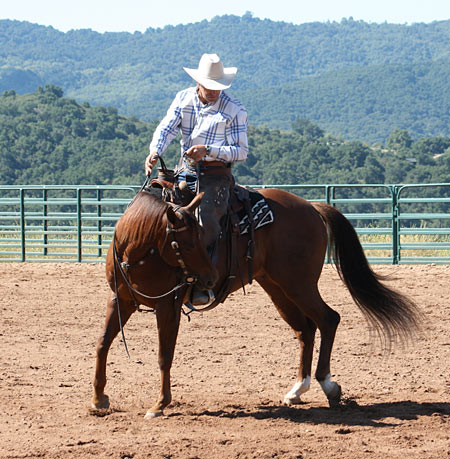
This rein is used to control your horse’s hindquarters. If you draw your left rein up along your horse’s neck, at an angle towards your right shoulder, it will cause your horse’s hind end to rotate or disengage to the right. Having the ability to disengage your horse’s hind quarters with an indirect rein can help you stay in control even in the most volatile situations.
Neutral Rein: This is simply a loose rein that is not sending any signal to your horse. If you are disengaging your horse’s hind quarters with an indirect left rein then it is important for your right rein to be neutral. If you have tension on your right rein, that movement would be sending a conflicting signal to your horse. The only reason I mention the importance of a neutral rein is that many riders are unaware of what they are doing with the opposite rein and are thus confusing their horses.
Now, as I mentioned earlier, your hands and legs need to work in harmony for these rein positions to be effective. The cueing process is simple because all you need to remember is that your hands and legs, on a given side, do the exact same thing. For example: If you use a left direct rein to lead the front end across, your left hand is out to the side. Your left leg will also be out and away from your horse’s body. Your right supporting rein is along-side your horse’s neck and your right leg is against your horse’s side. Now there are no contradicting signals. You’re leading with your left hand and opening with your left leg. You support with your right rein and leg on his right side.
When directing the hindquarters to the right, use your left indirect rein and your left leg on your horse’s side. Your right rein is neutral (loose) and your right leg is away (neutral) from your horse’s side. In this manner you are not setting up a road block in the direction you are trying to send your horse’s hind quarters.
Most control issues come from poor communication and confusion in your horse’s mind. Understanding what rein and leg positions accomplish, and how they work together, will bring clarity to your requests and a more willing partnership with your horse.
For more information about Richard Winters Horsemanship please go to wintersranch.com.