

Proper Posts for Your Horse Fencing
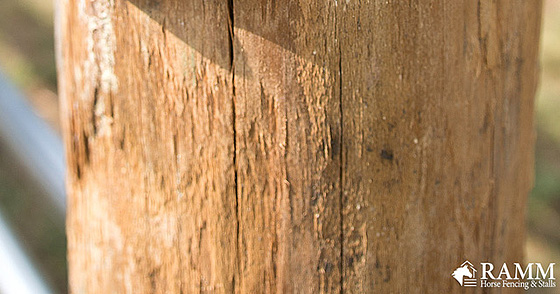
The strongest, safest post for horse fencing is a full round, CCA pressure-treated post four to six inches in diameter. Full round posts come from the core of the tree—the strongest and most pest-resistant part of the wood—and the round shape lets a horse slide away from the post rather than catching on a 90-degree corner. A CCA pressure-treated post carrying a .40 retention rating will last 30 years or more under the ground.
Planning your horse fencing can become a bit confusing with all of the choices available. But when you ‘divide and conquer’, you will be able to get the job done. One of the most important parts of fencing for your horses will be your posts. So lets start there and the rest of your fencing choices will automatically fall in place. Article by Debbie Disbrow
Several years ago my children were studying the human bone structure. It occurred to me that our magnificent spine that holds us up for years is the same concept and job of the fence posts in a fencing system. Without good posts, your fence will fail, your fence will wear out quickly, or it will need continual maintenance. Let's take a look at some of your best options.
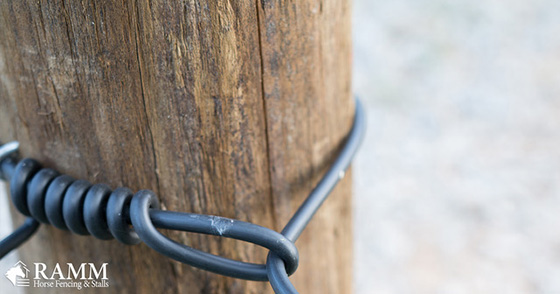
Not all posts are made equally. At a glance, many posts look the same. But with further checking, there are many different sizes in length, diameter, square, half round, not to mention wood types and treatments. So to make the choice for posts easier, you need to answer a few simple questions:
●How safe do I want my horse fencing to be? ●How long do I want my fencing for my horses to last? ●How much maintenance do I care to do in the future? ●What is my budget for my posts and fence project?
First, we know that our horses and ponies can be abusive to our fencing. Rubbing, scratching and even an occasional kick can be expected from our happy or playful horses. Because of the strength of our equine friends, a full round (6,5 or 4”), CCA pressure treated post offers the best of all posts available.
How safe do I want my fencing to be? Here is why, full round posts come from the core of the tree. The core is naturally the strongest part of the wood. It is also the most pest resistant part of the tree. Compromising half rounds or other shaped posts does not allow for the best strength of a post. Having a round post also takes our horses into consideration. Why? Because with a round shape the horse will slide away from the post without anything to catch on such as a 90 degree corners that grabs or scuff your horses head, withers, hips, hocks and more. Additionally, as a rider, round posts offer the same benefits.
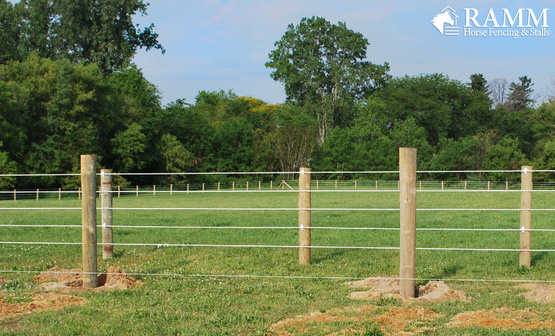
How long do I want my fencing for my horses to last? When you start to shop for your posts, you will hear terms about treatment. The treatment has almost everything to do with the life of your post (as well as size being 4”’s in diameter and larger to be able to hold up to rubbing, scratching, etc). Treatments vary from ‘naturally treated, dunking treatment, and then CCA pressure treatment.
Beware of naturally treated statements. Usually this is a post that has been taken from the core of the tree, is usually a tapered where one end diameter is larger than the other end of the post post. Often these posts are sized by the larger end. This does not tell you how small the other end will be. Tapered posts can have less strength than full turned posts that are the same diameter from top to bottom of the post. Often these posts are not life rated and don’t last long.
Dunked post treatment is when posts are placed into a vat of treatment and dunked in it. Often the treatment does not penetrate far into the post leaving it open to wear from weather. Often you can look at the top of a post and see the darker outer ring of treatment. This will give you a better idea of how well the post is treated. These posts may come with a life rating, however, ask what that means and find out the average life of the post. If you can get something written about your posts longevity for any future questions.
CCA pressure treated posts is one of the best treatments you can recieve. This process takes the posts and puts them in a vacuum that draws out the moisture in the post then replaces the moisture with CCA treatment that is drawn into the post further. This treatment can be seen on top of the post and reaches towards the core. Most often these posts are tagged with the retention level for treatment meaning if your post has a .40 rating it will last 30 years plus, under the ground. When you purchase these posts, pull off the tag and keep them with your invoice. You have a warranty that will help with any questions you may have in the future.
Not all posts come from the same area in the United States You can also ask about the wood types when shopping for posts. One of the best woods for fencing is pine because it allows you to hammer nails or use screws with the wood and has very good holding power. Red pine is prevalent in the northern half of the states and yellow pine is more prevalent in the southern states. Yellow pine is better in strength than red, however red pine runs a close second to yellow.
Yellow posts often can be price prohibitive and freight costs can easily escalate prices. Beware of hardwood posts at lower prices. Once hardwoods sit they become harder and pilot holes are needed to be drilled for every nail or screw hole, adding more work and time when installing. Ask your wood expert in your area to explain about the posts that you will be considering.
Find out which one will fit your needs and horses the best.
How much maintenance do I want to do in the future? I believe that horse owners want more time to ride and less time doing repairs and maintenance. If this is what you are thinking too, find an expert in the horse fencing field. Ramm Horse Fencing and Stalls can help you with your decision making. Many of the people at Ramm own horses and understand the process of fencing from beginning to end. They can explain the differences between posts and fencing so that you can make an educated choice for your horse farm. They will also help you with another very important part of any fencing project. Your budget.
Your budget Matters When choosing posts and fencing that you want to last longer, your budget is extremely important. Be sure you put your money where it will be used best and that starts with your posts.