

How to Find the Best Horse Fencing
by Debbie Disbrow
Start with an honest written list of what your horses need—strength, safety, longer life, least maintenance—and use it as a checklist against every option, looking for fences made specifically for horses and a company that asks questions about your farm. Traditional wood board fence lasts approximately 12 years with maintenance and offers approximately 600 lbs of break strength per board, which an average 1200 lb horse can break at a strong trot or gallop. By comparison, Flex Fence® flexes 6-8 inches on impact, carries up to 4,200 lbs of break strength per rail, never needs painting, and comes with a definitive warranty from lifetime to 30 years.
Shopping for horse fencing can be a confusing venture. So many opinions and so many kinds of fence! How do you decide what is best? Let’s take a look at a few schools of thought so you can easily choose what fence will work best for you and your horses.
When it comes to horse fencing, most people start looking at fence systems and forget about the criteria of what they need to accomplish. For example, are your horses pushy and you need to be sure they stay off of the fence? To start, if you can build a list of what you need for your particular horse farm, you will have a better idea if you are making the right decision when you are ready to purchase. So first start with a very honest list of what your horses need. This is your first step. Here is an idea of that list:
1 Must be strong enough to hold Bob, our draft-cross that is very pushy
Secondly, you need to decide what you want and need in the best horse fence that you can find. This list is secondary to your horse's needs. Because, the most important fence is a safer alternative to what you have had and to what is on the market. Your pastures are primarily your horse's home, where they live and it needs to be as safe as it can be. Your list can include any important needs and it will come in handy to have when you start looking at different horse fencing choices. Here is an example of that list:
1. Need to have cross fencing in the first pasture. 2. Move gates closer to the barn entrance. 3. Incorporate waterer between cross fenced pasture. 4. Be sure to have a large gate access in the back for big equipment. 5. Create a ‘catch area’ closer to the barn to be able to bring horses out of the pasture easier. 6. Do we need a riding arena or make another pasture?
Once you have your lists with your horse's criteria and yours, you can use this as a checklist when you begin to look at options. If the fencing you are looking for does not fit your criteria, look for another kind of fence. There are many options - all made for each person's particular farm - but look for fences made specifically for horses. Why? Because these fences will give you more bang for the buck and longevity.
Find a company that understands horses and is not just selling a product to sell it. If they ask you many questions about your farm and your ‘want’ list you will know that they want a good picture of what you have and what you will need. Also, the more information you provide, the more you will be able to narrow down a good fence for your horses.
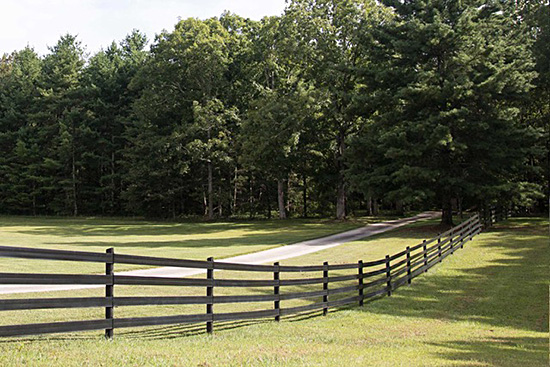
Wood vs. Flex Fence® is a place to start. Traditional board or split rail fences were a mainstay for years, until Flex Fence® came onto the market. The comparison is from one end of the spectrum to the other - and other fences fall somewhere in between. Wood can last for approximately 12 years, with maintenance, a support electric fence rail and caution with horses that tend to walk, lean or run into the fence.
After a few seasons of heat and cold, which varies in great intensity across the United States, wood rails warp. Expensive maintenance comes in with replacing rails that sag, wood that shrinks and exposes nails and jagged edges - not to mention vet bills. Wood carries no warranty and its break strength also varies but is approximately 600 lbs of break strength per board. An average 1200 lb horse can easily break wood at a strong trot or gallop.
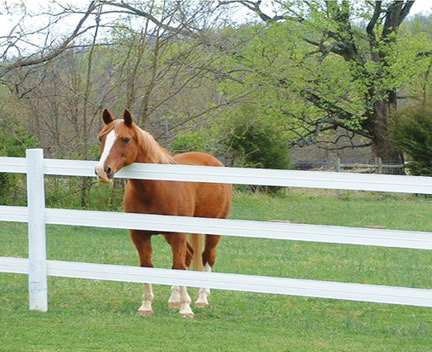
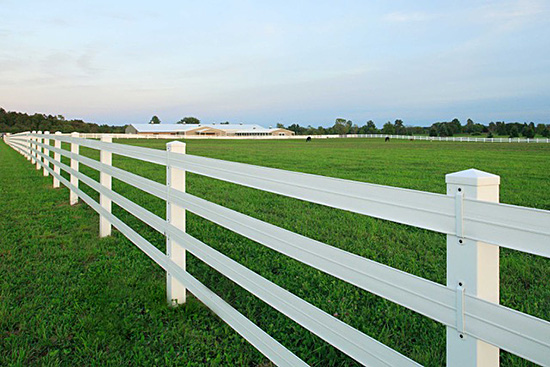
Keeping your list in mind, Flex Fence® was produced with horses in mind. It lends itself to the needs of horses because it flexes 6 -8 inches on impact and has up to 4,200 lbs of break strength per rail. The three 12.5-gauge mechanically-entrapped wires in the rail are the strongest made. A polymer rail offers a softer feel than wood and is very forgiving in comparison to ridged wood.
Additionally, the Flex Fence® rail is available in white, black or brown and you never need to paint the rail. This saves hundreds of dollars that you would spend with a wood fence from paint, stain and the labor to paint. Over a short period of time, Flex Fence®, hands down, is less expensive than wood fencing.
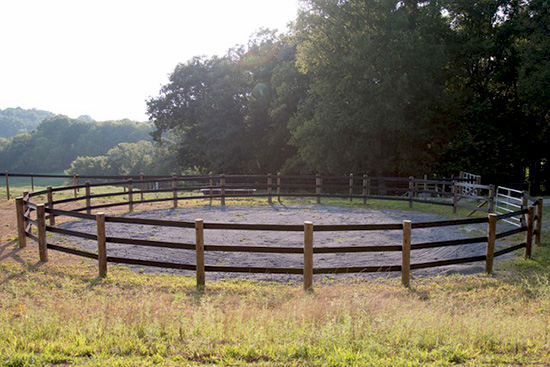
With a price point comparable to wood, with the Flex Fence® being made specifically for horses, it's an easy choice. Flex Fence® also comes with a definitive warranty, from lifetime to 30 years... you cannot get that with wood or many of the other horse fence systems on the market.
The choice between wood and Flex Fence® boils down to this:
1.Comparable costs initially. 2.Over a short time, even 4 years, Flex Fence® pays for itself making wood the more costly option. As time goes on the cost of wood escalates from maintenance, paint stain and labor to paint or repair. 3.Break strengths are evident and Flex Fence® is superior - plus you get flexibility that wood does not have. 4.Flex Fence® is made for equine use, it is not considered a residential fencing product. 5.The Flex Fence® warranty outweighs wood hands down.
What is the best fencing for your horses?
One that serves you and your horses well and long. Check out the advantages of Flex Fence®; you will be glad you do.