

Safe Horse Fencing for Expectant Broodmares

If your broodmare is expecting this year, here are some fence and gate guidelines that will keep your new foal safe! Article by Karen Elizabeth Baril
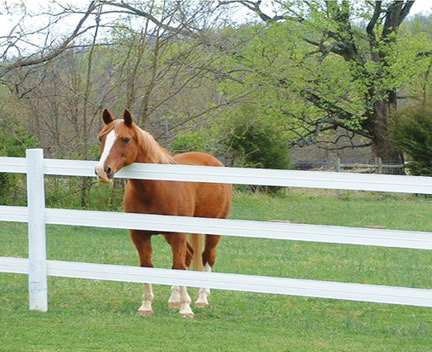
Foal-safe fencing begins with spacing: rails should measure no more than 6 to 8 inches apart, with the bottom rail no more than 6 inches from the ground, so a foal can’t get trapped between rails or roll underneath the fence. The fence should also forgive inevitable foal mistakes—Ramm’s Flex Fence® flexes up to 6 inches on impact and offers up to a 4,200lb break strength—and gates should be 2-inch heavy gauge tubular steel, never aluminum, which is not strong enough for agricultural use.
If your mare is expecting a foal this year, you already know you’re going to be busy. Foals are like toddlers. They’re sweet and cuddly, but oh so curious. You can spend hours watching the little guy play, but just like a human toddler, he’s prone to getting himself into tight situations.
Hours after your foal’s birth he’ll already be pretty handy on his feet. As soon as you get the okay from your veterinarian, you’ll want to offer your foal daily turnout. Just as adult horses require movement to feel good, your little one needs ample turnout for proper hoof growth, digestion, respiratory health, and even emotional well-being.
Of course, even though your foal is pretty agile already, he won’t always understand boundary lines like fences and gates. Consider investing in foal-safe fencing or tweak your current fencing and gate situation to reduce the risk of injury.
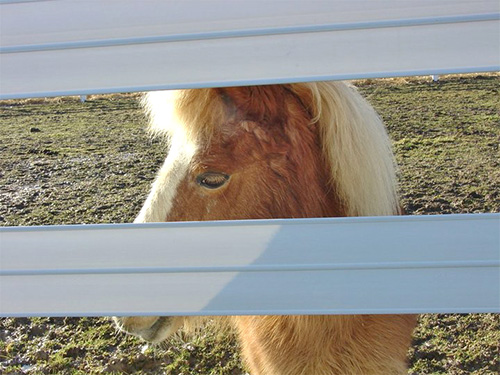
If your broodmare is expecting this year, here are some fence and gate guidelines that will keep your new foal safe: ' Check that rails are spaced correctly for a foal. The fencing that has kept your mare safe all these years may not be suitable for a baby. We recommend you walk your fence-line with a foal’s eye view of the world before you turn him out. To prevent your foal from getting trapped, rails should measure no more than 6 to 8- inches apart. The bottom rail should measure no more than 6- inches from the ground to prevent the foal from becoming trapped beneath the fence or from rolling under it.
' Does your foal have enough room to run and play without crashing into a barrier? Foals have incredible bursts of speed, but sometimes they miscalculate the stopping distance. His turnout should be large enough to allow him room to play without running into the fence. Foals don’t need a great big pasture, but they do need a little elbow room.
' Remove objects that might trap your foal. Never use old tires to feed hay in a turnout intended for small horses, miniature horses, or foals. Move troughs well away from the fence-line to avoid your foal from getting stuck. If you have horse toys in the paddock, be sure they are foal-safe. Ropes and dangling toys should be removed altogether.
' Keep him safe from neighboring horses on the other side of the fence with electric tape, braid, or a double fence-line. Keep in mind that even one bite or serious kick can be fatal for a young foal. Consider adding a top rail of electric rope or braid to discourage threatening advances from horses in adjacent paddocks or fields.
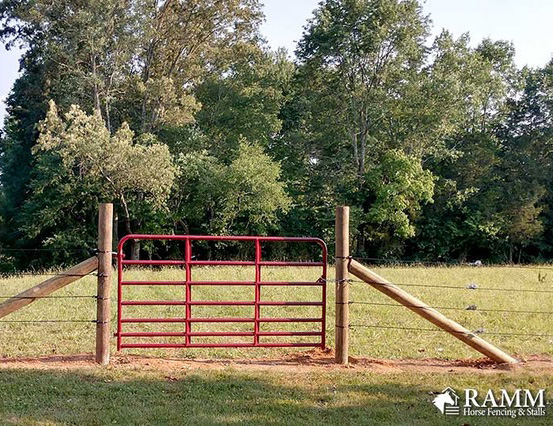
' Check gate safety. Never use aluminum gates for any horses, but particularly foals. They are simply not strong enough for agricultural use. Check for spaces or gaps between the gate and the fence post that can trap a curious foal’s head or hoof. Choose 2 -inch heavy gauge tubular steel gates, painted or galvanized for longevity. Never use V-cross rail gates for little ones.We love wire -mesh gates for young and curious horses. Consider a two-way latch to make it easy to walk mare and foal in and out of their turnout.

' Check that your fence is forgiving of those inevitable foal mistakes. It’s predictable that your foal will test your fence, either with a curious hoof or an all-out impact. Ramm’s Exclusive Flex Fence® is the safest choice for all horses, but especially for babies. Flex Fence® minimizes the risk of injury for foals and energetic young horses by flexing on impact. The 12.5-gauge double coated high tensile wires are mechanically trapped in polyolefin plastic and are exclusive to Ramm, making it one of the strongest and safest fences in the industry.
Ramm’s Flex Fence® offers up to a 4,200lb break strength, flexing up to 6-inches on impact. It works well in combination with woven mesh, electric rope, or electric tape fencing. As a stand-alone fence, Flex Fence® offers the beautiful 3-board look without the danger of splintering and little to no maintenance.
' Flex Fence® Coated Wire, Shockline (electric) or Raceline (non-electric) are also safe choices for the little ones. With a 1400lb break strength, this fence also flexes up to 6-inches on impact. Heavy Class-3, 12.5 gauge high-tensile wire ensures your fence will last a long time. Both products are backed by a Limited Lifetime Warranty.