

The Miniature Horse; Feeding, Turnout, and Safe Horse Fencing
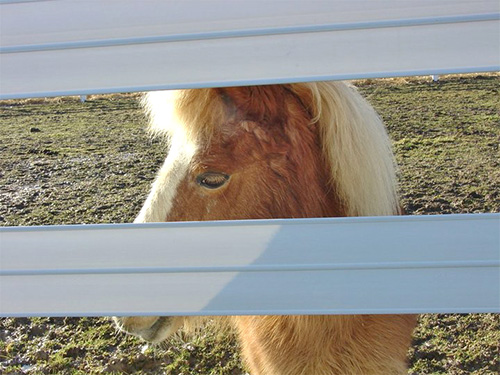
Article by Karen Elizabeth Baril
A miniature horse needs the same respect and care as his full-sized cousins: feed about 1.5% of body weight daily in soft grass hay such as a timothy/grass mix, lock up the grain and limit lush pasture to avoid obesity and laminitis, and keep regular dental check-ups on the calendar. For turnout, fencing must be adapted to a mini’s size—flexible fencing with the bottom rail no more than six inches from the ground, rails about six inches apart, and an overall height of around four feet keeps these curious, athletic escape artists safely at home.
The first time I saw a miniature horse was at a horse show a number of years ago. I fell in love as I watched these tiny horses being shown in-hand. These little guys were not chubby; every horse was an exact miniature replica of his full-sized cousins.
Although the miniature horse is defined by his small stature, he is not in the same class as a pony. Years of selective breeding have produced a tiny equine that retains all of the characteristics of a full sized horse. They sport various color and coat patterns and, unlike most ponies, retain the body proportions of a horse. While many become family pets, others compete in all sorts of venues, including driving, in-hand obstacles, agility, and conformation classes. They also serve as service animals and companion animals.
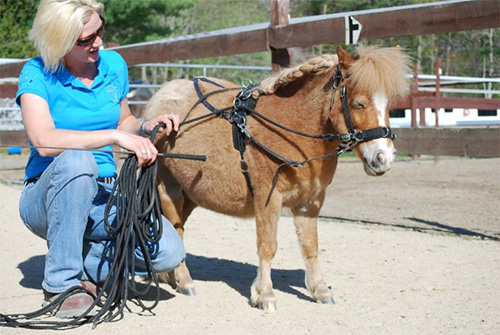
There is however, a caveat that responsible breeders would like new owners to know; the miniature horse is truly a miniature horse and as such must be treated with the same respect and care as their larger cousins. Miniature horses retain all of their natural horse behaviors, including the fight or flight instinct. That means care, handling, and especially turnout, must be planned with a big horse mentality in mind.
Feeding Miniature horses tend to have pretty good appetites so it’s important to lock up the grain and limit concentrates to avoid obesity. Just like large horses, the miniature horse boasts a full set of teeth; 36-42 on average. Dental problems are common in minis due to dental overcrowding. Sinus troubles and bad teeth can lead to serious health issues so regular dental check-ups are mandatory.
Obesity is another common problem in miniature horses. They love treats, but it’s best to stick to healthy treats like carrots, apples, or even slices of watermelon in moderation. Coarse hays are hard for miniature horses to digest. Soft grass hays, such as a timothy/grass mix are a good choice. As a guide, feed 1.5% of your mini’s body weight in hay daily, depending on his breeding status and activity level.
To determine your mini’s weight, use a weight tape or use the following conversion: Estimated Body Weight (pounds) = (9.36 x girth inches) + (5 x body length in inches) – 348.5 Getting an accurate weight is important as most miniature horse owners tend to underestimate their minis total weight. Knowing your mini’s weight is especially important before administering medications, supplements, or when de-worming.
Turnout Miniature horses love to run and play. Run-in sheds or quality lean-tos work especially well for most minis. Keep in mind that lush grass pastures are not a good idea for minis due to the risk of obesity and laminitis. New owners often ask if they can turn their miniature horse out with large horses. This is one of those questions for which there is no easy answer. Perhaps the most important thing to consider is the temperament of those large horses.
Miniature horses are at kick -height so even innocent horse hi-jinks is risky for these little ones. Some miniature horses are mischievous and will tease large horses into bad behavior. In most cases, it simply isn’t worth the risk. Fencing is an important consideration. You cannot turn a miniature horse out in fencing designed for large horses without tweaking it a little to keep your littlest herd member safe.
Fencing Miniature horses are by nature curious, fun, and frisky. They love to run, run, run. We often see our neighbor’s miniature horse zooming around his pasture. While it’s so much fun to watch, fencing for the mini horse must be designed for safety. Just like your large horse, fencing for your mini must provide a psychological barrier as well as a safe physical barrier. Miniature horses tend to be pretty athletic and can jump out of enclosures or wriggle underneath bottom rails. They have a reputation as escape artists, but it doesn’t have to be this way. Perhaps one of the most common mistakes is to overlook the special considerations of fencing for the miniature horse.
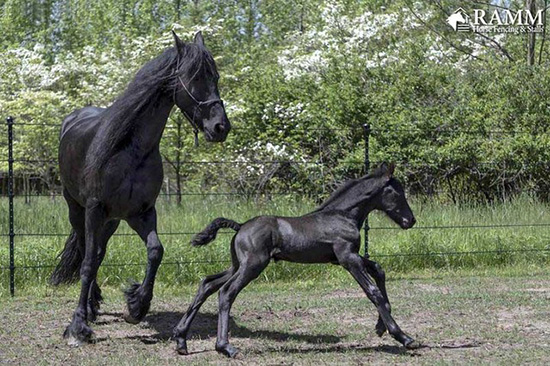
If you have a mini horse, you already know they do all the crazy things full sized horses do, including accidentally running into fences, rolling too close to fence lines, and pawing at fences. For this reason, wire-mesh or woven wire is not the best fencing for miniature horses due to the risk of injury if they run into the fence or paw. Woven wire can easily trap a small mini hoof.
While wood board fencing can be tweaked for the miniature horse, it isn’t the safest option. Wood board splinters on impact and it’s very difficult to install rails at the proper distance for the miniature horse, especially over uneven terrain. Flexible fencing, on the other hoof, offers a safe, safe, safe fence for the miniature horse.
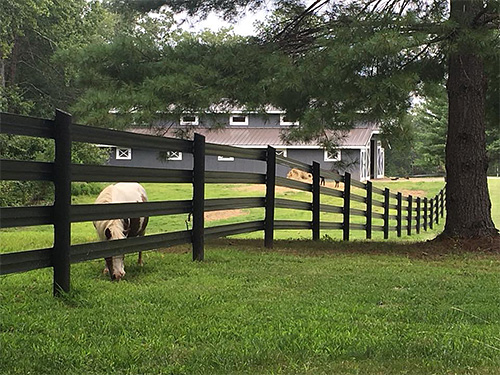
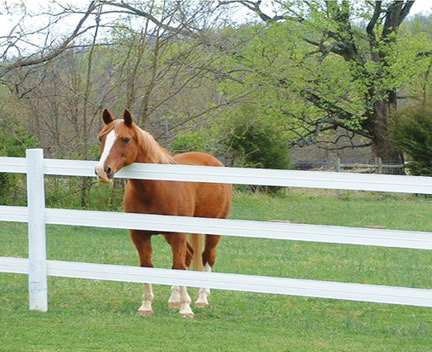
Flex Fence®, available in 5.25 inch, 4.25 inch, 1 inch, and 5/16th inch width makes for a safe, durable, low-maintenance fence. Made of a plastic polyethylene (used in the airline and space industry) it never needs painting and is easy to install. Revolutionary hardware makes this one of the easiest fence installations on the market today. Best of all, if your miniature horse accidentally runs into this fence, the fence flexes safely and then returns to its natural shape. No broken rails, low to no risk of injury, and best of all no loose miniature horses!
When you install Flex Fence® for the mini horse, set the bottom rail no more than 6 inches from the ground, especially if you are breeding minis or plan on adding young horses to your herd. Rails should be no more than six inches apart or so and the overall height should measure around 4-feet or so. You can use electric rope or coated wire fencing between rails for a very safe combination fence.