

Follow Your Horse's Fears
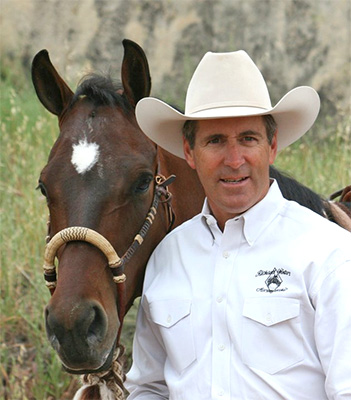
The way to turn a horse’s fear of a scary object into confidence is to let him follow it rather than forcing him toward it. Have a helper roll a big rubber ball away as you ride your horse closer—when the object appears to yield, the horse’s apprehension turns into curiosity, and before long he will reach out and touch the retreating ball with his nose. Because horses are natural followers, the same follow-the-leader game works with bicycles and even cattle, building the horse’s confidence rather than shattering it.
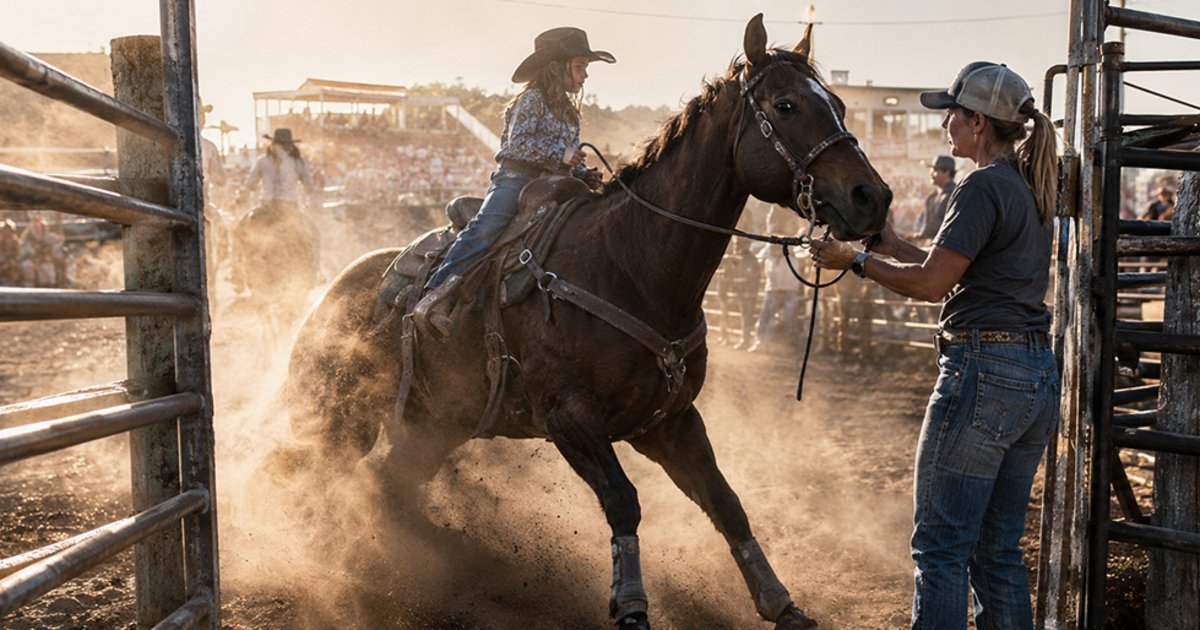
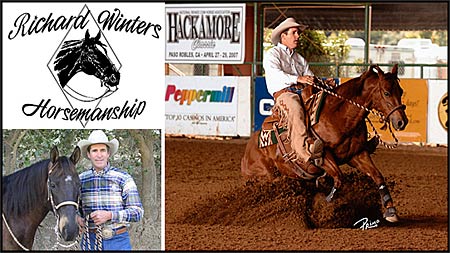
Horses are prey animals. Their number one defense mechanism is their ability to run away. When they're threatened or unsure of a situation, their instincts tell them to move their feet. With Richard Winters
Here are a couple questions that I hope to answer in this article. 1) How can you transform your horse's fear and apprehension into curiosity? 2) How can you convert that curiosity into confidence? You, as the leader, need to be able to show your horse how to follow his fear.
More often than not, horses are startled and afraid of moving objects. From your horse's perspective, that moving object is a threat that needs to be avoided. Your horse feels the need to keep his feet moving and keep a safe distance between himself and the threat. What are some threats that your horse might encounter? It could be a big rubber ball, a four-wheeler, a tractor, possibly a bicyclist or even a cow.
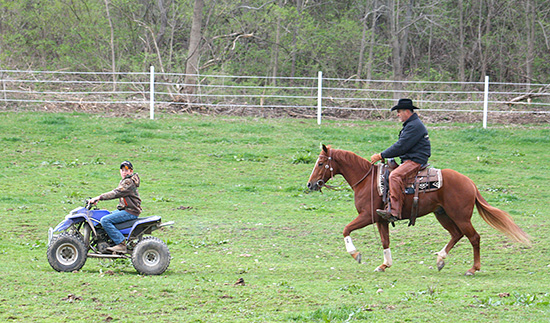
Here is a practical game you can play to help your horse gain more confidence with a scary moving object. Get a big rubber ball (Many horse enthusiasts are using these with their horses.) and have someone on the ground that can control and roll the ball across the arena. Ride your horse toward the ball while it is moving away. Let your horse begin to think that the ball is yielding away from him.
Don't try to overly force your horse up to the ball. Continue to have your assistant roll the ball away as your horse steps closer. Little by little you'll begin to narrow the distance between your horse and the ball. Now, as your horse feels less threatened you will begin to see his apprehension turn into curiosity. It won't be long before you'll be able to ride up close to the retreating ball and your horse will reach out and touch it with his nose.
This technique allows you to capitalize on your horse's curiosity rather than forcing him into a scary situation. Horses are natural followers. This game will build his confidence rather than shatter it.
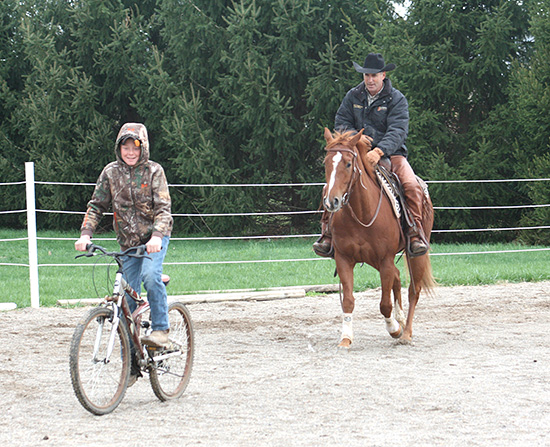
Is your horse scared of bike riders?
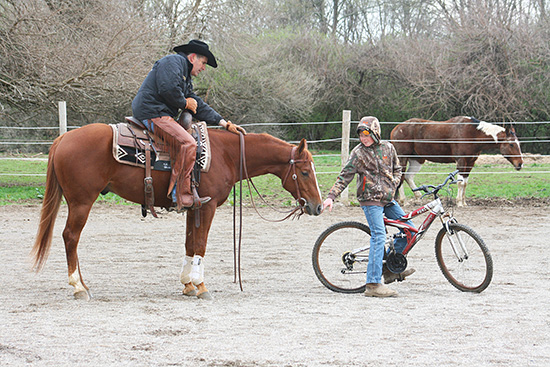
You can do the same thing. Have your volunteer cyclist pedal around in the safe open area and begin to play follow the leader. Now your horse has the opportunity to digest and comprehend this scary contraption in a positive learning environment.
This is also how all of my cow horses are introduced to cattle in the first two or three sessions. I will put one cow in the arena and allow my horse to follow it. I won't try to drive the cow in any specific direction. Rather, I will simply track right in behind the cow and follow wherever it goes. Now, this thing that my horse was afraid of is actually moving away from him. My horse is realizing that the cow is the one that is apprehensive and yielding away. Even horses that initially appear to be petrified of cattle will begin to get curious and even confident playing this game.
In each of these scenarios, it is important that you as the leader ride with focus. Look where you want to go. Push your hands forward and guide your horse one rein at a time. Don't hang and pull on the reins. You and your horse should have your attention on that "thing" you are following. There should be no whirling around in circles trying to get away. If that is happening, you have forced too much on your horse and you have not ridden with enough focus and direction.
When I play this game I imagine there is a string tied from that scary object back to my horse's nose. No whirling around allowed. My horse and I are going to look where we want to go. That's what riding with focus is all about.
It is also important to have your horse properly warmed up before starting any following games. That means you have trotted and loped your horse sufficiently to have removed the silly behaviors that a fresh horse can have hidden under the surface. Following a cow around the arena at different speeds can be emotionally charged in itself. You want to make sure that you have properly prepared your horse physically and mentally for the task at hand.
Creating scenarios where you can Follow Your Horse's Fears will help your horse be the brave partner you want him to be.
Richard Winters Horsemanship WintersRanch.com