

Teaching Your Horse the Haunches-In Maneuver
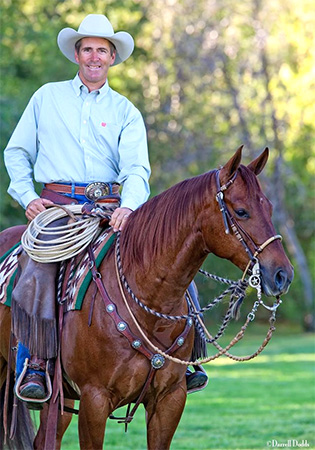
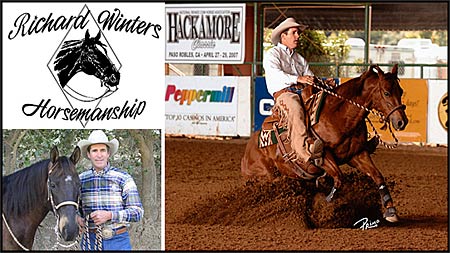
With Richard Winters Horsemanship
Haunches-in—known in dressage circles as travers—is taught by walking along the arena rail with the horse’s front feet tracking straight while the hindquarters shift away from the rail onto a separate, offset set of tracks, cued with the outside leg slightly back and against the horse’s side. The horse should bend just enough that you can barely see the corner of its inside eye, and it must first know how to soften to the bridle and yield away from leg pressure in both directions.
Reward any small correct attempt by releasing and letting the horse trot straight a few strides; the hindquarters control this exercise builds later pays off in canter departures on any lead, flying lead changes, and turn-arounds.
I was recently performing at a Horse Expo and had a fun experience. I participated in a joint presentation with a Grand Prix Level - Dressage rider. We each performed maneuvers specific to our riding disciplines. She demonstrated the passage, piaffe, half pass and canter pirouette. I performed spins, sliding stops, large fast circles and flying lead changes. We talked about some of the differences in our training styles and also emphasized the many similarities. The demonstration reminded me of a training exercise that I use that has its roots in the discipline of dressage. Dressage aficionados know this as the “haunches-in” maneuver.
The haunches-in maneuver (known in dressage circles as "travers"), is important for the western horse to properly execute canter departures, flying lead changes and even turn-arounds. Without refined hindquarters control the advanced maneuvers become problematic.
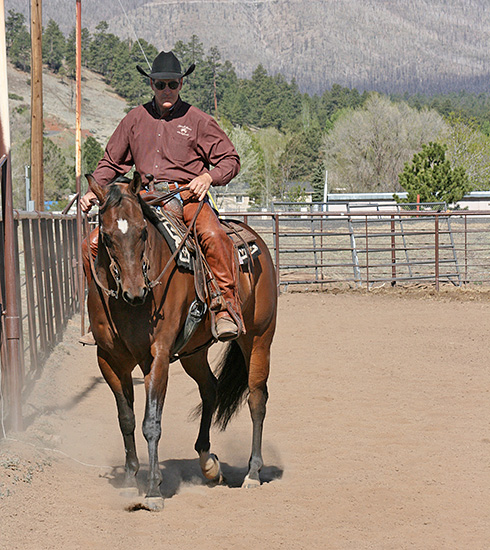
Haunches-In with front feet tracking on rail and hind feet offset to the inside.
There are two pre-requisites to performing a proper "haunches-in." First, you must have a certain degree of collection with your horse. When you pick up on the bridle reins, your horse should soften in the face, yield at the poll and give you a soft feel. Second, your horse must understand how to yield away from your leg, both to the left and to the right. With these conditioned responses in place, your horse is ready to perform the "haunches-in" maneuver.
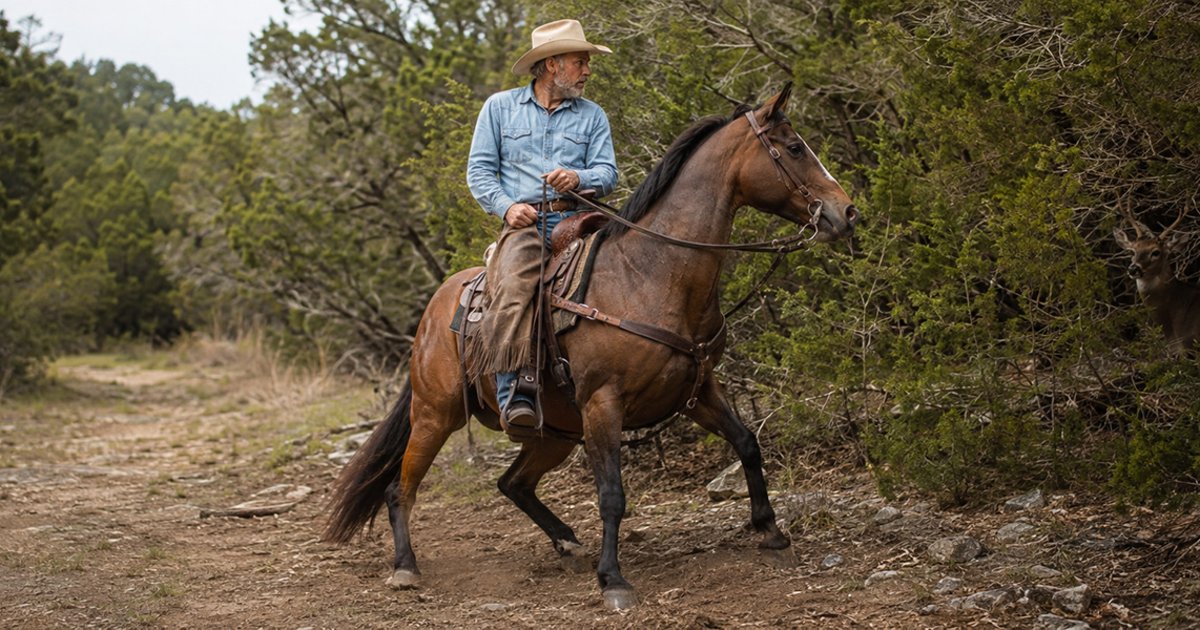
Begin this exercise by walking along the long side of an arena fence rail. The goal is to keep your horse's feet tracking straight ahead, along the rail, and the hind end shifting away from the rail making a separate set of tracks off-set from the front feet. You want to keep your horse's front end parallel to the fence rail. You need to have just enough bend in your horse so that you can see your horse's inside eye. This will be the eye closest to the center of the arena.
You will cue your horse with your outside leg, slightly back and against your horse's side. (Closest to the fence.) You will use your hands to keep your horse strait and tracking along the rail. Remember, you want to just barely be able to see the corner of your horse's inside eye. (Eye closest to the center of the arena.) If you can see the outside eye, your horse is counter bent and out of position.
This body control exercise will not be easy for your horse at first. Make sure that you don't ask for too much too soon. When your horse makes any small attempt to yield correctly, reward his effort by releasing and allowing him to trot straight for a few strides. As his understanding increases, you can ask for more strides of the "trevers." You will be establishing better shoulder control as your horse learns to separate and move his body parts independent of each other.
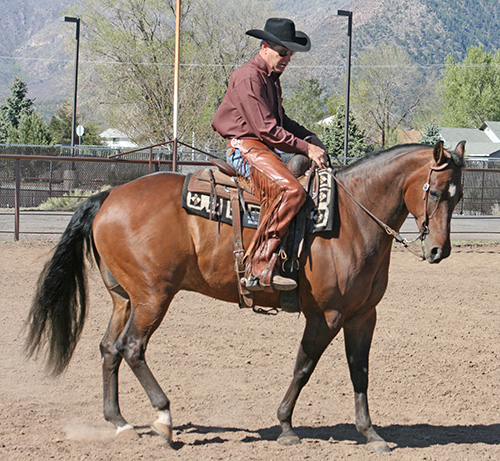
My horse is reaching forward and in with his right hind ready to canter depart on his right lead.
As your horse gains confidence with haunches-in, it will be very easy to canter depart on any lead at any time. You will not be dependant on a circle to help you pick up a particular lead. If you can keep your horse's shoulder straight and push the hindquarters to the inside, your horse is very likely to pick up the lead in that same inside direction.
Perhaps very few western performance riders use the term "haunches-in." Even fewer would ever speak of "trevers." However, all of my mentors understand the importance of this body control maneuver as it relates to advanced performance and athleticism. Haunches -in is a building block in the foundation of your training program that will pay big dividends on your horsemanship journey!
Richard Winters Horsemanship wintersranch.com