

Is Heavy-Duty Vinyl Fencing a Good Choice for Horses?
When horse owners start looking for pasture or paddock fencing, they usually have several priorities at once. The fence needs to be easy for horses to see, strong enough for an equine environment, attractive around the property, and practical to maintain for years to come.
For many farms, ranches and equestrian properties, high-quality, heavy-duty vinyl horse fencing can be an excellent option.
But there is an important distinction to make at the beginning: not every product sold as “vinyl fencing” is built to the same standard, and not every vinyl fence is designed for horses.
A lightweight residential or decorative vinyl fence should not automatically be assumed suitable for containing horses. Horse owners should look specifically for a commercial-grade vinyl ranch or horse-fencing system engineered for equine and livestock applications.
That difference matters.
Why Is Visibility So Important in Horse Fencing?
One of the first advantages horse owners notice about ranch-rail vinyl fencing is its visibility.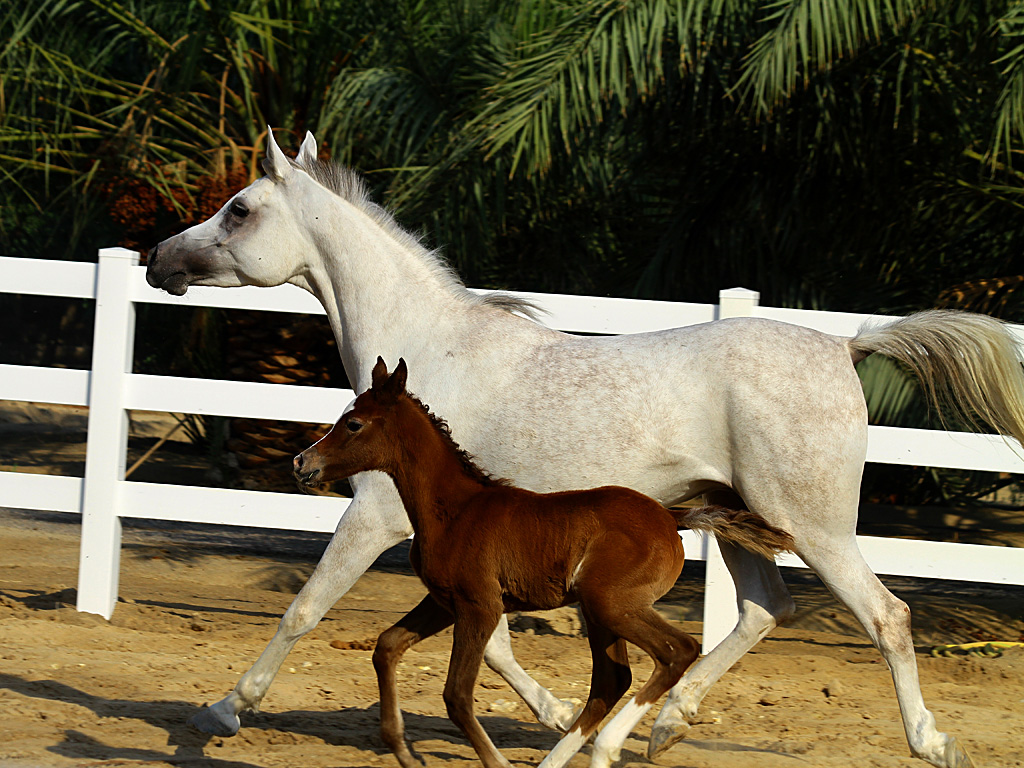
Horses are large, fast-moving flight animals. A horse that becomes excited, frightened or playful can cover ground very quickly. Thin wire and narrow fence strands can be more difficult for a running horse to recognize than substantial horizontal rails.
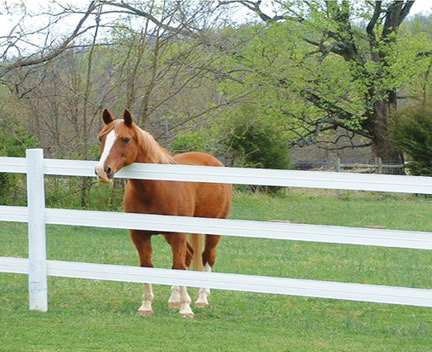
The wide rails of vinyl horse fencing create a clearly defined visual boundary around a pasture or paddock.
That doesn't mean a visible fence can prevent every accident. No fence can. But visibility is one of the basic characteristics horse owners should consider when designing an enclosure.
This is also one reason the familiar white ranch-rail fence has become so closely associated with horse farms: it provides a strong visual contrast against grass, soil and surrounding vegetation.
Why Does the Quality of Vinyl Matter?
This may be one of the most important considerations in the entire discussion.
Vinyl is not simply vinyl.
A horse owner comparing products should look beyond appearance and price and ask how the fencing itself is manufactured.
High-quality vinyl fencing may incorporate impact modifiers and ultraviolet inhibitors into its formulation. These are important because a horse fence spends its entire life exposed to sunlight, temperature changes, rain, irrigation and the normal physical demands of a working farm.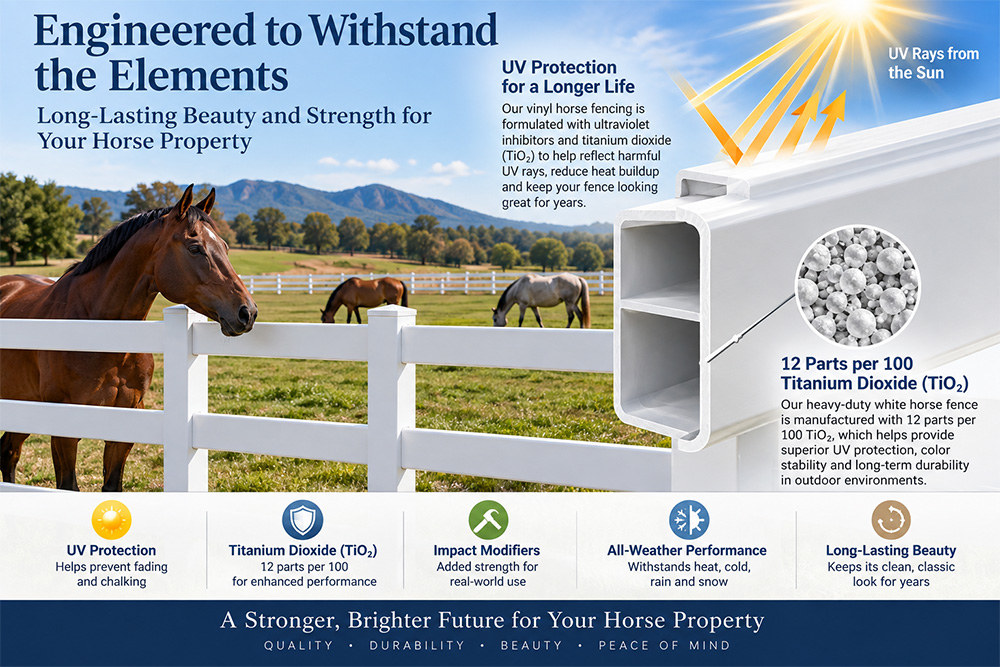
UV protection helps the material withstand prolonged exposure to sunlight, while impact modifiers contribute to the material's strength and impact resistance.
Even wall thickness by itself does not tell the entire story. The formulation of the material and the extrusion process used to manufacture the posts and rails are also important parts of producing a durable vinyl product.
This is where commercial-grade horse fencing should be distinguished from inexpensive decorative vinyl products intended primarily for residential landscaping.
What Makes Heavy-Duty Vinyl Horse Fencing Different?
A horse fence does considerably more work than an ornamental boundary around a yard.
Horses may lean against fencing. They may rub on it. They may reach toward grass on the other side. Horses in neighboring paddocks may socialize across it. A startled horse may even make contact with a fence at considerable speed.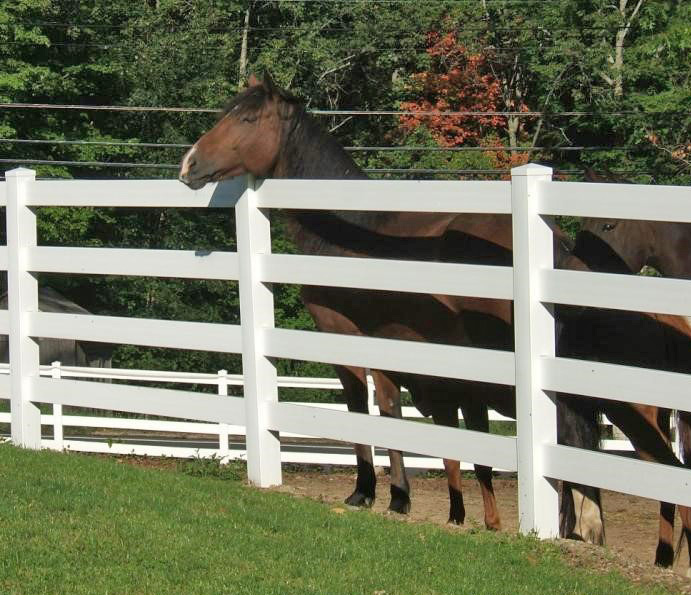
For those reasons, the construction of the rail and post system matters.
Vinyl Fence Wholesaler's heavy-duty horse-fence system uses substantial posts and double-ribbed rails designed specifically for additional strength. The rails are pre-notched and fit into pre-routed posts rather than depending upon a row of exposed brackets to create the fence line.
The result is the clean, traditional appearance horse owners expect from ranch fencing while using a system manufactured specifically for farm, ranch, horse and livestock applications.
No Splinters and No Rot
One of vinyl's biggest practical advantages becomes apparent after the fence has been standing for years.
Wood is beautiful, which is one reason traditional board fencing remains popular throughout the horse world. But wood is an organic material. Over time it can weather, split, rot, warp and develop splinters.
Damaged wooden boards can also expose nails or other fasteners.
Heavy-duty vinyl does not rot as a result of exposure to moisture and it does not splinter in the same manner as aging wood.
That can be especially valuable on horse properties with sprinklers, irrigation, wet soil, mud or humid conditions.
High-quality vinyl can still be damaged by extraordinary impact—just as virtually any fencing material can be damaged—but horse owners aren't dealing with the gradual rotting, splintering and deterioration associated with wood.
A Horse Fence That Doesn't Need Painting
Anyone who has maintained a large horse property knows what happens when a beautiful painted fence stretches hundreds or thousands of feet.
Eventually, it has to be painted again.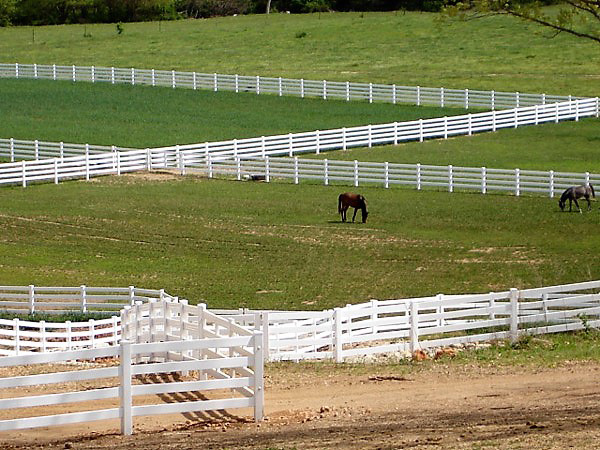
And again.
Wood fencing may require scraping, staining, sealing, painting and replacement of deteriorating boards to maintain the appearance that made the owner choose it in the first place.
Vinyl provides another option.
It does not require routine painting, staining or sealing. Periodic washing and normal fence inspection are generally the major maintenance considerations.
Multiply that difference over several paddocks—or around a large farm perimeter—and reduced maintenance becomes much more than a convenience.
It means fewer hours maintaining fences and more time available for horses and the rest of the property.
Moisture, Insects and the Realities of Farm Life
Horse fencing lives outside 365 days a year.
It encounters rain, mud, sprinklers, manure, vegetation and insects. In some parts of the country it faces intense summer sun. In others it has to live through freezing winters.
Vinyl does not provide a food source for termites and other wood-destroying insects and does not decay because the ground around the fence is damp.
That makes it particularly appealing in areas where maintaining wooden posts and rails can become a continual battle against moisture and insects.
Proper installation, drainage and routine property maintenance still matter, of course. Good fencing material cannot correct poor drainage or improper installation.
But starting with a material that does not itself rot removes one significant maintenance concern.
What About Sunlight and Hot Climates?
This is another area where quality becomes important.
Horse owners in states such as Texas, Florida, Arizona and California know how much punishment direct sunlight can give anything left outdoors year after year.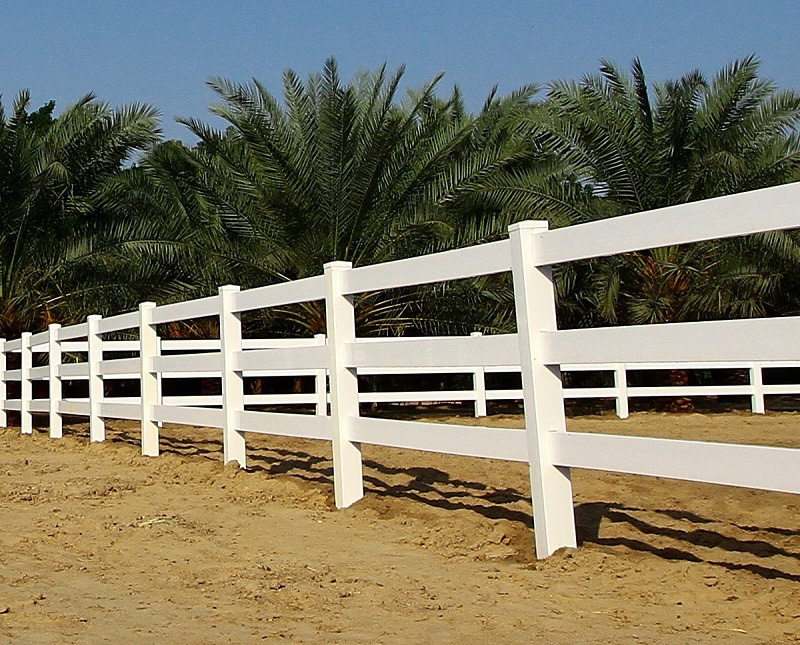
Good vinyl formulation therefore matters.
Vinyl Fence Wholesaler uses UV protection and titanium dioxide (TiO₂) in its heavy-duty vinyl formulation to help protect the material from prolonged ultraviolet exposure. Its heavy-duty white horse-fence products are manufactured with 12 parts per 100 TiO₂, according to the company's specifications.
The company's black horse fencing uses a formulation developed for temperature and color stability and is offered for climates ranging from hot southern states to northern regions.
For a horse owner investing in miles—or even hundreds of feet—of fencing, these are meaningful differences worth asking about when comparing vinyl products.
Can Vinyl Horse Fencing Look Like a Traditional Horse Farm?
Absolutely.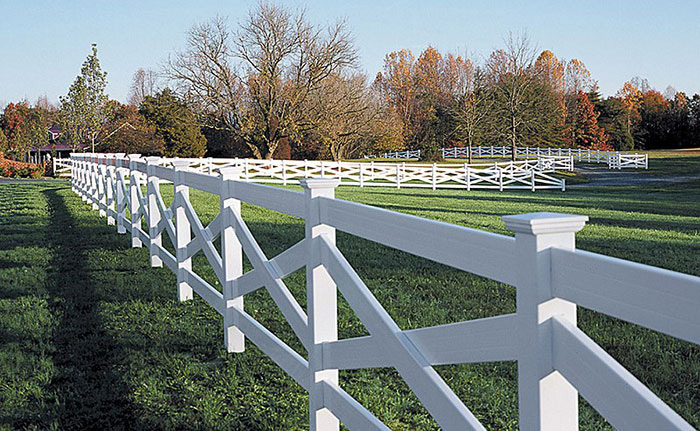
In fact, appearance is one of the reasons many people initially consider it.
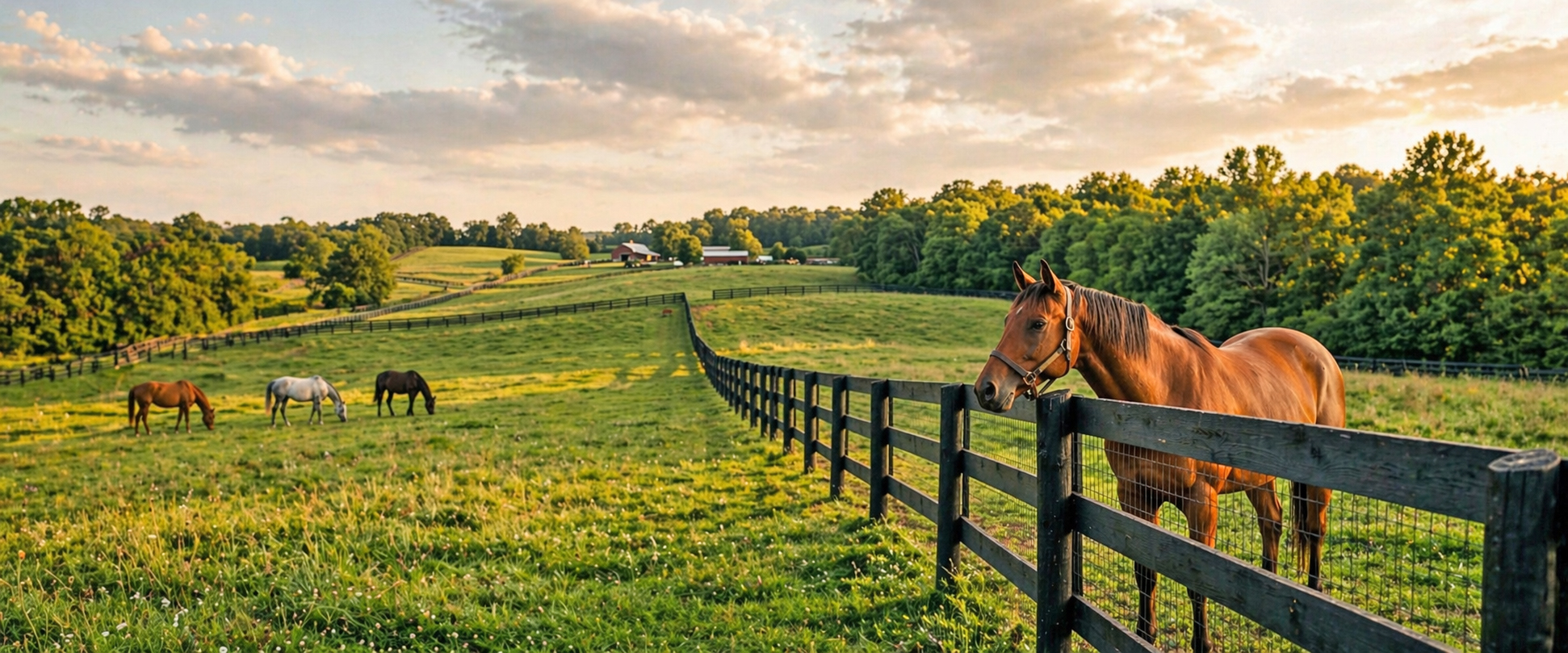
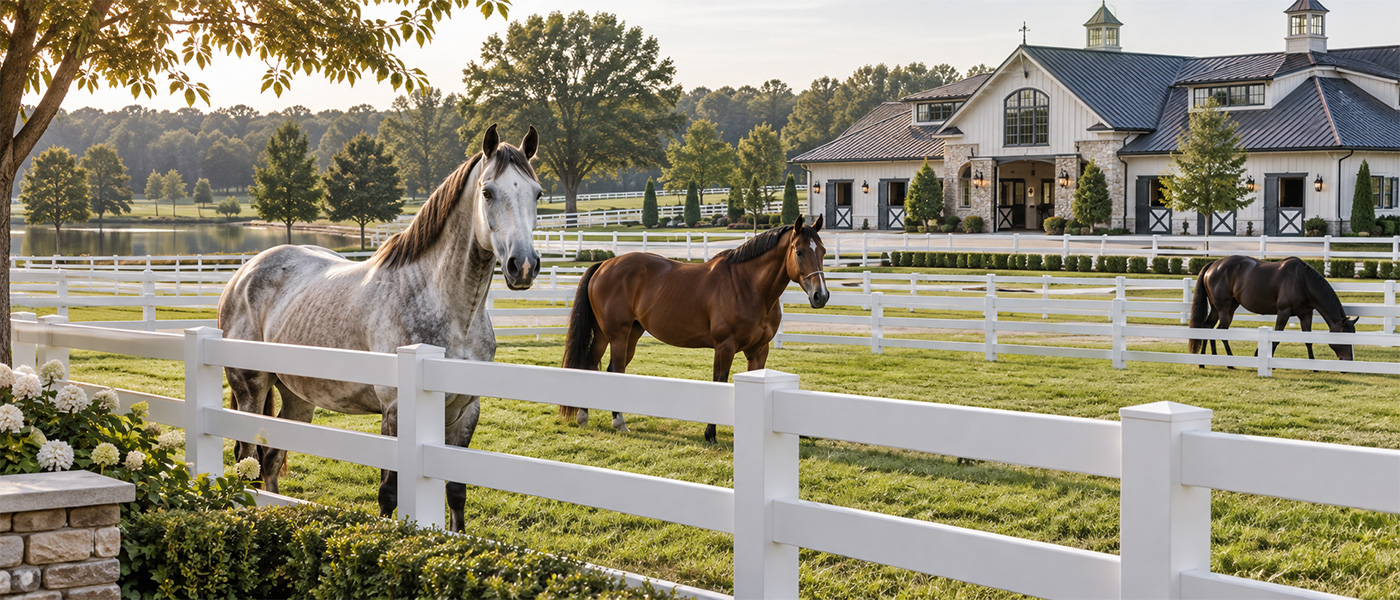
Vinyl ranch fencing provides the broad horizontal rails and open appearance traditionally associated with horse farms, breeding operations and country estates.
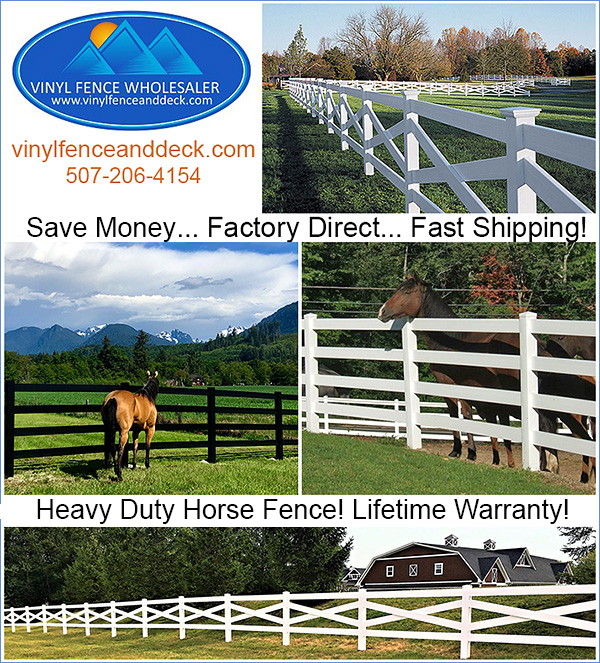
Depending on the property and fencing system, designs can include:
- Two-rail ranch fencing
- Three-rail horse fencing
- Four-rail horse fencing
- Five-rail configurations
- Crossbuck fencing
Vinyl Fence Wholesaler also offers several appearance choices within its horse-fence line, including traditional white and additional colors and styles, with availability varying by product.
For owners who love the appearance of wood, the company has also developed a mocha-walnut wood-grain style designed to provide more of a wood-like appearance without requiring the painting and staining associated with traditional lumber.
This lets fencing become part of the overall architecture of the farm instead of simply a means of containment.
Where Can Vinyl Horse Fencing Be Used?
Heavy-duty ranch-style vinyl fencing can serve several purposes around an equestrian property.
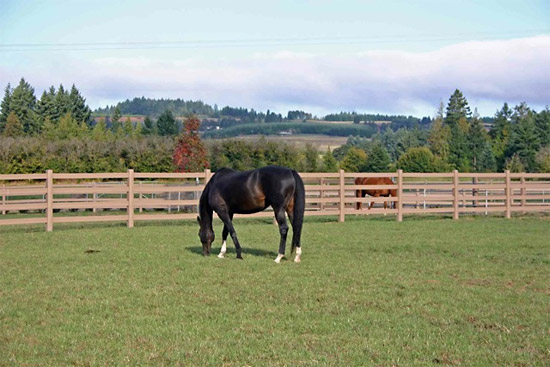
It may be used around pastures and paddocks, along property boundaries, around riding areas, beside driveways and entrances, and to separate different areas of a farm.
It can also be particularly attractive around highly visible portions of an equestrian facility—including barn approaches, entrance drives and show or training properties—where appearance is important.
Thoughtful fence planning can help control horse and vehicle movement, separate groups of horses, protect landscaping and establish clearly defined areas throughout the property.
Don't Forget About Gates
Horse owners sometimes spend weeks comparing fencing and only later begin thinking seriously about gates.
The gate deserves just as much attention as the fence.
A good horse-fencing plan should consider gate width, gate-post strength, hardware, vehicle and tractor access, how horses will enter and leave the enclosure, and whether several horses may congregate around the gate.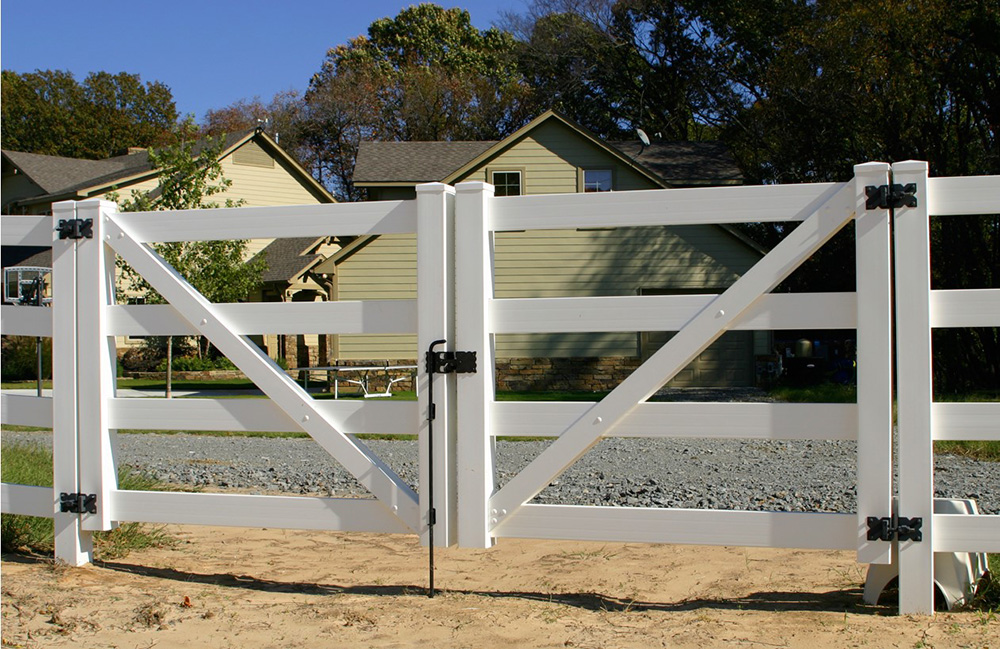
Vinyl Fence Wholesaler offers matching walk gates as well as larger drive gates for its horse-fencing systems.
The company's installation specifications call for concrete at gate posts, where the additional structural support is needed.
Planning gates correctly at the beginning can make daily feeding, turnout, mowing, manure removal, hay delivery and emergency access considerably easier later.
What About Horses That Lean or Reach Over the Fence?
Some horses seem convinced that the most desirable blade of grass on the entire farm is the one growing six inches beyond the fence.
Repeated leaning, rubbing and reaching can be hard on virtually any fencing material.
Depending on the horses and property, an owner may choose to install an appropriately positioned electric strand inside a vinyl fence to discourage horses from leaning, rubbing or reaching across the rails.
The objective isn't necessarily to make the electric strand the primary visual fence. The substantial vinyl rails remain the obvious physical boundary while the electric component can help teach horses to respect it.
Any electric fencing used around horses should, of course, be properly designed and installed for equine use.
Rail Spacing Should Fit the Horses
There is no single fence layout that is ideal for every horse property.
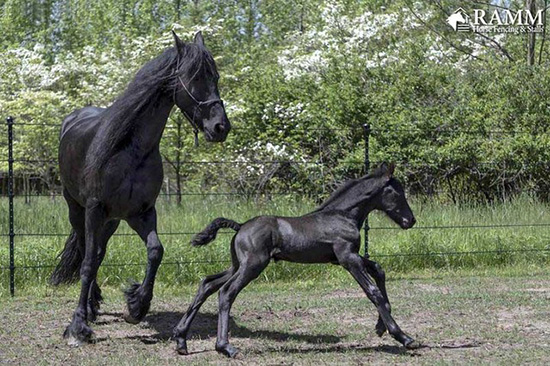
Miniature horses, ponies, large Warmbloods, broodmares and foals don't necessarily create identical fencing requirements.
Horse owners should consider fence height, rail spacing and the size and behavior of the horses using each enclosure.
The goal is to create an easily recognized boundary while reducing opportunities for a horse to place its head or legs where they don't belong.
Vinyl Fence Wholesaler can provide different rail configurations and can accommodate custom spacing for projects requiring something beyond a standard layout.
That ability can be particularly useful when designing a property around a specific type or population of horses.
The Long-Term Cost Deserves Consideration
Horse owners naturally compare the initial cost of fencing, but purchase price is only one part of what a fence eventually costs.
Maintenance has a cost.
Paint has a cost.
Replacement boards have a cost.
Labor has a cost.
And the owner's time has value.
A well-made vinyl horse fence may represent a larger initial investment than some fencing choices, but it should be evaluated over its expected service life rather than solely by the price of the first installation.
Reduced painting, staining and replacement work can become significant on larger properties.
Vinyl Fence Wholesaler also sells factory-direct, allowing horse owners and commercial operations to purchase directly from the supplier rather than adding another layer of distribution.
Can Horse Owners Install Vinyl Fencing Themselves?
For capable property owners, one attraction of this type of system is that installation can be relatively straightforward.
Vinyl Fence Wholesaler's posts arrive pre-routed for their positions in the fence layout, while its double-ribbed rails are pre-notched to slide into the posts and lock in place.
Standard heavy-duty line posts generally do not require concrete under the company's installation system; gate posts are an exception and require concrete for additional support.
Owners can install the fencing themselves or use a local fencing contractor.
For a large farm project, having manufacturer assistance available during planning and installation can be particularly helpful. Vinyl Fence Wholesaler provides installation support and can work with the property owner or installer during the project.
Every Horse Fence Still Deserves Inspection
No matter which fencing material you choose, walk your fence lines.
This isn't a weakness of vinyl fencing. It is simply good horsemanship and good farm management.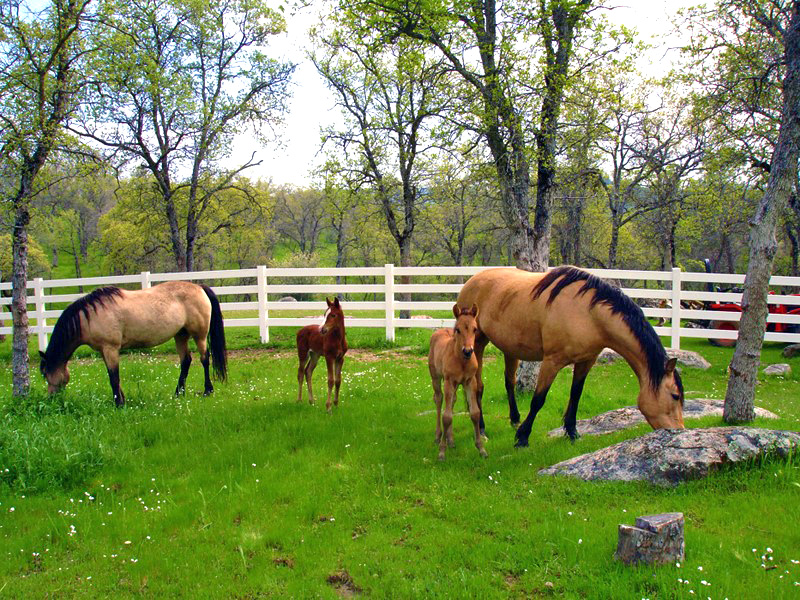
Horses can damage virtually anything. Storms drop limbs. Tractors bump posts. Gates loosen. Soil erodes. Vegetation grows into fences.
Regularly check:
- Rails and posts
- Gates and latches
- Areas where horses have been rubbing or leaning
- Fence lines near trees
- Ground erosion or washouts
- Damage from equipment
- Any broken or displaced component
- Vegetation or debris that could create a hazard
Finding a small problem early is almost always easier than finding it after a horse has discovered it.
What Should You Ask Before Buying Vinyl Horse Fencing?
Perhaps the best question isn't simply, “Should I buy vinyl?”
A better question is:
“What kind of vinyl am I buying?”
Ask whether the product is actually manufactured for horse and livestock applications. Ask about the posts and rails. Ask about UV protection and impact modifiers. Ask how the rails connect to the posts. Ask about available heights and rail spacing. Ask about installation support. Ask about the warranty.
And compare commercial-grade horse fencing to commercial-grade horse fencing—not to inexpensive decorative vinyl intended for a suburban yard.
Those differences can be much more important than they appear in a photograph.
About Vinyl Fence Wholesaler
Vinyl Fence Wholesaler has been supplying vinyl fencing online since 1995 and offers heavy-duty commercial-grade horse, farm and ranch fencing shipped directly to projects across the United States.
Its heavy-duty horse-fencing line includes multiple ranch-rail configurations as well as Crossbuck and other styles. The company's system features heavy-duty posts, double-ribbed pre-notched rails and pre-routed posts designed for straightforward installation.
Its horse fencing is manufactured in the USA and is backed by the company's transferable lifetime warranty.
For horse owners with large properties, the company also offers factory-direct purchasing, volume opportunities and project assistance.
Most importantly, Vinyl Fence Wholesaler doesn't simply sell decorative vinyl and suggest horse owners use it around livestock. Its heavy-duty ranch-fence products are specifically marketed and manufactured for horse, farm, ranch and livestock applications.
For horse owners who love the clean appearance of traditional ranch fencing but would rather spend their weekends riding than scraping and repainting fence boards, high-quality heavy-duty vinyl deserves a serious look.
 Vinyl Fence Wholesaler
Heavy-Duty Vinyl Horse, Farm & Ranch Fencing
Made in USA
Phone: 507-206-4154
Nationwide Shipping
Factory-Direct Purchasing
Transferable Lifetime Warranty
www.vinylfenceanddeck.com