

How To Build A Safe Fence For Your Horses
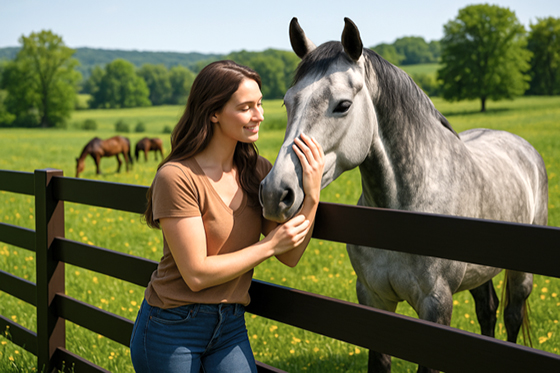
A safe horse fence is strong enough to contain a horse under normal circumstances yet has some flexibility or give to minimize the risk of injury if a horse collides with it or delivers a powerful kick. Quality fencing also shields the owner from legal and financial liability if a horse escapes, and it heads off vet bills that can run from $1500 for an uncomplicated laceration to upwards of $20,000 to remove a splintered board from a muscle.
Low-maintenance HDPE fencing like Tangent’s—colorfast, uninviting to wood-chewing horses, and built not to rot, warp or attract insects—was recommended to Stanford University by a leading equine design and consulting company as the safest fencing option available for horses.
Safe horse fencing is one of the most important investments a horse owner can make. Article from Tangent Sustainable Lumber
A proper fence must be strong enough to contain a horse under normal circumstances, but it should also have some flexibility or “give” to minimize the risk of injury if a horse collides with it or delivers a powerful kick. Horses are large, energetic animals, and an unsafe or poorly designed fence can quickly become a serious hazard. Beyond protecting the horse, safe fencing also protects the horse owner from liability.
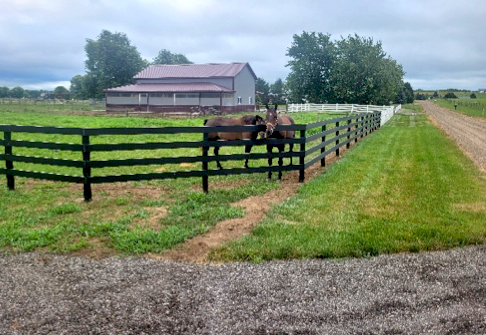
If a horse escapes due to inadequate fencing and causes damage to property, injury to another person, or even a traffic accident, the owner can be held legally and financially responsible. This makes secure, reliable fencing not only a matter of animal welfare but also of legal responsibility. Ultimately, maintaining a safe fence is the direct responsibility of every horse
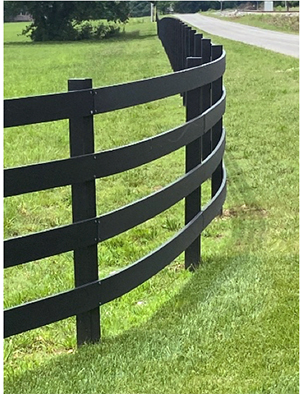
owner. It demonstrates respect for the animal’s safety, consideration for neighbors and the public, and commitment to responsible horse ownership.
Investing in strong, well-designed fencing offers peace of mind, knowing that horses are safe within their environment and that risks to both horse and community are significantly reduced.
Horse owners have always been diligent when it comes to caring for their horses, and looking for ways to do that in the most ‘cost effective’ manner. But, in this day and age, when costs of care, property, hay, veterinary bills etc, are constantly increasing, that becomes harder to do. So, when the time comes for an upgrade to their property, generally there is a desire to find the "cost-effective" solution that will fix the problem. But, is cost-effective today really the true solution? The long term cost may outweigh the cost-effectiveness of the immediate future.
A lot of times, our time spent doing a project on your horse property does not get calculated into the actual cost of a project. We consider it just part of the lifestyle. But, in hindsight, what is not considered is what could be getting done during that time. The colt that needs exercised? The baler that needs repaired before hay is ready to cut? The brakes that need changed on the farm truck? There is a long list of “to-do’s” on the farm that can be accomplished instead of fixing fence!
But, time is not the only contributing factor, have you considered the financial cost of an injury to your favorite horse or livestock? Whether it is a splintered wooden rail or an uncapped T -post, it can be a costly or even deadly consequence. This makes it even more important to stay on top of fence repairs. Choosing a quality fence to place on your property or replace your current deteriorating fence can save you thousands in vet bills. An uncomplicated laceration repair at your local vet hospital can cost you $1500, but having to remove a splintered board from a muscle? That can be upwards of $20,000.
Important factors to consider in a quality fence:
- Upkeep and Maintenance
Think long term on your next fencing project and choose a quality, long-lasting fence like Tangent Fencing. When you choose Tangent, you are not only saving quality time, you are saving the planet by choosing a sustainably made product. HDPE Fencing at Tangent Fencing offers horse owners a safe, reliable, and virtually maintenance-free solution that far outperforms traditional fencing materials.
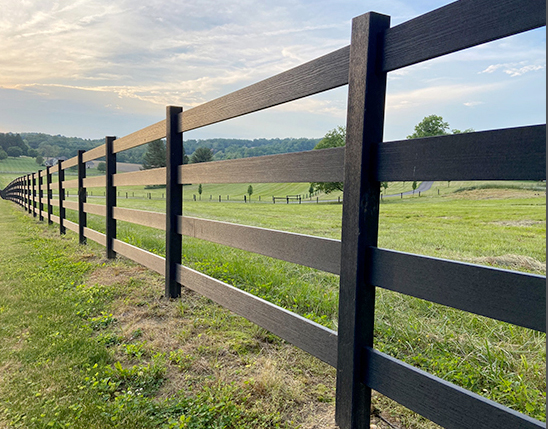
Because the color is built into the product, Tangent’s HDPE is completely colorfast, meaning it will never fade, peel, or require painting—unlike wood or metal fences that demand ongoing upkeep. Unlike PVC, it does not become brittle with age or in cold weather, making it a durable option year-round. Horses also have no interest in chewing it, unlike wood fences, which can quickly become damaged and hazardous.
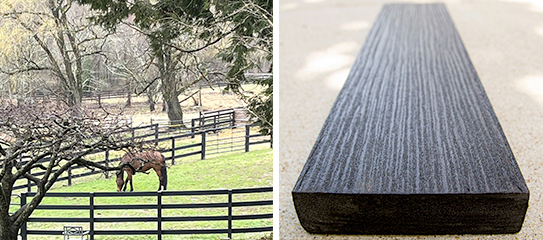
In addition, Tangent’s HDPE fencing will not rot, warp, or attract insects, ensuring a long-lasting investment that remains both attractive and functional. Its safety record is one of its greatest advantages: a leading equine design and consulting company recommended HDPE fencing to Stanford University as the safest fencing option available for horses. For strength, safety, and beauty without constant maintenance, Tangent’s HDPE Fencing is the clear choice.

Contact us today at 1-800-721-9037 or visit us online at tangentfencing.com