

Welcome to the World – Gentle Horse Birthing and Non-Invasive Imprinting.
Gentle horse birthing starts long before foaling: earn the mare’s trust so she welcomes you at the birth, and learn what normal labor looks like—in a normal presentation one front foot appears slightly ahead of the other, soles down, and birth usually occurs about twenty to thirty minutes after the water breaks. Non-invasive imprinting then means towel-drying and loving the newborn foal alongside its mother rather than taking it away for extreme desensitizing exercises, and giving the foal up to two hours to find the udder on its own.
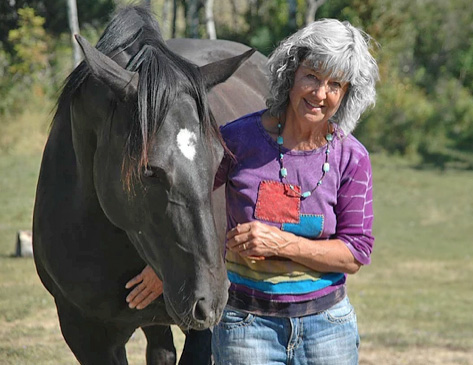
By Liz Mitten RyanDe-sensitization and imprinting are found in every horse trainer’s tool box.
Their importance to our efficient handling of horses is invaluable. From a human perspective our interaction with horses, from handling to riding is safer and less stressful. Its value to a trusting partnership though is dependent on how sensitive and considerate we are to the horse. Is our horse enjoying the relationship more as a result, or are they simply dead to the stimulus?
My journey with horses has been an adventure of discovery. I am always looking to refine and enhance the connection and communication. As a warmblood breeder I have birthed and raised dozens of foals. I remember reading all I could get my hands on, and specifically when Dr. Robert Miller published his findings on imprinting to the snickers of the ‘old boys’ club. His practices are now embraced by Natural Horsemanship greats like Pat Parelli and adhered to religiously by most breeders.
I have been a breeder now for twenty years and have developed, through the process a more holistic and rewarding approach, similar to how we welcome humans into the world. There are several important ideas involved:
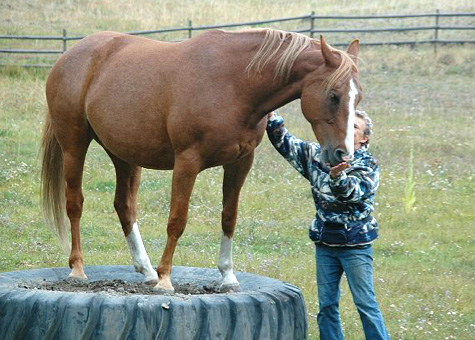
Become A Trusted AND Considerate Friend TO Your Mare.
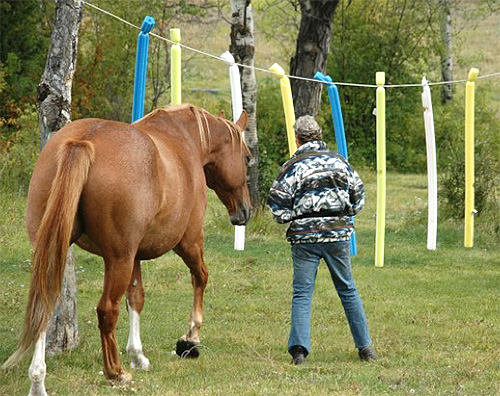
In order for my mare to welcome me at the birth, she must first consider me a friend to be trusted with her well-being. This is a lifelong process, but a simple lead in is to genuinely consider her; to be kind and generous as we would be to a human friend. One of the best ways to a mare’s heart is through her stomach and making a fuss over her condition by preparing wholesome healthy meals and snacks. This will have her nickering the minute she sees you. Grooming, scratching and forays to find choice patches of succulent grass are also great bonding exercises.
All of this will be time well spent as she will transfer her feelings about you to the new foal. Animals learn by example, and the foal will watch his mother closely to see how she responds to her human caregiver.
Learn ALL YOU CAN About Foaling SO YOU CAN Make Wise Safety Decisions.
There are many good books available on the care of the mare and foal throughout the birthing period. Study them and get up to speed on when ‘all is normal’ and when to call a vet. Many breeders tell the sad story of finding their mare and foal dead in the morning – not a very pretty situation. Others, not knowing what to watch for, leave a mare laboring for hours in agony and possibly lose her and the foal. Horses birth quickly and efficiently unless there is a misalignment, and it is important to know what to watch for.
Help Make Your Mare’S Birthing Experience Wonderful.
In keeping with the relationship you have fostered with your mare, be there when she is birthing and help make it easier for her. Because my mare knows her well-being is everything to me, she welcomes me at the birth. When the water breaks and the sack appears, I immediately check the position of the foal. In a normal birth one foot is presented slightly ahead of the other, soles down.
If it is any other way, make an emergency call to your vet! Holding the foal’s front pasterns and pulling with the mare’s contractions will help her labor proceed more easily, and when the nose appears, break the sack so the baby can breathe. If all goes smoothly birth usually occurs about twenty to thirty minutes after the water breaks.
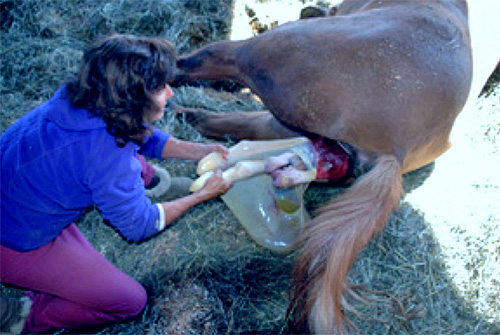
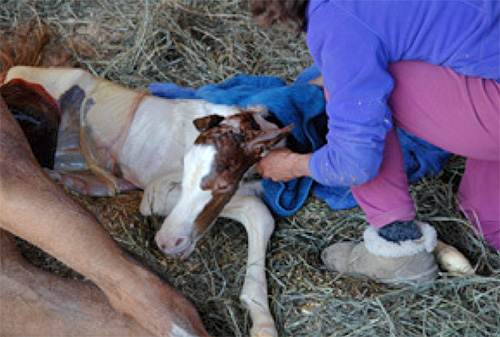
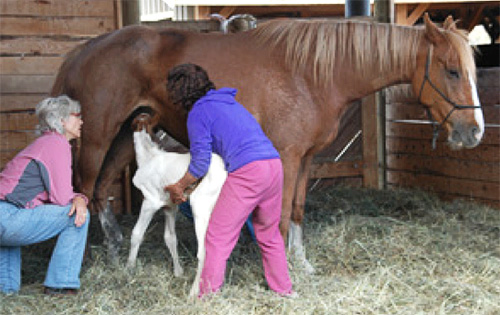
In my barn the foal is towel dried and loved, between my kissing and congratulating the mare until it breaks the umbilical cord. I then help it to get close to the still recovering mom so she can lick all the places I have just dried, and the two of us alternate in one big welcome fest. The mare then rises and I clip her placenta back up to itself so she won’t step on the trailing end and tear it (squeeze clamps from the hardware store work well).
It is the weight of the placenta that helps it separate cleanly from the uterine wall without leaving bits that can cause serious infection. All the while the baby is attempting to stand and when he succeeds, will then begin his search for his mother’s udder. It is better to give him time (up to two hours) to find it on his own and most mares will try to help by getting in position and pushing the foal in the right direction.
My lead mare L.E. is a master at this, curving her body around the foal and pushing his hind end with her nose.
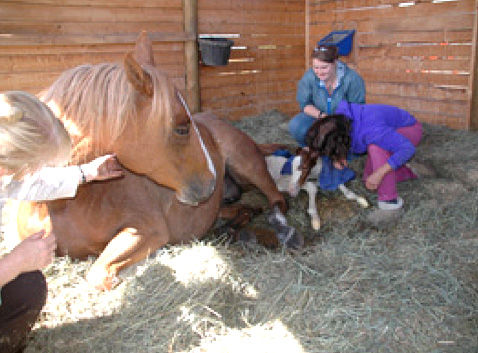
That was one thing Epona and I agreed upon –our baby would live! When Paschar was born three weeks early, he was literally fighting for his life and even after my gentle welcome, a day later he tried to rear and run at me. I understood his concern. Humans had tried to end his life and he had to fight for it. Patiently I talked to him and told him he was my angel (Paschar is the Angel of Vision) and as I talked and stroked him, his eye would soften and he would relax.
Days became weeks and I would remind him who he was and how loved he was and each time his eye grew softer. By the time he was two months old he was the most gregarious, loving and affectionate foal who particularly loved being buried under hugging children.
At three months old he followed at liberty, backed, moved his hind end and shoulder, picked up his feet, trailer loaded (all at liberty) and ran happily behind in a game I call ‘Stick (to me)’. He was fully imprinted and de-sensitized while fully alive and filled with Joy.
By two years old, he understood my every word and was so self-assured that he followed me down to our playground several hundred yards from the paddock where his family was grazing, got up on tires, ran across bridges, walked ,trotted, and Whoaed all by voice and body language, all without halters, ropes or sticks. Paschar is a super horse. Why? He was born gently, loved, treated with patience and consideration and knows that his well –being is my first concern.