

Emergency Horse Evacuation Plan: How to Protect Your Horses in Disasters
When disaster strikes, every second matters, especially for horse owners! Article from Robert SM Pruitt - InfoHorse.com
The golden rule for evacuating horses in a disaster is to leave early—if a hurricane is forecast, plan to evacuate at least 48 hours before landfall, before panic sets in. Keep your trailer ready and your truck fueled at all times, practice loading until it’s routine, and store at least three days of hay and grain in waterproof containers along with filled 50-gallon water barrels, since one horse can drink 10 or more gallons a day. Line up safe destinations in advance—a trusted neighbor’s property, a boarding barn, fairgrounds or an equestrian center—and always call ahead to confirm space.
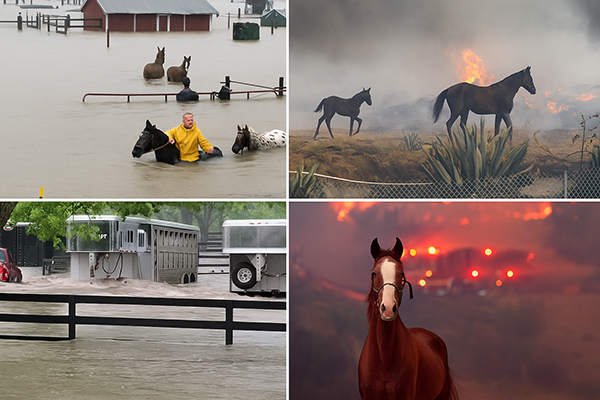
Fires, floods, hurricanes, and other natural disasters happen every year, and without a clear plan, the results can be devastating. Horses are large, sensitive animals who quickly pick up on your stress and fear, making them harder to handle when the pressure is on. That’s why having a Horse Emergency Plan and practicing it in advance is the best way to protect both your animals and your family.
This guide will help you create a step-by-step Horse Disaster Preparedness Plan that covers evacuation, supplies, identification, first aid, and safe housing. With preparation, you can leave panic behind and act with confidence when it’s time to go.
Why Every Horse Owner Needs a Disaster Plan
Waiting until the flames are at your barn door or the floodwaters are rising is too late. A Horse Evacuation Plan reduces fear, prevents injuries, and ensures you know exactly what to do. Horses may refuse to leave stalls, panic at loading, or become dangerous to handle under stress. Practicing now can save precious time and lives later.
When to Evacuate Horses
The golden rule: leave early. If a hurricane is forecast, plan to evacuate at least 48 hours before landfall. Never risk being caught on the road with horses when a firestorm or storm surge arrives - your trailer and truck cannot outrun a disaster.
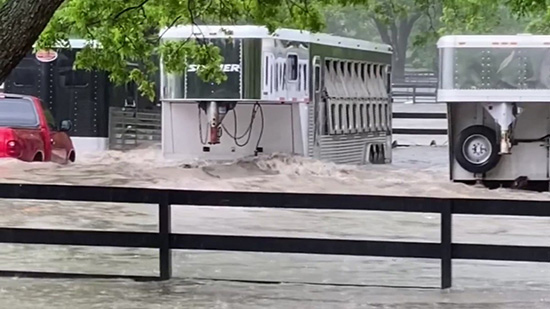
Key reminders: Make the decision to go before panic sets in. Sooner rather than later.
Keep your trailer ready and your truck fueled and ready at all times.
If you don’t own a trailer, line up at least two trusted friends with trailers in advance.
Preparing Food, Water & Supplies In a disaster, feed stores and power may not be available for days. Horses can colic when their diet changes suddenly, so always keep at least three days of hay and grain in waterproof containers.
Hay & Grain: Store in plastic bins or trash cans with tight lids.
Water: Have 50-gallon barrels filled and ready — one horse can drink 10+ gallons a day.
Emergency Kits: Pack buckets, halters, ropes, and any special medications your horse may need.
Emergency Horse Evacuation Plan: How to Protect Your Horses in Disasters
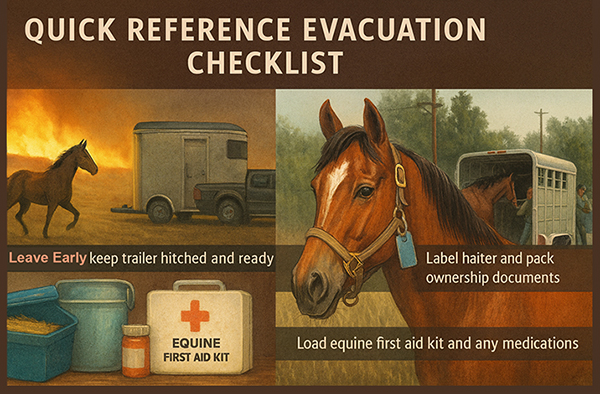
Fire Safety for Horses & Barns Among all natural disasters, fire is the greatest threat to horses. Barns and corrals can ignite quickly, leaving little time to react.

Reduce risks by: - Keeping a fully charged fire extinguisher in the barn and near the tack room.
- Clearing dry brush, hay debris, and weeds away from barn structures.
- Storing hay bales in a separate building when possible.
Tip: Practice leading your horses from the barn calmly as they may resist in a smoke-filled environment if they’ve never done it before.
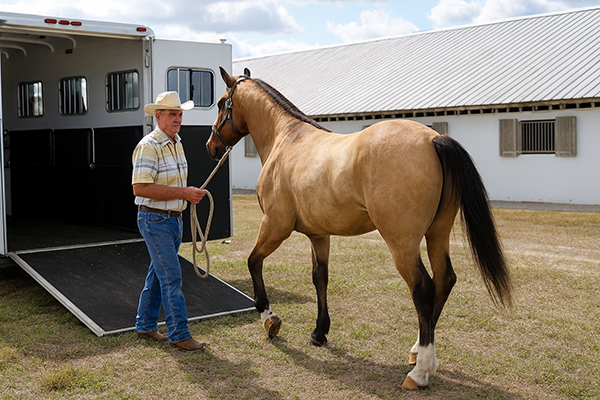
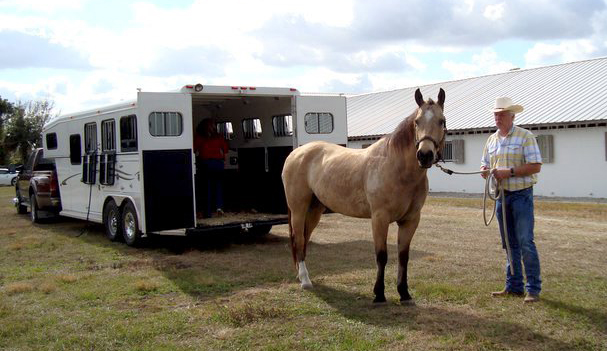
Trailer Loading & Evacuation Practice Your trailer may be your horse’s lifeline. A horse that refuses to load under pressure puts everyone in danger. Practice regularly so trailer loading becomes routine, not a fight.
- Store fuel, hay, and chemicals in separate, well-ventilated buildings.
- Work with your horse until he loads easily and quietly.
- Keep your trailer in good repair and fuel your truck often.
- Consider carrying portable horse panels or a travel corral to set up safe stabling if you must stay on the road overnight.
- If you don’t own a trailer, arrange help from neighbors or friends now; not during the emergency.
Safe Places to Take Your Horses
Where will your horses go once you’re on the road? Don’t wait to figure it out. Build a network in advance:
- Local Options: A trusted neighbor’s property, a boarding barn, or a rental stable.
- Regional Options: Horse show grounds, fairgrounds, or equestrian centers often open stalls during crises - but you must call ahead to confirm space.
- Travel Routes: Plan and drive multiple evacuation routes to your destination before disaster strikes. Reminder: Always phone ahead to let facilities know you’re coming and what route you’ll take.
Horse Identification During Emergencies
In chaotic evacuations, horses can get separated. Having multiple forms of identification ensures they can be returned to you. Breakaway halter with your name, phone, and an emergency contact written in permanent marker.
-Braided tail or mane ribbon with your contact info as backup ID.
Proof of ownership: Current Coggins, microchip ID, description of markings, photos of you with your horse, and your veterinarian’s info all stored in a waterproof bag. Never attach a horse’s Coggins test directly to the animal as it can be misused by thieves.
Building a Complete Equine First Aid Kit Every horse owner should keep a fully stocked Equine First Aid Kit ready to load in the trailer. Start with a sturdy plastic bucket or bin with lid, then add: - Stethoscope for checking heart rate and gut sounds (know your horse’s normal before hand).
- Digital rectal thermometer with string attached.
- Diluted iodine solution (Betadine) – for cleaning wounds.
- Saline solution
to rinse eyes and flush wounds.
- Antibiotic ointments (Neosporin, Nolvasan).
- Sterile gauze
pads, rolls, and Vet-Rap.
- Bandage scissors & tweezers.
- Topical eye ointment (non-steroidal).
- Instant cold packs.
- Electrolytes
for dehydration risk.
- Gloves, duct tape, diapers (for bleeding), lubricant, twitch, hoof pick, EasyBoot, flashlight, knife, wire cutters.
- Keep extra doses of any medications
your horse is currently prescribed.
Horse Owners should have a seperate First Aid Kit for Humans - available through Amazon etc.

Returning Home After a Disaster Once authorities allow you to return, safety comes first. Walk your property carefully before releasing horses. Check for: - Downed fences or power lines.
- Sharp objects or debris.
- Contaminated water sources.
Do not rely on automatic waterers immediately, power outages can make them unsafe. If you must leave horses behind temporarily, supply 48–72 hours of hay and water in secure containers.
Preparing Your Horse Property for Emergencies A good plan also includes making your property disaster-ready:
- Clear fire breaks and maintain defensible space around barns.
Post emergency contacts and your evacuation plan in a visible place.
Work with neighbors, local humane societies, and emergency management agencies to coordinate larger evacuation efforts. A community plan is always stronger than a single plan.
Final Word: Don’t Wait to Prepare Your horse depends on you for survival. By creating and practicing your Horse Emergency Evacuation Plan, you remove fear, save time, and protect the lives that matter most. Share your plan with your family, neighbors, and horse friends and encourage them to prepare too.
Remember: The key to survival is simple - leave early, stay safe, and be ready. Article by Robert Pruitt CEO InfoHorse.com