Per Richard Winters: most bridling problems trace to handlers who never taught the horse to accept fingers in the mouth.
Use a soft lead rope first—non-threatening, won't bang teeth, builds trust.
Hold the bit open in the palm with the chinstrap controlled by your little finger.
Smoothness installs over time; rushing creates the resistance owners then have to fix.
Older horses with bad bridling experiences need patient retraining, not force.
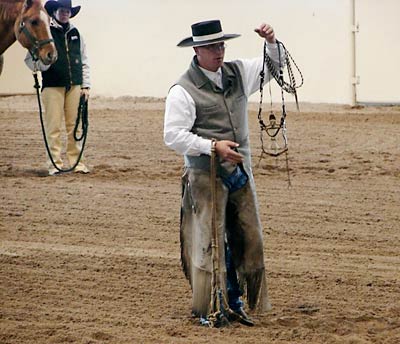
Horse Bridling Problems With Richard Winters Here is a question for you: Is it because of you or in spite of you that most horses are relatively compliant with the bridling process?
Most bridling problems are caused by the handler—rough, crude techniques leave a horse dreading the bit. To help a resistant horse, teach him to accept your fingers along his gum line, prepare him for the bit’s hard metallic sensation with a soft lead rope in his mouth, and keep your palm cupped under his chin so he learns your hand stays with him wherever he goes. Pain from a cut inside the mouth or a bad tooth can also cause resistance, and how politely you remove the bit after a ride often determines how well he accepts the bridle next time.
Needless to say, there are some horses that do object strongly to this procedure. Perhaps it is a young horse that has no idea as to what you're about to do with that pile of leather and metal. Or, it may be an older horse that has had a series of bad experiences with handlers who were less than polite and smooth with the bridling process. Regardless of the problems origin, here are a few tips that can help a horse become more accepting of the bit and bridle.
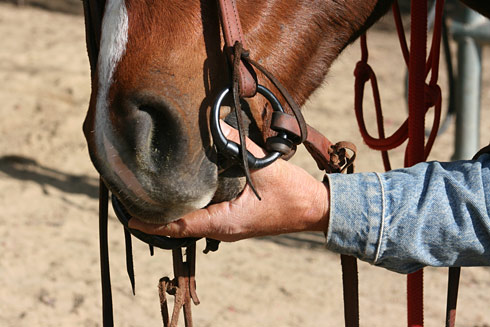
Teach your horse to accept your fingers in the corner of his mouth, encouraging him to open his jaw. If you can't put your finger along his gum line, you'll probably have difficulty placing the bit in his mouth.
Teach your horse to accept the lead rope being put into his mouth. Some horses are bothered by the hard metallic sensation of the bit touching their teeth. You can help prepare your horse for the bit by using the soft, non-threatening lead rope. The rope won't bang his teeth, so he'll develop confidence and trust in you and the procedure.
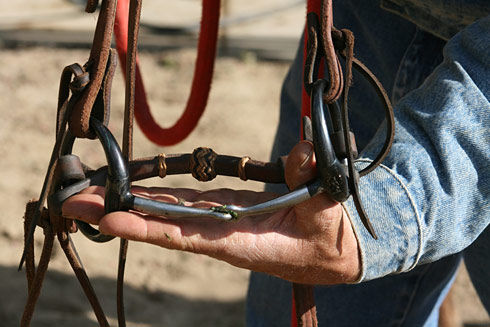
Learn how to hold the bit in your hand. You should be able to hold the bit open in the palm of your hand and keep the chinstrap out of the way with your little finger. Without holding the bit properly, you will not be prepared to smoothly place it in when your horse opens his mouth.
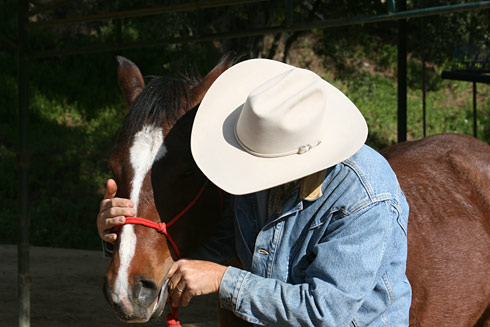
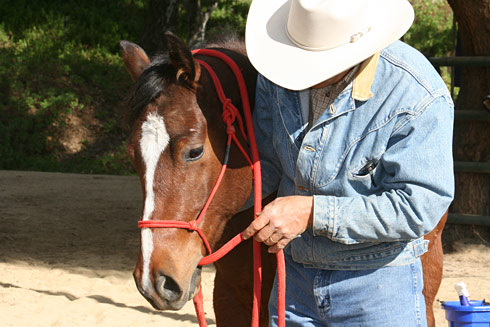
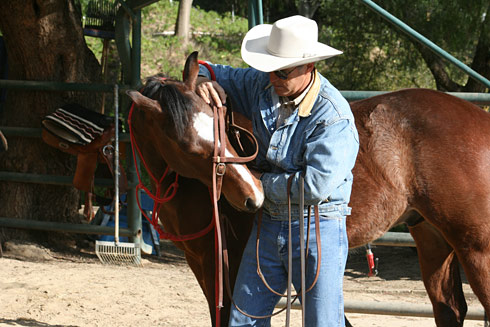
Keep the palm of your hand cupped under your horse's chin as you prepare to bridle. If your horse moves his head and your hand moves away, he'll be inclined to pull away and be evasive. You want him to believe that your hand is going to stay right there with him, no matter where he goes.
Place the bridle over the bridge of your horse's nose and bend his head back to you if he attempts to pull away. You want your horse to know that you are in control. A horse can also have bridling issues due to pain. If he has a cut on the inside of his mouth or has a bad tooth, he might be very resistant to having the bit placed in his mouth. How you remove the bit after a ride will often determine how well your horse accepts the bridle next time you attempt to put it on him. Be sure you are polite and smooth as you slip the bridle off his head. If the bit bangs your horse's teeth, or if he raises his head and gets the bit momentarily hung up in his mouth, you're liable to have trouble next time you attempt to bridle him. We as horse handlers are the cause of most bridling problems. If our techniques and movements are rough and crude, then we will leave a bad taste in his mouth (so to speak!) As with everything else, the better we present, the better they perform!
Per Richard Winters: start by teaching him to accept your fingers in the corner of his mouth, encouraging the jaw to open. Once that's reliable, use a soft lead rope between his teeth—it's non-threatening and won't bang teeth. Then progress to the bit itself.
Why is the lead rope a useful intermediate step?
Per Richard Winters: it removes the metallic sensation of the bit against teeth. Many horses object to the bit specifically because the cold metal banging gum and tooth scared them once. The rope rebuilds confidence in the procedure without the trigger.
How should I hold the bit when bridling?
Per Richard Winters: open in the palm of your hand, with the chinstrap controlled by your little finger so it doesn't tangle. The horse opens his mouth, the bit slides in cleanly, and the headstall lifts up over the ears in one smooth motion. Awkward bit-holding makes smooth bridling impossible.
What if my horse already hates being bridled?
Per Richard Winters: rebuild from the start—finger acceptance, lead rope acceptance, bit acceptance—over several sessions. Each successful bridling builds confidence; each forced bridling deepens the problem. Patience over weeks beats force in any single session.
Should I use a bitless option for problem horses?
Per Richard Winters: temporarily, yes—if it lets you keep working while the bridling issue gets addressed in parallel. Long-term, most horses benefit from learning to accept a bit calmly, and the retraining process is worth the time investment.
📋
Recommended Products
Curated picks from across InfoHorse.com — most relevant first