

Horse Trailer Buying Guide: Bumper-Pull vs Gooseneck, Sizing, Safety, and What Horse Owners Need to Know
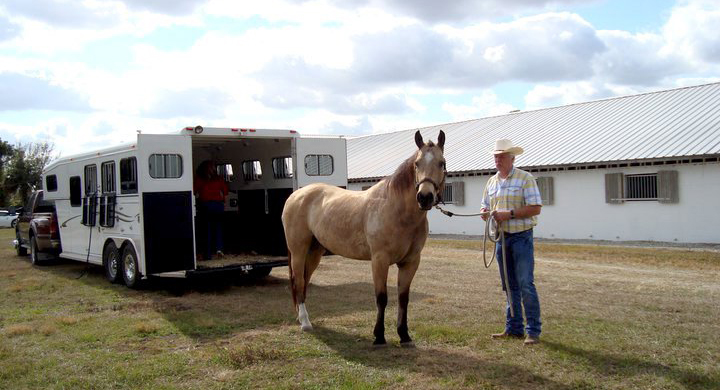
The right horse trailer comes down to matching three things: your horses, your tow vehicle, and the kind of hauling you actually do. A bumper-pull is lighter, less expensive, and well suited to owners hauling one or two horses locally, while a gooseneck—hitched in the truck bed—offers superior highway stability and greater capacity for multiple horses or long-distance travel. Size for the horse, too: standard horses need about 7 feet of interior height, warmbloods and drafts up to 8 feet, and your truck’s ratings should be checked against the trailer’s fully loaded weight, never its empty weight.
Buying a horse trailer is one of the most important investments a horse owner can make. Unlike many horse-related purchases, a trailer directly affects both your horse's safety and your own safety every time you pull onto the road. The right trailer can provide years of dependable service and comfortable travel for your horses. The wrong trailer can create loading problems, towing challenges, expensive repairs, or dangerous situations on the highway.
Whether you're purchasing your first trailer or upgrading to a larger model, understanding the differences between bumper-pull and gooseneck trailers, proper sizing, towing requirements, and safety features can help you make an informed decision.
Bumper-Pull or Gooseneck: Which Is Right for You?
One of the first decisions you'll face is choosing between a bumper-pull trailer and a gooseneck trailer. Both have advantages, and the right choice often depends on how many horses you haul, how often you travel, and what vehicle you use for towing.
 Bumper-Pull Horse Trailers
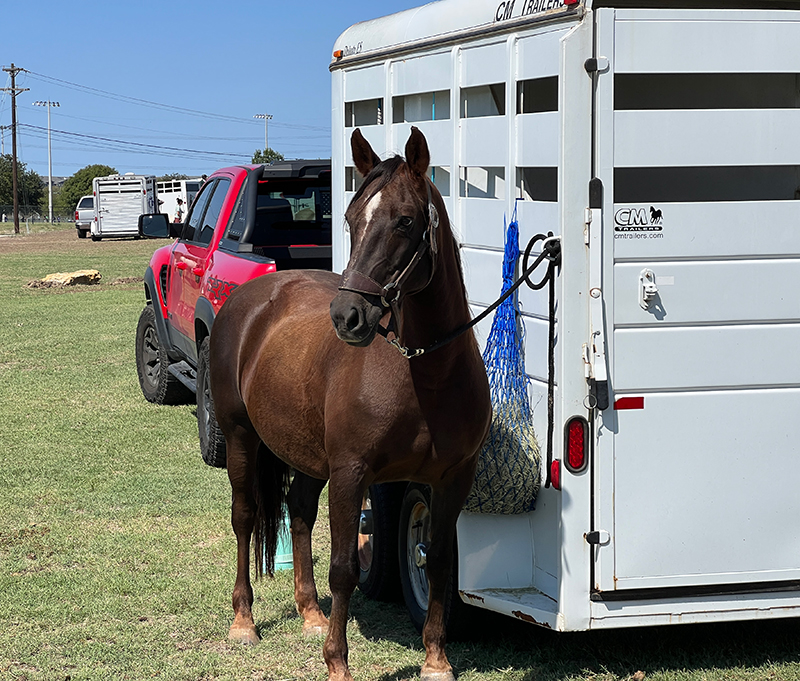
Bumper-pull trailers connect to a receiver hitch mounted behind the vehicle. They are generally lighter, less expensive, and easier to store than gooseneck trailers.
Advantages include:
- Lower purchase price
- Compatible with more tow vehicles
- Easier storage requirements
- Ideal for one- and two-horse owners
- Suitable for local hauling, lessons, and trail riding
Potential drawbacks include:
- Less stability in crosswinds
- More trailer sway potential
- Lower overall weight capacity
- Less room for tack and equipment
For horse owners who haul occasionally and transport one or two horses, a bumper-pull trailer is often an excellent choice.
 Gooseneck Horse Trailers
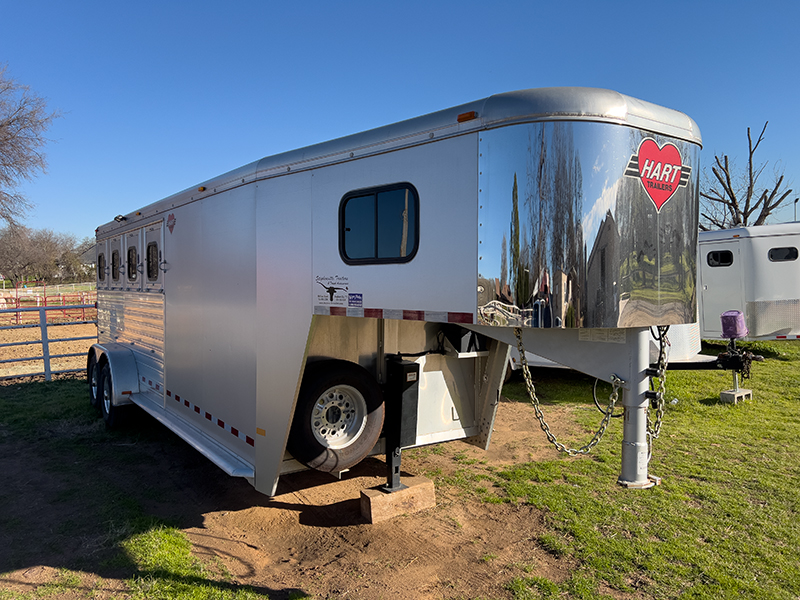
Gooseneck trailers connect to a hitch mounted in the bed of a pickup truck. Because the trailer weight is positioned directly over the rear axle, towing stability is significantly improved.
Advantages include:
- Superior highway stability
- Easier backing and maneuvering
- Greater hauling capacity
- More storage space
- Better suited for long-distance travel
- Ideal for living quarters configurations
Potential drawbacks include:
- Higher purchase price
- Requires a properly equipped pickup truck
- More storage space needed
- Increased overall vehicle length
For owners hauling multiple horses, traveling long distances, or considering living quarters, the advantages of a gooseneck trailer often outweigh the additional cost.
Choosing the Correct Trailer Size
A common mistake is assuming that larger automatically means better. Horses travel most comfortably when they have enough room to balance without excessive space that allows unnecessary movement.
Stall Width
Average horses typically fit comfortably in standard stalls.
Larger horses often require additional width:
- Quarter Horses (average): 30–34 inches
- Morgans and Arabians: 30–34 inches
- Warmbloods: 36–40 inches
- Draft horses: 40 inches or wider
Interior Height
Proper headroom is critical because horses use their heads and necks to maintain balance during travel.
Typical trailer heights include:
- Standard horses: 7 feet
- Large horses: 7 feet 6 inches
- Warmbloods and drafts: 7 feet 6 inches to 8 feet
A horse should never feel cramped or forced to lower its head unnaturally during transport.
Length Considerations
Long-bodied horses require adequate stall length to stand comfortably and spread their legs for balance.
Measure your actual horses rather than relying solely on breed averages.
Straight Load, Slant Load, or Stock Trailer?
Straight Load
Straight-load trailers position horses facing forward.
Advantages:
- Individual stalls
- Easier monitoring of horses
- Often preferred by larger horses
Slant Load
Slant-load trailers position horses at an angle.
Advantages:
- More horses in a shorter trailer
- Often easier loading
- Efficient use of space
Many horses travel exceptionally well in slant-load configurations, while others strongly prefer straight-load trailers.
Stock Trailers
Stock trailers offer more open space and flexibility.
Advantages:
- Excellent ventilation
- Versatility for multiple uses
- Popular among ranchers and trail riders
However, stock trailers may provide less individual separation and protection compared to dedicated horse trailers.
Aluminum or Steel?
Another major buying decision is trailer construction.
Aluminum Horse Trailers
Advantages:
- Lighter weight
- Better fuel efficiency
- Resistant to rust
- Higher resale value
Disadvantages:
- Higher purchase price
- Can develop fatigue cracks over time
Steel Horse Trailers
Advantages:
- Lower initial cost
- Strong construction
- Easier repairs in some areas
Disadvantages:
- Rust and corrosion concerns
- Heavier towing weight
Many premium trailers combine aluminum bodies with steel frames to capture advantages from both materials.
Matching Your Trailer to Your Tow Vehicle
This is where many horse owners get into trouble.
Never match your truck to an empty trailer.
Instead, calculate the fully loaded weight including:
- Horses
- Tack
- Feed
- Hay
- Water
- Equipment
- Living quarters supplies
Important numbers include:
GVWR (Gross Vehicle Weight Rating)
The maximum legal loaded weight of the trailer.
Payload Capacity
The amount of weight your truck can safely carry.
Tongue Weight or Pin Weight
The amount of trailer weight transferred directly to the truck.
Trailer Brake Controller
Every horse trailer should have properly functioning electric brakes and an appropriate brake controller in the tow vehicle.
Remember: the engine pulls the trailer, but the brakes stop it.
Ramp or Step-Up?
Horse owners often have strong preferences regarding loading styles.
Ramp Loads
Advantages:
- Easier for some horses
- Helpful for older horses
- Convenient for loading equipment
Disadvantages:
- Heavier
- More moving parts
- Requires maintenance
Step-Up Loads
Advantages:
- Simpler design
- Less maintenance
- Lighter weight
Disadvantages:
- Some horses dislike stepping upward
- Can be challenging for horses with mobility issues
Neither is universally better. Individual horse preference often determines the winner.
Essential Safety Features
Some trailer options are nice luxuries.
Others are absolutely essential.
Safe Flooring
Inspect trailer floors annually by removing mats.
Look for:
- Soft spots
- Rot
- Corrosion
- Cracks
- Loose fasteners
Floor failure remains one of the most devastating trailer accidents a horse can experience.
Quality Ventilation
Proper airflow helps reduce:
- Heat stress
- Respiratory irritation
- Moisture buildup
- Travel anxiety
Roof vents, adjustable windows, and proper air circulation are critical.
Reliable Brakes
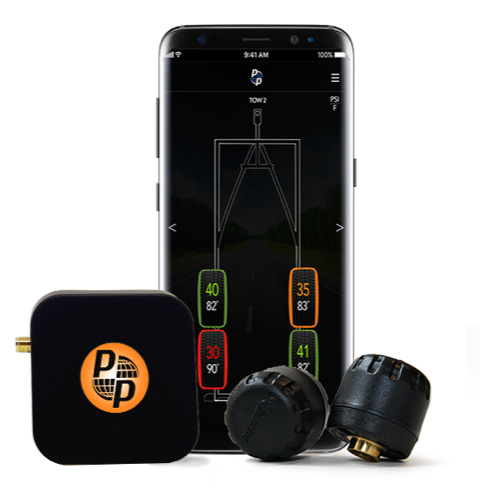
Trailer brakes should be inspected regularly and tested before every trip.
Proper Tires
Trailer tires often age out before they wear out.
Replace tires based on age, cracking, and condition rather than tread depth alone.
Emergency Access
Quick-release ties, escape doors, and accessible dividers can become invaluable during emergencies.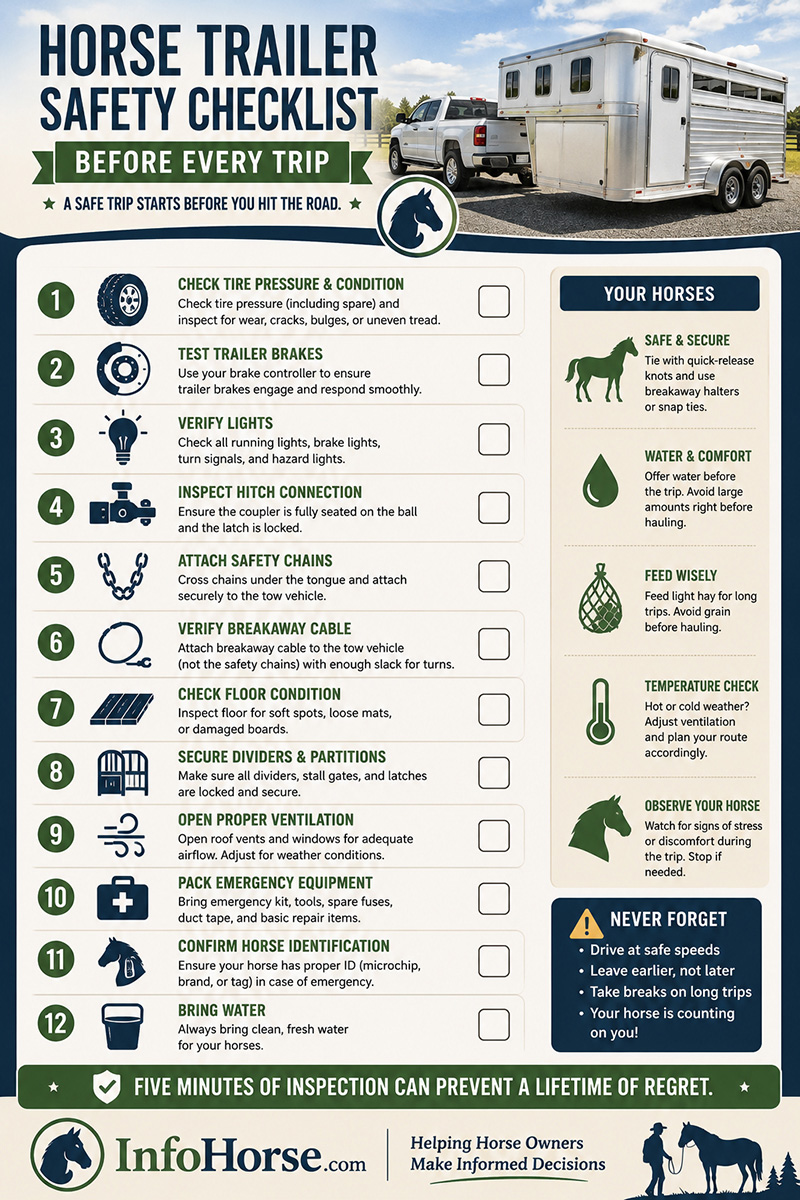
Buying a Used Horse Trailer
A quality used trailer can provide tremendous value.
Before purchasing:
- Remove floor mats
- Inspect flooring thoroughly
- Check the frame for rust or cracks
- Test brakes and lights
- Inspect wiring
- Check tire age codes
- Examine wheel bearings
- Inspect roof seals and leaks
A cosmetic makeover can hide expensive structural problems.
Always inspect underneath the trailer as carefully as you inspect the outside.
Common Horse Trailer Buying Mistakes
Many first-time buyers make similar mistakes.
Avoid:
- Buying too small
- Underestimating horse size
- Ignoring towing capacity
- Focusing only on appearance
- Skipping floor inspections
- Overlooking tire age
- Forgetting future needs
- Purchasing without hauling experience
Think about where you'll be in five years, not just next weekend.
Pre-Trip Horse Trailer Safety Checklist
Before every trip:
✓ Check tire pressure
✓ Test lights and turn signals
✓ Verify brake function
✓ Confirm hitch security
✓ Inspect safety chains
✓ Check breakaway cable
✓ Verify doors and latches
✓ Ensure horses are tied safely
✓ Check ventilation
✓ Confirm emergency equipment is onboard
Five minutes of inspection can prevent hours of problems.
Frequently Asked Questions
Is a gooseneck safer than a bumper-pull?
Generally, gooseneck trailers provide greater towing stability, particularly with multiple horses or highway travel.
How much trailer do I need for two horses?
Most average-sized horses fit comfortably in a two-horse trailer with appropriate width, length, and headroom.
Is aluminum better than steel?
Neither is universally better. Aluminum resists rust and weighs less, while steel is often less expensive and extremely durable when properly maintained.
How often should trailer tires be replaced?
Many experts recommend replacing trailer tires every five to seven years regardless of tread depth.
 The Bottom Line
The best horse trailer is the one that safely fits your horses, matches your towing vehicle, and supports the type of hauling you actually do. Focus on safety, proper sizing, quality construction, and towing compatibility before considering cosmetic features.
Your horses trust you every time they step into a trailer. Choosing wisely, maintaining it carefully, and towing responsibly helps ensure every trip begins and ends safely. Bob Pruitt InfoHorse.com