

Horse Trailer Tire Safety
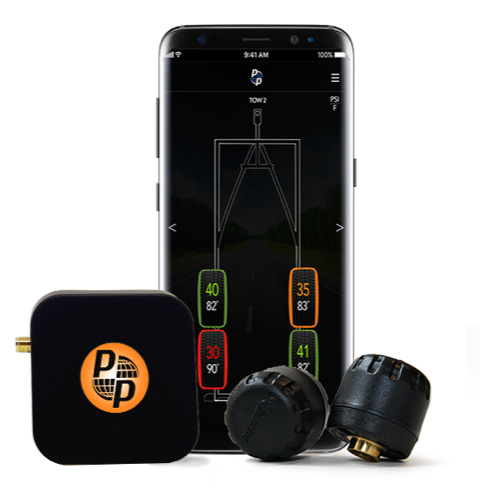
Low tire pressure is the number-one cause of tire failure—underinflated tires run hotter, put excessive stress on the tire walls, and can lead to a blow-out—so check the pressure of every tire, including the spare, before each trip. A tire pressure monitoring system makes that easy: small sensors replace the valve-stem caps and a dash-mounted monitor displays each tire’s pressure even while you drive, sending an audible and visual alert if pressures drop.
When trailering horses, the condition of your tires is of prime concern. Having a horse trailer tire monitor makes it easy to check your tires, even while driving down the road! Article from L&S Safety Solutions
Underinflated tires can lead
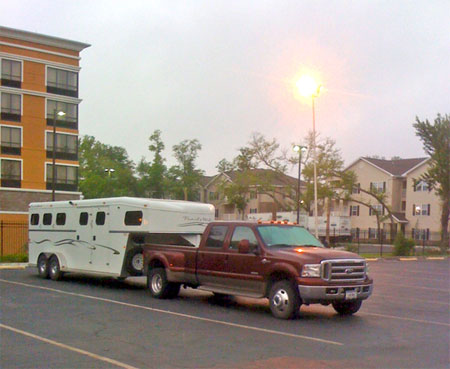
to a blow-out if not attended to in the early stages. And many tires disintegrate due to under-inflation which leads to excessive stress on the tire walls. A tire pressure monitoring system (Tpms) can cut downtime, extend tire life, improve performance, increase safety, and also reduce maintenance.
The easiest way to check your tires and be assured that you have the proper horse trailer tire pressure in those tires is to have a tire pressure monitoring system. Note that under-inflated tires run hotter than properly inflated tires; it’s better to error with too much air in your tires rather than too little. And tires running low on pressure require more fuel to overcome rolling resistance. With today’s prices of fuel, it’s even more important to have your tires properly inflated. Underinflated tires can decrease a vehicle’s average MPG by as much as 3.3%!
The horse trailer truck tire monitor is usually mounted in the dash area of the vehicle, and tire Sensors replace the valve stem caps. The tire Sensors can be mounted on both the truck and the horse trailer, or just on the trailer.
Reasons to keep your tires properly inflated: Added Vehicle Safety, Accuracy/Reliability, Enhanced Vehicle Performance, Increased Tire and Tread Life, Reduced Fuel Costs.
How to check tire pressure on horse trailer with an “external” Tpms: 1. On the dash-mounted Monitor, arrow over to the location of the tire. 2. The Monitor will display the pressure of that tire. 3. To check another tire, press the arrow button and read the next tire, etc. 4. You’re done! No need to go outside in inclement weather and get one knee dirty even! 5. If you need more air, or want less air, simply remove the tire Sensor which replaces the valve-stem cap, adjust your tire pressure, and put the Sensor back on. The Monitor will display the new pressure.
Safety traveling tips for horse owners: 1. Buy a tire pressure monitoring system 2. Install a tire pressure monitoring system 3. Check your tires easily via the tire pressure monitoring system 4. Be assured that you will be warned ahead of time of a low-pressure tire 5. Relax and enjoy your trip!
Types of Tpms Systems Some tire pressure monitoring systems require breaking down the tire to install Sensors inside each tire, while others are external, and are installed by merely replacing the valve stem cap with a tire Sensor. Most now offer low pressure alerts in addition to variable high pressure alerts; some even offer signal strength diagnostics.
Also, it’s important to some that the Tpms is developed and manufactured in the USA, rather than abroad; many are manufactured in China.
Horse owners should check the tire pressure of all tires before each trip, including the spare tire; having a tire monitoring system makes checking tires much easier, as one simply checks tire pressures by pressing a button on the dash-mounted monitor.
Note that even a correctly inflated tire can fail, if overloaded. Overloading any tire is extremely dangerous, and can cause tire failure, as well as failure of any suspension component.
Optimal Benefits of a Tpms ' Improved Fuel Economy ' Audible and visual alerting ' Check pressures even when parked ' External systems are easy to self-install ' Tire Sensors simply replace the valve stem caps ' Monitors truck and towed vehicle tire pressures ' Some systems monitor up to 34 tire positions ' No wiring required; reliable FM signal reception ' View current tire pressures any time with the touch of a button ' Increase safety by having properly inflated tires appropriate for the load ' Enhanced vehicle performance; tires with low air pressures require greater stopping distances and cause deterioration in tire performance.
Dual Tires A Tpms can give you the information you need to maintain properly inflated tires which in turn, can result in significant savings and safety. Inside duals are often neglected which could be detrimental, as checking air pressures of the inside tires is an absolute necessity. An outside tire can be supporting an inside tire that is going flat, making the low-pressure tire hard to spot. Therefore the outer tire would experience added stress and pressure, causing permanent damage. This could result in a tire overheating and rupturing; if the tire is a retread, there is the possibility of tread releasing from the casing which could even lead to a highway accident.
Having a tire pressure monitoring system will help to avoid under inflation and will extend tire life, as well as to save fuel, time and $$$. Low tire pressure is the Number One cause of tire failure and contributes to heat buildup, tire disintegration, ply separation and sidewall/casing breakdowns.
PressurePro is a wireless electronic tire pressure monitoring system designed to monitor and display tire pressures. The system is capable of displaying current tire pressures on demand, whether moving or stationary.
Monitor Tire Sensors The dash-mounted Monitor displays each tire’s pressure and can send an audible and visual alert if your pressures drop. Small tire Sensors screw onto the valve stems of your tires, replacing the valve-stem caps, and transmit a coded RF signal.
PressurePro Features: PressurePro is the world-wide leader in developing the Tpms marketplace and technology since 1991, providing drivers with continuous tire pressure readings whether a truck or trailer is parked or moving.
The dash-mount Monitors come set from the factory to read in psi, but can also read in BAR and kPa. PressurePro can also display temperature measurements.
PressurePro systems alert at three pressure thresholds: two alerts at a low-pressure reading, and one at a high pressure reading. The first low-pressure alert occurs when tire pressures drop more than 12.5%, and a second alert occurs when tire pressures drop by more than 25%. A variable high pressure alert also occurs at the level set by the user.
Tire Sensors merely replace the valve stem caps; the dash-mounted Monitor comes with Velcro and can be hard-wired or can plug into the cigarette lighter receptacle. A 3 '” antenna is standard, but horse trailers should also use the optional Cabled Antenna Kit for better reception.
PressurePro: ' Easy to self-install ' Alerts driver with both visual and auditory warnings ' Capable of monitoring both the towing vehicle and a trailer ' Alerts when tire pressure is high or low, specifies which tire, and what the actual pressures are use with RVs, trucks, horse trailers, autos, tractor/trailers, buses, heavy industrial equipment, etc.
About L&S Safety Solutions LLC L&S Safety Solutions is the North American Distributor for PressurePro Tire Pressure Monitoring Systems which is the leading aftermarket Tpms system in the world. L&S Safety Solutions has been a leader in the development and evolution of tire pressure marketing systems’ technology, and remains dedicated to providing additional safety and savings to the transportation industry. PressurePro: Proud to be the only Tpms product designed, developed and manufactured in the USA