


EHV-1 Biosecurity for Horse Owners: Why It’s Not Just a Show Barn Problem
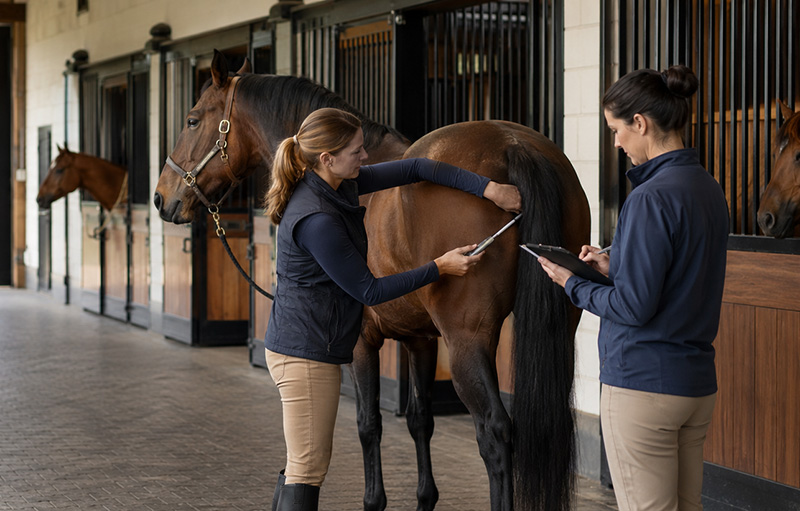
EHV-1 biosecurity comes down to a few plain habits that belong in every barn, competitive or not: take and record rectal temperatures twice daily, treat a reading of 101.5°F or higher as a reason to separate the horse and notify your veterinarian immediately, stop sharing water buckets, feed tubs, grooming tools, tack, and lead ropes between horses, and clean manure and organic material off the trailer before applying disinfectant.
Keep returning and newly arrived horses away from the resident herd — some barns use a separation period of approximately 14 days for routine travel, while veterinarians or state officials may recommend 21 to 28 days or longer following a known or suspected exposure. Vaccination remains worthwhile because it may reduce respiratory illness, the amount of virus a horse sheds, and the severity of clinical signs, but current EHV-1 vaccines do not reliably prevent the neurologic form, EHM, and a health certificate cannot guarantee that a horse is not incubating or shedding the virus.
You can do everything right—vaccinate on schedule, quarantine new arrivals, avoid sharing equipment, and never haul to an event without the proper health paperwork—and still end up exposed.
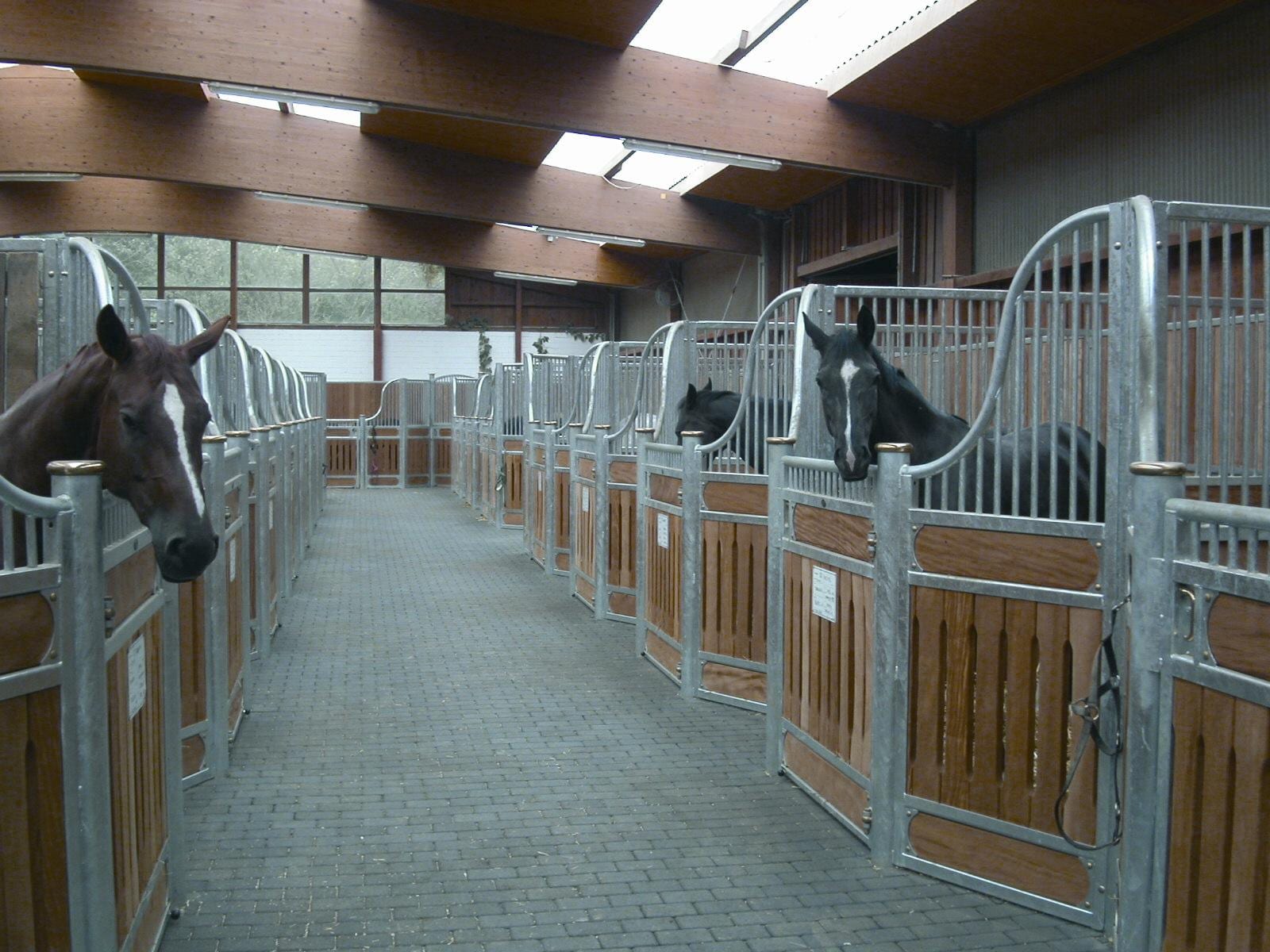
All it may take is one horse from three barns down attending an event, returning home, and walking straight back into the resident herd without anyone checking temperatures or asking where that horse has been.
That is the uncomfortable truth about Equine Herpesvirus-1.
EHV-1 is not simply a competition problem, a show-barn problem, or “that other barn’s” problem. It is a community problem, and that community includes nearly every horse within trailering distance of a barn that is not paying attention.
The Virus May Already Be There
Here is what surprises many horse owners: a large majority of horses are exposed to equine herpesviruses early in life.
After infection, the virus can remain latent in the body—quiet and undetectable—for years. It may later reactivate during periods of stress, transportation, illness, competition, weaning, overcrowding, or changes within the herd.
That is one reason EHV-1 outbreaks can seem to appear without warning among vaccinated horses that looked perfectly healthy only days earlier. The virus may not have arrived with an obviously sick horse. It may have already been present in a horse that showed few or no outward signs.
Most EHV-1 infections cause respiratory illness, including fever, nasal discharge, coughing, loss of appetite, or lethargy. Some horses may show very mild signs.
Occasionally, however, EHV-1 affects the nervous system and develops into Equine Herpesvirus Myeloencephalopathy, commonly called EHM.
EHM can cause hind-end weakness, stumbling, incoordination, difficulty urinating, loss of tail tone, inability to rise, and, in severe cases, death.
Many horses affected by EHM do recover with veterinary treatment and intensive supportive care. However, the prognosis becomes much poorer when a horse goes down and can no longer stand.
There is no medication that simply eliminates the virus. Treatment focuses on reducing inflammation, supporting the horse, preventing secondary complications, and giving the nervous system time to recover.
A Health Certificate Is Not a Guarantee
Health certificates are important, but horse owners should understand what they do—and do not—prove.
A health certificate confirms that a veterinarian examined the horse and found no visible evidence of infectious disease at that time.
It cannot guarantee that the horse is not incubating EHV-1, shedding the virus, or carrying a latent infection.
A horse may appear healthy on the day of examination and develop a fever or other signs later. That is why paperwork should never replace daily observation, temperature monitoring, and good barn management.
This Is Not Hypothetical. It Is Recent.
In November 2025, an EHV-1 and EHM outbreak associated with a barrel racing and rodeo circuit in Texas and Oklahoma spread concern across multiple states.
Horses traveled home from events, other horses were potentially exposed, and competitions across several disciplines were postponed or canceled while veterinarians and state animal health officials worked to contain the situation.
Only a few months later, in April 2026, a 21-year-old gelding developed EHM during a hunter-and-jumper show in Culpeper, Virginia. The horse was euthanized.
Forty-two exposed horses from the show grounds were quarantined, along with 13 horses at the affected horse’s home farm.
It was another reminder that EHV-1 does not care whether a horse runs barrels, jumps fences, competes in dressage, works cattle, attends a local clinic, or never wins a ribbon at all.
It is also not the first time one gathering has created consequences far beyond the original event.
In 2011, an EHV-1 outbreak associated with a cutting-horse championship in Utah involved hundreds of horses traveling from numerous states and Canadian provinces. Horses carried the risk home, and confirmed cases were eventually reported across multiple states.
Secondary exposures occurred in barns that had never attended the original event.
One event.
Horses returning to numerous communities.
Barns exposed without ever setting foot on the show grounds.
That is the scale biosecurity is trying to prevent.
The Early-Warning Window That Matters
One detail every horse owner should understand is that fever is often the earliest detectable warning that an EHV-1 infection may be developing.
A horse may spike a temperature before anyone notices coughing, nasal discharge, weakness, loss of appetite, or neurologic signs.
That does not mean a horse cannot spread the virus before a fever is detected. It can.
However, twice-daily temperature checks give barn managers one of their best opportunities to identify a potentially infected horse early, isolate that horse, call a veterinarian, and reduce further exposure.
That makes one of the highest-value biosecurity tools remarkably simple:
A thermometer.
Not one buried in a tack-room drawer.
Not one used only when a horse looks sick.
A thermometer used consistently, with every reading written down.
Knowing a horse’s normal temperature also matters. A temperature that appears only slightly elevated may be significant if that horse normally runs lower.
At an event or during an active disease concern, temperatures should generally be taken and recorded twice daily.
A temperature of 101.5°F or higher should not simply be watched for another day to see whether it passes. The horse should be separated from others, and the owner, veterinarian, show office, or barn manager should be notified immediately.
Your veterinarian may recommend a different threshold based on the horse, the weather, recent exercise, and the circumstances.
What Good Biosecurity Actually Looks Like
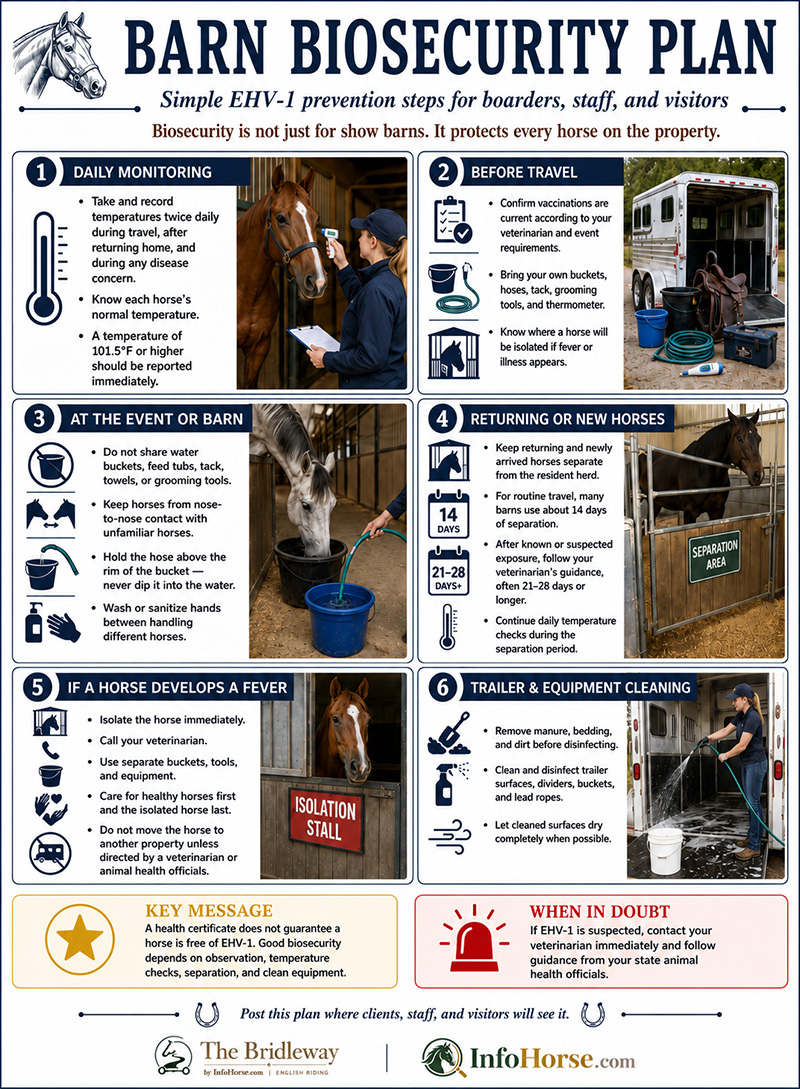
US Equestrian describes disease risk as a triangle involving three connected factors:
The horse.
The pathogen.
The environment.
A barn cannot manage an infectious-disease threat by addressing only one side of that triangle.
Vaccination alone is not enough.
Disinfection alone is not enough.
Quarantine alone is not enough.
Good biosecurity requires several simple habits working together.
Before You Travel
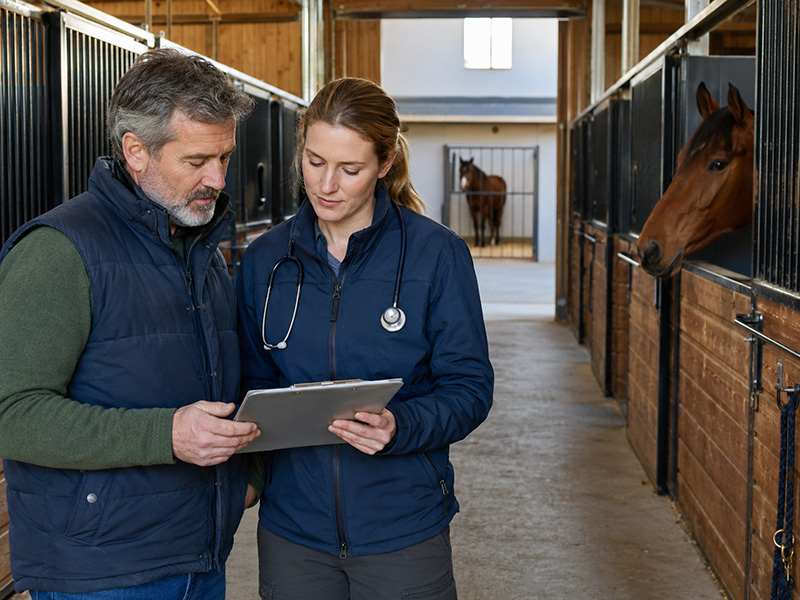
Confirm that vaccinations for EHV-1 and equine influenza are current.
For many competitions, vaccination must have been administered within the previous six months. Horse owners should verify the current requirements of the event, facility, state, or governing organization before traveling.
Vaccination remains worthwhile. It may reduce respiratory illness, the amount of virus a horse sheds, and the severity of clinical signs.
However, owners must understand that current EHV-1 vaccines do not reliably prevent the neurologic form, EHM.
Vaccinated horses can still become infected and may still spread the virus.
Prepare an isolation plan before you need one.
Every barn should know where a horse with a fever or suspicious symptoms will be housed. Ideally, that location should be separated from normal horse traffic, shared water sources, communal equipment, and routine feeding paths.
Trying to decide where a sick horse should go after a fever has already been discovered is too late.
Know whom you will call.
Keep contact information readily available for your veterinarian, barn manager, event office, transporter, and state animal health authority.
Biosecurity plans work best when decisions are made before emotions and confusion take over.
While You Are Away
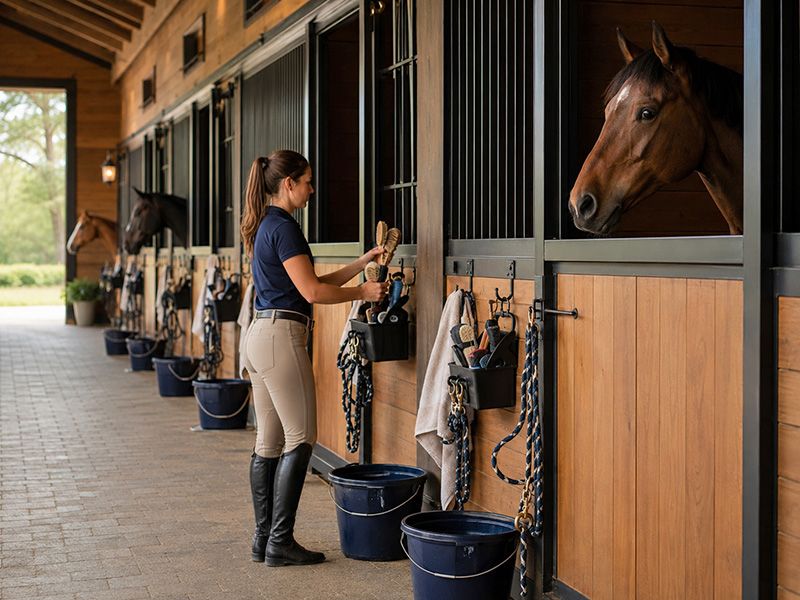
Take and record rectal temperatures twice daily on every horse—not only the horses that look tired or “a little off.”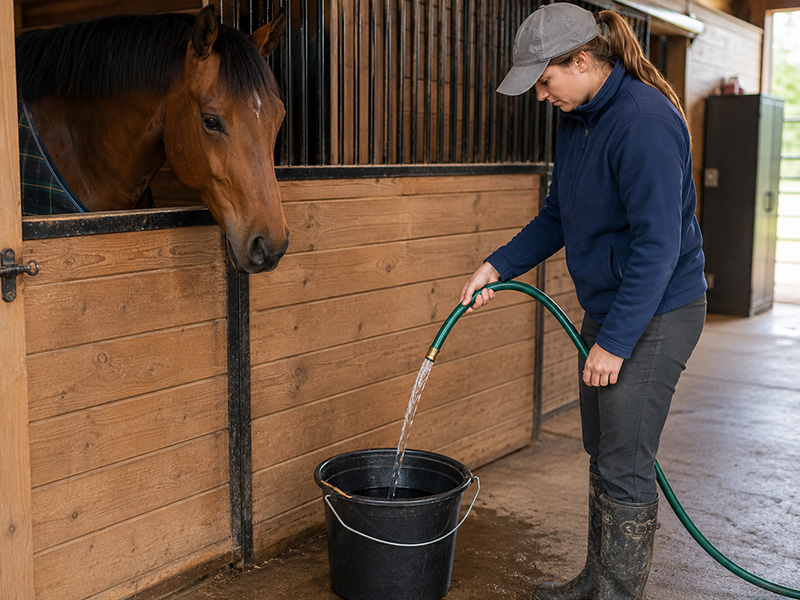
Do not share water buckets, feed tubs, nose rags, grooming tools, tack, bits, thermometers, lead ropes, twitches, or other equipment between horses.
If equipment must be shared, it should be thoroughly cleaned, properly disinfected, rinsed when appropriate, and allowed to dry completely before being used on another horse.
Never dip the end of a hose into a horse’s water bucket.
Hold the hose above the rim and allow the water to fall into the bucket. A hose that touches contaminated water or saliva can carry infectious material from one bucket to another.
Avoid allowing horses to touch noses with unfamiliar horses.
Do not let your horse drink from communal troughs or shared buckets.
Keep your own equipment within your assigned area, and limit unnecessary movement through other barns and stabling sections.
People do not become infected with EHV-1, but they can mechanically carry contaminated secretions between horses on their hands, clothing, footwear, tools, and equipment.
Wash or sanitize your hands after handling another horse and before returning to your own.
When possible, care for healthy horses before caring for a horse that is sick, exposed, or under observation.
Coming Home
Do not assume the risk is over simply because the event has ended.
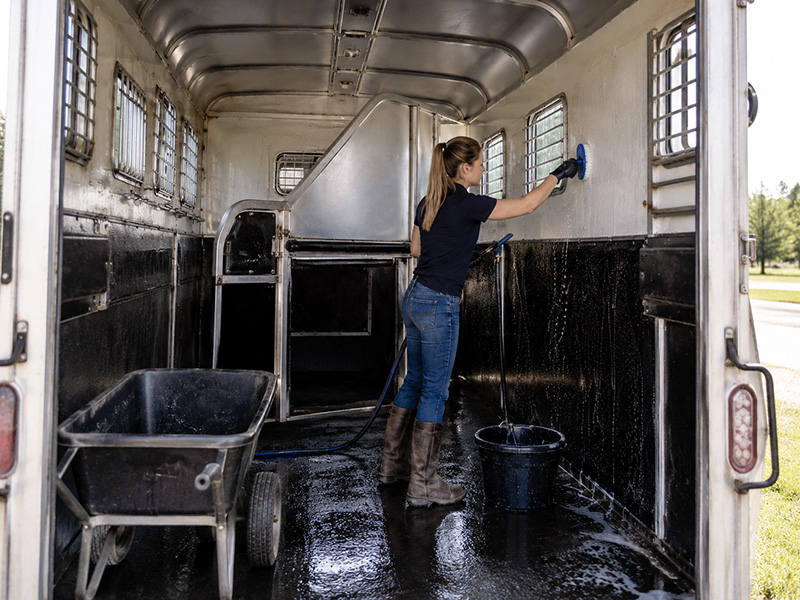
Clean manure, bedding, hay, and organic material from the trailer before applying disinfectant. Disinfectants do not work well through layers of dirt and manure.
Clean and disinfect trailer walls, floors, dividers, butt bars, chest bars, mangers, water containers, lead ropes, and other surfaces that may have contacted the horse or respiratory secretions.
Allow cleaned surfaces to dry completely whenever possible.
Keep returning horses separated from the resident herd for a period established with your veterinarian.
For routine travel, some barns use a separation period of approximately 14 days. Following a known or suspected exposure, veterinarians or state officials may recommend 21 to 28 days or longer.
Continue taking and recording temperatures throughout the separation period.
Do not allow a returning horse to share buckets, grooming tools, feeders, fence-line water sources, or nose-to-nose contact with resident horses.
This is the step backyard barns and boarding facilities skip most often.
The show is over.
The trailer is unpacked.
Everyone relaxes.
And the horse walks directly back into the herd.
That single decision can undo every precaution taken during the trip.
New Arrivals Need a Plan Too
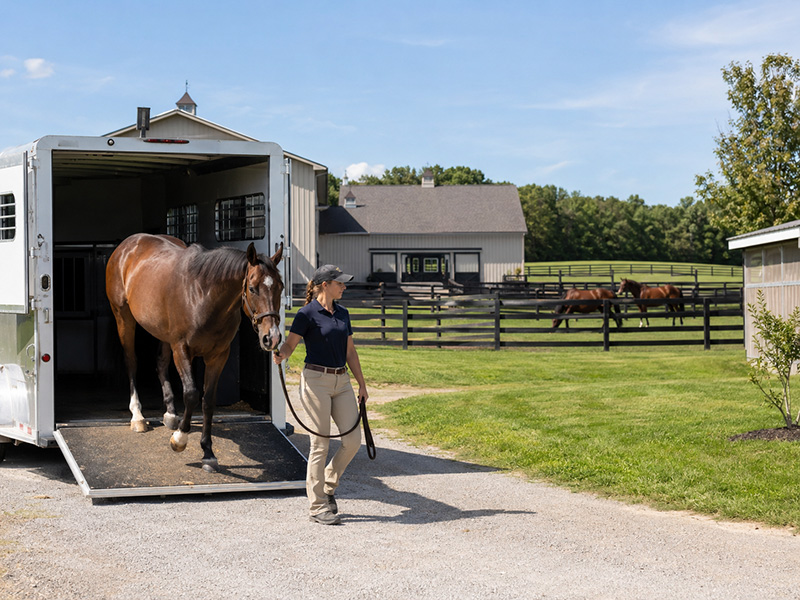
A new horse should not be turned directly into the resident herd simply because it arrives with vaccination records and a health certificate.
Ask where the horse has been during the previous several weeks.
Has it attended a show, clinic, sale, racetrack, breeding facility, veterinary hospital, training barn, or overnight stop?
Has there been any fever, cough, nasal discharge, unexplained swelling, loss of appetite, weakness, or illness in its home barn?
Has it recently been near horses that traveled?
New arrivals should be kept separate, monitored closely, and handled with separate equipment.
Take and record their temperatures daily.
A horse can look perfectly healthy at unloading and still be incubating disease.
What to Do When a Horse Develops a Fever
Do not move the horse through the barn unless necessary.
Separate it from other horses as quickly and safely as possible.
Stop sharing equipment between that horse and the rest of the barn.
Assign one person, when practical, to care for the isolated horse.
Care for healthy horses first and the isolated horse last.
Use separate boots, gloves, clothing, tools, buckets, hoses, and manure-handling equipment.
Record temperatures and symptoms carefully.
Write down which horses, people, trailers, stalls, and equipment may have had contact with the affected horse.
Do not haul the horse to another property unless your veterinarian or state animal health officials direct you to do so.
Moving a potentially infected horse may expose additional horses at the destination and along the way.
When EHV-1 is suspected, contact your veterinarian immediately and follow instructions from your state animal health officials.
Why This Belongs in Every Barn
None of these precautions require a horse that competes.
A horse that never leaves the property can still be exposed by a pasture-mate returning from a schooling show.
A new boarder may arrive after traveling through several barns.
A lesson horse may attend a clinic.
A broodmare may visit a breeding farm.
A horse may return from a veterinary hospital.
A trainer may move between barns.
A farrier, veterinarian, bodyworker, dentist, hauler, feed representative, or visitor may have been at another facility earlier that day.
People are not the natural host of EHV-1, but contaminated hands, clothing, footwear, vehicles, and equipment can help move infectious material from one place to another.
That does not mean horse professionals should be treated with suspicion. It means every barn should provide a practical way for visitors and workers to clean their hands, boots, and equipment when disease risk is elevated.
Biosecurity is not a competition rule.
It is a property-wide habit.
And it only works when everyone—from large show facilities to private backyard barns—recognizes that infectious disease does not respect property lines.
Stable Managers Need a Written Plan
A good biosecurity plan does not need to be complicated, but it should be written down.
Every stable manager should be able to answer these questions:
Where will a sick or exposed horse be isolated?
Who has authority to call the veterinarian?
Who will notify boarders?
Who will take and record temperatures?
Which equipment will be reserved for the isolation area?
How will manure and bedding be handled?
How will workers move between healthy and isolated horses?
What happens when a horse returns from an event?
How long will new arrivals be separated?
Who will communicate with state animal health officials if a reportable disease is suspected?
The time to answer those questions is not while a frightened owner is standing beside a horse with a 103°F fever.
A written plan helps people act calmly, consistently, and quickly.
Protecting Horses Without Attacking People
There are barns in almost every horse community that take biosecurity seriously, and there are others that still treat it as an inconvenience.
Publicly embarrassing people usually does not improve the situation.
Education may.
Share reliable information.
Encourage stable managers to speak with their veterinarians.
Ask your own barn what its isolation and homecoming policies are.
Offer to help establish a temperature chart, disinfecting station, or written travel protocol.
The goal is not to prove that one owner is more responsible than another.
The goal is to keep horses from becoming sick, frightened, weak, neurologically impaired, or unable to stand.
Those are unpleasant and sometimes devastating events in a horse’s life.
Many exposures cannot be predicted.
But better habits can prevent some of them from becoming outbreaks.
Where Horse Owners Can Watch for Updates
Because EHV-1 outbreaks and quarantine recommendations can change quickly, horse owners should rely on current information from reputable veterinary and animal-health authorities.
Useful resources include:
- Equine Disease Communication Center live outbreak alerts
- Your state veterinarian or state department of agriculture
- US Equestrian EHV-1 updates and biosecurity resources
- American Association of Equine Practitioners infectious-disease guidelines
- University veterinary hospitals and extension programs
- Your own equine veterinarian
Do not rely solely on barn gossip or social-media posts. Early reports may be incomplete, inaccurate, or missing important details.
Verify the information before moving horses or making decisions that affect an entire barn.
The Bottom Line
EHV-1 cannot be eliminated from the horse world, and no vaccine, health certificate, disinfectant, or quarantine procedure can reduce the risk to zero.
But that does not mean horse owners are powerless.
Check temperatures.
Separate returning and newly arrived horses.
Avoid shared equipment.
Clean trailers.
Pay attention to travel history.
Have an isolation plan before the first fever appears.
Biosecurity is not about panic.
It is about giving a horse the best possible chance of never having to experience the worst this virus can do.