

My Horsemanship Speech with Richard Winters
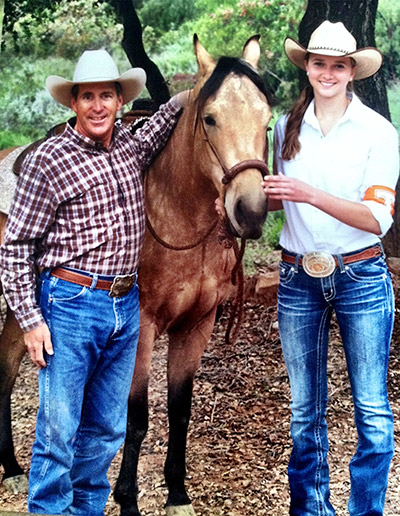
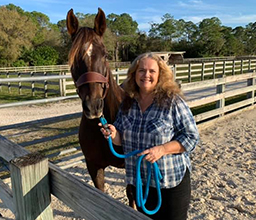
Annie, my #1 apprentice - four summers in a row!
Becoming a professional horse trainer takes far more than copying what one trainer did with one horse—it takes endless hours and hundreds of horses. Trainer Richard Winters tells every new apprentice at his ranch that horsemanship is an art, not a science: the principles of the craft stay the same, but each rider ultimately becomes the product of many great horsemen rather than a copy of any one. Until a young trainer has worked with not dozens but hundreds of horses, his frame of reference is simply too small to handle the myriad of situations horses will present.
This weekend a young man will be arriving at my ranch because he wants to become a horseman. He might be here for 2 years or he may only last two weeks. He’ll have to work very very hard for very little monetary reward. As my apprentice, he is eager to gain the experience and knowledge necessary to one day be a professional horse trainer.
The following is my speech he will be subjected to on the first day of “school.” “While you’re here, I hope you’ll learn some principles and skills that will help you along on your horsemanship journey in years to come. During this time you should try and emulate my style and do things as I recommend. When you leave here you can sort through the information and file away what works for you and disregard those tools or techniques that really don’t fit your style. Hopefully you won’t end up being a “cookie-cutter” of Richard Winters. Rather, you’ll ultimately be the product of many great horsemen and horsewomen you’ll have the privilege to ride with.”
If I still have my young prot'g's attention I’ll continue; “I’m not going to show you the way to work with a horse but rather I’m going to show you a way. I’m not so conceited as to think that it can only be one way – my way. Horsemanship is an art, not a science. The principles of our craft will stay the same. However we should grant others the latitude to develop their own particular style.” Now I’d probably throw in a clever quotation. “Just because it doesn’t come out of my chimney doesn’t mean it’s not smoke!”
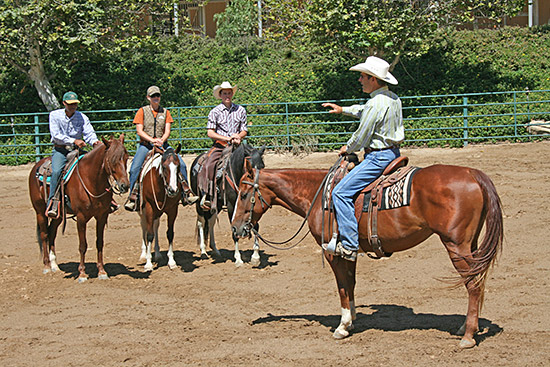
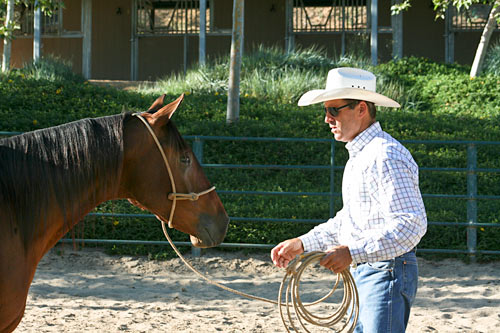
Three aspiring trainers listening to my horsemanship speech.
Now I’m really on a roll. My monologue continues: “This is a mistake some young aspiring trainers make. They’ll be at a show, or in the practice pen, and see a trainer school a horse in a specific manner to correct or teach a certain behavior. The novice observer thinks this must be the technique they should employ next time they’re in what they perceive as, that same situation. What they don’t understand is this; that is what the trainer did that time with that particular horse. That circumstance was probably unique and the trainer might not implement that same method in a host of similar situations.
All this is to say; just about everything is right sometimes and almost nothing is right all the time.” About this time in my mini lecture I’ll throw in a joke just to show my good humor and to drive home a point. “A young man was watching an older horseman working with his equine partner and he was very impressed. He asked the horseman how he acquired such good judgment in dealing with horses.” The old horseman replied, “Experience!” “How did you get all that experience?” The young man questioned. Without hesitation the horseman confessed with authority, “Bad judgment!”
Hopefully at this juncture my young apprentice will laugh at my joke and more importantly get the point. There will be no substitution for the endless hours invested and the multitude of horses he’ll need to encounter on his way to achieving his horsemanship goals.
This will bring me to another point in my finely crafted speech. “You can place whatever value on your time invested here as you want. I hope that some of my horsemanship principles and techniques work for you and will enhance your own training program. However, there is one thing of value I can guarantee to give you that is absolutely necessary and cannot be substituted. I’m going to give you the opportunity to work with and ride a lot of different horses.
Until you’ve worked with not dozens but hundreds of horses, your frame of reference is too small to competently handle the myriad of situations horses will present. The novice trainer will talk with me about a colt they’re riding and describe a behavior that has stumped them. They’ll say “I’ve never had one do that before.” Well, I bet that’s right! Actually they’ve really only started about six colts in their short training career.
It’s no wonder they’ve not experienced that particular behavior before. Their frame of reference is too limited.”
My lecture probably goes a little long and my captive audience is probably only being polite. I wonder if he is craving this as much as I did when I was his age. Time will tell. So, yes it’s true. For the young would-be-horseman the work is hard and the pay is poor. Sometimes it’s a school of hard knocks with tuition of blood, sweat, and tears. Yet for those willing to invest in themselves, the journey is its own reward. For now however, “I’ll let you finish cleaning the stalls. Let me know when you’re done.”
Richard Winters Horsemanship WintersRanch.com