

How Horses Learn with Richard Winters
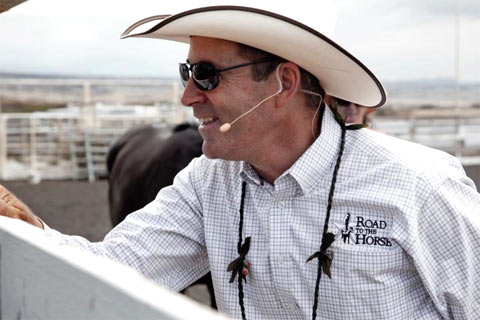
Horses learn through the release of pressure, not the pressure itself—the teaching moment comes the instant the right behavior is made easy and comfortable. Because a horse’s core motivation is simply to be comfortable, the classic horsemanship principle of making the right thing easy and the wrong thing difficult works so well. The keys are consistency, rewarding the slightest try, and giving an immediate release the moment the horse responds correctly.
If we hope to teach our horses, we need to understand how they learn. When does the light bulb go on?
At what point do they get it? How do we find these teaching moments?
First, we need to understand how a horse thinks and what motivates his behavior. This is built on the idea that horses simply want to be comfortable. They are not fighters or confrontational by nature. Nor do they bond to humans in the same way a dog does to its owner. Once a horse believes that he can survive and his life is not in danger, then he simply desires to be comfortable. This is why the horsemanship principal “make the right thing easy and the wrong thing difficult” works so well with horses.
For example: If I want my horse to move forward, I might begin to rhythmically tap him on the rump, gradually increasing intensity. The moment he steps forward, I will quit tapping, relax, and rub his neck. If I am consistent, my horse begins to realize that the instant he steps forward, he finds comfort. I had the ability to take away his comfort (by tapping), and then show him where he can get comfortable again (by stepping forward).
The “teaching moment” didn’t occur when I simply made the wrong thing difficult. The point of learning takes place when the right behavior is made easy (or comfortable) for the horse. If pulling on a rein, kicking with a spur, or spanking with a crop caused horses to learn, then anyone could be a horse trainer. The “teaching moment” comes when I release the rein, quit kicking, or stop spanking.
Our consistency is very important in these situations. If you are leading your horse into a trailer you might apply pressure to the halter and lead rope, asking him to move forward. This is where the novice horse handler may be inconsistent. After pulling for a few moments, they release the pressure, lead the horse in a circle, and then try again by pulling on the lead rope. Now this horse has learned that he doesn’t have to step forward toward the trailer when he feels the pressure. He simply needs to wait until his handler’s arm gets tired. Learning does takes place, unfortunately the novice handler did not communicate in a manner to be able to achieve the desired goal.
This is why it is so important to set up a scenario where you can be consistent with your tools, wait for a positive response, and reward with an immediate release. That’s the “teaching moment.” This is where another horsemanship principle comes into play: reward the slightest try. We have the ability to take our horses comfort away. Now we must consistently show our horses where they can get comfortable again.
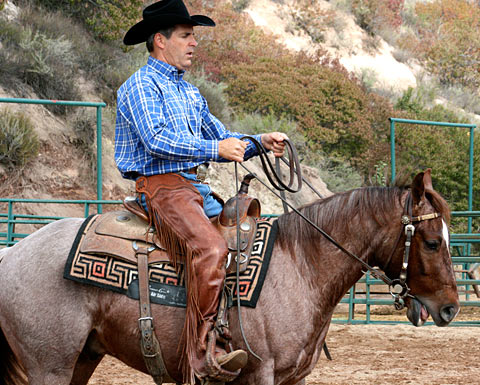
Generally speaking, there are only six things a horse can do. They can go left, right, forward, backward, up, and down. Every time we apply pressure to horses, they see within their mind’s eye, a panorama of doors, six to be exact. At this point a horse starts to try door handles. It is our job to have five of those doors completely closed.
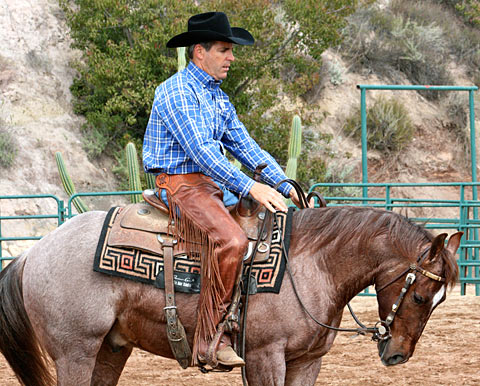
One proverbial door should be wide open with spotlights shining down saying, “Step through this door and you can be comfortable again .” With that kind of clarity, it’s amazing what horses will do for us. Without it, a horse will simply give up, sull up, or fight back.
If backing up under saddle were an issue, it would be important for the horse to feel like there was a place he could go with his feet and body to get away from pressure and be comfortable. Unfortunately, many riders just pull on the reins, making the horse back up, and they’ll only quit pulling when they are done backing. There is no release for the right behavior. In this situation horse says, “He pulls on me when I back up good, and he pulls on me when I back up bad.
No matter what I do, he’s going to pull on me!” This horse has no motivation to back up any faster or lighter because there is no reward (release for the effort). I want my horse to believe that the quicker and lighter he gets back, the quicker the release will come. Certainly, as horses mature and their understanding increases, we can ask them for more effort and response to gain the reward of release.
Make the right thing easy and the wrong thing difficult. Be firm as necessary yet gentle as possible. Reward the slightest try. With these principals firmly in place, you will find your equine student learning positive behaviors in these “teaching moments.”
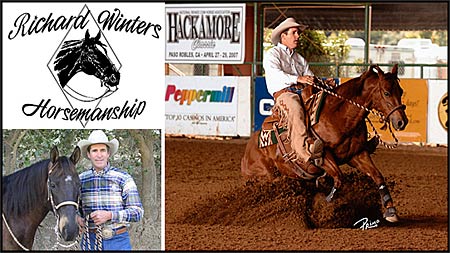
For more information about Richard Winters Horsemanship please go to wintersranch.com.