

Horsemanship Basics for Training and Care
My definition of Horsemanship = Horse, Human Relationship
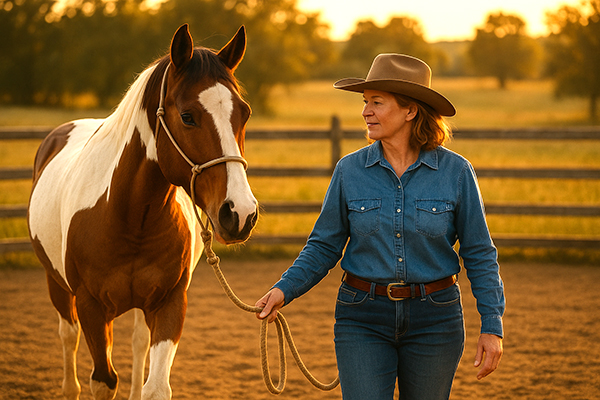
Building a stronger bond with a horse begins with mutual respect and an understanding that horses are prey animals who naturally look for a calm, quiet, consistent leader. Progress comes from patience—teaching line upon line, rewarding even the smallest try, and softening your hands so the horse softens its whole body—because the slowest way to train a horse is to be in a hurry. Horses live in the moment, and simply spending time with your horse is what builds the bond.
Every healthy relationship begins with mutual respect. Horses have evolved as prey animals, relying on the herd for safety and family structure. Whether in the wild or in a pasture, horses naturally look for a leader. Their survival depends on flight speed, quick reactions, and nearly 350 degrees of vision that allow them to detect predators.
Understanding their prey nature is essential to understanding your horse.
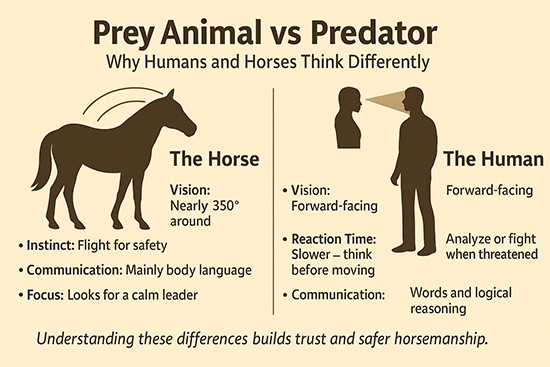
Humans, on the other hand, evolved as predators. Our forward-facing eyes help us focus on what’s ahead. Our hands with opposing thumbs allow us to create tools. Our ability to communicate and reason gives us a completely different perception of the world than horses have.
Training: A Relationship of Trust
We are often in a hurry when interacting or training our horses. We are always training — or un-training — our horse with every interaction. Horses respond to our pushing and hurrying with fear or confusion.
A fearful horse takes much longer to trust and accept training. Impatience only frustrates the horse and demonstrates poor leadership.
Being forceful or harsh causes a horse to protect itself. Soften your hands, and the horse will soften its whole body.
Remember — The slowest way to train a horse is to be in a hurry.
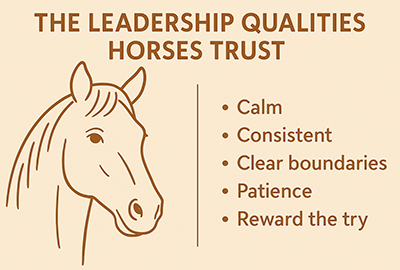
Horses want a trusted leader. Leaders are calm, quiet, and consistent. Trainers fail only when we lose patience or expect more than our horse currently understands. Progress depends on teaching line upon line and rewarding even the smallest try.
The amazing thing about a horse, who is so much larger and stronger than we are, is their willingness to get along, to try, and to trust us. Horses live in the moment and we are most effective when we join them there.
Responsibility: We Asked Them Into Our World
When we put a halter on a horse, that horse becomes our responsibility. We take them from the natural world they evolved in and ask them to live safely in a human-designed environment. That makes us responsible for teaching safety and manners through basic groundwork.
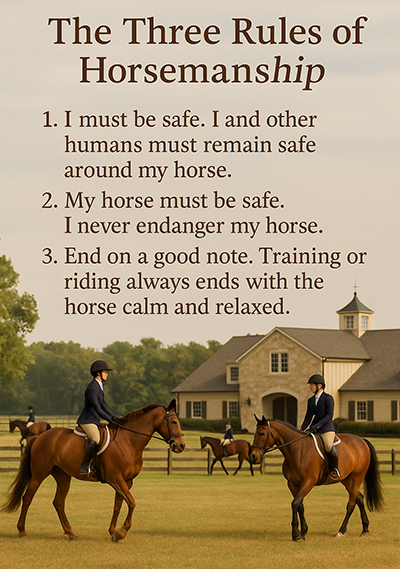
The Three Rules of Horsemanship
- I must be safe. I and other humans must remain safe around my horse.
- My horse must be safe. I never endanger my horse.
- End on a good note. Training or riding always ends with the horse calm and relaxed.
Daily Care Responsibilities
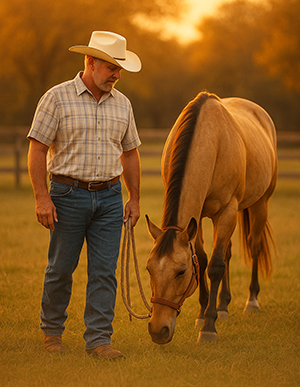
- Feed horses consistently — they depend on us for all nutrition when stabled.
- Provide clean water — horses drink 10–15 gallons daily, often more.
- Ensure exercise — movement supports physical and mental well-being; turnout is essential.
- Keep stalls clean — ammonia odor is far harsher and more harmful to the horse than to us.
- Groom regularly — brushing and bathing maintain skin and coat health.
- Check teeth — our horses require dental exams and floating, typically yearly.
- Care for hooves — clean daily and schedule regular farrier visits. There is a saying: “No hoof, no horse.” Cutting corners on hoof care can cost your horse its life.
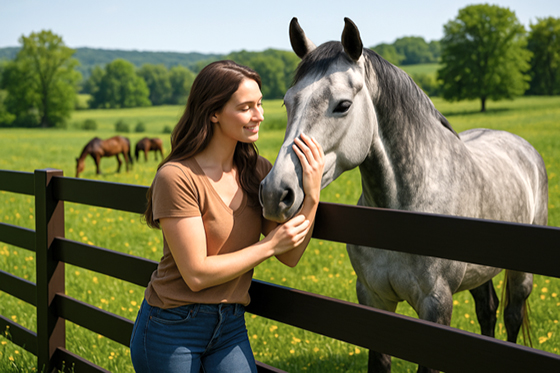
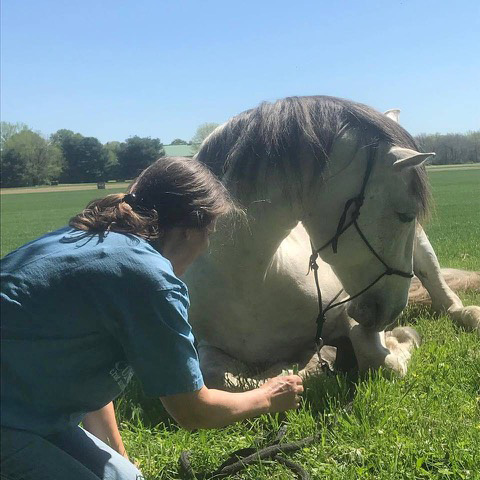
Spend time with your horse to build a better bond.
Building a Support Team
You will need qualified professionals to help you:
- Veterinarian — routine vaccinations, soundness checks, and emergency care.
- Farrier — trimming or shoeing to maintain hoof health and structure.
- Trainer — someone whose methods show patience, gentleness, and respect. Anyone can call themselves a trainer so always seek referrals and observe their approach.
Remember: your horse’s team has only one captain — you. You make the final decisions because you are invested in the relationship and the one who has earned your horse’s trust.
Final Word
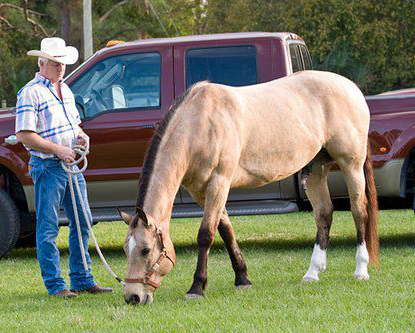
Horsemanship is about the horse–human relationship.
All healthy relationships must be rooted in mutual respect.
We asked horses to step into our world, and we are responsible for their care, training, and well-being.
There is nothing in my life beyond family that has been more rewarding than the horsemanship journey.
I wish you and your horse partner all the best!