

How To Pony a Horse

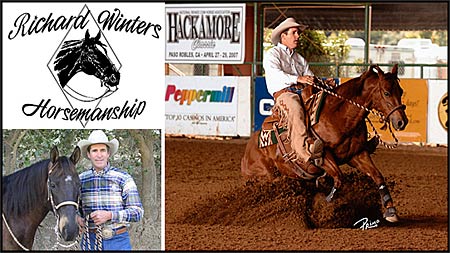
With Richard Winters
To pony a horse—lead one horse while riding another—start in a confined area so you can safely retrieve the led horse if you ever have to let go. Make sure your saddle horse is desensitized to a rope draped and bumping against his hindquarters, keep the lead rope out from under his tail, and never coil or wrap the rope around your hand or wrist. Practice on both sides, and rehearse first by having a friend on the ground hold one end of a rope while you manage your reins and lead rope at the same time.
The idea of ponying (leading) another horse, while riding your own horse, is an extremely common practice among horsemen. This skill can come in handy for myriad of situations. Perhaps you need to move another horse from point A to point B. Also, ponying another horse allows you to exercise two horses at the same time. Whatever the reason, this skill is worth learning for both you and your horse.
Here are a few things to keep in mind:
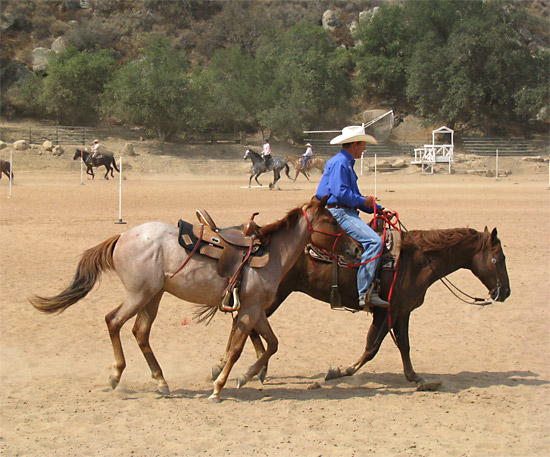
1)Stay organized - With another horse in tow, you now have two horses to control. Rein management is crucial. While leading the second horse, you will have to rein your horse one handed much of the time. If your saddle horse knows how to neck-rein, it will be to your advantage. If not, you’ll need to be able to shorten and lengthen your reins while riding predominately one handed.
2)Handle the lead rope with care - You never want the lead rope to be coiled or wrapped around your hand or wrist in a way that you could get hung up. In a worst-case scenario, you need to be able to let go of the pony horse before things get out of control.
3)Pay attention to your pony horse - Some horses, while being led from horseback, will begin to nip and bite the rump of the saddle horse. Your horse is likely to kick out at the rude pony horse, and now you have problems. Make sure the horse you are ponying stays respectful while being led.
4)Keep the lead rope out from underneath your horse’s tail - When your saddle horse swishes his tail, it’s easy for the lead rope to get stuck up underneath his tail. Many horses get very bothered in this scenario and will jump, kick out or even buck. Pay attention to your lead rope at all times.
How do you get started?
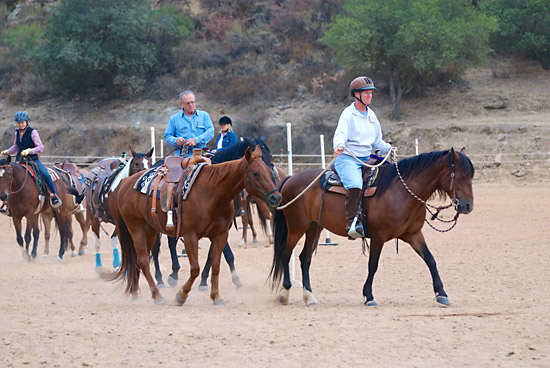
1 Begin in a confined area - This way, if you have to let go of the pony horse to avoid a wreck, you can safely and easily retrieve him again
2 Know how your saddle horse handles a rope around his hindquarters - You want your horse desensitized and comfortable with a rope draped and bumping against his rump
3 Simulate ponying a horse by having a friend on the ground hold one end of a rope while you practice managing your reins and lead rope at the same time - What happens when your “simulator” horse moves behind your saddle horse and tries to switch sides
4) Practice on both sides - When training young horses, I often work them from my saddle horse. This helps the young horse get comfortable seeing me above him. Stepping around in tight left and right hand circles shows the young horse how to disengage his hindquarters. I am also able to reach down and pat the colt all over his body from above. If the colt is saddled I will often tap the saddle and move it around on both sides as well. All this helps to prepare the young horse for his first ride. As with groundwork, working on both sides is an important step in the learning process.
Ponying a horse is not only a great skill for you, but it is a great skill for your saddle horse to acquire as well. It will make both you and your horse more versatile, confident and competent. This skill is an invaluable part of a well-rounded horsemanship education.
Richard Winters Horsemanship WintersRanch.com