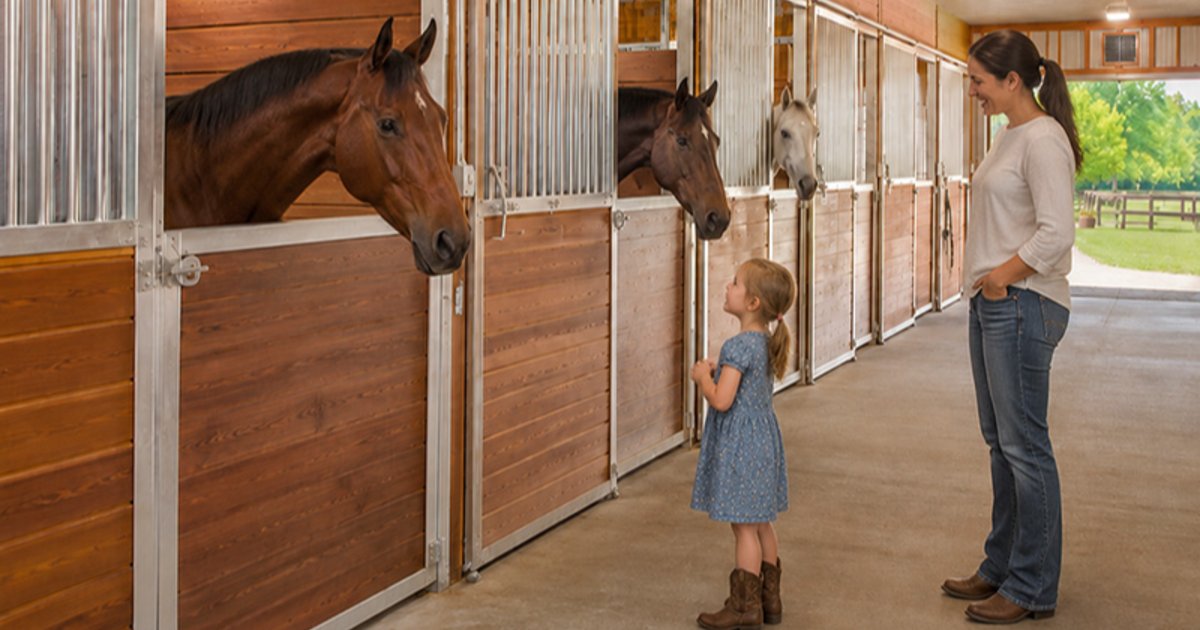


A good stable starts with ventilation—horses are sensitive to high temperatures and humidity, so windows and fans keep the air moving and the bedding from getting damp. Give each horse a roomy stall (the suggested minimum is 12 feet by 12 feet, and it’s best to err on the side of caution), plenty of natural light to keep their body clock on track, and sight lines to other horses, since they’re social creatures. Finally, store hay separately from the stable in a dry spot with plenty of airflow.
The horse is a magnificent animal with the strength and power to carry you through life. But they require a lot of care, so it's essential that you understand your horse's needs and how to best meet them.
This article will cover the essentials of setting up a stable so your horse can live comfortably and in good health.
Updated September 2026: We've added current guidance from university extension specialists and equine researchers—stall sizes for every size of horse, how much fresh air a barn needs, the hay temperatures that warn of a fire, and a setup checklist you can take to the barn.
Ventilation: Keep Fresh Air Moving
Ventilation is a key part of most stable designs, as horses are sensitive to high temperatures and humidity. A well-ventilated stable will help keep your horse comfortable during hot weather, and it also means that your horse's bedding won't get damp from moisture in the air. Most stables have windows in some places, but you may also want to install fans or other mechanical ventilation systems.
For example, you can install a fan over the stall door if your horse has trouble standing straight due to arthritis or other joint problems. This type of ventilation helps cool down the area by moving air through it quickly. However, this might not be necessary if you live in an arid climate!
How much fresh air does a barn need?
More than most people think. Penn State Extension recommends 4 to 8 complete air changes every hour in cold weather—all of the air in the barn replaced every 7 to 15 minutes—and far more in summer, when the job shifts from clearing out moisture to carrying away heat. The air needs a way in and a way out: permanent slot openings under the eaves let fresh air in, and an open ridge vent at the peak lets warm, damp air escape.
For hot weather, plan windows, vents and Dutch doors that open up to 5 to 10 percent of each stall's floor area. In a 12-by-12 stall, that works out to about 7 to 14 square feet of opening—a good-sized window, or the open top half of a Dutch door.
The nose test: A healthy barn smells like fresh hay and clean horses, not manure or ammonia. If the ammonia stings your eyes when you walk in, the air down at bedding level—where your horse eats, rests and lies down—is even worse.
Don't seal the barn up for winter
Shutting every door and window to hold in warmth does more harm than good. Penn State calls closing a barn up tight just to stay above freezing a management mistake for both air quality and horse health, and advises keeping the stable no more than 5 to 10°F warmer than the outside air. If you see condensation dripping inside, the barn is closed up too tight.
Horses are built for cold. Their comfort zone runs from roughly 45 to 75°F, and a healthy horse with a full winter coat and plenty of hay handles far colder weather than that. What they handle poorly is damp, stale air full of ammonia and dust.
Choose fans built for barns
If you add fans, buy ones rated for agricultural use, with sealed, dust-tight motors. A household box fan's open motor packs with dust and chaff, overheats and can start a fire, and Penn State's fire-prevention guide says to use only agricultural-rated stall fans. Our guide to the best fans for horse barns and stalls covers sizing and placement.
Large Stalls: How Big Should a Horse Stall Be?
The size of your stable will depend on the number of horses you have and the size of each horse, as different breeds vary a lot on size, just take for example a Thoroughbred and a Falabella horse. The size of your horse's stall is essential in creating a stable environment. The suggested minimum size for a horse's stall is 12 feet by 12 feet, but this may vary depending on the breed and temperament of your horse. When choosing a stall size, you should always err on the side of caution so that there is ample room for your animal to move around freely and lie down comfortably.
Here is how that plays out by size of horse, based on university extension guidelines.
- Ponies and miniatures: box stalls can be smaller, depending on the breed; 10 by 10 feet suits most ponies.
- The average 1,000-pound riding horse: 12 by 12 feet, the standard recommendation from Penn State Extension and the University of Kentucky.
- Big warmbloods and draft horses: 14 by 14 feet or larger. A good check is that each stall wall should be about one and a half times your horse's body length.
- Foaling mares: roughly double a standard stall. Many barns simply take out the divider between two stalls; the University of Kentucky suggests 16 by 20 feet or more where the layout allows.
Height and doors matter as much as floor space. Penn State recommends ceilings of 10 to 12 feet, with 8 feet as the bare minimum, and stall partitions about 8 feet high—never less than seven and a half—so a horse can't get a leg over. Plan doorways about 4 feet wide and 8 feet tall, and hang swinging doors so they open into the aisle, not into the stall.
Latches should work with one hand and sit where a clever horse can't reach them. Leave less than 3 inches of clearance under a stall door so a hoof can't slide under and get trapped. For a deeper look at stall construction, see what makes a good horse stall.
Room to lie down, and to get back up
A roomy stall isn't only about comfort. A horse that lies down or rolls too close to a wall can get cast—stuck with its legs against the wall and unable to get up—and a frightened, cast horse can hurt itself and the people trying to help. Give your horse enough room to lie flat, and if you have one that rolls a lot, look at anti-cast strips and other horse stall accessories.
Floors and Bedding That Stay Dry
A good stall floor gives a little underfoot, stays level, isn't slippery and doesn't soak up odor. No single material does it all, which is why so many barns lay rubber stall mats over a compacted, well-drained base. Most stall mats run from half an inch to three-quarters of an inch thick. Penn State also recommends keeping the finished floor at least 12 inches above the ground outside, so water runs away from the barn instead of into it.
Mats cut down on bedding, but they don't replace it. Bedding soaks up urine, and wet bedding is where ammonia comes from. That matters more than it sounds: horses spend hours with their heads down near the floor, and Penn State warns that high ammonia at floor level can damage the lining of a horse's throat and lungs. Pick out manure and wet spots every day, and strip the stall often enough that it never smells. Here's more on how stall bedding affects horse health.
Light: Daylight First
Horses are large animals that need to consume a lot of food, and they do best on a steady daily routine. Light helps set that routine, because daylight is the cue a horse's body clock runs on. Most horses sleep during the night and stay awake during the day, so it's important to ensure that there is enough light available in your stable for them to keep a natural day-and-night rhythm. It's best to provide them with natural sunlight, however, if this isn't possible, you could use artificial lighting instead.
Day length matters as well: it is how a horse's body keeps track of the seasons, which is why breeding barns put mares under lights in winter. Iowa State University's lighting program keeps open mares under lights for a total of 16 hours a day, starting around the first of December, and most begin cycling by mid-February. For everyday stalls, Penn State recommends at least 4 square feet of window in each stall.
When you add electric light, mount the fixtures at least 8 feet high, out of reach of a tossing head, and put them inside shatterproof cages. Choose fixtures made for agricultural use, because barn dust and damp are hard on household lights. Our barn and arena lighting guide covers choosing and placing them.
Water and Feed
A horse needs clean water in front of it around the clock. Purdue Extension says a mature horse drinks at least 1 gallon per 100 pounds of body weight a day—about 10 gallons for a 1,000-pound horse—and heat, hard work, nursing a foal and a diet of dry hay all push that number higher. Buckets let you see how much each horse drinks; automatic waterers save labor but need a daily check to make sure they're working.
Fasten water buckets and feeders to the wall at about the height of your horse's chest, and keep them apart so feed doesn't end up in the water. Hay is different. Equine nutritionist Dr. Anna Pesta Dunaway notes that a horse pulling hay from a net or manger at chest height or higher is more likely to breathe in dust, while eating in a natural head-down position helps clear the airways. If your horse coughs or has sensitive lungs, feed hay low, in a ground-level feeder or on a mat.
In cold country, plan for winter water from the start: a frozen bucket is an empty bucket. See how to help your horses drink water all year round for heated buckets, tank heaters and backup plans.
Interaction with Other Horses
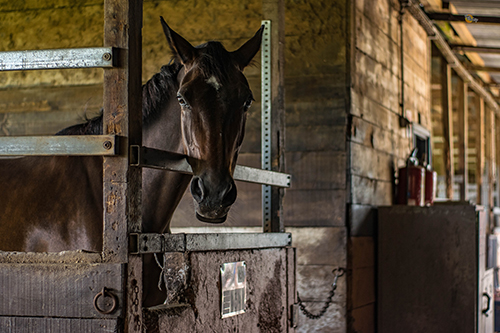
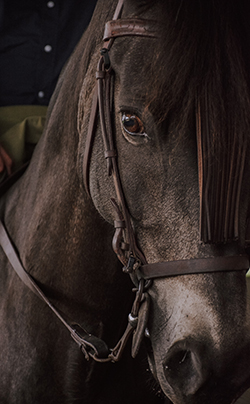 Horses are social creatures and need to be around other horses and people. They also need to interact with other species and animals. If you have more than one horse, the horses need to know that they are not alone in the stable. Ensure horses can see each other from their stalls. If you only have one horse, keeping them company by spending time with them is good. Horses also love other animals; a stable cat might be an excellent way to keep them company!
Research backs this up. In a study published in Applied Animal Behaviour Science, stabled horses that were given a view into the neighboring stall through a grille weaved significantly less. Weaving is the restless side-to-side swaying some stalled horses develop. Solid walls between stalls may head off squabbles, but they also leave a horse alone for most of the day. Stall fronts with open bars, and partitions with a grille at the top, let neighbors see and sniff each other while keeping them safely apart.
Turnout: Time Out of the Stall
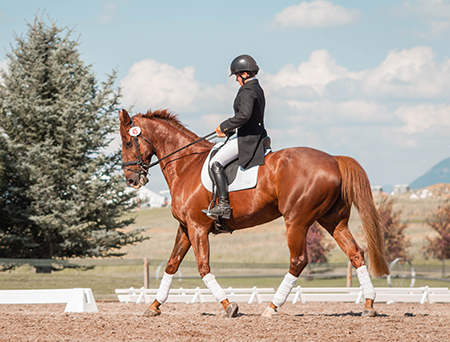 Even the best stall is a place to rest, not a place to live. Horses evolved to walk and graze for most of the day, and long stretches of confinement are linked to colic, stiffness and stall vices. In its colic-prevention advice, the University of Connecticut Extension says to avoid keeping horses stalled more than half the time, and to keep them active beyond turnout alone. See our article on horse turnout for how to plan it.
Store the Hay Separately
Hay storage is best kept separate from the building. The hay should be kept in a dry place, preferably away from animals and other types of livestock. Hay is best stored in an area that gets plenty of airflow. If your horse has access to a barn, you can hang racks of hay on the wall or ceiling and allow the air to circulate around it, keeping it dry and fresh. However, if you don't have room for this, you can use large plastic containers with lids and ensure there are screens over all windows so flies cannot get inside!
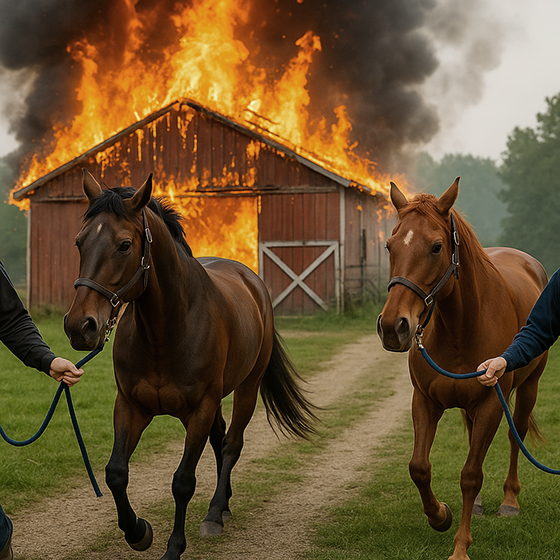
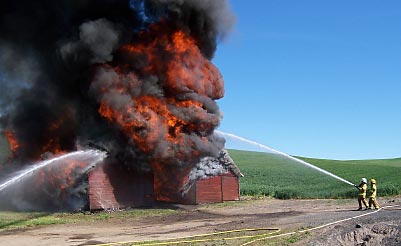
Keeping hay out of the horse barn is also one of the best fire precautions you can take. Hay baled too wet, above about 20 percent moisture, keeps heating as microbes break it down, and it can get hot enough to burst into flame on its own.
Most hay fires happen within six weeks of baling, so new hay deserves the most attention. Penn State recommends storing hay in a separate building, ideally downwind of where your horses live.
Hot hay warning signs: Check new hay with a long probe thermometer pushed into the middle of the stack. At 150°F, check it twice a day and pull the stack apart so air can move through it. At 160°F, check it every couple of hours. At 175°F, call the fire department, and don't move the hay yourself, because fresh air can make hot hay burst into flame.
Fire Safety Basics for Every Barn
Barns are full of dry fuel—hay, shavings, dust and cobwebs—and a stalled horse can't get itself out. Penn State's fire-prevention guide comes down to a handful of habits.
- No smoking anywhere at the barn. Post the rule and enforce it.
- Protect the wiring. Keep cords and wires where horses can't chew or step on them, replace anything frayed, and have an electrician confirm the wiring meets code.
- Use barn-rated equipment. Only agricultural-rated fans and light fixtures, no dangling heat lamps, and never a space heater left running unattended.
- Keep extinguishers handy. Mount ABC-rated fire extinguishers where anyone can grab one quickly, and have them inspected every year.
- Keep it clean and clear. Sweep up loose hay, knock down dust and cobwebs, and keep aisles and exits free of clutter.
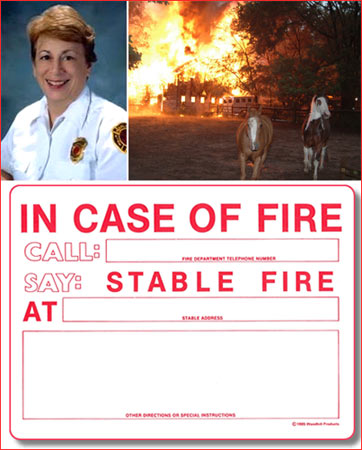
Plan the worst day ahead of time, too: know how you would get every horse out, and where you would put them. Our guide to horse barn fire prevention goes deeper.
A Stable Setup Checklist
- Stalls at least 12 by 12 feet for an average horse, bigger for large horses and foaling mares
- Permanent openings at the eaves and the ridge, plus agricultural-rated fans for summer
- Ceilings 10 to 12 feet high, partitions about 8 feet, doorways about 4 feet wide
- Rubber mats over a well-drained base, topped with absorbent bedding
- At least 4 square feet of window per stall, and caged light fixtures 8 feet up or higher
- Clean water around the clock, with buckets and feeders fastened to the wall
- Grilles or open bars so horses can see their neighbors
- Daily turnout, with stall time under half the day
- Hay stored in a separate building, with new hay temperature-checked
- No smoking, protected wiring, and fire extinguishers inspected every year
Conclusion
Horses are beautiful creatures. Many people like horses for various reasons; some love horse riding, others love watching horse races. However, if you are lucky enough to have your own horses, use these tips to ensure they are happy in their stables.
Sources: the university extension guides and research used for this update.
- Penn State Extension: Horse Stall Design; Horse Stable Ventilation; Horse Stable Flooring Materials and Drainage; Fire Prevention Measures for Equine Facilities
- University of Kentucky, via Extension Horses: Equine Facilities: Stall Dimensions
- Purdue Extension: Nutritional Management for Horses
- Iowa State University Extension: Lighting Programs for Mares
- UConn Extension: Colic: Its Risk Factors and Prevention
- Extension Ag Safety: Preventing Fires in Baled Hay and Straw
- The Horse: Supporting Your Horse's Airways Through Nutrition
- Cooper, McDonald and Mills, Applied Animal Behaviour Science (2000): The effect of increasing visual horizons on stereotypic weaving