

Inexpensive Treatments for Hoof Diseases in Horses That Really Work
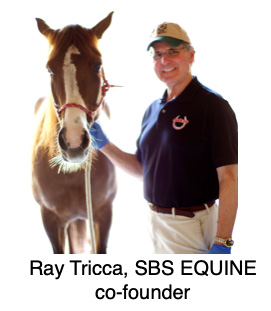
Ray Tricca, SBS Equine co-founder
Affordable hoof-disease treatment works best as an ongoing plan rather than a one-time fix—deeply rooted infections like white line disease and chronic thrush are nearly impossible to eradicate with a single application of any topical agent. Have your farrier trim away diseased tissue first to open the hoof to oxygen, then keep the feet cleaned by washing, picking, and brushing, and apply economical commercial preparations that stop bacteria and fungi without harming sensitive hoof tissue.
Avoid caustic household chemicals, which can harm healthy tissue and slow healing; time-release gel formulas are especially effective because of the extended contact time they provide inside hoof cracks and voids.
Beware of the Quick-Fix!
After 35 years in the hoof care business, I have learned that the first line of defense against hoof disease is usually your farrier. When identified, many horse owners expect their farrier to do a quick-fix on a suspected hoof infection as a part of their routine trimming and shoeing. However, most of the hoof care professionals that I know have provided sound advice in the form of an Action-Plan for dealing with these issues. The reality is that deeply rooted infections such as white line disease and chronic thrush are nearly impossible to eradicate with one application of any topical agent.
Bacteria and fungi are very adept at hiding among healthy hoof tissue through millions of years of evolution. One application of a robust chemical agent usually will not stop them. Unless you can get to the infection early enough, repeated use of these chemical agents can be counterproductive. Caustic chemicals can be effective against bacteria and fungi, but their continued use can be harmful to surrounding healthy hoof tissue and slow the healing process.
An Action-Plan That Works
When a hoof disease is identified, the horse owner or handler should share the responsibility for the follow-up treatment in between farrier appointments. Your farrier or vet’s recommendations on what topical agents to use and how frequently they should be applied are essential to a successful Action-Plan.
Removing diseased tissue and trimming the flaps of the frog are critical first steps to be done by the farrier. Trimming opens up the hooves to oxygen which gives a head start to the healing process. Improperly trimmed feet prevent oxygen or topical ingredients from entering the crevices where the disease usually progresses.
The horse owner should ensure that the feet are cleaned regularly by washing, picking & brushing with a good hoof pick. Most professional farriers recommend well-established commercial preparations for treatments that are known to be safe and effective against hoof disease. They know that home remedy recommendations, no matter how well-intended, can be dangerous and lead to permanent damage to the hoof structure, and lead to possible litigation if the home remedies prove damaging.
Hoof researchers have discovered that there are many economical hoof treatments that can stop bacteria and fungi without harming sensitive hoof tissue. Most pharmaceutical strength formulas that are sold commercially are not harsh or harmful to hoof tissue when used as directed. This means that they can be used more frequently than caustic home ingredients.
This keeps the infections under control and healthy hoof tissue a chance to grow-out and prosper as nature intended. Do not expect to kill all the dangerous organisms initially. Consistent use of an eco-friendly commercial product can slow disease advancement to the point where it may grow out with successive trimmings by the farrier.
Common Hoof Problems & Solutions Recognized by Hoof Care Professionals
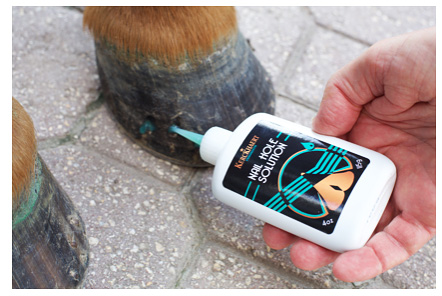
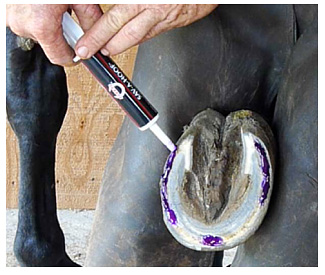
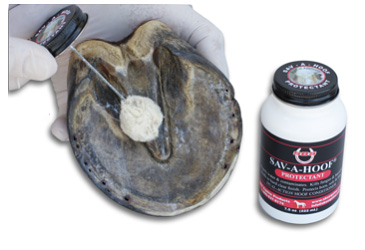
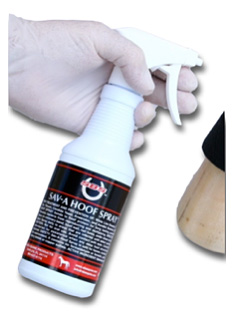
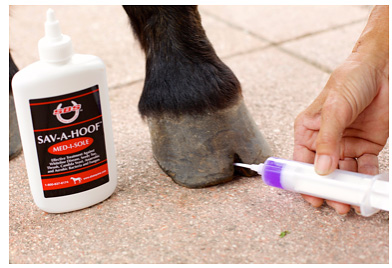
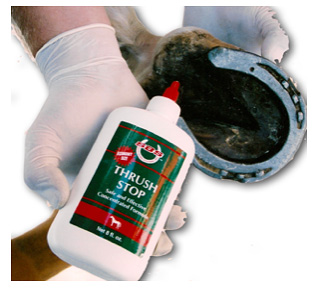
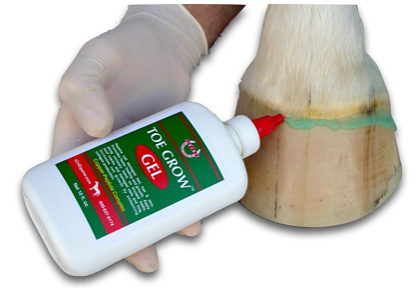
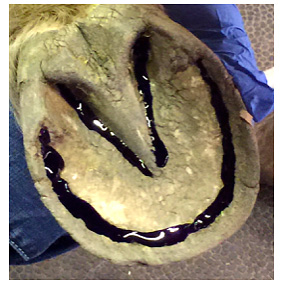
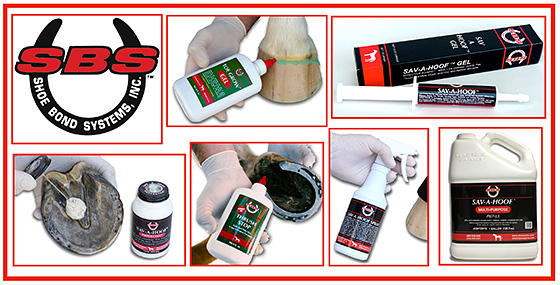
Stain-marking gel products are gaining in popularity. They turn diseased hoof tissue a dark blue color. The stain shows where to add more gel as the color fades. Gel products are used frequently along the horn rim, in voids, nail holes, under shoes, and pads.
These time-release gel formulas are longer lasting than liquids and improve the critical contact time that is needed to affect the fungal spores within the sulcus of the frog and white line area without running off.