

Is Your Horse Really Broke?
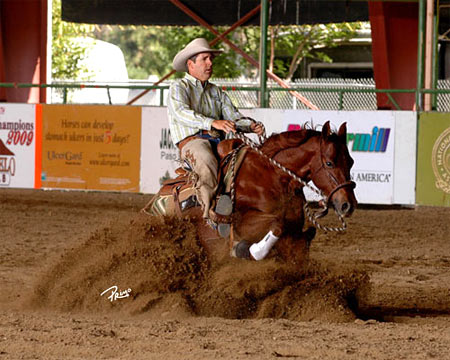
A horseman must take all the parts of the horse’s body and bring them together in perfect balance and harmony.
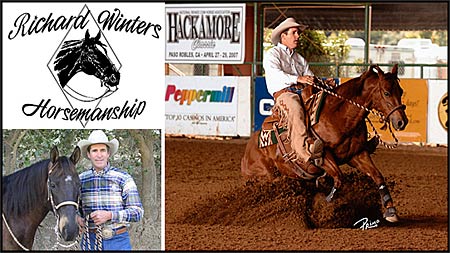
By Richard Winters Horsemanship
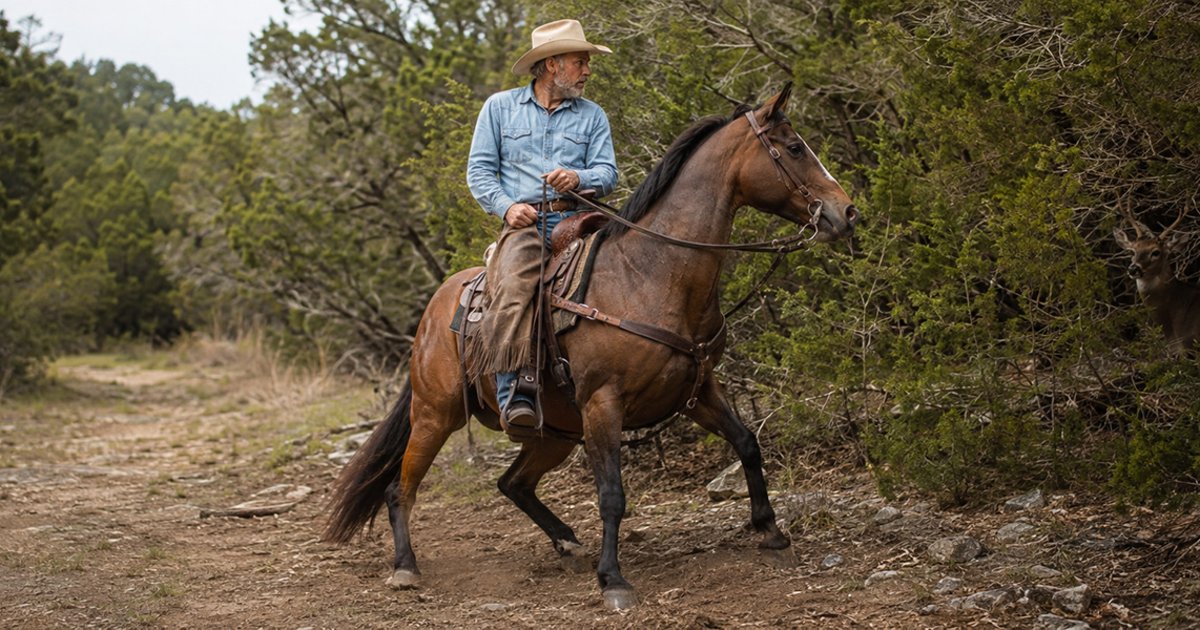
A horse isn’t truly broke until he’s broke through his body—able to yield his head and neck, shoulders, rib cage, and hindquarters independently, then move all of those parts together in balance and harmony. Trainer Richard Winters tests this with two backing exercises: backing a circle with the horse’s body arced into the circle, and backing a circle with the horse counter-bent away from it. A horse that performs both proficiently is well on his way, and the exercises immediately reveal any sticky or bracy spots that still need work.
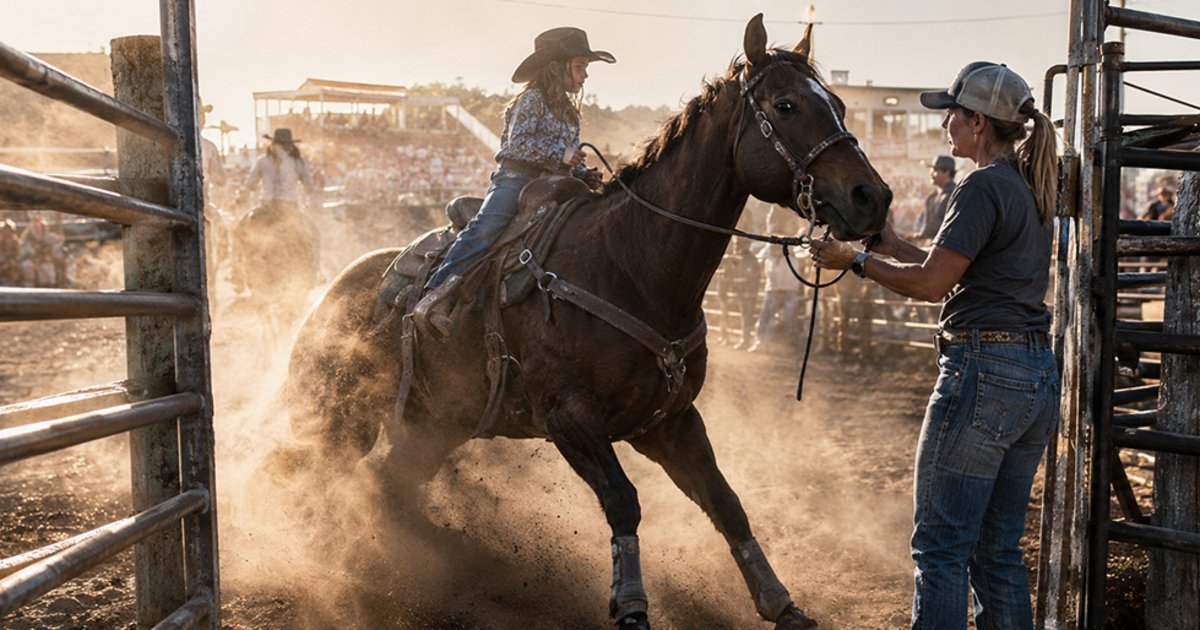
My daughter has spent the last two years as assistant trainer to one of the National Reined Cow Horse Associations million-dollar -riders. While she was home for Christmas we had the opportunity to ride together. This was my chance to “de-brief” her. While we were working some young horses on a flag (a mechanical cow), she said, “Dad, I’ve really learned how important it is to get a horse “broke through their body.” As I schooled my colt back and forth on the flag, Sarah pointed out bracy spots in my horse’s body that needed to be addressed if I wanted to advance his performance.
What does it mean to be broke through the body? We know it’s important to have body control. I have exercises that teach my horse to yield his head and neck, shoulders, rib cage, and hindquarters. It’s crucial to be able to move each of these body parts independent of each other. When I am able to put all these parts together and move my horse’s body in concert with itself, that’s what I consider to be “broke through their body.”
A baker will knead dough until its texture is consistent throughout. A potter will mix clay until the moister content and pliability are correct. A horseman must take all the parts of the horse’s body and bring them together in perfect balance and harmony. Although working the individual body parts is important, the next step is to utilize them as a team. This is when a horse truly becomes “broke though his body.”
Here are two exercises that help me achieve this goal: Both of these exercises involve backing in a circle. What separates them is how you shape your horse’s body in the backward circle. One is arcing your horse’s body into the circle. In other words, your horse’s body is aligned, like a train on a track, to the circle you are making. The second is a backward circle with your horse counter bent. In this circle your horse’s body is arced away from the center of the circle. On the inward arc you would be able to see your horse’s inside eye. On the counter bend or outward arc you would be able to see only your horse’s outside eye.
If you can perform both of these backward circles proficiently, then I believe you are well on your way to getting your horse “broke through his body.” These exercises are also a great way to diagnose where you might have sticky or bracy spots in your horse. You’ll discover immediately whether you can, or can not, put any part of your horse’s body in any given position at any given time.
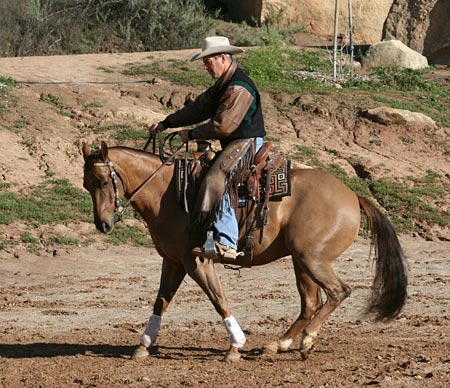
To back in an inward arcing circle (we’ll say to the left) I will use predominantly my left rein and my right leg. My left rein will keep my horse’s nose tipped to the left while my right rein helps to keep my horse balanced and soft in his face. My right leg will be back toward my rear cinch. My right leg in this position is encouraging my horse to move his hip to the left as he backs.
Remember to keep his left eye in sight. This will be an indicator that his body is arced in the desired direction. It will also be demonstrating that you have picked his shoulders up with straightness. If you were to video tape your horse walking in a small circle with a lot of bend and arc in his body, then played the tape backward, that’s how this backward circle should look. The arc and bend stay exactly the same as when you were walking forward.
This exercise will begin to create a softness and suppleness in your horse that we all desire.
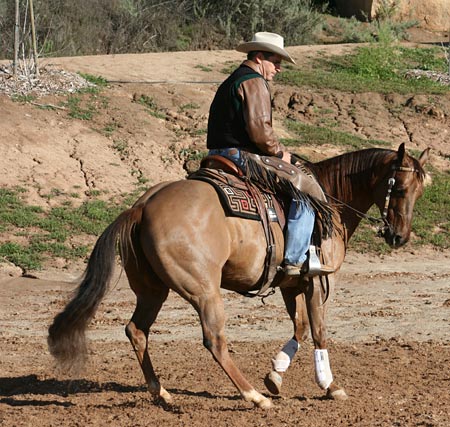
The counter bent circle (to the left) require that my right rein and right leg work in concert. My right rein is further out to the side than the left rein was in the preceding exercise. I want to see his right eye and maintain significant bend to the right through my horse’s head and neck. I will use my left rein to keep my horse balanced and backing. My right leg will again be back by the rear cinch, asking the hindquarters to yield to the left. This counter-bent backward circle is often used to help cow horses learn to “come through themselves” in a turn with the cow.
This is how it works: While backing to the left; I am using predominantly my right rein and right leg. When I feel he is stepping correctly, with softness, I can open my right leg and bring my horse through a 180 degree turn to the right. I’ll lead him across with my right rein and support him with my left neck rein and left leg. Backing this circle, in preparation for the turn, puts my horse on his hind end and also gets his shoulders picked up.
This is great practice when using the predictability of a flag or mechanical cow. If I’m standing parallel to the flag, ready to make a right turn, I can back my horse in a counter-bent circle to the left 360 degrees and then send the flag to the right. Now, I open my right rein and leg to allow my horse to make a balanced turn over his hocks, following the cow.
Getting a horse broke through their body takes continual monitoring and maintenance. You can start right away. Practice these exercises and evaluate yourself. Find out what parts are working and which are not. With diligent consistency you’ll create a horse that is more willing, softer, and yielding. You’ll appreciate the improvement and your horse will be more prepared for performance.
For more information about Richard Winters Horsemanship please go to wintersranch.com.