

Cross Country Horse Hauling
A horse can haul very comfortably for about 500 miles without being unloaded, provided there is hay in the manger, good ventilation from open vents or drop-down windows, and a drink offered midway through the day in warm weather. When crossing state lines, carry a copy of a negative Coggins test—normally good for at least six months—and a health certificate, which is generally valid for only thirty days. In regions of extreme heat or humidity, hauling at night keeps the trailer from turning into a sauna.
From Richard Winters Performance Horsemanship In March my wife and I, along with two horses and a little dog, embarked on a two month horsemanship tour where we’ve been conducting clinics and presenting at horse expos around the country.
Our stops have included Tennessee, Nebraska, South Dakota, Ohio, Pennsylvania, and Wisconsin. By the time we return to California we will have hauled our horses over 7,000 miles. For the veteran horse hauler, this is no big deal. For the novice who rarely hauls further than the local county fair, it might seem overwhelming.
Here are a few considerations and helpful tips for your next big road trip. Trailer Maintenance – Repacking the wheel bearings, checking brakes and lights, along with inspecting your trailers flooring are all important items to have inspected before heading out.
Trailer Bedding – Even with quality rubber mats on your trailer floor; some type of bedding will be important to prevent your flooring from becoming dangerously slick from manure and urine.
Documentation – When traveling over state lines you’ll need to have a copy of a horse’s negative coggins test and a health certificate and or brand inspection. Coggins tests are normally good for at least six months. Health certificates are generally valid for only thirty days. Any veterinarian can assist you with these tests and documents. I also like to have a bill of sale or registration papers that prove ownership should any questions arise at boarder crossings.
Feed – On an extended trip it probably is not practical to haul all of the hay your horses will need. As you travel through different regions you’ll find that hay quality and types vary significantly. By the time I reached Tennessee I could not find any more alfalfa. (This is what my horses had been eating.) Before I finished my last alfalfa bale, I began feeding some of the new grass hay I had purchased in Tennessee. Making this incremental transition helped my horses adjust to the new feed. You can also consider processed bag feed that would be more consistently available in different regions.
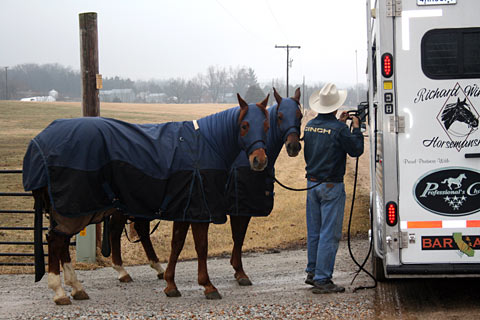
Climate Changes – The temperatures in California are much different than what might be found in South Dakota. Before leaving, I outfitted each of my horses with a lite sheet and hood along with a heavy set as well. You should also pay attention to temperature changes throughout the day. You might load up on a frosty morning with heavy blankets on your horse. By the afternoon you’re 300 miles away and it’s 70 degrees. Now your horse is hot and sweaty underneath an uncomfortable blanket.
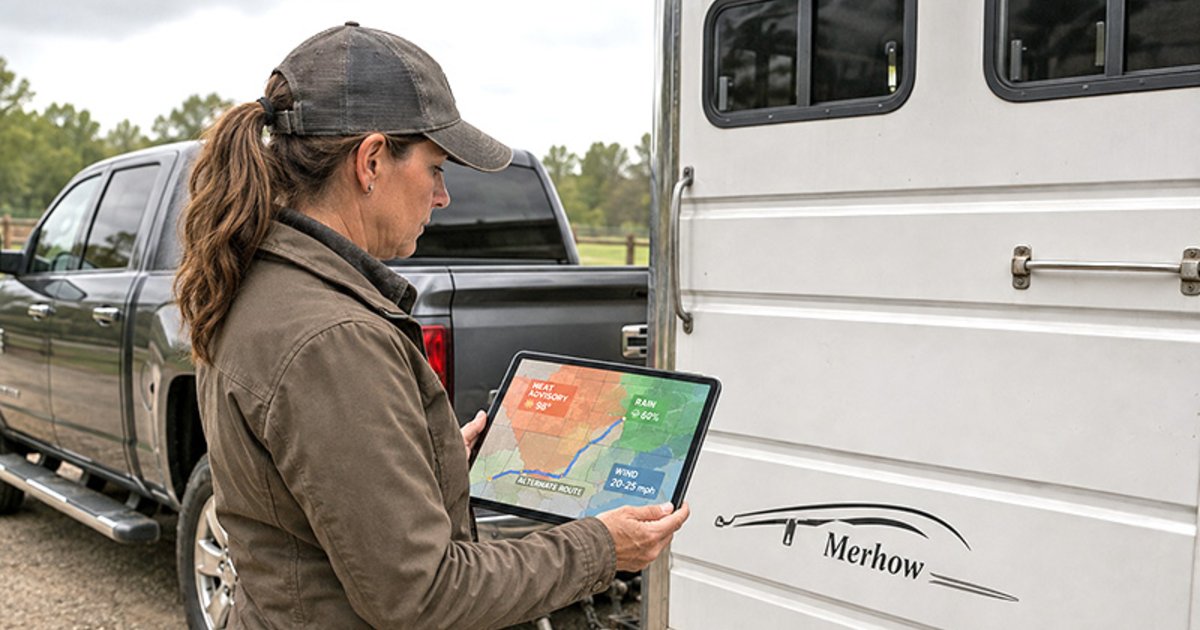
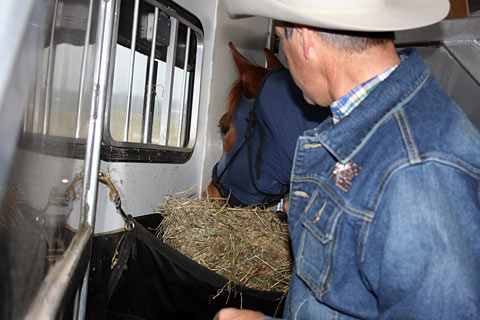
Duration of Travel – It’s been my experience that a horse can haul very comfortably for 500 miles without being unloaded. I try to always have hay in the manger for my horses to eat. If the weather is extremely warm, I’ll offer a drink to my horses midway through the day. Don’t allow your trailer to turn into a sauna. Opening vents and or drop down windows is important for good ventilation. Hauling at night is also a viable option when traveling through regions where temperatures are 100 degrees plus or humidity is extremely high.
Overnight Stabling – Twenty-five years ago I would carry a small directory of horse hotel listings from around the country. In this high tech age, my wife simply googles (for example), “Lincoln, Nebraska Horse Hotels” while we’re driving down the highway. When she finds one that seems appropriate and accessible, I call them up and make arrangements to be there in a couple of hours.
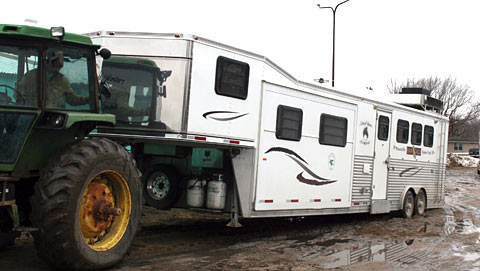
We drive a pretty big rig. Inquiring about driveways and turn-a-round room is important with larger trucks and trailers. You find that most of these horse hotels cost approximately $15.00 - $20.00 per night and may also allow RV camping.
Vet Kit – As you know anything can happen when dealing with horses. When you’re on an extended trip you might be forced to deal with an accident or illness with your horse. When a vet is not immediately available, you should be prepared to administer some immediate care until professional help arrives. A few items in my kit include: Bute paste (pain reliever and anti-inflammatory), Banamine paste (muscle relaxant), thermometer, antiseptic spray and salve, gauze pads, gauze rolls, cotton roll, and vet wrap.
As with children, every horse has different traveling needs. Some are low maintenance while others require more consideration. By remembering and applying good horsemanship skills most of the drama and trauma can be removed from your horse hauling experience.
For more information about Richard Winters Horsemanship please go to wintersranch.com.