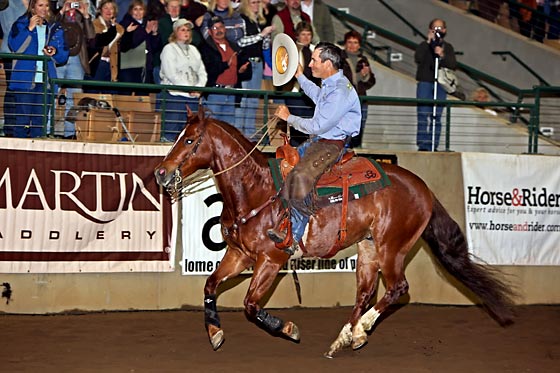


Colt Starting Part 1, What Can You Expect in Sixty Days Richard Winters winner of the Road to the Horse
After a sixty-day colt starting program, a young horse should lead and follow respectfully, stand tied, pick up all four feet for trimming or shoeing, readily enter and exit a trailer, accept saddling without a fight, lunge in both directions, stand still for mounting, and be ridden at the walk, trot, and canter with fairly smooth transitions. He should also stop and back up, be learning to yield away from leg pressure, and be ridden outside the arena as well as inside it. Road to the Horse winner Richard Winters stresses that every colt is an individual—some progress faster and others need more time—but most should understand these basics at the end of a sixty-day foundation.
This is the time of year when all the colts and fillies are turning two and three.
Have you considered when and where you are going to enroll your “youngster” in school? Colt Starting Part Two, One Step at a Time Colt Starting Part 3, Mounting Up and Riding Off
Many years ago Robert Fulghum wrote a book entitled, “All I Really Need To Know I Learned In Kindergarten” which became an instant classic. His theory was that the early education of a child is really the foundation of life skills that everything else is built upon. Regardless of your equine discipline, the foundation your colt receives will determine how well they perform, once in advanced training.
Starting horses has almost become a lost art. There are many fine horsemen who train and show horses successfully, yet starting the young horse has become just a necessary evil that must be dealt with prior to the “real” training process. Often this job is relegated to a less experienced assistant or the colt is sent away for a “Horse Breaker” to remove the bucks. If gold buckles were awarded for colt starting, perhaps more attention and care would be administered to the process.
Let’s suppose your colt has been with a reputable trainer for a few weeks. It’s probably time to visit, watch your colt work, and get your trainer's evaluation of his progress. There are some basic maneuvers that the trainer should be able to demonstrate with your horse. Whether you would be able to accomplish these things depends totally on your experience and horsemanship skills. Young horses demand a great deal of direction and support. If your colt does not feel leadership coming from you, you will not get the smooth responses you witnessed with your trainer riding him.
It’s important to know what your trainer's policy is in regard to getting both you and your horse together. If your colt will be continuing his education with another trainer this is not as important. However, if you are planning to take this horse home, to ride yourself, it would be valuable to spend time with your horse and trainer before leaving his facility.
* Is your trainer willing to spend this time with you?
* Will he or she demonstrate how the colt responds in different situations?
* When the trainer feels the colt is safe enough, will you be given some lessons with your colt, helping the two of you get together?
* Are these lessons included in the monthly training price, or is there an additional fee?
You’ll want precise answers to these questions in advance.
Generally speaking, green horses and green riders are not a very good combination for success. I recommend that experienced riders should handle green horses, and experienced horses are better suited for green riders.
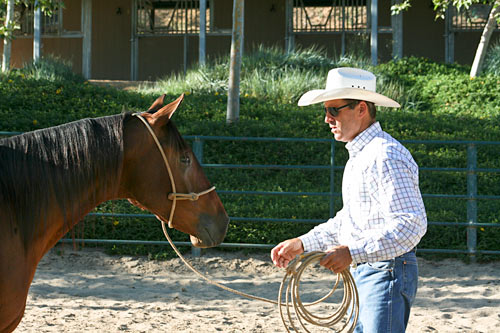
The following is a realistic list of expectations for a sixty day training program. Your Colt Should: * Lead and follow respectfully. * Be able to be tied and stand tied. * Be able to pick up all four feet well enough to be trimmed or shod. * Readily enter and exit a horse trailer. * Be able to be saddled without a fight, and bridled without being evasive or pulling away. * Be able to be lunged both directions and stand still for mounting.
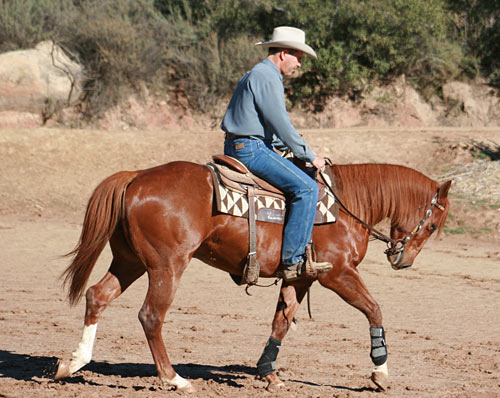
* Be ridden at the walk, trot, and canter in both directions. Transitions through these gaits should be fairly smooth. * Be able to stop and back up. * Be learning to yield away from leg pressure for lateral movement. * Be able to be ridden outside as well as inside the confines of an arena.
Allow me to stress that I am talking about the majority of horses, most of the time. I recognize that each horse is an individual and there are exceptions to every rule. Some colts will progress faster. Others will need more time. Some colts are naturally quiet and gentle while others are sensitive and high strung. Yet there are some basic principles that most colts should understand at the end of a sixty day foundation.
Finding a trainer who understands young horses and enjoys working with them is the key to success. Do not discount this essential time in their development. Build a proper foundation and it will last a lifetime! Colt Starting Part Two, One Step at a Time
For more information about Richard Winters Horsemanship please go to wintersranch.com.