

Teaching Your Horse To Handle A Rope - Part 2
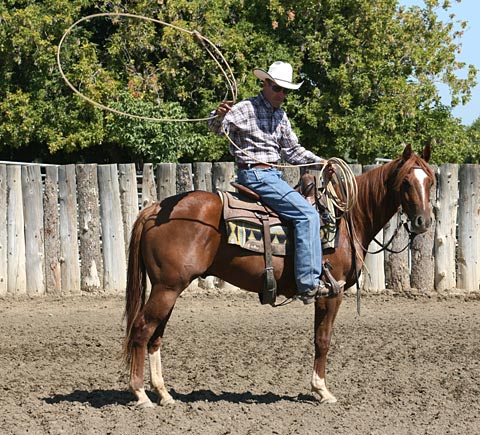
Once a horse has been prepared and desensitized to a lariat rope, those skills can be put to work on practical tasks such as ponying another horse and dragging a log. Clinician Richard Winters builds these skills gradually—using a helper on the ground to simulate the ponied horse, and introducing dragging with something light such as a small pole or tire—so the horse’s confidence is built, not shattered. Each task must be introduced systematically, and the rider must always be able to let go of the rope if the horse panics.
Last month we learned to prepare and desensitize your horse to a lariat rope in Part 1. With that preparation, it is now possible to use these skills to perform practical tasks. With Richard Winters
Ponying Another Horse:
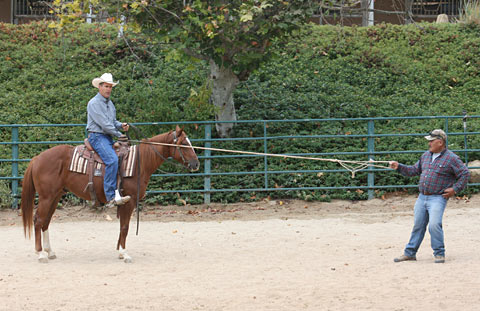
When you’re ready for a real horse, you should start with a quiet gentle horse at first.
You also need to know how concerned your saddle horse is with another horse tracking so close. Managing your own horse while dealing with the rope and an extra horse can be over-whelming if you haven’t prepared and if you don’t stay organized.
Dragging a Log:
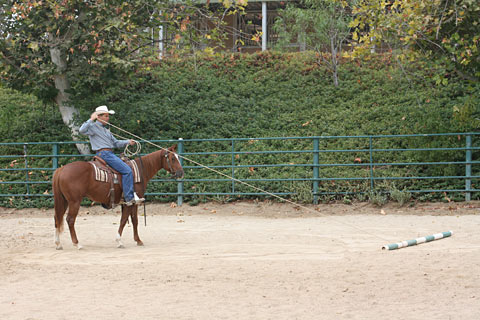
There are numerous competitions where dragging an object with a rope is required. Trail classes, versatility, competitive trail riding and extreme cowboy racing often incorporate this task during the contest. I introduce this to my horse with something light, such as a small pole or tire. I want to have the ability to pull the object with just the strength of my arm if I desire. This can be scary for some horses at first.
It appears like something very unnatural is happening. It can feel like this object is chasing them. Start off slow with small movements. It could be helpful to begin in a smaller arena such as a round pen. Face the object and give it a small pull. What is your horse’s reaction? Perhaps he is unconcerned. Or he might be thinking this object is going to eat him. This is your starting point. Now ride your horse up to the object and then ride past it to the other side.
Face it again and give it a small tug. Do this multiple times until your horse is comfortable with these small movements.
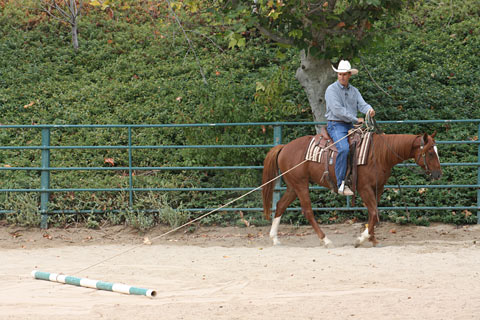
You are now prepared to drag the object. Walk by the pole and keep going until the rope is tight and the pole begins to move. Drag it a few feet and then turn your horse to face it. Remember, you must always be able to let go and be free of the rope if your horse panics and things fall apart. Now approach the pole and walk to the other side and begin dragging it a few feet in the other direction. All of these exercises are to build your horse’s confidence, not shatter it. Take the time it takes for your individual horse to get comfortable.
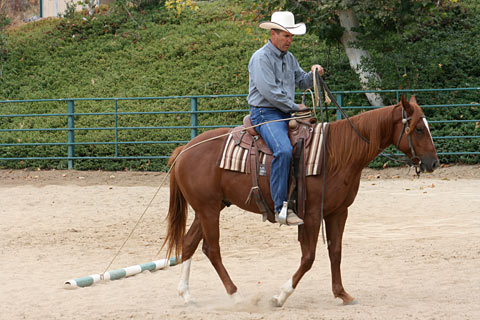
Your horse will also need to be desensitized to the rope along his rump when you move in the opposite direction. If you are holding the rope in your right hand, clockwise (right) turns will be safer. In that direction the rope is out away from your horse’s hind-end. When turning counterclockwise (left) the rope will rub up against your horse’s hind end. This can be scary for some horses. This is when you’ll know how well you’ve prepared your horse. You also need to take care that the rope does not get up under your horses tail in this configuration. That’s a pretty good way to get bucked off!
All of these things must be introduced systematically. You can never assume that something is alright until you’ve spent the time introducing it to your horse. As you and your horse develop these skills, you’ll both become braver and handier in many types of situations. When other riders feel overwhelmed and out of control, you’ll be able to exemplify good horsemanship and showcase a solid equine partner.
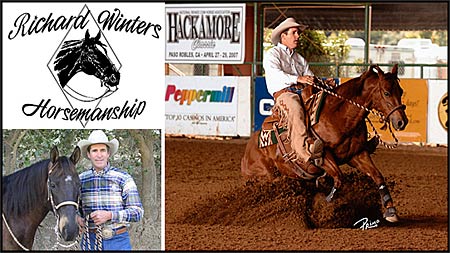
For more information about Richard Winters Horsemanship please go to wintersranch.com.