

Ropemanship -Teaching Your Horse To Handle A Rope
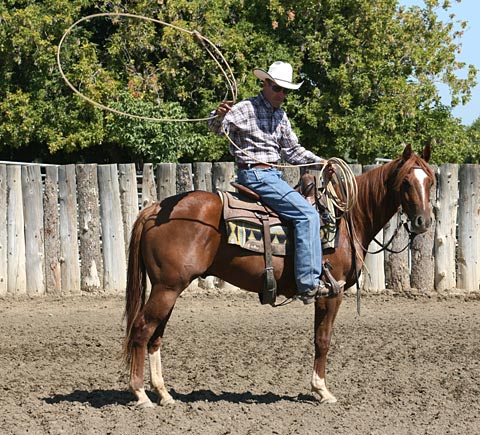
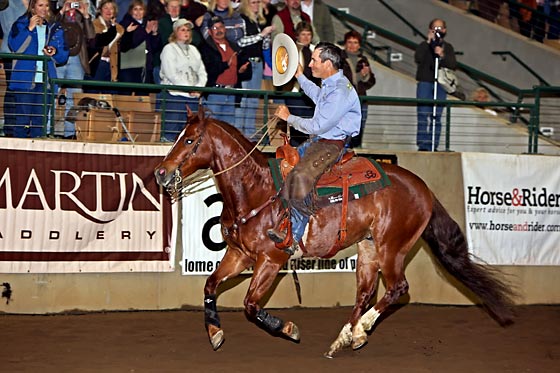
Introducing your saddle horse to a lariat rope and getting him comfortable with its use could go a long way in training your horse to become a safe and solid equine citizen. Performance Horsemanship with Richard Winters - Part 2 is Here
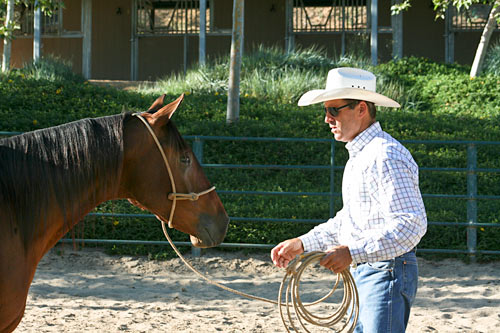
Getting a horse comfortable with a lariat rope starts on the ground: rub the rope over his body as if you were grooming him with a brush, using smooth, rhythmic movements and an approach-and-retreat method on ticklish areas, and do the work equally on both sides so he accepts the rope out of his right eye as well as his left. Once he is quiet, progress to handling the rope while mounted—a round pen helps if he is apprehensive—then build a small loop, swing it off to the side rather than over your head, and repeat until the horse is acclimated to all kinds of movement with the rope.
Even if you don’t plan on roping off of your horse, being desensitized and comfortable with the rope around his body could keep you out of trouble. It can also be helpful when attempting to pony another horse or even if your lead rope or mecate falls down around your horses’ legs while riding.Here are some things that you can do to start the process of getting your horse broke to the lariat rope:
1 Be handy yourself – How well do you handle a rope
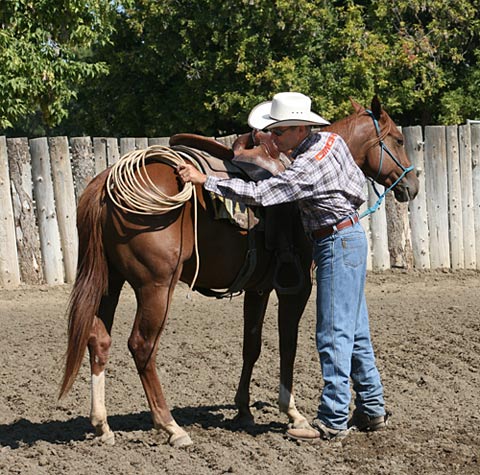
2. Start with ground work – You’ll want to begin by desensitizing your horse to the feel and sound of the rope on his body. Begin to use the rope on your horses’ body just like you would a brush. It would be as if you are grooming your horse with the rope. Be smooth and use rhythm with your movements. Start at a part of his body where he is comfortable and work toward those areas where he might be more ticklish.
If he is touchy about the rope around his legs, rub him on the shoulder with the rope and move down his leg and back up again – before he gets bothered. This method of approach and retreat in these areas helps a horse get braver and more confident. Take your time, these are things that you want to check out and make sure your horse can handle. You can also build a big loop and drape it over your horses’ hindquarters and lunge him in a circle.
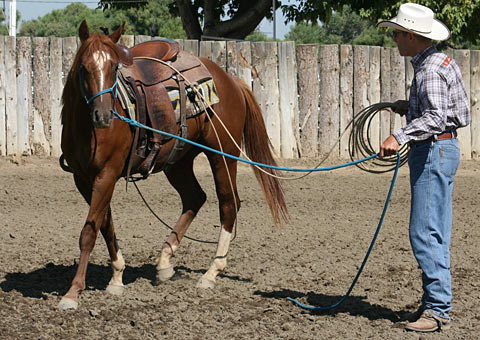
You want to make sure that your horse is not worried and is comfortable with a rope dangling around his hind legs. This is where it becomes very important to be organized: You need to be able to handle your lead rope and lariat rope efficiently to keep your horse out of trouble. If he gets scared with this exercise, jerks away from you and runs off with a lariat rope around his legs, you’ll shatter what little confidence you had established with your horse. Be sure and do all of this ground work equally on both sides. You want your horse to be comfortable dealing with the rope out of his right eye as well as his left.
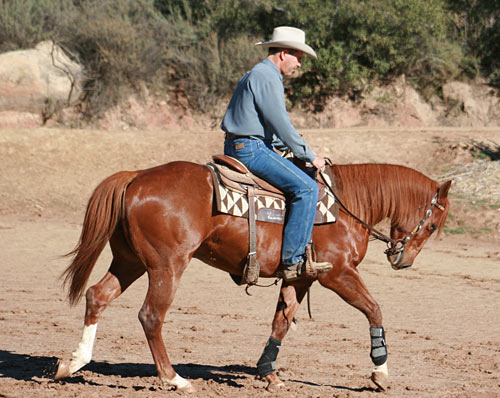
3 Handling the rope while mounted – For the novice rider, just managing the reins and controlling the horse is a full-time job
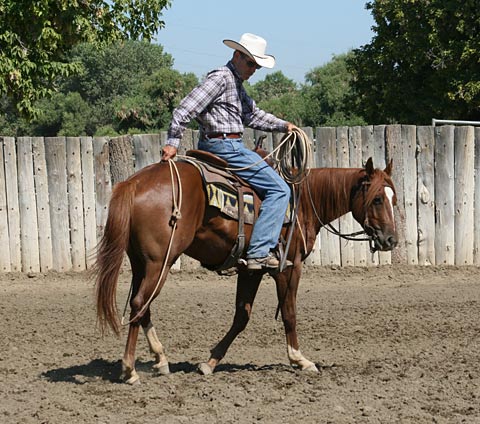
4 Building a loop – When your horse is comfortable with a coiled rope, while mounted, you can build a small loop in your rope to show him that your rope can potentially grow
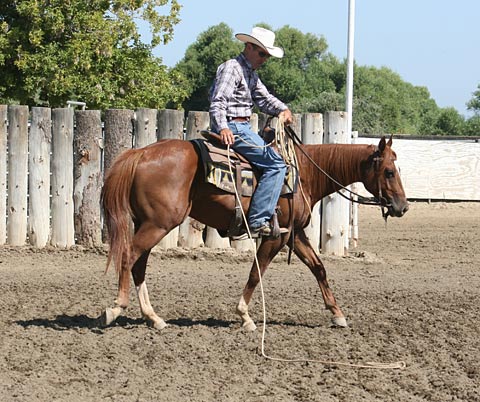
Again, it’s important to stay organized. You need to make sure that you can remove the rope at any point and you also want to be sure that you don’t get the rope up under his tail. Throw a few feet of your rope on the ground while holding the remainder in your hand. Begin to walk a circle around the rope, allowing your horse to look at it with his inside eye and get comfortable with its movement. Now, you want to be able to coil your rope back up while mounted and build another small loop. Swing the rope once or twice and toss it out on the ground again. You need to do these things repetitiously until your horse becomes acclimated and comfortable with all kinds of movement with the rope.
Getting your horse comfortable with a rope is similar to everything else we would want to desensitize him to. Be consistent, stay organized, be smooth and use rhythm in your movements. Taking the time to work on these skills will add value to you and your horses’ experience.
For more information about Richard Winters Horsemanship please go to wintersranch.com.