

Winter Water for Horses; Solve Your Winter Water Woes Once and For All.
Article written by Karen Elizabeth Baril
There’s an old saying; ask ten horse owners for their opinion…and…you guessed it…you’ll get ten different answers. This holds true on every topic, from what type of saddle to ride in to how to load your horse onto the trailer. But, ask ten horse owners what their biggest winter challenge is and they all agree; getting fresh, temperate water to the pasture or paddock. Old man winter’s frigid temperatures make meeting that challenge pretty tough.
Water troughs freeze over, buckets crack, hoses freeze, and power outages disrupt heated coils or buckets. Frozen or near frozen water is a serious problem that impacts far more than your time and budget; a lack of fresh, clean water is a serious equine health risk.
Water is the most important nutrient in your horse’s diet. Water keeps your horse’s joints lubricated, wards off colic, helps him to maintain his body temperature, and works to keep his nervous system strong. The average 1100 pound horse requires between 10 -12 gallons of water per day to stay properly hydrated. Signs of dehydration include a sudden lethargy, dry skin and mouth, sticky saliva, dry stools, or an increase in capillary refill time. Winter dehydration is a serious issue that cannot be disregarded.
Dehydration occurs when more fluids are being excreted through sweat or urine than your horse can take in. We tend to think of this as a summer or warm-weather problem, but winter brings its own challenges. In fact, most horses tend to decrease water consumption in winter. There are good reasons for this change in behavior; horses (just like their owners!) prefer fresh, clean water, offered at an ambient temperature. They tend to drink less water if it’s at or near freezing. The fact is; our horses do not like drinking cold water in cold weather.
A study at the University of Pennsylvania at New Bolton confirmed this theory. The study showed that ponies tended to drink 40 percent more water when it is offered at a warm or ambient temperature over water that is near freezing. It makes sense. Offer water that is fresh, clean, and temperate and your horse will likely stay well-hydrated. Still, keeping a constant supply of fresh, clean water when the temperatures dip below freezing is no small feat.
The perfect solution would provide a constant supply of fresh, temperate water that never fails, even in the midst of a power outage. If that sounds too good to be true, read on: we’ll offer a few options that meet some of those requirements and one that fits the bill perfectly.
A solar-heated trough: Solar-heated troughs work fairly well, providing the nighttime temperatures don’t fall too low. They do require sunlight to work effectively so a string of cloudy days can also cause them to fail. There are several solar troughs on the market, but you can also build your own. Typically, stock tanks and troughs have a large exposed surface and walls that conduct cold all too well, which is why they freeze over pretty quickly.
The solar-heated trough enlists some common building materials, including wood, rigid insulation board, and solar panels. The position of your trough is critical to your success; solar panels should face south and you want the trough in an area that receives a lot of direct sunlight. Solar-heated troughs still have to be emptied regularly to keep the water fresh. This creates a lot of mud or even ice patches near and around the trough.
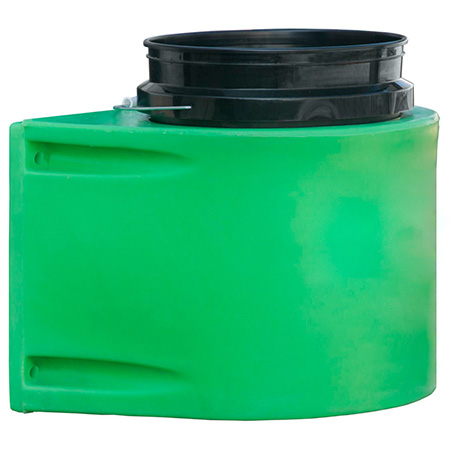
Insulated bucket holders work moderately well and require no electricity, but once again they will need to be emptied which will either create muddy or icy conditions. They will not keep water thawed in sub-zero temperatures. Insulated bucket holders work best inside the barn, solving the problem of fresh, ambient water in the stalls. Drinking Post Waterer: The Drinking Post Waterer works on the same principle as a frost-free hydrant.
Your horse controls the water flow by simply depressing a small paddle. When he’s finished drinking, the excess water flows back below the measured frost line, just as it does with a frost-free hydrant. It’s pretty ingenious and offers the most practical solution for all your winter water woes.
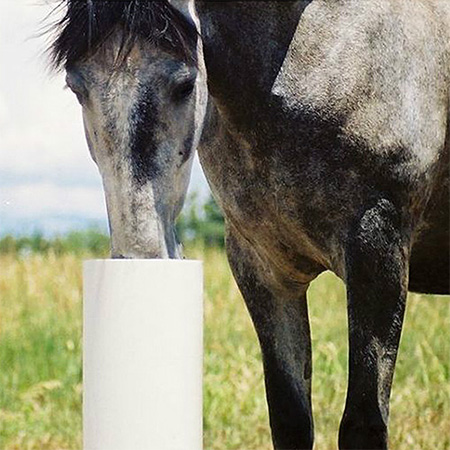
The Drinking Post Waterer offers many benefits: ' It can be installed anywhere you have a pressurized water line (45 psi of pressure or more), including pastures, barns, paddocks, and along double fence lines. ' It requires no insulation. Many other units on the market do require insulation so be sure to do your homework before opening your checkbook. ' It operates as a hydrant so it never freezes, never overflows, never needs to be emptied, and never grows algae. ' It requires no electricity so there is no risk of shock.
It pays for itself in unused kilowatt hours in just a few short years. ' It supplies a constant supply of fresh water even when the power goes out. ' There are no buckets or troughs to scrub or empty. ' There is no standing water to attract mosquitoes so also reduces the risk of West Nile Virus and other vector-borne diseases. ' Water stays at a perfect 50' F year round! ' It’s easy to install and relatively inexpensive.
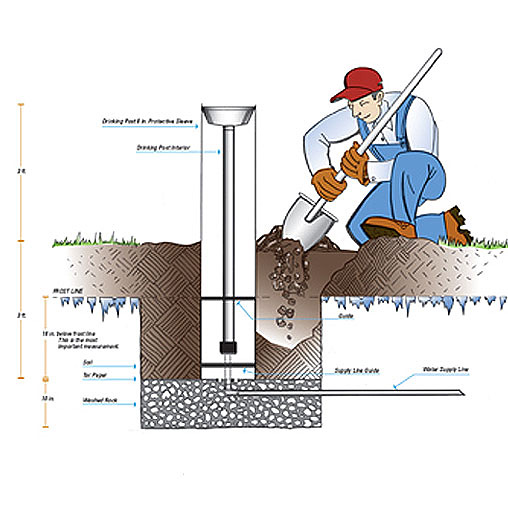
The Drinking Post Waterer is extremely durable. It boasts a 3/16″ stainless steel rod activating mechanism. A solid '” Cpvc custom fit water line versus flex lines and hose clamps that many units offer. A strong 8” protective sleeve with a .24” wall thickness offers high resistance and flexibility against impact. Stainless steel fasteners throughout and a poly valve housing material ensures decades of maintenance free operation.
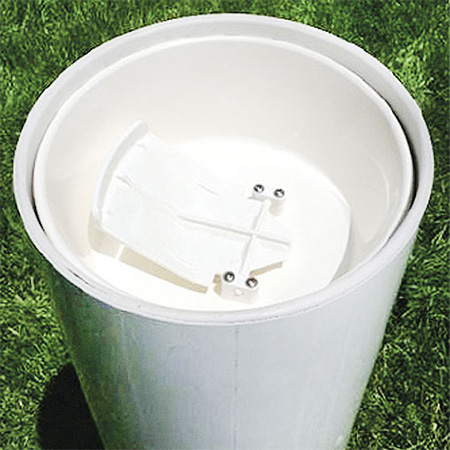
The Drinking Post Waterer has no minimum usage requirements. This unit can literally stand unused for years and still instantly produce clean 50'water in any season, no matter what the outside temperature. It can do this because all the water drains from the post into the ground below your local frost line.