

Tips for Planning Horse Fence Layouts
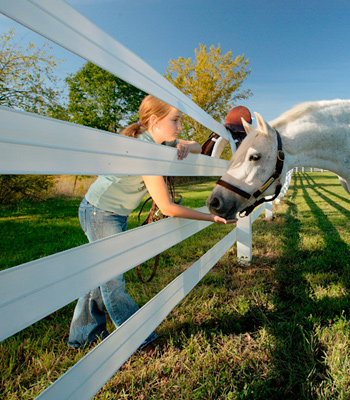
A well-planned fence layout is not only beautiful and easy to maintain, but it’s also a real step-saver when doing barn chores Article by Karen Elizabeth Baril.
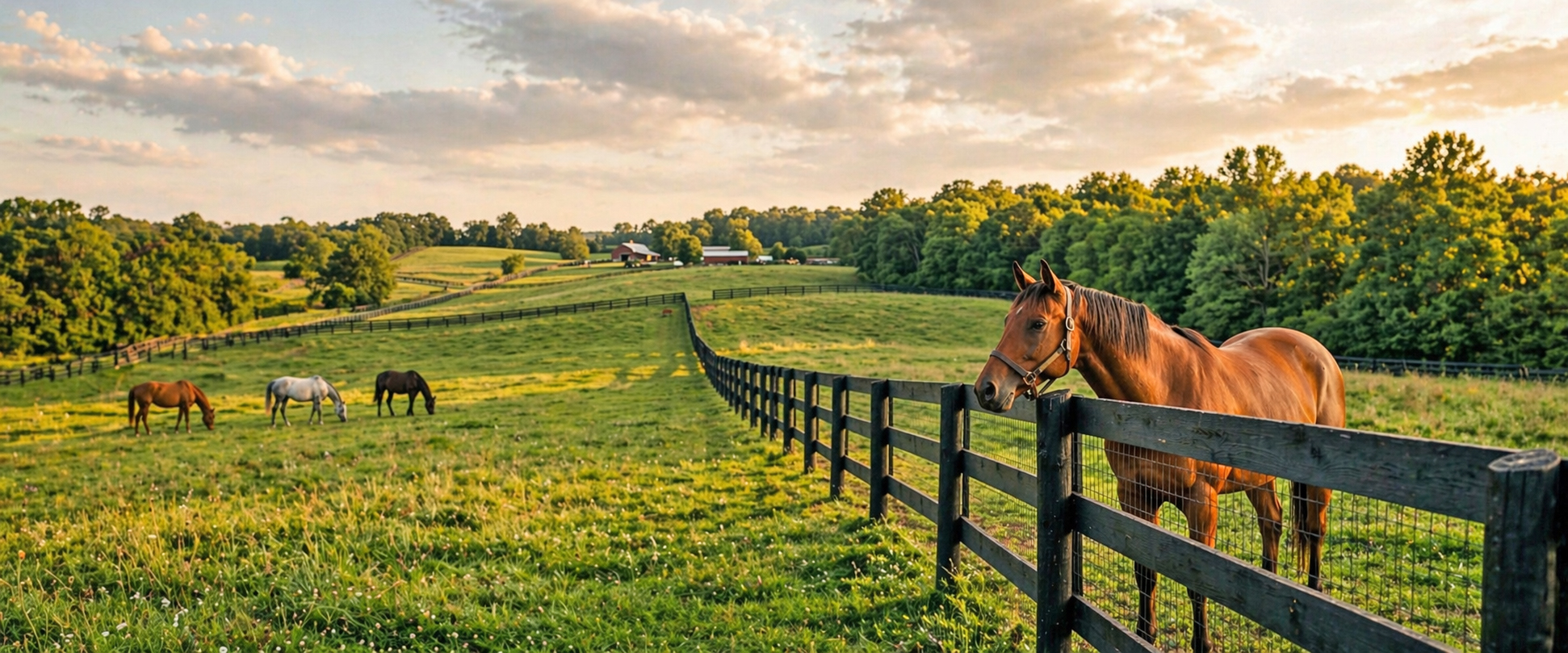
Start planning a horse fence layout by drawing it to scale on paper first, including existing buildings and topographical features like streams, ponds, and shade trees. Keep sacrifice and turnout paddocks closest to the barn to save steps, position equine access gates several feet away from corners, and install 6-8 foot gates for horse and human traffic and 12-16 foot gates for vehicles. Whatever style you choose, never skimp on quality or buy fencing made for other livestock—the cheapest alternative is often the one that leads to heartache down the road.
If you skip or underestimate the fence planning stage, you might regret it later on when struggling to drive your tractor through a too narrow gate or having to walk too far to get to the turnout paddocks. Whether you’re planning from the ground up or fine-tuning an existing layout, the following tips will help you create a fence layout that works for you and your horses.
1 Put
it in Writing It was Benjamin Franklin who said, “By failing to prepare, you are preparing to fail.” I’m pretty sure he wasn’t referring to fence layouts, but it’s an adage that fits. Your first step is to draw your proposed layout (to scale) on paper first. There are many software programs that can help with the design process, although you might have to tweak them a little for the farm environment.
As you design your layout, include existing buildings like your barn, hay-shed, or home, and topographical features like streams, ponds, or shade trees.
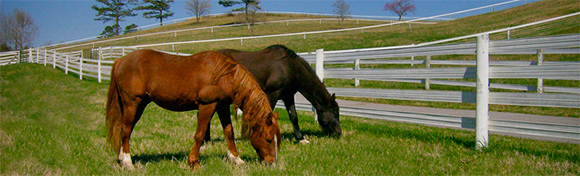
Here are a few basic guidelines to keep in mind as you sketch your layout and choose your fencing material. ' Keep sacrifice and turnout paddocks closest to the barn to save you steps. ' Grass fields can be a little farther away from the barn. Choose a High Impact Flex Fencing to separate fields or other highly visible and safe product. ' Consider the gender, size, number, and temperament of the horses you’re fencing in.
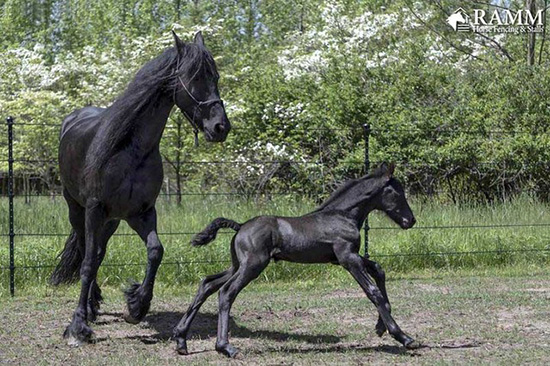
Stallions, mares, foals, and miniature horses all require special consideration. ' Double fencing or lanes between paddocks will prevent neighboring horses from socializing over the fence-line. ' High-traffic areas, like those closest to the barn, around water troughs, feeding areas, gates, and adjacent fencing need to be sturdy enough to withstand horses pushing or testing the fence.
Electric shock tape or coated electric wire is a good back-up deterrent. ' Keep horses off fragile areas like streams, ponds, and delicate tree root systems with electric shock tape or coated electric wire. ' Use electric polytape or electric shock tape fencing as a permanent fence and as a temporary fence for rotational grazing systems. ' Consider installing a perimeter fence if you can afford to do so. Should a horse escape his paddock, perimeter fencing ensures he won’t reach the road; a 1.5 inch electric shock tape works well as a perimeter fence or alternatively an electric polywire fence. Both are economical and easy to install.
2 Be
Flexible on Style, but Never Skimp on Quality No matter what style or material you choose, your fence construction must meet a few basic criteria. It must be sturdy enough to withstand even the most playful or grass-greedy horse and must be free of anything that could trap or snag a hoof or a curious nose. Never try to save money by purchasing fence made for other livestock. When it comes to fencing, the cheapest alternative is often the one that can lead to heartache down the road.
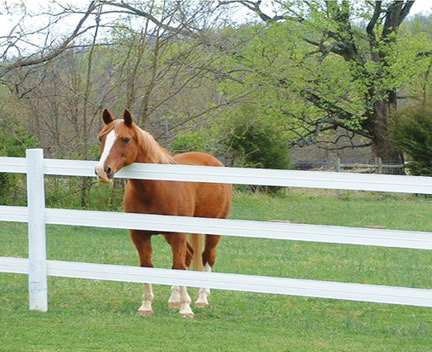
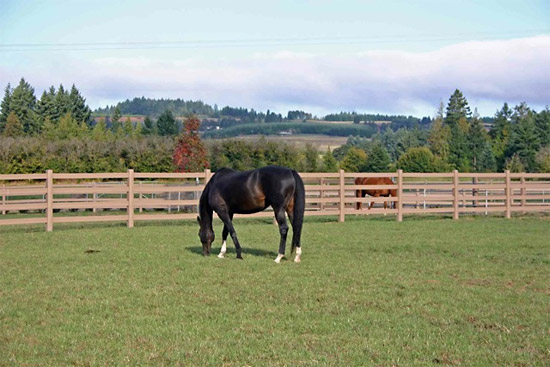
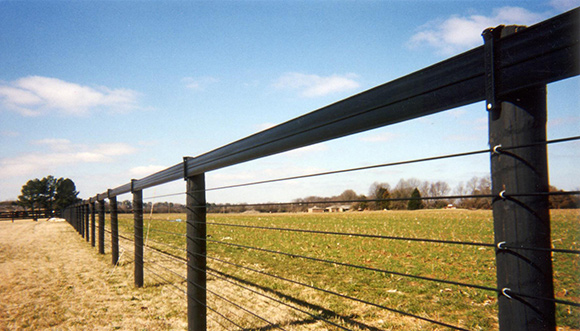
Remain flexible when it comes to style---many farm owners combine two fence styles depending on the intended use. For example, around paddocks or grass fields, you might choose a High-Impact Flex Fence as a top rail and use a coated wire fence for the remaining two or three rails. This offers you an aesthetically pleasing look, but is fairly easy on the budget.
If predators or loose dogs are a problem, consider V-Mesh Fencing to prevent them from getting into the paddock. When fencing in a large, grassy field where horses will spend their days happily grazing, consider electric tape fencing (highly visible) or coated wire fencing. All fencing should offer a strong deterrent to any horse that tests it, but should also offer forgiveness. We love High Impact Flex Fencing for this reason.
Although it does yield 6-12 inches on impact, it flexes back into its original shape with no damage to the fence or your horse! Low maintenance makes this a winner in our book. Electric tape fencing is highly visible and therefore is a good choice for rotational grazing. In a rotational grazing system, you might change the configuration of your pasture weekly. If horses can clearly see the new fence, they’ll have no trouble learning their new boundaries.
3 Plan
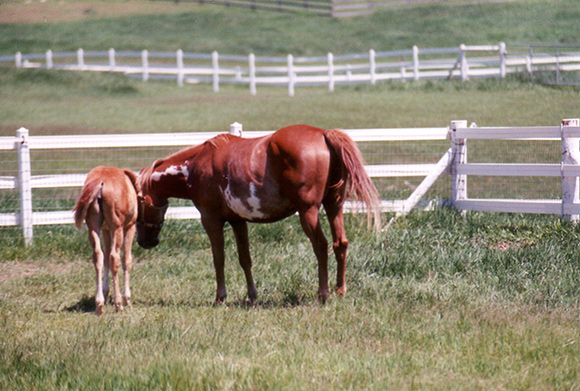
Gate Location and Width Generally speaking, the closer the gates are to the barn, the less time it will take to turn horses out. For paddocks or fields divided by an all-weather lane, install parallel gates roughly half-way up the fence line to make for easy transfer of horses from one paddock to another. Equine access gates should always be positioned several feet away from corners.
This will prevent dominant horses from trapping a submissive herd buddy in the corner. Better yet, avoid corners altogether by designing paddocks with round or oval shapes. Install 6-8 foot gates for horse and human traffic, 12-16 feet for vehicular traffic. Be sure to allow for adequate turnaround if the gate is meant to be used for tractors. Add a gate wheel on gates 8-feet wide or wider to ensure the gate won’t sag. One or two-way locking latches make handling gates with one hand a breeze.
Tip 4: Purchase Your Fence from a Reputable Horse Fencing Company Perhaps the most important tip we can share is to encourage you to buy your fence from a reputable company that cares about the safety and well-being of your horses.