

Tips for Cold Weather Horse Blanketing
Article by Karen Elizabeth Baril As soon as the mercury falls, many of us ask the age-old question; to blanket or not to blanket?
Most horses stay comfortable without a blanket because equine thermoregulation is very efficient—a horse’s thermoneutral zone runs from 41 to 77 degrees Fahrenheit, far wider than the human range of 77 to 86 degrees. A blanket is worth considering when a horse is elderly, very young, sick, or has a body condition score of 3 or less; when winter weather is mostly cold and wet; when the coat is clipped or the horse will sweat from hard winter riding; when the horse is adjusting to a colder climate; or when there is no adequate shelter during turnout.
Once you blanket, remove it every day to brush the horse and check for rubs, and watch the forecast—sweating under a too-heavy blanket is dangerous.
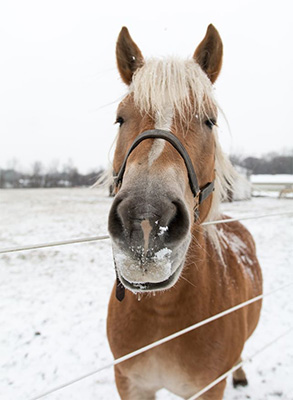
Most horses are comfortable without a blanket even on those brisk mornings that have us reaching for our winter coats. Their thermoregulation, the ability to maintain internal body temperature even when the air temperature dips and rises, is very efficient at keeping them warm. Humans use thermoregulation to keep ourselves warm in the winter as well, but our thermoneutral zone (TNZ), the range where we maintain our body temperature without exerting any energy, is far narrower than that of our horses. While our TNZ ranges between 77' and 86' Fahrenheit, our horse’s TNZ ranges between 41' to 77' Fahrenheit. That makes him better equipped to stay warm even in temperatures that make us shiver.
Of course there are other factors that can challenge him, like wind, rain, and even acclimatization to the climate, but these numbers give us some idea as to why our horses don’t seem to mind the cold like we do. Still, we learn to never say never in the horse world.
Here are five good reasons you should consider blanketing despite the numbers:
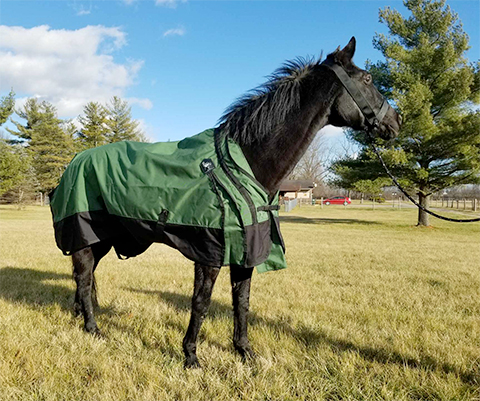
➢Your horse is elderly, very young, sick, or has a body condition score of 3 or less. ➢Your winter weather is mostly cold and wet. Even healthy horses have a hard time staying warm in freezing rain. ➢You plan on riding this winter hard enough for your horse to break a sweat or you've clipped your horse’s coat. ➢Your horse is adjusting to a colder climate. ➢Your horse has no adequate shelter during turnout.
Once you choose to blanket, you’ll have to commit to keeping your horse’s skin healthy. Remove the blanket every day to brush and check horse for rubs. Pay close attention to the weather forecast; sweating under a too-heavy blanket is dangerous.
Let’s take a look at some of your choices in blankets: Turnout sheets are the lightest layer of horse clothing and are often used as lightweight raincoats or for the ‘shoulder’ seasons like Spring and Fall when temperatures are milder. They’re also great to use as mud-protectors for horses who like to roll. There’s nothing worse than arriving at the barn to find your horse coated in a thick layer of mud! Keep in mind that turnout sheets should be waterproof and this will make them too hot for summer months. They provide little to no warmth in cold temperatures.
Turnout blankets are available in lightweight, mid-weight or heavyweight, referring to the amount and type of polyfill between the inner and outer linings. Some horse owners purchase one of each, rotating through the ranges depending on the forecast. Most horses do quite well with a lightweight layer so keep that in mind when purchasing. No matter what style or weight of blanket you choose, it should be rugged, waterproof, and provide a perfect fit. Which brings us to our next tip; fitting your blanket.
Sizing your horse is not difficult, but is important to his comfort. A bad fit will cause painful rubs. Using a soft tape, measure your horse from the center of his chest to the center of his tail. This offers a fairly accurate measurement, but if you have a stout horse or a cob-type, you might have to choose one size larger than his measurement would indicate.
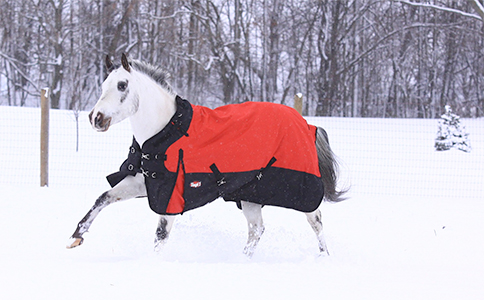
Once you receive your blanket, try it on your horse using the following guide: ➢Fasten the chest buckle. The front of your blanket should have room to overlap, but not hang loose. Check there is ample room for the withers as this is a spot where horses are prone to rubs. A good rule of thumb is 2-4 inches of room in front of the withers. ➢Check that the seams or gussets allow enough room for your horse to put his head down to graze or eat hay.
Thick-necked horses or broad-shouldered horses need generous gussets. ➢Next check for belly fit. Your blanket should hang down an inch or two below your horse’s belly. ➢Adjust the cross-surcingles or belly band to allow one flat hand between band and belly.
This allows for freedom of movement, but prevents a hoof getting caught in the strap. ➢Fasten the leg straps and the tail strap following the same rule; one flat hand between the strap and your horse. ➢Now stand back and look at the whole picture. If all looks well and your horse looks comfortable, you’ve chosen well and the blanket fits.
When to buy a new blanket?
You can save money by making minor repairs on most blankets. Small tears can be mended with blanket repair tape. Finish all repairs by spraying the edges with waterproof spray. If you’re a handy sewer, buckles and straps can be replaced.
A quality blanket will already be waterproof and that feature should last several years, providing you follow manufacturer’s instructions for washing. Harsh detergents and dryers will destroy waterproofing so always line dry your blankets. You’ll know it’s time to re-waterproof your blankets when you notice wet spots on your horse’s topline. Hardware and outdoor shops carry water-proofing spray that works just as well, if not better, than products sold specifically for horse blankets. Keep in mind that re -waterproofing has its limits so pay close attention to whether the blanket is keeping your horse dry.