Start on the ground, not in the saddle: desensitize the horse to a small horseman’s flag on both sides of his body from head to tail, then graduate to the large flag—kept rolled up at first and unrolled gradually as he relaxes. Only after the groundwork checks out should you repeat the same progression mounted, adding a stirrup-mounted flag keeper to stabilize the flag before speed is added, and if you ever start to lose control, drop the flag and go back to better preparation. Plan on follow-up sessions in the weeks after the first introduction before the horse is ready for a real event.
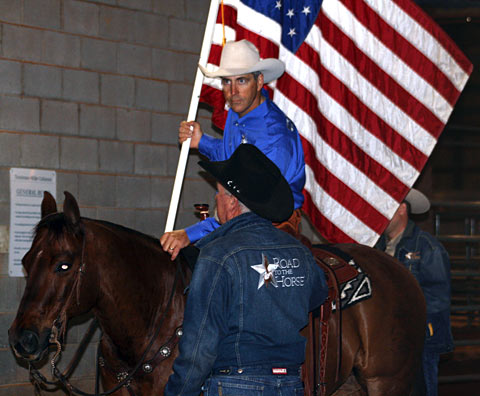
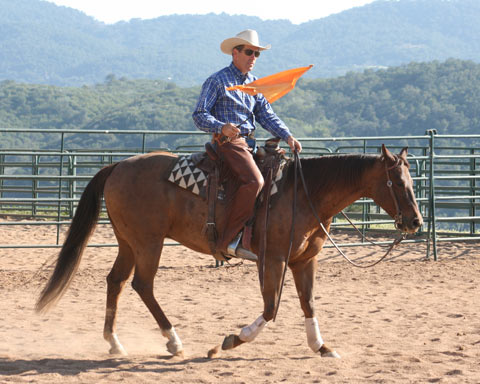
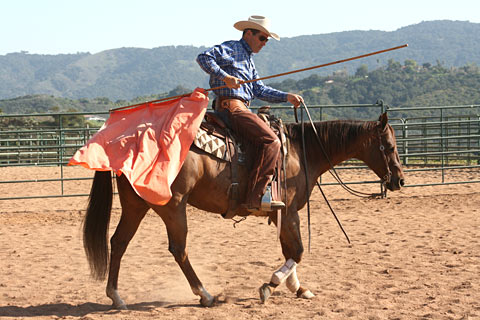
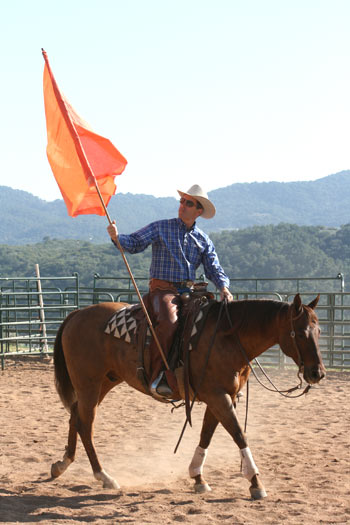
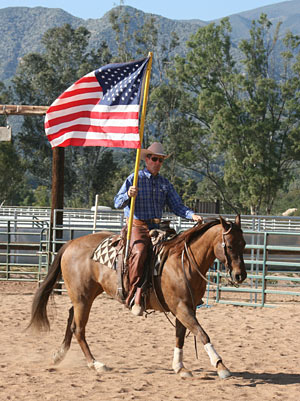
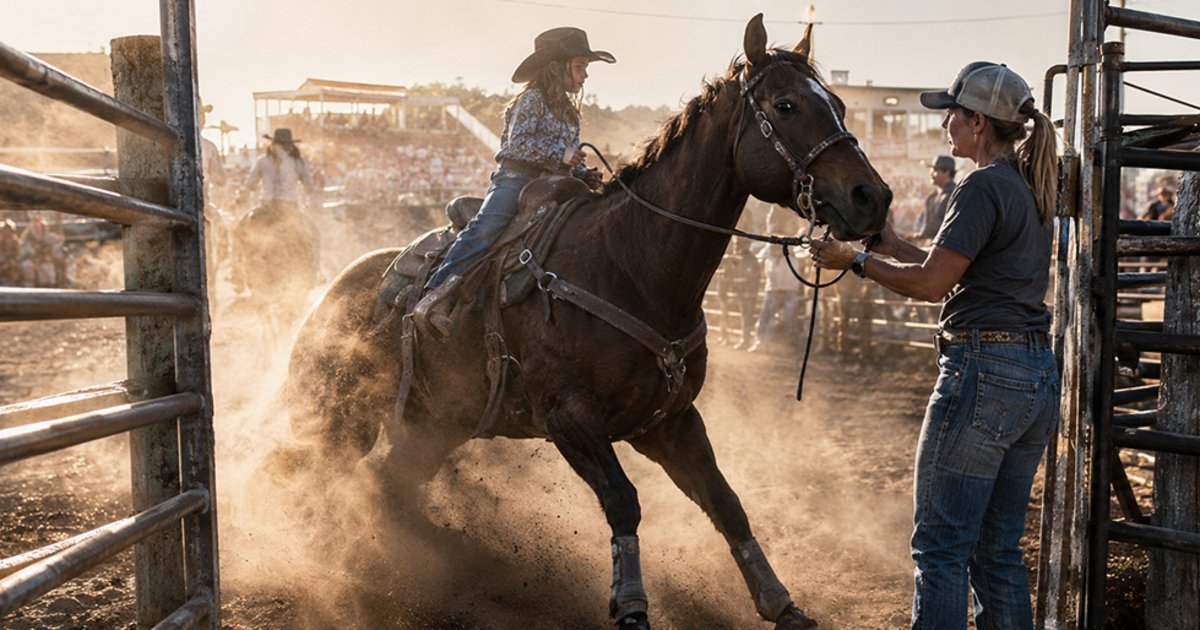
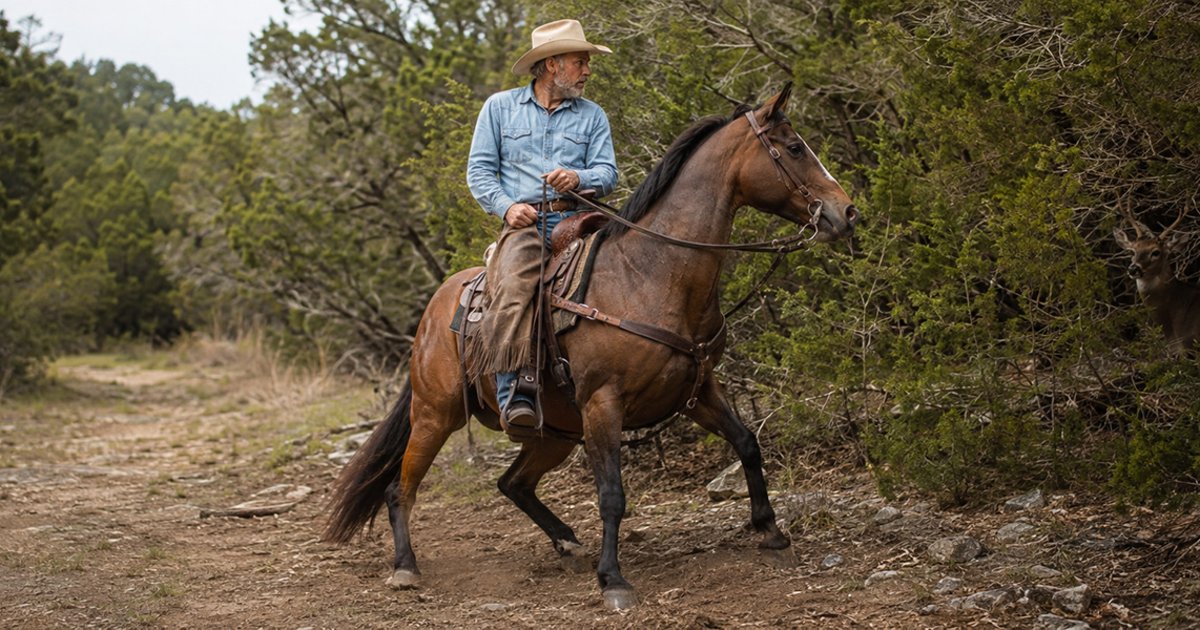
If everything goes according to plan, next month I will add something new to my horsemanship resume. I’ve been asked to gallop my horse around the arena as 7,000 observers stand for the national anthem at this years Road to the Horse in Tennessee. It sounds like fun and I am honored to play a part in that patriotic moment. The question is: Will my horse be as enthusiastic as I am? I’m not going to wait until I get there to find out! The following photos show how I’m preparing my horse for this patriotic moment.
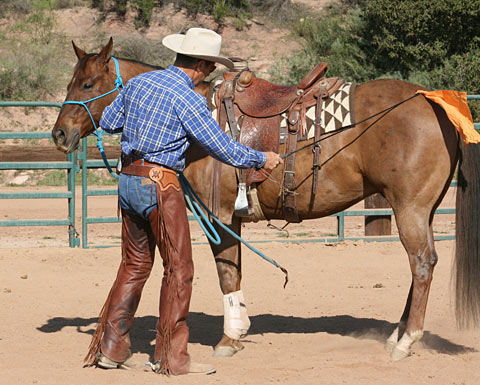
What I’m not going to do is pick up a huge American flag while mounted to see if he can handle it. I’ll start my preparation on the ground. Being comfortable and desensitized to a small horseman’s flag will begin his preparation for ultimately carrying a large U.S. flag. I’ll work my small flag on both sides of his body from head to tail. I’ll also move the flag in and away from his body in sweeping motions until he becomes unconcerned with its movement.
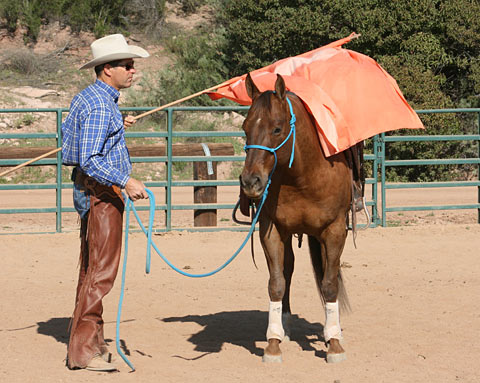
Now that my horse is handling the small horseman’s flag, I’ll graduate to something similar to what I’ll be asked to carry at the Rtth event. At first, I’ll keep the flag rolled up and simply rub my horse all over (on both sides) with the stick and fabric. As he becomes more comfortable I will begin to unroll the flag and let it move smoothly over his body. I always want to be aware of areas that seem to bother my horse. Moving the flag into these areas and then retreating before he get panicked can help build his confidence rather than shatter it. Holding the flag upright similar to how it will be carried with help prepare him for seeing the flag above and behind his head.
Take whatever time is necessary to prepare your horse on the ground with these tools, If you horse can’t handle the stimuli form the ground, it’s probably true that it will only be worse when your are mounted.
Now that things have checked out on the ground, my horse is ready to be introduced to the horseman’s flag while mounted. I’ll use a lot of rhythmic motion as I rub him all over while walking around the arena. If I did my ground work correctly, this should be a simple transition. If he gets worried I’ll move the flag back towards his rear end. As he can handle it, I’ll move the flag up to his shoulders and neck. Extending the flag out to the side and up above his head making some swift sweeping motions will desensitize him to the visual and audible stimuli that a flag can make. Now it’s time for the larger flag while mounted. I can keep it rolled up at first, just as I did on the ground, and gradually unroll it as I move it all over his body. Remember, if your horse gets in trouble and you start to loose control of the situation, drop the flag. Don’t attempt to hold onto the flag if your horse is getting scarred and unable to recover. In many cases this reveals that you got ahead of yourself in preparation and left something undone. I’ll say it again: If you begin to loose control and things are getting dangerous; Drop the flag. Then start over with better preparation. Having a flag keeper that attaches to your stirrup allows you to keep the flag much more stable when held upright. This will become more important when speed is added. The wind velocity hitting the fabric will make the flag very difficult to control without one of these keepers. I’ll begin to experiment with trotting and loping. As I go faster, the flag makes more noise in the wind. This is something that my horse will need to hear and accept. I worked through this entire process in less than half an hour. I don’t however; believe my horse is now fully trained to carry flags. I’ve introduced the flag to him and he has handled it well. I will definitely continue with follow-up sessions over the next two weeks to prepare him further for his big National Anthem debut. Prior proper preparation prevents poor performances. Following these steps, I’m not just hoping for the best. I’m planning for the best!
For more information about Richard Winters Horsemanship please go to wintersranch.com.
💬Questions Readers Commonly Ask (FAQ)
Why start desensitization on the ground?
Per Richard Winters: the horse learns to accept the flag without the added stress of carrying a rider. If he startles, he can move freely—and you can move freely—without compounding the wreck. Mounted desensitization comes only after ground work is solid.
Why a small flag first?
Per Richard Winters: a small horseman's flag is less imposing visually and quieter in motion. The horse accepts it readily, builds confidence, and that confidence transfers to the larger event flag. Skipping straight to the large flag is how startles turn into permanent fears.
How do I work the flag on the horse's body?
Per Richard Winters: rub it from head to tail on both sides, gradually expanding to sweeping motions in and away from the body. Watch for tense areas—the horse's eye, ear position, and tail tell you where he's worried. Spend extra time in those zones until he relaxes.
When is he ready for the actual event?
Per Richard Winters: when he's calm with the full flag unfurled, mounted, at all gaits, and unbothered by the visual or sound of fabric snapping. Practice at the canter before the event because galloping with a flag amplifies every variable.
Can any horse learn to carry a flag?
Per Richard Winters: most horses with a calm temperament and patient preparation can. Hot, reactive horses may take longer or never reach event-readiness. Match the horse to the job—not every horse is suited for ceremonial flag work, and that's fine.
📋
Recommended Products
Curated picks from across InfoHorse.com — most relevant first