Helping Horse Owners Make Informed Decisions
Doctorate in Cancer Biology — Dogs And Puppies (Tumexal™ can help add months- even years-- to a dog's life who is suffering…)

Doctorate in Cancer Biology

Tumexal™ can help add months- even years-- to a dog's life who is suffering with canine cancer!

Got a dog facing cancer and want a Cancer-Biology-PhD-developed life-extending support?

Reviewed by Ann Pruitt, InfoHorse.com · Updated May 2026
Doctorate in Cancer Biology — Dogs And Puppies (Tumexal™ can help add months- even years-- to a dog's life who is suffering…)
Doctorate in Cancer Biology

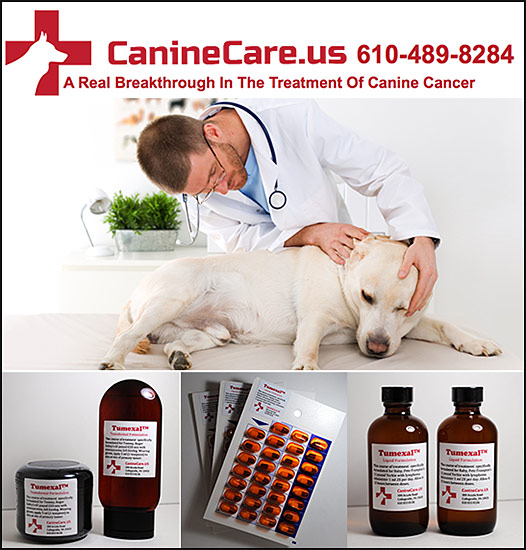
Tumexal™ by CanineCare.US
Tumexal™ can help add months- even years-- to a dog's life who is suffering with canine cancer!

About Dr. Nyce (Dr. Nice)

Many of you know and interact frequently with Professor Nice, to the extent that he has become the voice, if not the face of the Tumexal™ project. Dr. Nyce received his Doctorate in Cancer Biology from the Temple University School of Medicine in 1983. His mentors were Professors Peter Magee and Sydney Weinhouse, two stellar figures in the biology of cancer, both of whom were Directors of the Fels Institute of Molecular Biology and Cancer, where Dr. Nyce did his doctoral work. Following postdoctoral fellowships at the Children’s Hospital of Los Angeles and the University of Southern California Comprehensive Cancer Center, Dr. Nyce accepted a professorship at the Brody School of Medicine in North Carolina, part of the University of North Carolina System. While at U.N.C. Professor Nyce obtained a new mentor, (later to be Nobel Laureate) Dr. George Hitchings, the inventor of 6-thioguanine, the first agent active in childhood cancer.

Over the course of his ensuing career, Professor Nyce obtained more than 40 patents on his own medical discoveries; taught more than 1200 medical and graduate students; served as major thesis advisor and mentor for several of his own graduate students; published more than 75 original papers in the medical and scientific literature; was an invited speaker at more than 100 national and international events; took drugs of his own creation into F.D.A.-monitored human clinical trials; and was the recipient of more than $65 million in research funding from such sources as the National Cancer Institute, multinational pharmaceutical companies, and public and private investors. He lives in Worcester, Pennsylvania, with his three children, Alex, Trevor and Samantha— each budding scientists in their own right.

What Is Tumexal™?

Tumexal™ is an exciting, powerful new natural product for canine cancer based on a new paradigm: the restoration of natural tumor suppressor gene activity that has been lost as part of the cancer process.

Unlike traditional chemo, which is based upon the flawed, now 100 year old paradigm of toxic poisons as cancer medicines, Tumexal™ is the product of 21st century science. Rather than acting as a poison, Tumexal™ works by duplicating critical functions of the p53 tumor suppressor, inhibiting the same enzymes, and activating the same enzymes that the p53 protein would if it had not been disabled as part of the cancer process. The result is induction of programmed cell death (apoptosis) in the tumor. And with Tumexal™ there is virtually no toxicity! In fact, Tumexal™ will almost always restore a cancer-stricken dog’s appetite, spirit and energy! Because it re-activates tumor suppressor pathways that have been inactivated in most canine cancers, Tumexal™ is effective against a wide array of canine cancers.

Tumexal™ is not only a sound treatment choice, but an affordable, economical one as well. Traditional chemotherapy for lymphoma, for example, costs $5000 to $12,500! Treatment with Tumexal™ costs less than 10% of that! And Tumexal™ is available without a prescription, and can be administered in the comfort of your home, the place your dog feels safest and most secure.

Do I Need The Capsule, Transdermal or Liquid Formulation of Tumexal™?

Because the majority of cancers have inactivating mutations in the p53 tumor suppressor gene, and Tumexal™’s mechanism of action is to restore p53 function to the cancer cell, Tumexal™ is active against a wide array of cancer types. Nevertheless, different cancers have differing biologies, and can best be treated with specific formulations of Tumexal™. For example, osteosarcoma (bone cancer) must be treated as two entirely different types of cancer with two entirely different biologies. By the time a primary osteosarcoma can be clinically diagnosed, in virtually 100% of cases it has already spread to the lungs, even if such micrometastases cannot be seen on X-ray.

It is impossible, using one treatment modality, to treat both the primary osteosarcoma and the pulmonary metastases that have spread from it. The capsule formulation of Tumexal™, when used continuously for three months and intermittently after that, has shown a quite remarkable ability to eliminate pulmonary metastases and to prevent new ones from growing in the lung. But the capsule formulation appears to be ineffective in stopping the growth of primary osteosarcoma tumors— probably because they secrete little angiogenesis factor and therefore do not have the well-developed blood supply that other kinds of solid tumors possess. While amputation is the surest way to eliminate a primary osteosarcoma, many dog owners refuse such surgery for their animals, and in other cases amputation is not possible.

To help in such cases, CanineCare.US has created a transdermal formulation of Tumexal™ that is applied, as a cream, directly to the site of the primary tumor. Up to 90% of the Tumexal™ in this formulation passes through the skin and creates a very high local concentration at the site of the primary tumor, where it is needed. Using this formulation, the growth of the primary tumor can generally be stopped.

The transdermal formulation of Tumexal™ can also be used in cases where dogs are not eating or are unable to eat, for example in certain cases of oral or head and neck cancer; in various cancers of the skin including cutaneous T cell lymphoma (mycoses fungoides) and mast cell cancer; in anal gland cancer, etc. If you have questions about application in your dog’s specific case, you may address those questions to our cancer specialist either by telephone or.

What Do Customers Say About Tumexal™?


Good day professor! Billy is doing so much better..she’s more active and playful. Tumor has shrunk,she’s able to defecate and urinate with no problem. She’s on her 2nd month treatment. And we thank you so much!

Jayson A., Daly City, CA

Badner is doing very well on Tumexal. He’s putting on weight and becoming active again. The family is very happy.

Dr. K. H., DVM, Connecticut

Sophie is doing wonderful! We are thrilled with the results! It’s like we have a new dog! Our vet was astonished when he could find no swollen lymph glands anywhere. And the swelling behind Sophie’s eye is completely gone. She has her energy back! We are really thrilled!

Julie K., Cedarville, IL 61013

Thank you for all your help with Pierre. He had his first surgery to remove a grade III mast sell tumor on his right ear the end of February, 2014, and has had two subsequent surgeries as he developed more masses extending down the right side of his neck. The last surgery left a mass that was near the right jugular vein and clean margins were not obtained. This was when CanineCare. US was contacted. The medication was sent out quickly but Pierre had stopped eating by the time we received the Tumexal. We had to force feed it to him but he took it willingly by the third dose. His incision and skin surrounding it was red and leaking serous fluid. Within days he had a new lump in his ventral right chest, We were concerned that this may be it for Pierre. He kept taking Tumexal three times daily and we noted significant improvement in the surgery site. It healed and there is no more redness or discharge. The lump in the ventral chest is no longer palapable either… He is currently taking walks twice daily and is eating like a horse. You would not know he had cancer. Thank you, CanineCare.

Dr. C. V., DVM, Arizona
Learn More About Tumexal™ Today!

The time you have with your dog is so precious. Please don't think that there is "nothing I can do" when Tumexal™ is making such a difference to thousands of dogs across the country. Please call Dr. Nice today- to learn more about our product and how it can help you dog. We have experts who are more then happy to help with your dogs specific case and individual needs.


Important consumer-safety notice about this listing

This legacy directory entry describes "Tumexal" and "Naturasone," products formerly sold under the CanineCare.US, Canine Care, Acgt, and Cagt names by Jonathan Nyce, who marketed himself using his Doctorate in Cancer Biology. These products were the subject of a federal criminal prosecution for fraud. The website at http://www.caninecare.us no longer resolves, and the products are no longer legitimately available. We are preserving this entry only with the context below so pet owners can make informed decisions.

What the products claimed

Beginning in 2012, CanineCare.US marketed Tumexal as an "Effective, Safe Monotherapy for virtually all forms of Canine Cancer" that was "virtually toxicity free" and would "almost always restore a cancer-stricken dog's appetite, spirit and energy." A second product, Naturasone, was sold alongside it. The marketing claimed the formula inhibited an enzyme called G6PD and "duplicated p53 function" to stop tumor growth, but the company refused to publicly disclose the ingredients.

Why veterinary authorities raised concerns

Veterinary reviewers, including the SkeptVet, documented that the company never published peer-reviewed clinical trials, would not reveal what Tumexal contained, and supported its claims with testimonials rather than controlled studies. In 2014 the U.S. Food and Drug Administration issued a warning letter identifying Tumexal as an unapproved new animal drug whose marketing violated the Federal Food, Drug, and Cosmetic Act. No legitimate, FDA-approved oral monotherapy cures "virtually all" canine cancers.

What the federal court found

A federal jury in the Eastern District of Pennsylvania convicted Jonathan Nyce of wire fraud and the interstate shipment of misbranded animal drugs. Evidence at trial showed he sold nearly $1,000,000 of these drugs to approximately 900 victims, blending bulk ingredients himself rather than manufacturing a tested pharmaceutical. He was sentenced to 97 months in federal prison, three years of supervised release, and a $500 special assessment. Nyce, who holds a PhD and is not a licensed veterinarian, had previously been convicted of manslaughter in the 2004 death of his wife.

What to do if your dog has cancer

If your dog has been diagnosed with cancer, work with a licensed veterinarian or a board-certified veterinary oncologist (search the American College of Veterinary Internal Medicine, Acvim, directory). Evidence-based options include surgery, chemotherapy, radiation, immunotherapy, and palliative care tailored to the tumor type. Be skeptical of any product that promises a near-universal cure, refuses to disclose its ingredients, avoids peer-reviewed trials, or sells only direct-to-owner without veterinary oversight.

How to report or research a suspected pet-product scam

Suspected fraudulent or misbranded animal drugs can be reported to the FDA Center for Veterinary Medicine and to the Federal Trade Commission at reportfraud.ftc.gov. For a second opinion on any "miracle" cancer claim, ask your veterinarian and consult independent veterinary resources before spending money or delaying proven treatment.

Share This Solution
The Solution Section (FAQ)
What is Tumexal™ and how does it work against canine cancer?
Tumexal™ by CanineCare.US is a natural product for canine cancer based on restoring natural tumor suppressor gene activity that has been lost as part of the cancer process. Rather than acting as a poison like traditional chemo, it works by duplicating critical functions of the p53 tumor suppressor, resulting in the induction of programmed cell death (apoptosis) in the tumor, with virtually no toxicity. Because it re-activates tumor suppressor pathways inactivated in most canine cancers, it is effective against a wide array of canine cancers.
Is Tumexal™ affordable compared to traditional chemotherapy?
Yes. The description notes that traditional chemotherapy for lymphoma, for example, costs $5000 to $12,500, while treatment with Tumexal™ costs less than 10% of that. Tumexal™ is also available without a prescription and can be administered at home, where your dog feels safest and most secure.
Which Tumexal™ formulation does my dog need — capsule, transdermal, or liquid?
Because different cancers have differing biologies, they can best be treated with specific formulations. For example, with osteosarcoma the capsule formulation used continuously for three months and intermittently after has shown a remarkable ability to eliminate pulmonary metastases, while the transdermal formulation is applied as a cream directly to the site of a primary tumor, where up to 90% of the Tumexal™ passes through the skin to create a very high local concentration. If you have questions about your dog's specific case, you can reach the cancer specialist by telephone at 610-833-8136 or by email.
When is the transdermal Tumexal™ cream the right choice?
The transdermal formulation can stop the growth of a primary tumor and is useful when amputation is refused or not possible. It can also be used when dogs are not eating or unable to eat — for example in certain cases of oral or head and neck cancer, in skin cancers including cutaneous T cell lymphoma (mycoses fungoides) and mast cell cancer, and in anal gland cancer.
Can Tumexal™ help restore my dog's appetite and energy?
Yes. According to the description, Tumexal™ will almost always restore a cancer-stricken dog's appetite, spirit and energy. Customer accounts describe dogs becoming more active and playful, putting on weight, and regaining energy while on Tumexal™.
Who developed Tumexal™?
Tumexal™ is associated with Dr. Nyce (Dr. Nice), who received his Doctorate in Cancer Biology from the Temple University School of Medicine in 1983. Over his career he obtained more than 40 patents on his own medical discoveries, published more than 75 original papers, took drugs of his own creation into FDA-monitored human clinical trials, and received more than $65 million in research funding from sources such as the National Cancer Institute.
What were Tumexal and Naturasone?
Tumexal and Naturasone were products marketed beginning in 2012 under the CanineCare.US, Canine Care, ACGT, and CAGT names as oral treatments claimed to cure or control canine cancer. Tumexal was advertised as an "Effective, Safe Monotherapy for virtually all forms of Canine Cancer." The products were the subject of a federal fraud prosecution and are no longer legitimately available.
Is CanineCare.US still operating?
No. The website at http://www.caninecare.us no longer resolves, and the products are no longer sold through legitimate channels. The man behind the company, Jonathan Nyce, was convicted in federal court and sentenced to prison. Any site or seller still offering "Tumexal" should be treated with extreme caution.
Who was Dr. Nyce, the "Doctorate in Cancer Biology" referenced in this listing?
Jonathan Nyce holds a PhD (a doctorate in cancer biology), but he is not a licensed veterinarian. He created the companies that marketed Tumexal and Naturasone. A federal jury convicted him of wire fraud and shipping misbranded animal drugs, and he had previously been convicted of manslaughter in the 2004 death of his wife.
What did the federal court decide?
A federal jury in the Eastern District of Pennsylvania found Nyce guilty of wire fraud and the interstate shipment of misbranded animal drugs. He was sentenced to 97 months in federal prison, three years of supervised release, and a $500 special assessment. The court record reflects a years-long scheme to defraud grieving pet owners.
How many people were affected and how much money was involved?
Evidence presented at trial showed the scheme sold nearly $1,000,000 worth of drugs to approximately 900 different victims. Many were owners of dogs with terminal cancer diagnoses who paid hundreds or thousands of dollars hoping for a cure.
Did the FDA take action against Tumexal?
Yes. In 2014 the U.S. Food and Drug Administration issued a warning letter identifying Tumexal as an unapproved new animal drug whose marketing violated the Federal Food, Drug, and Cosmetic Act. FDA's Office of Criminal Investigations was involved in the case that led to the federal conviction.
What ingredients were in Tumexal?
The company never publicly disclosed the full formula, describing it only as "natural." Independent veterinary reviewers flagged this secrecy as a red flag. Court findings indicated the product was a blend of bulk ingredients combined by Nyce himself rather than a tested, standardized pharmaceutical.
Was Tumexal ever proven to work in clinical trials?
No peer-reviewed, controlled clinical trials supported the company's cure claims. The marketing relied on unpublished laboratory charts and customer testimonials. Veterinary reviewers, including the SkeptVet, concluded it fit the pattern of "snake oil" marketing rather than evidence-based medicine.
What mechanism did the company claim the product used?
CanineCare.US claimed the formula inhibited an enzyme called G6PD and "duplicated p53 function" to halt cancer. Reviewers noted that published research suggests G6PD inhibitors require high concentrations and carry adverse effects, undermining the safety and efficacy claims. No credible evidence showed the consumer product achieved these effects.
How much did Tumexal cost owners?
Reported costs varied, but one documented customer said they spent $750 on Tumexal before their dog died about two weeks later. Owners of terminally ill dogs were enticed by phone and email into paying hundreds or thousands of dollars for the products.
Should I give my dog Tumexal if I find it for sale somewhere?
No. The product was deemed an unapproved, misbranded animal drug, its seller was criminally convicted, and its safety and contents were never verified. Giving an unverified blend to a sick dog can cause harm and may delay proven, effective treatment. Always consult a licensed veterinarian first.
What are legitimate treatment options for a dog with cancer?
Evidence-based veterinary cancer care can include surgery, chemotherapy, radiation, immunotherapy, and palliative or hospice care, chosen based on the specific tumor type and stage. A board-certified veterinary oncologist can outline realistic options and expected outcomes. Many cancers can be managed or, in some cases, treated successfully when caught early.
How do I find a veterinary cancer specialist?
Ask your primary veterinarian for a referral to a board-certified veterinary oncologist, or search the American College of Veterinary Internal Medicine (ACVIM) directory at acvim.org. Veterinary teaching hospitals at universities also offer oncology services and clinical trials. A specialist can give you an honest prognosis and a treatment plan grounded in published evidence.
How can I spot a fraudulent pet-cancer product?
Be wary of any product that promises to cure "virtually all" cancers, claims to be "toxicity free," hides its ingredient list, lacks peer-reviewed trials, relies only on testimonials, or sells direct-to-owner with no veterinary involvement. High-pressure phone or email sales aimed at owners of dying pets are another warning sign. When a claim sounds too good to be true, it usually is.
Where can I report a suspected fraudulent or unsafe pet product?
You can report suspected misbranded or unapproved animal drugs to the FDA Center for Veterinary Medicine, and report deceptive marketing to the Federal Trade Commission at reportfraud.ftc.gov. If you believe you were financially defrauded, you can also contact your state attorney general's consumer-protection office. Document any receipts, emails, and product packaging.
Why is InfoHorse.com showing this listing at all?
This is a legacy directory entry preserved with a consumer-safety notice rather than a current endorsement. InfoHorse.com is a neutral horse- and pet-products directory, and we are keeping this page only to provide accurate, sourced context so pet owners searching for "Tumexal" or "CanineCare.US" find the facts. We do not recommend or sell this product, which is no longer legitimately available.
My dog was given Tumexal in the past. What should I do now?
Tell your veterinarian exactly what your dog received, including amounts and dates, so they can monitor for any effects and adjust care. Focus going forward on a veterinarian-directed treatment plan. If you paid for the product, keep your records, as they may be relevant to consumer-protection or restitution matters connected to the criminal case.

Contact Doctorate in Cancer Biology

Call Website Email
Ann Pruitt
Contact Ann Pruitt
InfoHorse.com