

Why Clean Water Is One of the Most Important Parts of Horse Health
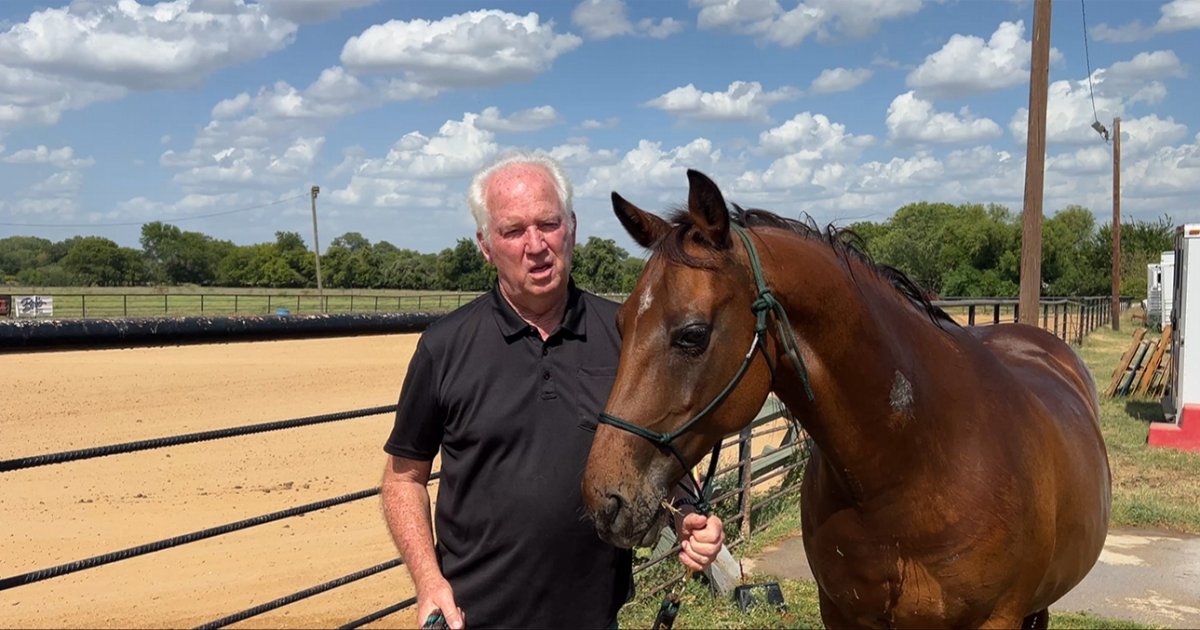
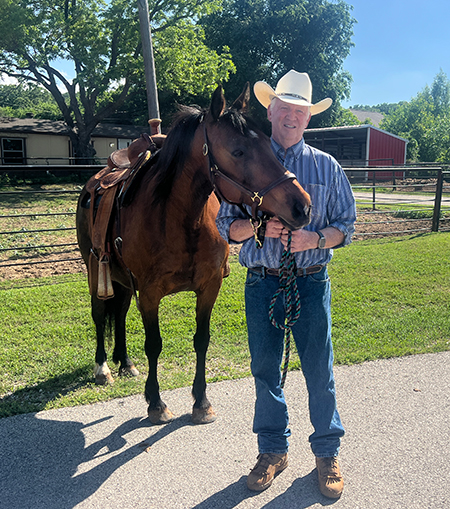
By Bob Pruitt Reviewed by Ann Pruitt
Sponsored by Bar-Bar-A Non-Electric Horse Waterer
Clean water is essential to horse health.
That may sound simple, but after more than 40 years of owning horses, I can tell you this: water is one of the first things I look at when I walk into a barn, pasture, or boarding facility.
Not the saddle rack.
Not the feed room.
Not the fancy fencing.
The water.
Because a horse can have the best hay, the best grain, the best supplements, and the best care in the world — but if he is not drinking enough clean water, his health is already at risk.
The Short Answer
Horses need clean, fresh water every day for digestion, hydration, temperature regulation, and overall health.
“Would I Drink That Water?”
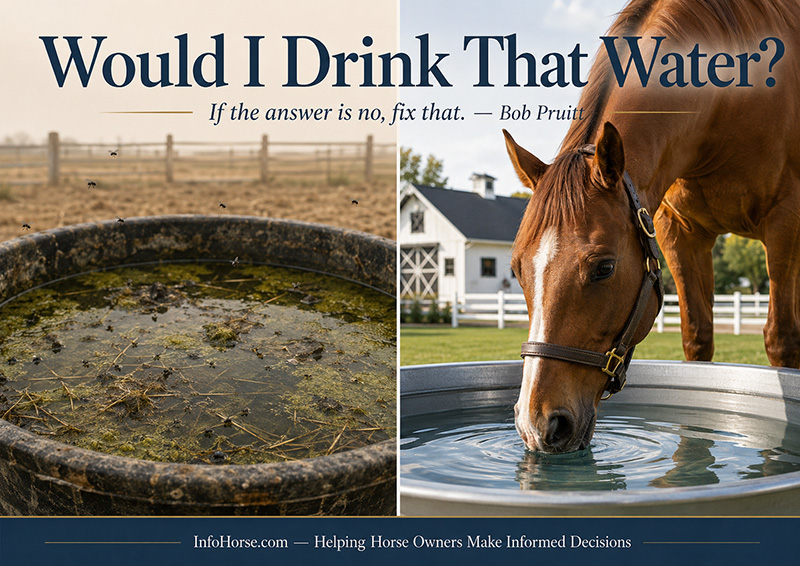
When you check your horse’s waterer, ask yourself:
“Would I drink that water?” If the answer is no, then fix it.
Clean water is the cheapest and yet most important single thing you can do for your horse’s health.
— Bob Pruitt
I mean that. I have seen beautiful barns with dirty buckets. I have seen expensive horses drinking out of slimy tubs. I have seen water tanks with leaves, hay, bugs, manure dust, algae, and mosquito larvae floating in them.
And I have seen owners spend a fortune on supplements while overlooking the one thing every horse needs every single day.
Fresh water.
Why Water Matters So Much to a Horse
A horse’s digestive system depends on water.
Horses are designed to graze, chew, move, and drink throughout the day. Water helps keep feed and forage moving through the digestive tract. It helps support normal manure production. It helps regulate body temperature. It helps the horse process dry hay. It helps the body function the way it was designed to function.
When a horse does not drink enough, problems can start quietly.
The horse may eat less.
Manure may become drier.
The digestive tract may slow down.
The horse may become dull or uncomfortable.
In some cases, dehydration can contribute to serious digestive trouble, including impaction-type colic.
That is why clean water is not a side issue. It is one of the foundations of horse care.
How Much Water Does a Horse Need?
A typical horse may drink:
• 5–10 gallons daily during moderate weather
• 10–20 gallons daily during hot summer conditions
Those numbers can change depending on the horse, weather, workload, diet, health, and management.
A horse eating lush pasture may take in some moisture from grass. A horse eating dry hay needs more water to support digestion. A horse working hard in hot weather needs more. A lactating mare needs more. A senior horse may need closer attention. A horse on stall rest still needs dependable water, even if he is not sweating from exercise.
The important point is this:
A horse must want to drink.
Water that is dirty, frozen, too hot, too cold, stagnant, slimy, or electrically unsafe can discourage drinking. Sometimes horses do not stop drinking completely.
They just drink less than they should.
That is enough to matter.
Water Is the Foundation of Summer Horse Care
In hot weather, water becomes even more important.
Summer horse care usually makes people think about shade, fans, fly control, electrolytes, turnout schedules, and cooling horses after work. All of those things matter.
But water comes first.
A horse standing in the summer heat loses water through sweat, respiration, manure, urine, and normal body function. If he is working, traveling, nursing a foal, or standing in a hot barn, his water needs can increase quickly.
That is when dirty water becomes more than unpleasant. It becomes a management problem.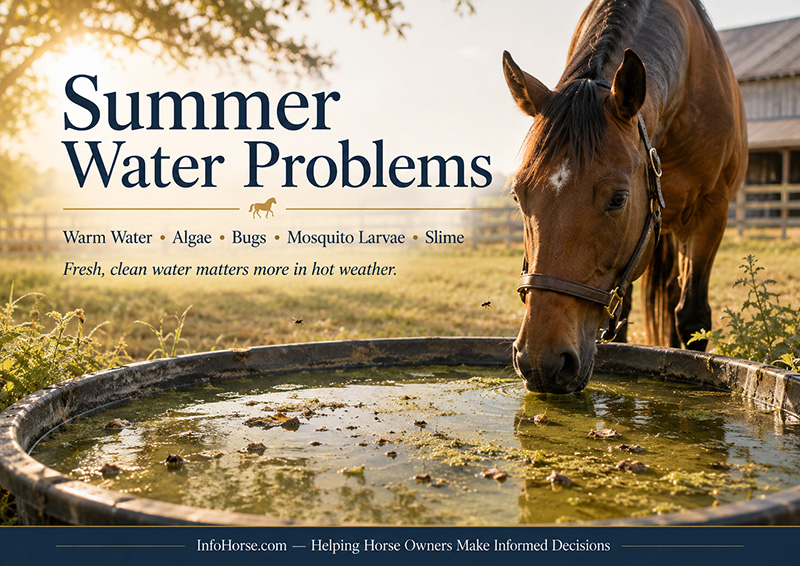
Summer water tubs can get warm.
They can grow algae.
They can collect insects.
They can become breeding places for mosquitoes.
They can collect hay, feed, dirt, manure dust, leaves, and slime.
If you would not drink it, do not assume your horse wants to drink it either.
Some horses are picky. Some will drink less if the water smells wrong, tastes wrong, or looks dirty. Others may drink it anyway because they have no choice, but that does not mean it is good management.
Clean water is part of summer horse health.
The Problem with Standing Water
Most of us have used buckets, tubs, or stock tanks. They are common because they are simple, inexpensive, and easy to understand.
But standing water has problems.
It sits.
It warms up.
It collects debris.
It grows algae.
It attracts insects.
It gets dirty between cleanings.
In a stall, a bucket can collect hay, bedding, feed, and manure splatter. In a pasture, a tank can collect leaves, dust, insects, bird droppings, and algae. In a dry lot, the water source may be exposed to blowing dirt and manure dust all day.
That does not mean buckets and tanks are bad. Many horse owners use them successfully. But they must be checked, cleaned, and refilled consistently.
Fresh water in a clean bucket is good horse care.
A slimy bucket that gets topped off but never scrubbed is not.
Winter Water Is Just as Important
A lot of people think horses are most at risk for dehydration in summer.
Summer is obvious. Horses sweat. Water disappears from buckets. Everyone can see the heat.
Winter dehydration can be sneakier.
In cold weather, horses often eat more dry hay. Dry hay requires water to help keep digestion moving normally. At the same time, water buckets freeze, tanks ice over, hoses freeze, and some horses drink less when water is very cold.
That combination can be dangerous.
Dry hay plus reduced water intake is not what you want going into winter.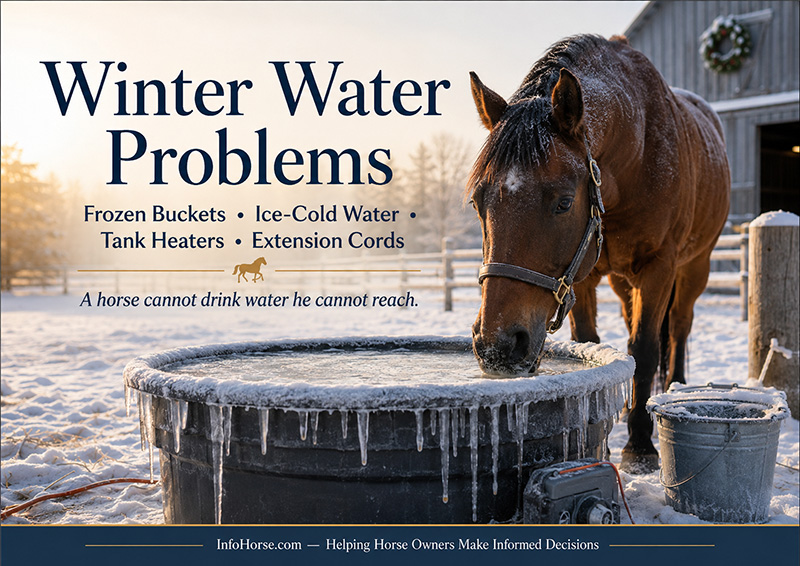
Every winter, horse owners fight the same battles:
Frozen buckets.
Frozen hoses.
Ice-covered tanks.
Stock tank heaters.
Extension cords.
Breaker problems.
Electricity near water.
Horses that do not drink enough.
This is one of the reasons many owners begin looking for an automatic horse waterer or a freeze-proof horse waterer. The goal is not just convenience. The goal is consistent water intake.
A horse cannot drink water he cannot reach.
The Concern with Electric Water Heaters
Many horse owners have used electric heaters in stock tanks or heated buckets. Sometimes they are necessary. But they also require careful management.
Cords must be protected.
Connections must be safe.
Breakers must work.
Heaters must be checked.
Water temperature must be monitored.
The equipment must not shock the horse.
That last point is not theoretical. It is part of the Bar-Bar-A story.
The Founder Story: Why Bar-Bar-A Was Invented
The Bar-Bar-A Drinker came out of a real horse problem.
Frank Frodsham, the inventor of the Bar-Bar-A Drinker, had boarded horses for years. In the winter of 1982, he had three animals that stopped eating and drinking. He had installed electrically heated drinkers to keep the water from freezing, but something was wrong.
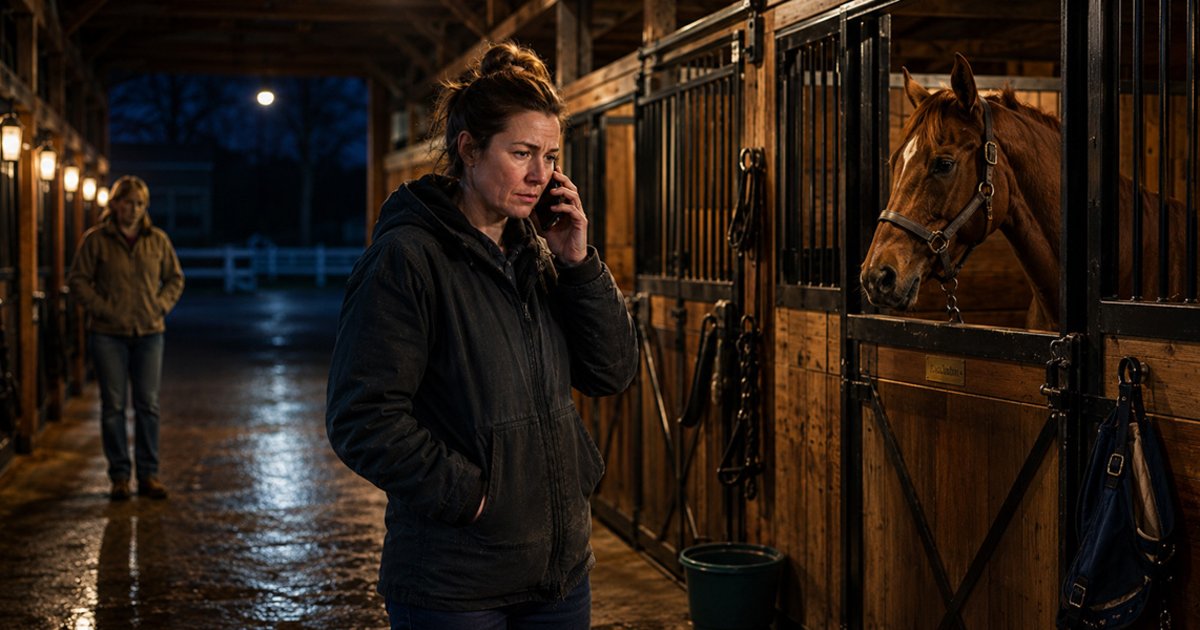
The veterinarian came out, and no one could figure out why the horses would not drink.
Then someone touched the water and got shocked.
The electric drinker had been shocking the horses when they tried to drink.
Frank pulled the plug and went to his workshop to build a better way. That first idea became the Bar-Bar-A Drinker - a non-electric automatic livestock waterer designed to provide fresh water without an electric heating element at the bowl.
That story matters because it explains the product.
It was created because horses needed a safer way to get water.
How the Bar-Bar-A Non-Electric Horse Waterer Works
The Bar-Bar-A Drinker works differently from many traditional automatic waterers.
It does not keep a bowl full of standing water.
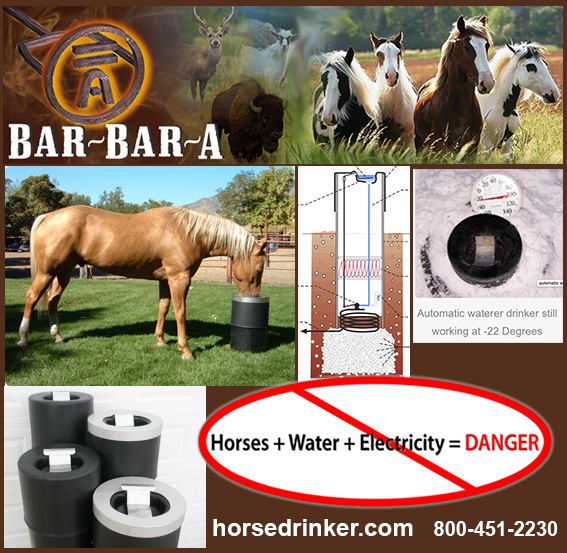
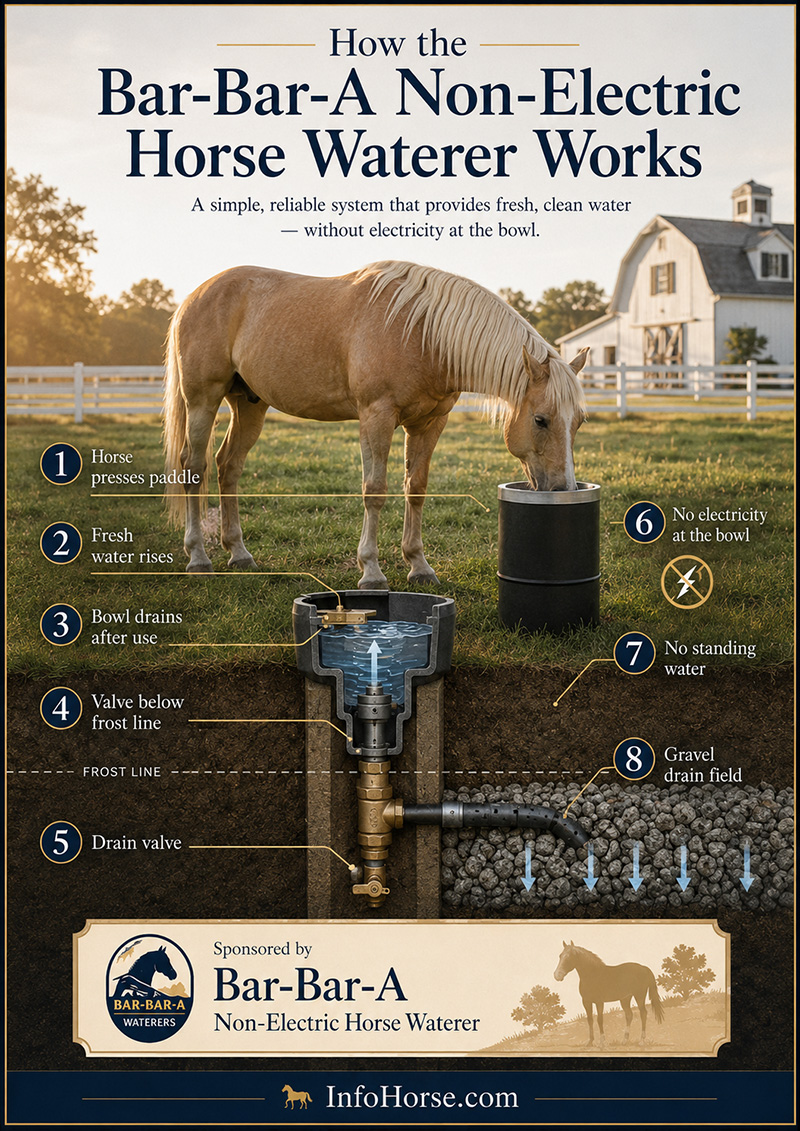
The unit is installed so the water supply and valve are below the frost line. When the horse presses the paddle, fresh water comes up into the bowl. When the horse is finished and releases the paddle, the remaining water drains away into a gravel drain field.
That means the bowl is empty between drinks.
There is no standing water left in the bowl to freeze.
There is no standing water left to grow algae.
There is no tank heater.
There is no electric cord at the drinking bowl.
There is no float valve sitting in dirty water.
It is a simple idea, but a very practical one.
Fresh water comes up when the horse asks for it.
The bowl drains when the horse is done.
That is why Bar-Bar-A is often described as a self-draining, non-electric horse waterer.
Why Non-Electric Matters
Electricity and water require respect.
In barns and pastures, water sources are exposed to animals, weather, mud, bedding, chewing, rubbing, shifting ground, and human error. Anything electrical around livestock water needs to be installed and maintained carefully.
A non-electric horse waterer removes that concern from the drinking bowl.
For many horse owners, that is one of the most attractive parts of Bar-Bar-A. It is designed to use below-ground temperature rather than a heating element at the water source.
That can be especially valuable for horse owners in colder climates, remote pastures, barns without convenient electrical access, or properties where owners want to reduce reliance on tank heaters and cords.
Automatic Waterers Are Helpful — But They Still Need Checking
I like good automatic systems. They save labor and can improve consistency.
But here is the important warning:
Automatic does not mean ignore it.
Every water source should be checked. Buckets, tanks, troughs, and automatic waterers all need attention.
With buckets and tanks, you can usually see how much water the horse drank. With automatic waterers, you may need to pay closer attention to the horse and the system. Watch manure. Watch attitude. Watch hydration. Watch whether the horse is using the waterer normally.
A good automatic waterer is a tool. It does not replace horsemanship.
The right approach is simple:
Trust good equipment, but still check your horse.
Teaching Horses to Use an Automatic Waterer
Most horses learn quickly when a waterer is designed around natural behavior.
Horses are curious. They nuzzle things. They push with their noses. When a horse presses the Bar-Bar-A paddle, water comes up. Once he tastes the water, he usually figures out the system.
Bar-Bar-A also offers a training mode that allows water to remain in the bowl temporarily while the horse learns. That helps the horse connect the paddle with the water source.
When introducing any automatic horse waterer, do not assume every horse understands it immediately. Watch the horse drink. Make sure each horse on the property is comfortable using it. Do not remove all backup water until you are sure the horse is drinking normally.
That is just good horse sense.
Clean Buckets Still Matter
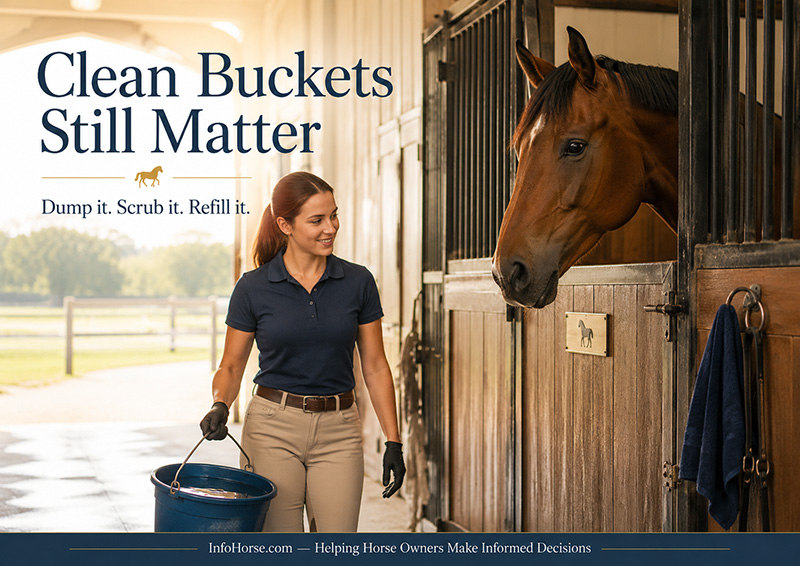
Not every horse is in a pasture with an automatic waterer.
Many horses spend part of the day or night in stalls. Some are fed in stalls. Some are brought in during bad weather, injury recovery, heat, cold, or show preparation.
If a horse is in a stall, clean buckets still matter.
A stall bucket should be checked at least daily and cleaned often. If the bucket feels slimy, it needs scrubbing. If hay, grain, bedding, or manure has gotten into it, it needs attention. If the water smells bad, dump it and start over.
Do not just top off dirty water.
Dump it. Scrub it. Refill it.
That is one of the simplest ways to improve horse care.
What to Watch For
Horse owners should pay attention to signs that a horse may not be drinking normally.
Watch for:
• Reduced water intake
• Dry or reduced manure
• Dull attitude
• Less appetite
• Darker urine
• Dry gums
• Thick saliva
• Signs of discomfort
• A horse standing near water but not drinking
• A horse acting worried around a water source
Any concern about dehydration, colic, or abnormal behavior should be taken seriously and discussed with a veterinarian.
The goal is to catch water problems before they become horse problems.
Daily Water Checklist for Horse Owners
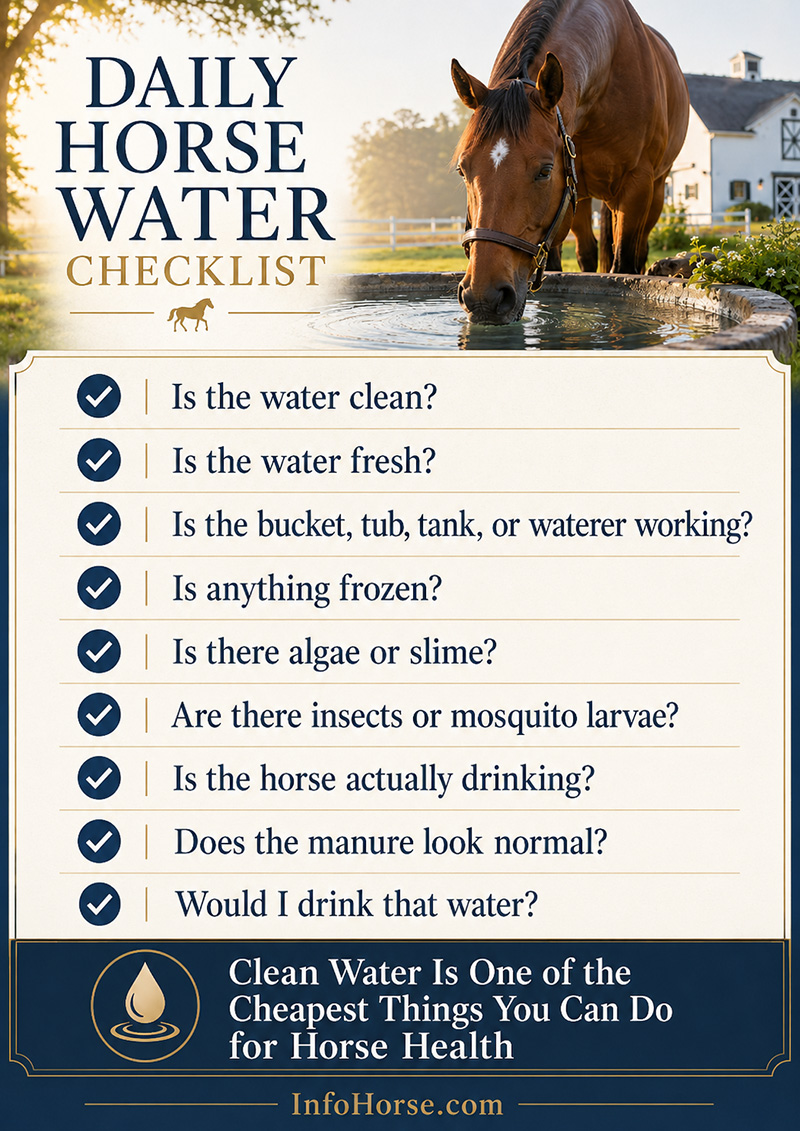
Here is a simple checklist I wish every horse owner would use:
• Is the water clean?
• Is the water fresh?
• Is the bucket, tub, tank, or waterer working?
• Is anything frozen?
• Is anything leaking?
• Is there algae or slime?
• Are there insects or mosquito larvae?
• Is the horse actually drinking?
• Does the manure look normal?
• Would I drink that water?
That last question will tell you a lot.
When a Better Water System Makes Sense
A better water system may be worth considering if you are dealing with:
• Frozen buckets
• Dirty tubs
• Algae-filled tanks
• Mosquito larvae
• Heavy daily water chores
• Electric tank heaters
• Remote pastures
• Multiple horses
• Winter freezing problems
• Summer water that gets warm and slimy
• Horses that need more reliable access to fresh water
That is where a product like the Bar-Bar-A Non-Electric Horse Waterer fits.
It is not just about convenience. It is about providing fresh water in a way that reduces several common water problems at once.
Why Bar-Bar-A Supports Better Water Management
Bar-Bar-A is a practical solution for horse owners who want fresh water without standing water and without electricity at the bowl.
The design helps answer several common concerns:
Will the water sit and grow algae?
No, the bowl drains after use.
Does it need a heater at the drinking bowl?
No, it is non-electric and uses a below-frost-line design.
Can water freeze in the bowl?
The bowl drains after the horse drinks, so there is no bowl full of water left to freeze.
Does the horse get fresh water?
Yes, water comes up when the horse presses the paddle.
Does it reduce dirty tub problems?
Yes, because it does not rely on a standing tub of water.
Does it reduce daily labor?
For many horse owners, yes. It can reduce hauling, dumping, scrubbing, thawing, and refilling.
That is why Bar-Bar-A deserves attention from horse owners who are building a barn, improving a pasture, replacing old tanks, or trying to solve winter and summer water problems.
Helping Horse Owners Make Informed Decisions
At InfoHorse.com, our mission is Helping Horse Owners Make Informed Decisions.
That means we do not just ask, “What product is being sold?”
We ask better questions:
What problem does it solve?
Why does the problem matter?
How does it affect the horse?
What should the owner understand before buying?
Is this a convenience product, a safety product, a health-support product, or all three?
With waterers, those questions are important because water is not optional. It is not decoration. It is not a luxury.
Water is daily horse care.
A clean, dependable water source supports digestion, hydration, comfort, and overall health. Whether you use buckets, tubs, tanks, or an automatic horse waterer, the goal is the same:
The horse should have clean, fresh, safe water every day of the year.
The Bottom Line
 Clean water is one of the most important parts of horse health.
It supports digestion.
It supports hydration.
It supports temperature regulation.
It supports normal manure production.
It supports comfort and overall well-being.
In summer, water helps horses handle heat.
In winter, water helps horses process dry hay and stay hydrated.
In every season, water deserves more attention than many people give it.
If your horse’s water is dirty, frozen, slimy, buggy, too hot, too cold, or hard to access, fix that first.
And if you are looking for a non-electric horse waterer that provides fresh water on demand without standing water, electric heaters, algae-filled tubs, or frozen buckets, the Bar-Bar-A Non-Electric Horse Waterer is well worth a serious look.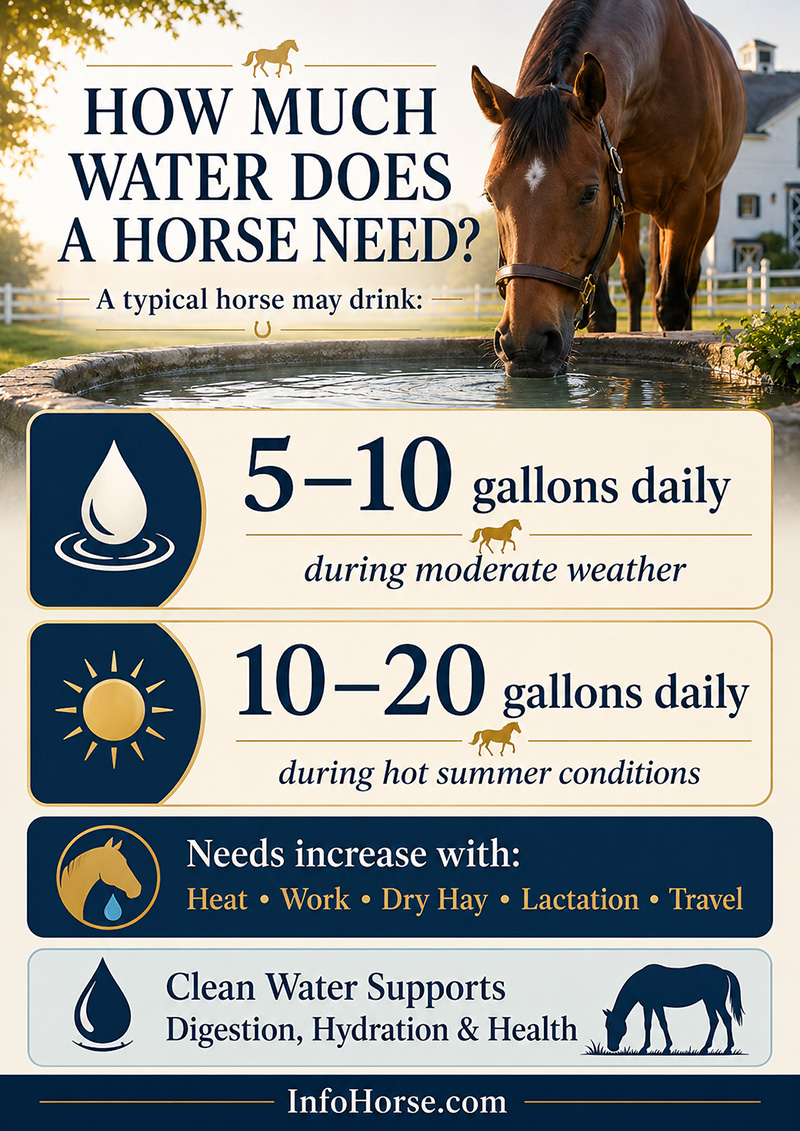
Because when it comes to horse care, clean water is not complicated.
 It is necessary.
Bob Pruitt