


Horse Colic: How to Read the Signs and
What to Do Beforethe Vet Arrives
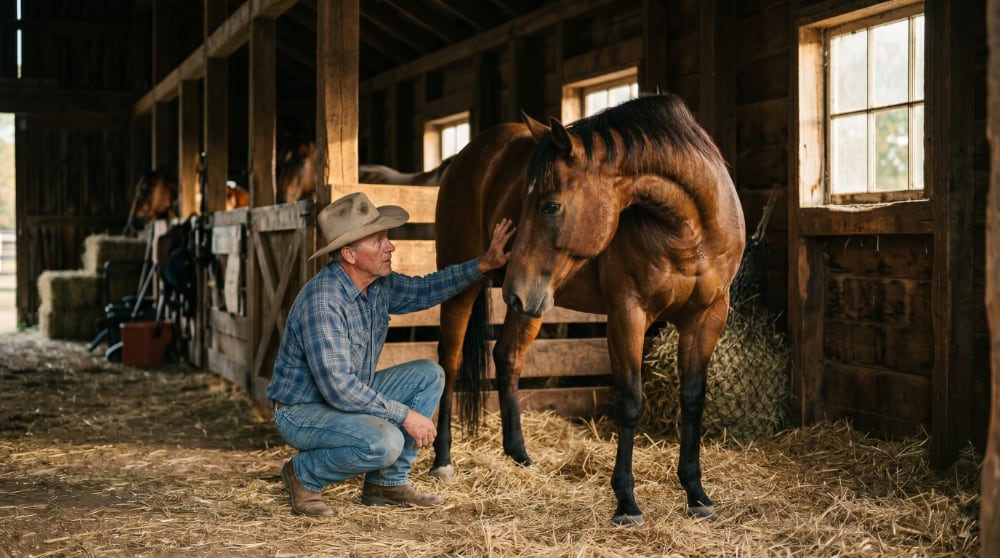
Colic simply means belly pain, and it’s the most common reason a horse needs an emergency veterinarian—watch for pawing, biting at the flank, going off feed, restless lying down and rolling, and sweating or trembling in a horse that hasn’t been worked. Call your vet first, even when it looks mild, then pull all hay and grain, leave water available, and check vital signs: a resting adult heart rate runs 28 to 44 beats a minute, and a rate over 60 is serious. Hand-walk only to stop dangerous rolling, and never give Banamine or bute on your own, because pain medication can mask a surgical colic.
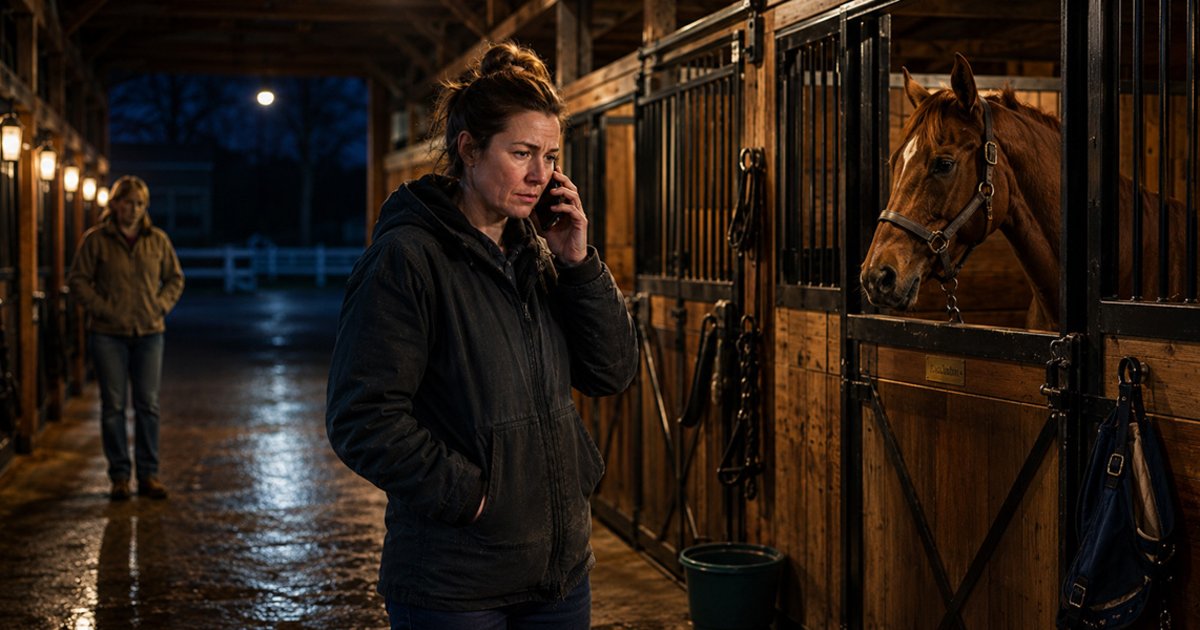
Every horse owner remembers their first bad colic. You walk out to the barn and something's just off. He's not at the gate. He's standing in the corner, head low, pawing at the dirt — then he swings around and stares at his own belly. Your stomach drops, because somewhere deep down you already know.
Here's the truth that twenty-five years around sick horses will teach you: colic is the most common reason a horse needs an emergency vet, and one of the leading natural killers of horses — but most colics are not the bad kind, and the person standing in that stall is the biggest factor in how the night ends. You're almost always the first one there. Long before the vet's truck comes down the drive, it's your eyes, your hands, and your steady head buying your horse time. This guide shows you how to use all three.
What is colic, really?
Colic isn't a disease. It's a word, and all it means is belly pain — pain anywhere in that long, complicated gut a horse carries around. A horse has something like 100 feet of intestine folded up inside him, most of it floating loose, and it can cramp, fill with gas, pack up with dry feed, fill with sand, or — in the worst cases — twist on itself.
So when we say a horse is "colicking," we're naming the pain, not the cause. Figuring out the cause is the vet's job. Yours is to spot it early, size up how bad it is, keep him safe, and get good information to the vet fast. A horse can't tell you where it hurts, and the dangerous kinds can look just like the mild ones in the first hour. That's exactly why you never just wait and watch — you check, and you call.
What Colic Looks Like — The Signs to Watch For
A horse in pain tells you with his body. Some signs are loud and obvious. The ones that catch good owners off guard are the quiet, early ones — when there's still plenty of time to help.
Early and mild signs:
- Turning to look at, nip, or bite at his flank or belly
- Pawing at the ground or stamping a back foot
- Going off his feed — leaving grain or hay he'd normally clean up
- Curling the upper lip (the "flehmen" face) for no reason
- Lying down and getting back up, restless, can't get comfortable
- Fewer manure piles than normal, or small, dry, hard ones — or none at all
- Stretching out like he needs to urinate, but nothing comes
Serious signs — call the vet now:
- Repeatedly lying down and rolling, or throwing himself to the ground
- Violent rolling — the kind that can twist a gut
- Sweating, trembling, or breathing hard when he hasn't been worked
- Kicking at his own belly
- Sitting back on his haunches like a dog, or a belly that looks bloated and tight
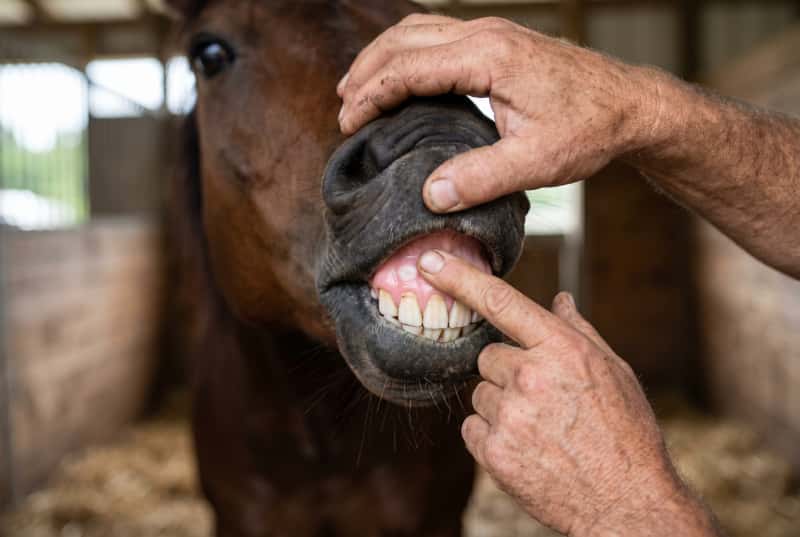
- Gums gone pale, white, brick-red, or bluish
One horse will throw every sign at you at once. Another just goes quiet in the corner and doesn't finish breakfast. Learn to trust the small change — the owners who catch colic early are almost always the ones who simply know what their horse looks like on a normal, boring Tuesday.
How to check your horse's vital signs (step by step)
This is the part that turns a panicked phone call into a useful one. The first thing your vet will ask is what your horse's vital signs are. If you already have them written down, you've given the vet — and your horse — a real head start. Practice these on a calm, healthy day so your hands know what to do at two in the morning.
1. Heart rate (the single most important number).
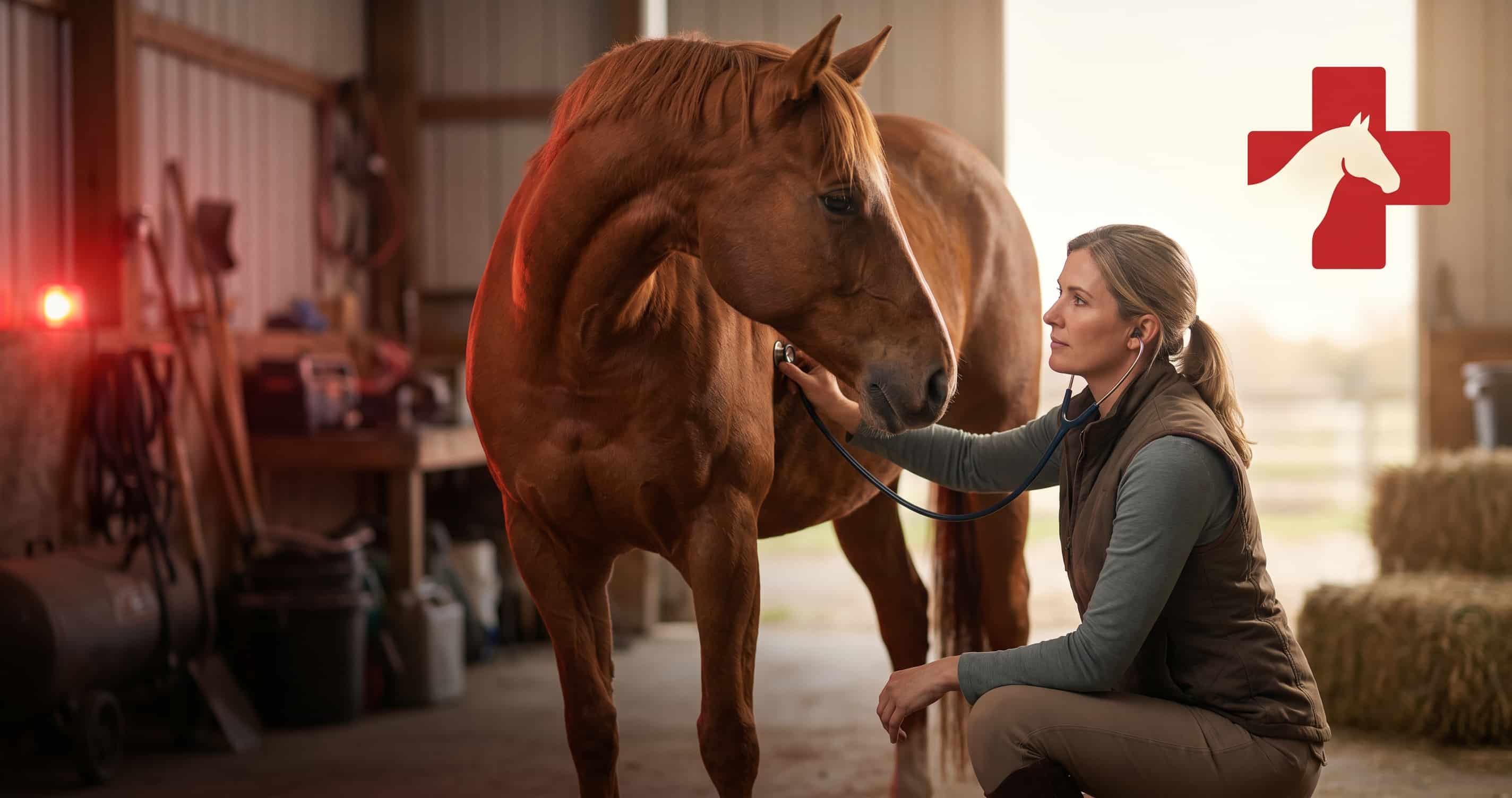
Press a stethoscope flat against his left side, just behind the elbow where the girth sits, and count the beats for 15 seconds, then multiply by four. No stethoscope? Feel the artery along the bottom edge of the jawbone, or just inside the cheek, with two fingers (never your thumb — it has its own pulse). A resting adult horse runs 28–44 beats a minute. A rate climbing past 48–50 means real pain; over 60 is serious.
2. Gum color and capillary refill.
Lift the upper lip. Healthy gums are moist and bubble-gum pink. Press a thumb to the gum until the spot turns white, lift off, and count how fast the pink floods back — under two seconds is normal. Pale, white, brick-red, or bluish gums, or a slow refill, are emergency signs.
3. Gut sounds.
Put your ear or a stethoscope flat against the flank — listen high and low, on both sides, for a full minute each. A healthy gut gurgles and rumbles like a far-off creek. Here's the part that surprises people: a silent belly is a red flag, not a relief — it can mean the gut has shut down.
4. Temperature.
A normal horse runs 99–101.5°F. Use a digital thermometer in the rectum, tied to the tail with a clip and string so you don't lose it. A fever can point to a different kind of trouble than a plain blockage.
5. Respiration.
Watch the flank or nostrils rise and fall — 8–16 breaths a minute at rest. Fast, labored breathing usually tracks with pain or distress.
6. Skin pinch (hydration).
Pinch a fold of skin on the point of the shoulder or neck and let go. It should fall flat almost instantly. Skin that stays "tented" for a couple of seconds means he's getting dehydrated.
| Vital sign | Normal (adult, at rest) | Worry — tell your vet |
|---|---|---|
| Heart rate | 28–44 beats/min | Climbing past 48–50; over 60 is serious |
| Gum color | Moist, bubble-gum pink | Pale, white, brick-red, or bluish |
| Capillary refill | Pink returns under 2 sec | Slower than 2–3 sec |
| Gut sounds | Gurgles in all four corners | Quiet — or a silent belly |
| Temperature | 99–101.5°F | Over 101.5°F or below 99°F |
| Respiration | 8–16 breaths/min | Labored, or over 30 unworked |
| Skin pinch | Snaps flat under 2 sec | Stays "tented" (dehydration) |
🎯 If you remember one number, make it the heart rate. It's the best read you have on how much pain your horse is in. A calm horse with a normal pulse and pink gums usually has time on his side. A quiet horse with a racing heart and pale gums does not — that's an emergency even if he isn't thrashing around.
The first hour, step by step
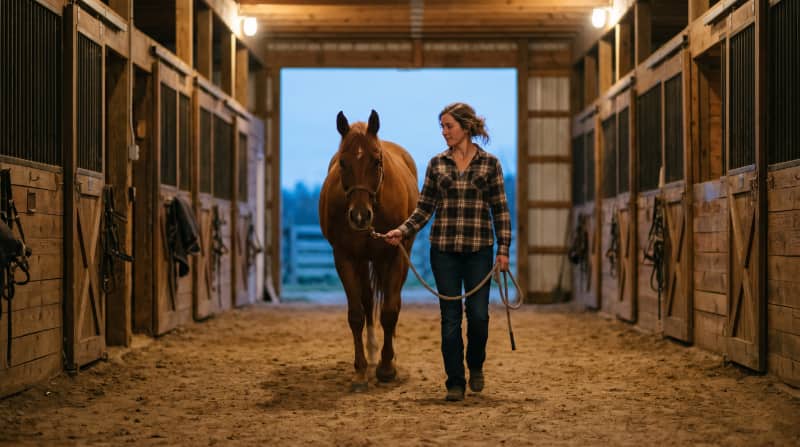
The first hour is yours, and how you use it matters. Here's the order that works:
🤠 A horseman's bottom line: Stay calm, take the heart rate, pull the feed, and call your vet early. Do those four things and you've already done your horse a world of good. This guide is education for owners — it does not replace your veterinarian. When in doubt, make the call. You'll never regret the colic call that turned out to be nothing.
- Call the vet first — always. Even if it looks mild. Describe the signs, read off the vital signs, and let the vet decide how fast they need to come. Calling early is never the wrong call, and it's the cheapest call you'll ever make.
- Pull all feed. Hay and grain come away. Leave water unless your vet says otherwise.
- Write down the clock. When it started, the vital signs, the last manure you saw, the last time he ate and drank, and anything that changed lately — new hay, a skipped deworming, a sandy paddock, a cold snap. The vet will want all of it.
- Keep him calm and safe. Your nerves travel right down the lead rope, so slow your own breathing first. Put him where he can't hurt himself if he goes down.
- Hand-walk only to prevent rolling. If he's frantic and keeps trying to hurl himself down, walk him slow and easy, ten or fifteen minutes at a stretch, to settle him and stop a dangerous roll. If he'll stand or lie quietly without thrashing, let him rest — walking is a tool, not a cure.
- Get ready to haul. If there's any chance this becomes a referral or a surgery, hook the trailer up and have it ready before the vet even arrives. Minutes saved here have saved lives.
What you should NOT do
Good intentions hurt horses every year. Steer clear of these:
- Don't reach for Banamine or bute on your own. Pain meds can mask a surgical colic and rob your vet of the signs they need to make the right call. Give them only when, and how, your vet directs.
- Don't walk him into the ground. An exhausted horse is in worse shape, not better. Walk only to stop rolling.
- Don't let him eat, no matter how bright he looks once the pain eases. Wait for your vet's all-clear.
- Don't drench him with oil, salt, or home remedies. You can send it down the windpipe and into the lungs. Leave the tubing to the vet.
- Don't "wait until morning" on a horse with red-flag signs. Colic can go from mild to surgical in a few hours.
When is colic a surgical emergency?
Most colics never get here — but the ones that do can't wait, and knowing them is the most valuable thing an owner can learn. Treat it as surgical until your vet says otherwise if you see:
- Violent, repeated rolling that nothing settles
- A heart rate over 60 and still climbing
- Pain that comes roaring back soon after the vet's painkiller wears off
- A silent gut with no sounds at all
- A distended, drum-tight belly
- Pale, brick-red, or bluish gums with a slow capillary refill
You don't have to make the surgical call yourself — that's your vet's job. Your job is to get them a clear picture, fast, so they can.
What will the vet do when they arrive?
Knowing what's coming takes some of the fear out of it. A colic workup usually runs like this:
- A hands-on exam — heart rate, gum color, gut sounds, temperature, and how much pain he's showing.
- Pain relief, often an injection like flunixin (Banamine), to settle him and make him safe to examine.
- A nasogastric tube — a soft tube passed up the nose into the stomach. A horse can't vomit, so the vet checks for backed-up fluid ("reflux") and may give water, electrolytes, or oil straight to the stomach.
- A rectal exam, feeling for an impaction, gas, or a gut that's slipped out of place.
- Sometimes a belly tap or ultrasound to read what's happening deeper inside.
- The decision: treat on the farm, haul to a clinic for fluids and monitoring, or refer for surgery. Early, clear information from you makes that call faster and more accurate.
What does colic treatment cost?
Nobody likes to think about money during an emergency, but knowing the ballpark ahead of time helps you decide fast — and decisions made fast save horses. Costs vary a lot by region, clinic, and how serious it is, so treat these as rough ranges and ask your own vet:
- A farm call plus on-site treatment for a mild gas or impaction colic often runs a few hundred dollars.
- Hospitalization with IV fluids and monitoring for a stubborn medical colic can run into the low thousands.
- Colic surgery, with the operation and aftercare, commonly runs from several thousand into the five-figure range.
Two things take the sting out of it: catching colic early (a mild colic treated on the farm costs a tiny fraction of a surgery), and planning ahead — major-medical or colic-specific equine insurance, or a line of credit set aside for emergencies, so the money question never costs you precious minutes.
The common types of colic (so the vet's words make sense)
- Gas / spasmodic colic — the most common and usually the most forgiving. Gas and cramps from a feed change, rich grass, or stress. Often settles with simple treatment.
- Impaction colic — a blockage of dry, packed feed, most often when a horse isn't drinking enough (think icy winter water) or has been eating coarse hay. Common, and very treatable when caught early.
- Sand colic — sand eaten off bare, overgrazed ground settles in the gut and irritates or blocks it. A real problem in dry, sandy country.
- Displacement or torsion (a "twist") — a piece of gut moves where it shouldn't or rotates and chokes off its own blood supply. This is the dangerous one, and the surgery you're racing to beat.
- Enteritis / colitis — inflammation or infection in the gut. Needs a vet's hands and medicine.
How do you prevent colic?
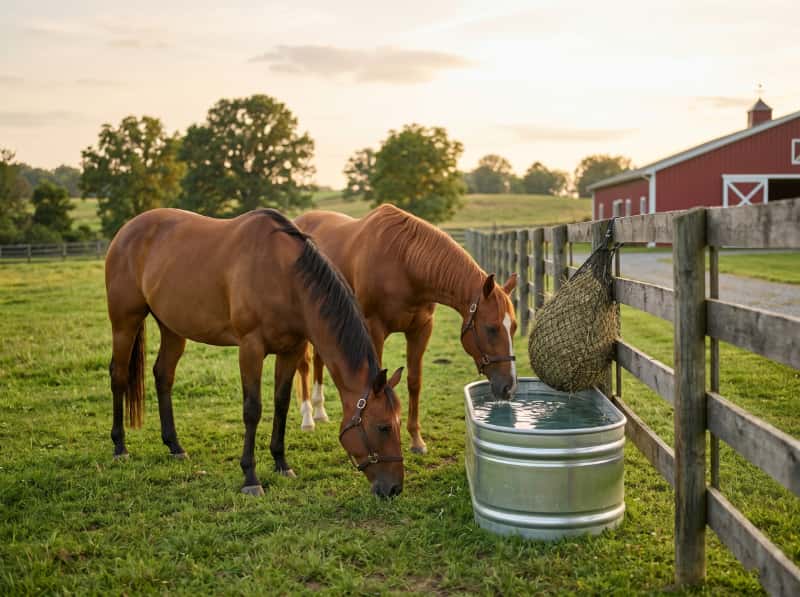
You can't promise a horse will never colic, but you can stack the deck hard in his favor. Almost all of it comes back to one idea: a horse's gut was built to trickle-feed forage and water all day long. The closer you keep him to that, the safer he is.
- Forage first, always. Plenty of good hay or pasture, fed little and often, keeps the gut moving the way nature intended.
- Water — and warm it in winter. Horses drink less when water is icy cold, and that's exactly when impaction colics spike. A few degrees of warmth keeps a horse drinking.
- Change feed slowly. Phase any new hay or grain in over about two weeks. Sudden changes are a classic trigger.
- Beat the sand. Feed off mats or in slow-feeders, never off bare dirt, and ask your vet about a periodic psyllium routine if you live in sandy country.
- Keep him moving. Turnout and regular exercise keep the gut working. The stalled-up, idle horse colics more.
- Mind the teeth and the worms. Yearly dental floats so he can chew his feed, and a parasite program built on fecal egg counts, not guesswork.
- Know his normal. His resting heart rate, his manure, his appetite, his gum color. You can't spot "off" until you know "normal."
Build your colic plan before it ever happens
The owners who come through a colic well are the ones who got ready on a calm day. Before you ever need it:
- Post your vet's number — and a backup clinic's — where anyone at the barn can find it.
- Keep the trailer maintained and ready to roll, and make sure your horse loads.
- Stock a simple first aid kit and learn to take vital signs until it's second nature. A hands-on equine first aid class is worth every penny.
- Sort out the money question ahead of time — insurance or an emergency fund — so it never slows you down.