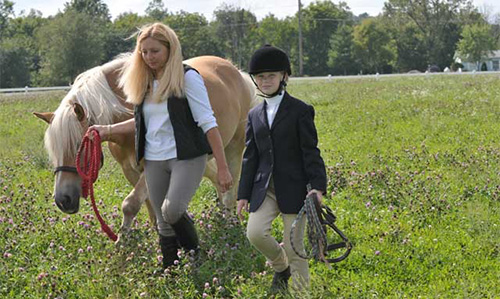
Practice good habits: ' Invest in and wear Personal Protective Equipment or PPEs like helmets, safety vests, proper shoes, and safety stirrups.
Your horse has 60 million years of evolution behind him---that makes him keenly aware of everything going on around him.
' Your horse has near 360' vision so that he can see predators sneaking up on him.
We use a heavy duty 14-gauge steel for our stall bodies and a 16-gauge for all grille work.
Article by Karen Elizabeth Baril My father was one of the most practical and logical men I’ve ever known.
Building Blocks of Horse Accident Prevention
Safety experts know that accident prevention relies on three key building blocks; maintaining an awareness of potential danger, controlling the physical environment, and practicing good personal or work habits. Article by Karen Elizabeth Baril
Preventing accidents with horses rests on three key building blocks: maintaining an awareness of potential danger, controlling the physical environment, and practicing good personal or work habits. That means learning to see the world through your horse’s eyes—he is a prey animal with near-360-degree vision—keeping barn aisles de-cluttered and stall doors shut, and wearing personal protective equipment such as helmets, safety vests, proper shoes, and safety stirrups. Most of what we call accidents are events that could have been prevented.
My father was one of the most practical and logical men I’ve ever known. In his heyday he loved to engage in philosophical discussions. Sometimes these discussions got pretty lively and his particular favorite was on the nature of accidents. He didn't believe there was such a thing as a true accident. In fact, he argued that most of what we call accidents are events that could have been prevented. You know, when it comes to horses, that's not such a bad philosophy to live by.
Safety experts know that accident prevention relies on three key building blocks; maintaining an awareness of potential danger, controlling the physical environment, and practicing good personal or work habits. Let's take a look at what that means to you as a horse owner.
Awareness:
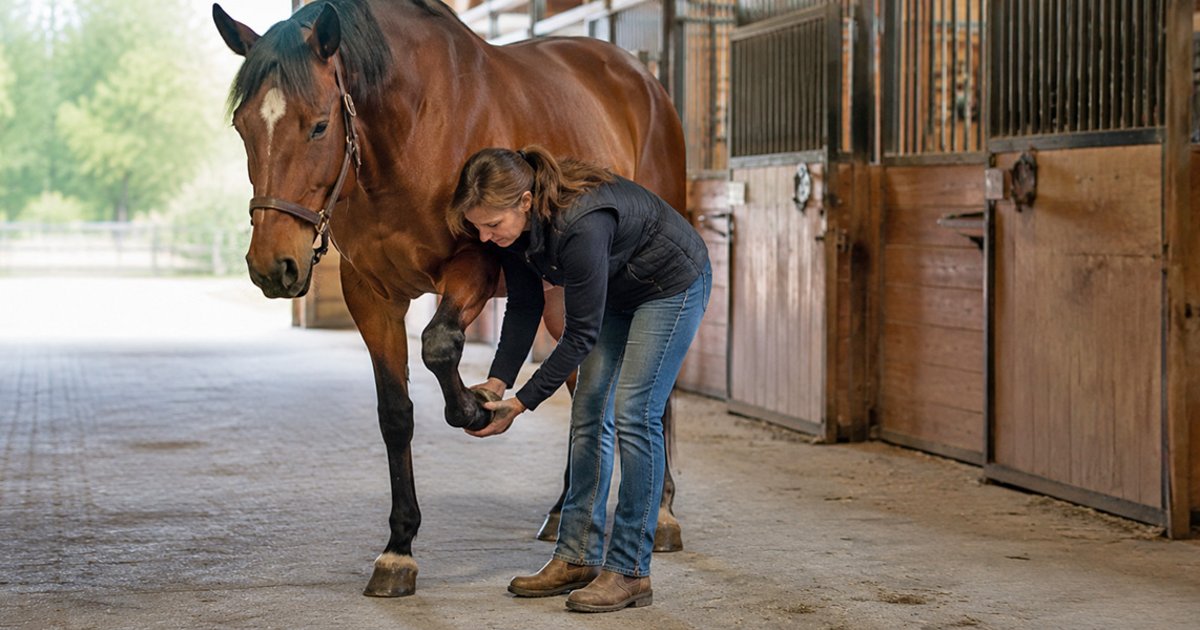
' Learn to see the world through your horse's eyes. The horse is a prey animal. That means he has an innate need to know who you are, where you are, and what you're going to do at all times. Your horse has 60 million years of evolution behind him---that makes him keenly aware of everything going on around him. A simple example would be picking your horse's hoof. Instead of going directly at it, run your hand down his shoulder first and then ask for his hoof, politely.
' Your horse has near 360' vision so that he can see predators sneaking up on him. If you're behind a horse and he perceives you as a predator, he might kick out at you.
' Horses spook. Their flight instinct is finely tuned. That's not something we can always control, but we can be sure we're in a safe spot if he should spook. When leading your horse always stand near his shoulder and maintain an awareness of his expression.
' Don't expect other horses to behave as calmly as yours. In boarding situations, in lesson barns, or wherever you're likely to encounter other horses never assume they'll behave as yours might. And remember that even your normally calm horse might be less comfortable in unfamiliar surroundings.
Control the physical environment:
' De-clutter your barn aisles. Wheelbarrows, muck buckets, rakes, brooms, saddles, all need to find their home after every use. So many accidents can be avoided simply by committing to better housekeeping!
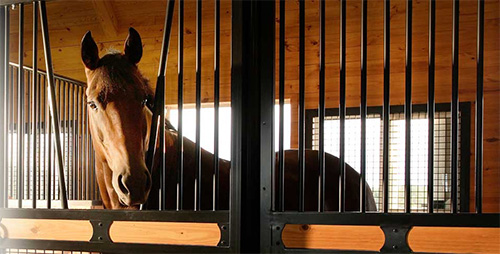
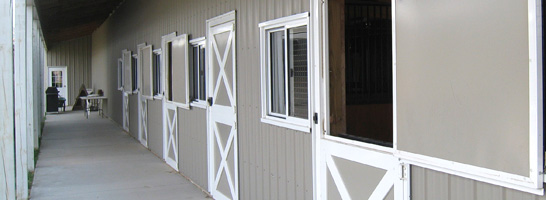
' Stall doors should be shut at all times whether or not the stall is occupied. Be sure to buy quality stall components. We've seen some nasty accidents on stalls that were not finished properly---they look pretty, but when it comes to stalls the old adage, handsome is as handsome does rings true. We use a heavy duty 14-gauge steel for our stall bodies and a 16-gauge for all grille work.
Our surface prep is unmatched in the industry. Metal is sand-blasted to remove impurities, inspected, and then sanded by hand to ensure a smooth finish. There are absolutely no sharp edges to snag a delicate muzzle! We use a hot-dipped galvanized metal with a thick coating of zinc for superior rust protection and we boast one of the longest and most thorough curing process in the industry.
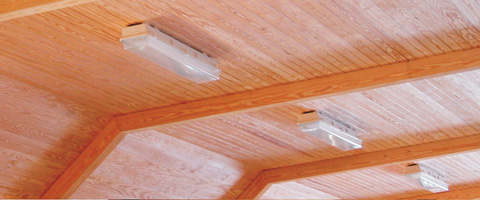
' Lighting is often neglected when it comes to barns, but poor lighting can lead to accidents. We should all be aware that the use of non-agricultural lighting in barns brings a risk of fire. Use only UL approved fixtures that reproduce daylight quality light, cool burning bulbs, gasketed fixtures that are made to withstand power surges, and, of course---enclosed to seal out moisture and bugs.
Practice good habits:
' Invest in and wear Personal Protective Equipment or PPEs like helmets, safety vests, proper shoes, and safety stirrups.
' Always leave an escape route for both horse and human. For example, when handling your horse in tandem with another professional---your veterinarian or farrier---stand on the same side of the horse as your veterinarian. Your horse would rather not run you down and chances are he won't if he doesn't feel trapped.
' Communicate with innocent bystanders. Never assume others know how to behave around horses, especially children.
💬Questions Readers Commonly Ask (FAQ)
What's the most practical way to prevent horse accidents around my barn?
Per the article: serious horse-safety experts organize prevention around three building blocks — awareness of potential danger, control of the physical environment, and good personal habits. None of them work alone. Awareness without environmental control means you'll see the danger but still trip on the muck bucket; environmental control without habits means you'll have a tidy barn but still walk behind a horse without warning him.
The article's framing — borrowed from a father who didn't believe in true accidents — is that almost everything we call an accident is an event that could have been prevented. Practical translation: pick one building block that's weakest in your operation, fix it for thirty days, then move to the next. Trying to overhaul all three at once usually means none of them stick.
How do I learn to see things from my horse's perspective?
Per the article: the horse is a prey animal with roughly 360-degree vision and 60 million years of evolution behind his alertness. He needs to know who you are, where you are, and what you're going to do at all times. That's the lens.
Practical applications:
When picking a hoof, run your hand down the shoulder first, then ask politely — don't reach straight for the foot.
If you're behind a horse and he reads you as a predator, expect a kick. Talk, touch his hindquarters lightly, stay in his peripheral vision.
When leading, stand at his shoulder and watch his expression — ears, eye, nostril — for any rising tension before it becomes a spook.
Don't assume strange horses behave like yours. Boarding barns, lesson barns, trail meetups — treat unfamiliar horses as unknown until proven calm.
What environmental changes prevent the most barn accidents?
Per the article: three environmental fixes do most of the work.
De-clutter aisles. Wheelbarrows, muck buckets, rakes, brooms, and saddles need a designated home after every use. A surprising share of barn accidents trace to tripping on equipment that was "just there for a minute."
Stall doors closed at all times, occupied or empty. An open empty stall is an invitation for a loose horse to wedge himself somewhere he can't easily back out of.
Quality stall components. Surface prep matters — sand-blasted, hand-sanded edges with no snag points for a delicate muzzle, hot-dipped galvanized for rust resistance. Cheap stalls look fine on day one and cause the worst injuries on year three.
Lighting also matters: use only UL-approved, gasketed, daylight-quality fixtures rated for agricultural environments. Non-agricultural lighting raises the fire risk meaningfully.
When is it most dangerous to be working around a horse?
Per the article: the highest-risk moments are when a horse feels trapped or doesn't have an escape route. A horse who can move usually won't run you down; a horse who can't is dramatically more likely to.
Practical application — when working with a vet or farrier, stand on the same side of the horse as the professional, not opposite. That keeps both humans on one escape line and gives the horse a clear opposite side to move into if he startles. Bracket a horse between two people on opposite sides and you've created a trap.
The other high-risk moment is around innocent bystanders, especially children. Per the article: never assume others know how to behave around horses. Communicate explicitly — "please stay outside the gate," "approach from the front," "don't run" — even if it feels over-explained.
What personal protective equipment is actually worth buying?
Per the article: the four PPE items horse owners should commit to are helmets, safety vests, proper footwear, and safety stirrups. None of these are optional once you've watched a serious accident play out.
The decision logic: the cost of any one piece is small relative to a single ER visit, and the protection compounds. Helmet plus safety vest is meaningfully more protective than either alone. Proper footwear (sturdy, closed-toe, with a defined heel) prevents both crushed feet at the ground and stuck feet in stirrups. Safety stirrups release if you fall, which prevents the worst trail-riding outcome — being dragged.
Per the article: the underlying habit is wearing the equipment every ride, not just for the ones that feel risky. Accidents don't announce themselves in advance.
📋
Recommended Products
Curated picks from across InfoHorse.com — most relevant first