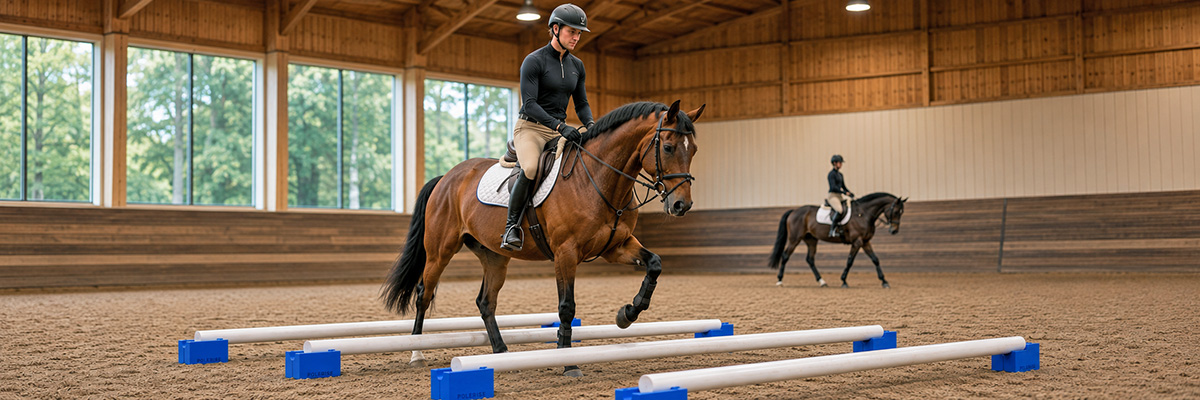
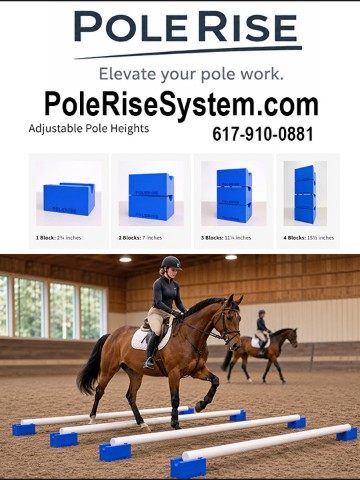
Cavaletti blocks — also called pole risers or riser blocks — are supports that hold a ground pole at a set height so it cannot roll underfoot. That fixed rail is what separates true cavaletti from loose trot poles, and it is the main safety reason riders choose blocks for raised pole work. The name comes from the Italian for “little horse,” and the tool traces back to cavalry training more than a century ago.
Working over raised poles helps horses develop rhythm, balance, strength, and body awareness, and published research shows greater joint flexion when poles are raised. Most riders school over poles set roughly 2.5–3 feet apart at the walk, about 4 feet at the trot, and 9–11 feet at the canter, raising the rail from a few inches up to about 20 inches as the horse grows stronger — always adjusted to the individual horse's stride.
When comparing cavaletti blocks for horses, look at the heights each design offers, how many blocks come in a set (you need two per pole), whether the cradle fits your poles, and how the blocks handle weather and storage. Modern stackable plastic riser systems are light enough to rearrange mid-lesson, while traditional wooden cavaletti sit heavier but need paint and upkeep. Many riders also use riser blocks to build a portable dressage arena boundary.

 NEW
NEW