ⓘ
The Solution Section (FAQ)
What are fly parasites and how do they control flies at a horse barn?
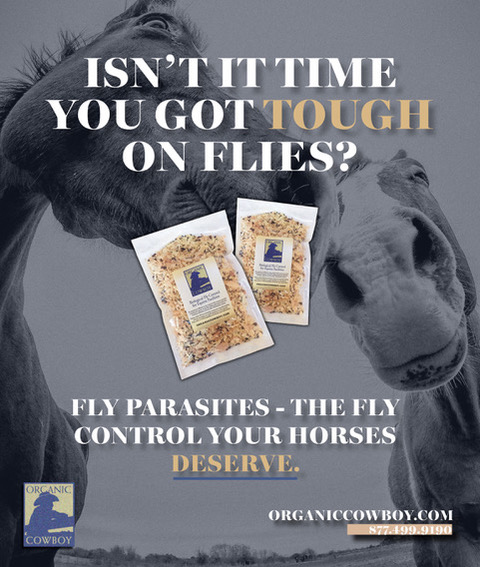
Fly parasites are tiny, harmless gnat-sized insects that prey on and kill pest flies the natural way, before those flies become adults that spread disease and bother you and your horses. The Organic Cowboy™ uses them as a time-honored biological tool in the battle against pest flies, with no chemical sprays needed.
Which flies do The Organic Cowboy™ fly parasites control?
The Organic Cowboy™ blend effectively controls house flies, stable flies, and horn flies. It combines three strains of fly parasites: Spalangia cameroni, Muscidifurax zaraptor, and Muscidifurax raptorellus, which target the pupae of these pest species.
How do I use fly parasites in my stable?
It is a simple three-step program. First, locate your worst fly breeding habitats, which are typically where manure builds up along fence lines and where manure is stored for later removal. Then peel open the pack and shake a small quantity of parasites onto the manure, working along the build-up areas, and maintain the program with regular barn cleanup throughout the season.
Where are the worst fly breeding spots in a horse barn?
The primary fly breeding habitats are areas where manure builds up along fence lines, which are often the toughest spots to clean, and where manure is stored for later removal or handling. These are where fly larvae concentrate in large numbers, so they are the first places you should release your fly parasites.
How soon do I need to release the fly parasites after they arrive?
Release your fly parasites within 48 hours of arrival to stay ahead of the flies and ensure the parasites are fresh and ready for action. If you need to store them for a few days, keep them refrigerated to slow their metabolism.
How often should I order and release fly parasites during the season?
You can choose to receive shipments every other week or monthly, releasing each new batch as it arrives to maintain season-long fly control. Pairing regular releases with weekly stall and barn cleanup reduces fly breeding habitat and interrupts the breeding cycle.
Can I still use fly spray if I release fly parasites?
Limited spray use in fly roosting habitats, where adult flies rest, can complement your biological fly control program. Just be sure never to apply chemical sprays in the areas where you release your fly parasites. As you remove chemicals, beneficial predators like Hister Beetles can also thrive and enhance overall fly control.
How do I get started with The Organic Cowboy™ for my property?
The Organic Cowboy™ understands the needs of horse owners and can help you build a natural fly control program tailored to your barn. Call 877.499.9190 to tell them about your property, or visit organiccowboy.com to get started.
What are fly parasites and how are they different from a fly spray?
Fly parasites are tiny, gnat-sized beneficial insects — parasitoids from the Pteromalidae family that are native to North America. Instead of killing adult flies after they hatch like a spray does, the parasites destroy flies during the immobile pupa stage, before they ever become biting, disease-spreading adults. They are a living, self-sustaining control rather than a chemical you reapply over the animal.
Do Organic Cowboy fly parasites bite or sting my horses, pets, or family?
No. The company states the gnat-like insects do not bite or sting animals or humans and are considered beneficial to the environment. They are interested only in fly pupae, so they live quietly around manure and bedding and pose no threat to horses, dogs, cats, or people.
Which fly species do they control — will they stop horse flies?
The Organic Cowboy blend controls house flies, stable flies, and horn flies — the manure-and-bedding-breeding pest flies. It does not control large biting horse flies or deer flies, which breed in water and are not affected by fly parasites. Industry sources are explicit that fly predators target the filth-breeding species, not the aquatic-breeding horse fly, so the program is aimed at the flies that congregate around the barn.
What species are actually in the blend?
Organic Cowboy ships a multi-strain blend of three species: Spalangia cameroni, Muscidifurax zaraptor, and Muscidifurax raptorellus. According to the company, this mix of multiple strains effectively controls house flies, stable flies, and horn flies. Blending strains gives the program a wider range of effectiveness than a single-species product.
How do the parasites actually kill the flies?
The parasites deposit their eggs inside the fly pupa and destroy the immobilized fly during its pupal stage, long before it can become an adult pest. This interrupts the fly's life cycle at its most vulnerable point. Because the work happens out of sight in the manure and bedding, you simply see fewer adult flies emerging over the season.
How do I release the fly parasites?
It is simple: peel open the top of the pack and shake out a small quantity of the fly parasites onto the manure, starting with your worst trouble spots. Concentrate on fence lines, manure storage, and soiled bedding where fly larvae build up in large concentrations, then continue across the property. No special equipment is required.
How often do I need to release them?
Release on a rotating schedule, every other week, at quantity levels that let you continuously populate all the trouble spots. During peak season a new generation of flies can emerge in as little as 14 days, so regular releases are essential to keep intercepting each new batch of pupae. This is why the program is built around recurring shipments rather than a single application.
What should I do with the parasites when they arrive?
Release them within 48 hours of arrival for optimal freshness. If you need to hold them briefly before releasing, keep them refrigerated. Releasing promptly ensures the parasites are most active when they reach the manure and bedding.
How do I order, and how is the program priced?
Organic Cowboy uses a custom order calculator rather than fixed boxes. You select your geographic zone (A, B, or C), enter your number of horses, choose shipping every 2 weeks or every 4 weeks, and pick a shipping method (USPS, UPS Ground, or UPS 3-Day). The price and parasite quantity are calculated from those inputs; you can order online at organiccowboy.com or by phone.
Should I choose the 2-week or 4-week shipping schedule?
The Organic Cowboy recommends 'Every 2 Weeks' shipping for maximum efficacy of your program. If you would like to save on shipping, the company notes that 'Every 4 Weeks' shipping will show good results as well. The choice lets you balance maximum fly suppression against shipping cost.
What if I start the program late in the fly season?
Organic Cowboy compensates for a late start automatically. As the company states, 'We've doubled the quantity of your first order to make up for a late start.' That extra first shipment helps the parasites catch up with a fly population that has already had a head start.
Can I use fly spray or chemicals at the same time?
You should avoid applying chemical sprays in the areas where the parasites are released, because chemicals can harm the beneficial insects. Instead, the company recommends pairing releases with weekly stall and barn cleanup to reduce breeding habitat. As you remove chemicals, other beneficial predators such as Hister beetles can also thrive and add to the natural control.
Is this an organic, chemical-free approach?
Yes. The Organic Cowboy's mission is to provide affordable and organic fly control for the equine industry using natural solutions. Because the program relies on living beneficial insects breaking the fly life cycle rather than insecticides, it lets you reduce or eliminate chemical fly sprays around the barn while still cutting down the fly population.
How long has the Organic Cowboy blend been around?
For over 50 years the proven blend has offered economical and safe season-long fly control. Fly parasites in general are described by the company as a time-honored tool in the battle against pest flies. That track record is one of the program's central selling points.
What does manure management have to do with the program working?
A great deal. Pest flies breed in manure, soiled bedding, hay, wood shavings, and rotting organic material, so reducing that habitat is foundational. The Organic Cowboy journal article 'You need a strategy' emphasizes manure removal and stall cleaning, and the company advises combining releases with weekly stall and barn cleanup so the parasites and your sanitation work together.
Does Organic Cowboy work with rescues or other organizations?
Yes. The company works with horse rescue and therapeutic riding organizations and has noted a partnership with the 3rd U.S. Infantry, known as 'The Old Guard.' This reflects the brand's stated focus on serving the hard-working people of the equine industry beyond just private barns.
How do I reach The Organic Cowboy?
The Organic Cowboy is based at 3845 Longwood Avenue, Boulder, Colorado 80305. You can call toll-free at 877.499.9190 or email
[email protected]. Orders and the zone-based order calculator are available on their website at organiccowboy.com.