Helping Horse Owners Make Informed Decisions
Fibar (’s selected wood fibers have been scientifically engineered and manufactured to…)
Home /

Fibar

Fibar’s selected wood fibers have been scientifically engineered and manufactured to provide

Tired of dirt and sand footing being hard on your horses and want engineered wood fiber?

Reviewed by Ann Pruitt, InfoHorse.com · Updated May 2026
Fibar engineered wood fiber footing in an outdoor horse arena
Fibar
Fibar Horse Footing By The Fibar Group, LLC
Fibar’s selected wood fibers have been scientifically engineered and manufactured to provide a soft, dust-free footing horse people can count on in all kinds of weather.

How Did Fibar Come To Be?

Fibar started with an idea: Wouldn't shredded wood fibers be a better horse training surface than dirt or sand? The question occurred to company founder Robert Heath, because, as an avid horseman, he saw that conventional surfaces were hard on horses' legs.

Wood fiber, on the other hand, was naturally springy, good to look at, and never turned to mud. The next step was development work that eventually resulted in Engineered Wood Fiber (EWF), which he called "Fibar." That was in 1979. Fibar was readily accepted by horse owners, professionals, and veterinarians from Kentucky horse country to British Columbia. Within five years, the company turned Heath's idea into a thriving business, which has supplied the surfacing for over 2,000 horse facilities in the United States and Canada. Today, there still is no more superior riding surface than Fibar.

Fibar’s selected wood fibers have been scientifically engineered and manufactured to provide a

A hard, rocky surface can give a horse splints, stone bruises, and bucked shins. A deep, cuppy surface could make a horse bow a tendon, strain a suspensory, or slip a stifle. And training every day on a surface that makes him uncomfortable may make a horse resent his job. After all, would you like to run, jump or dance if it hurt?

Its unsurpassed reliability has made Fibar the footing of choice for performance-oriented owners and trainers who depend on it to keep their training tracks, riding rings, shed rows, gallops, hot walkers and breeding sheds in full-time operation.

What matters to these experts is not the Fibar name. They care about Fibar’s results. Rain or shine, wind, sleet or snow, a Fibar surface means no rocks, no puddles, no ice, no dust and no slop. A footing by any other name would not stay so sweet.

What Does Fibar Cost?

A better question, is really “How Much Can Fibar Save?”. Fibar can help to save wear and tear on your horses feet and legs-- and we can save you from the down time of not being able to ride in a muddy arena! From as little as 25¢ a square foot for most indoor applications, 35¢ per square foot for an outdoor arena, and up to $1.00 per square foot for tracks and gallops. This price includes all the Fibar materials delivered to your site, plus expert advice based on our experience of installing riding and training surfaces that Work! It does not include the cost of labor to install the Fibar, excavation or a stone subsurface, since these are best obtained locally at competitive prices.

What Exactly Is Fibar?

Fibar is a unique blend of processed wood fibers. The wood fibers knit together forming a firm and stable surface, yet providing great cushioning properties. Fibar is not wood chips and contains virtually no bark.

Does Fibar Get Dusty?

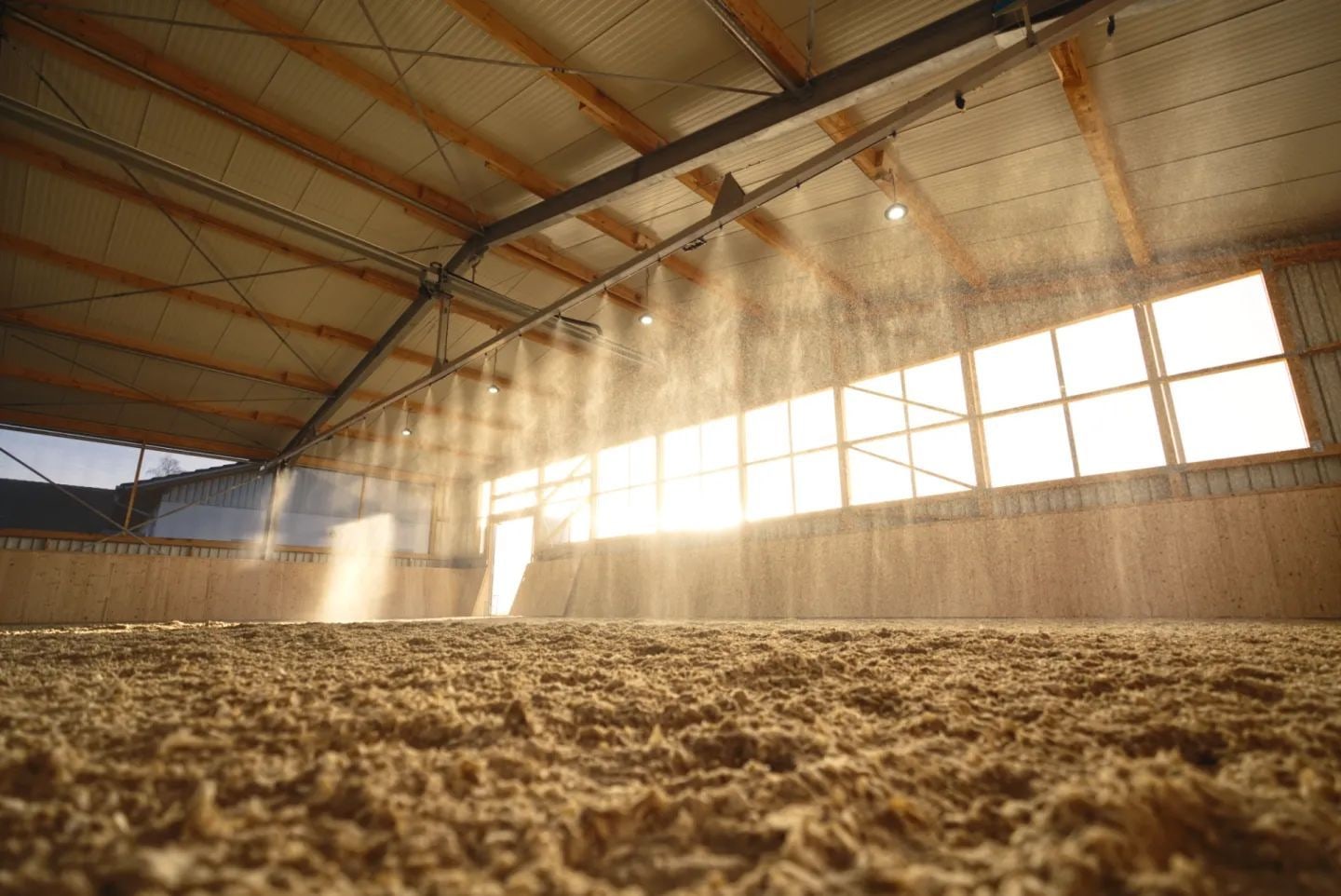
Indoor arenas surfaced in Fibar should be watered as conditions dictate. Fibar requires far less watering than any other indoor materials. Outdoors, most arenas never require watering. Tracks that get a lot of use find watering helps keep the track “tight.”

Is Fibar Treated With Chemicals?

Absolutely not! Fibar is manufactured from specially selected woods that exhibit unique fibrous qualities. Due to the drainage design, the wood fibers never become waterlogged.

What Do Fibar Users Have To Say?

Says Renowned Dressage Trainer, Gunner Ostergaard:
Horses are comfortable on Fibar. The springy surface- in combination with the lack of dust- is what I like most about Fibar.

Sharon Stewart of Cedar Hills Farm in California says:
Reducing wear and tear- that’s why Fibar was installed 10 years ago. We have no training injuries on this surface. It is very easy on horse’s legs!

Read more Testimonials.

Contact Fibar Today!

Our friendly representatives understand the needs of horse owners and their properties. We are happy to talk to you about Fibar and will work hard to ensure your complete satisfaction! Please give us a call today and let us help you on your way to the best footing at the best prices for your arena!
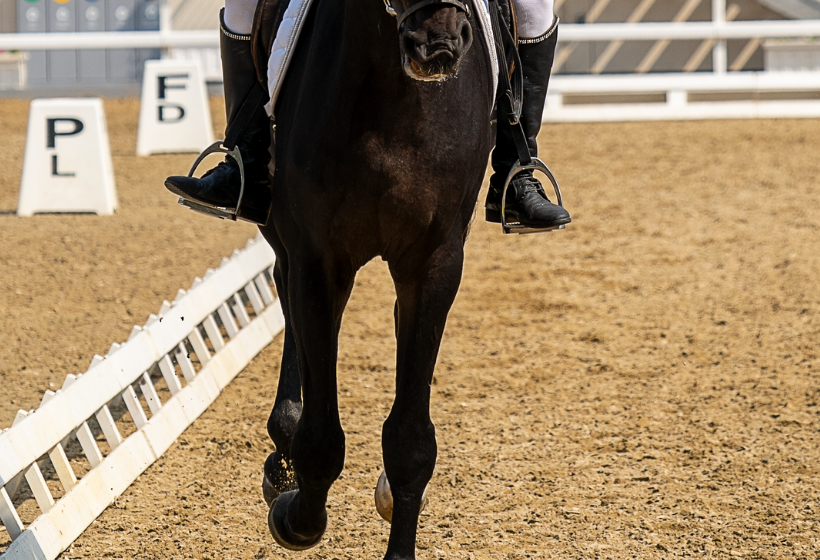


Fibar engineered wood fiber footing in an outdoor horse arena

What exactly is Fibar horse footing?

Fibar is an engineered wood fiber (EWF) riding surface produced by The Fibar Group, LLC, and marketed as "The Most Consistent Footing on Earth." Rather than dirt, sand, or sawdust, it uses selected wood fibers that have been scientifically engineered and manufactured into a soft, resilient, dust-free footing. The promise is simple and weatherproof: no rocks, no puddles, no ice, no dust, and no slop, rain or shine. That consistency is why performance-oriented owners and trainers reach for it season after season.
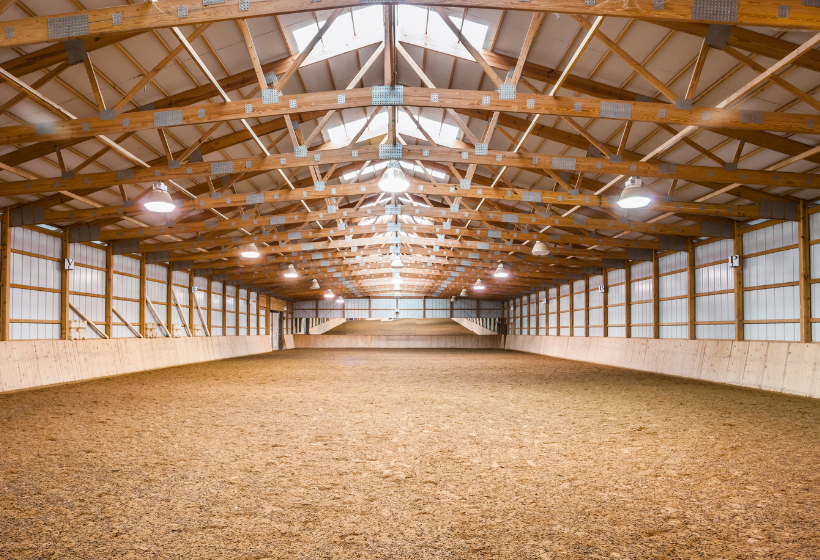
Fibar dust-free engineered wood fiber surface in an indoor horse arena

Who created Fibar and why?

The company was founded in 1979 by Robert Heath, an avid horseman who asked a deceptively simple question: wouldn't shredded wood fibers make a better training surface than dirt or sand? He branded his Engineered Wood Fiber answer "Fibar," and within five years the company was profitable and supplying thousands of equestrian facilities across the U.S. and Canada. By 1986 that same impact-absorbing material was adapted for playground safety surfacing, and The Fibar Group has since grown to over 100,000 installations across North America. The horse footing that started it all remains a flagship product.
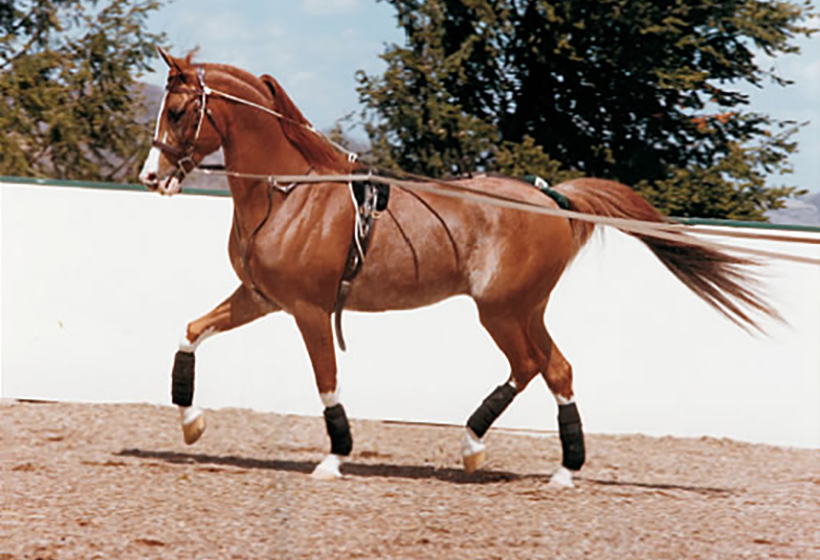
Fibar all-weather outdoor riding ring footing

How a Fibar arena is built from the ground up

Fibar treats good footing as a complete system, not just a top dressing. The company recommends a three-layer arena floor: a clay subfloor that slopes to shed water and prevent puddles, a base of roughly 6 to 10 inches of crushed rock such as limestone, and the engineered wood fiber surface manufactured specifically for horses on top. This drainage-first construction is what lets the surface stay rideable through rain, snow, sleet, and wind without turning to mud or ice. Fibar publishes dedicated installation guides for indoor, outdoor, track and gallop, and breeding shed builds.
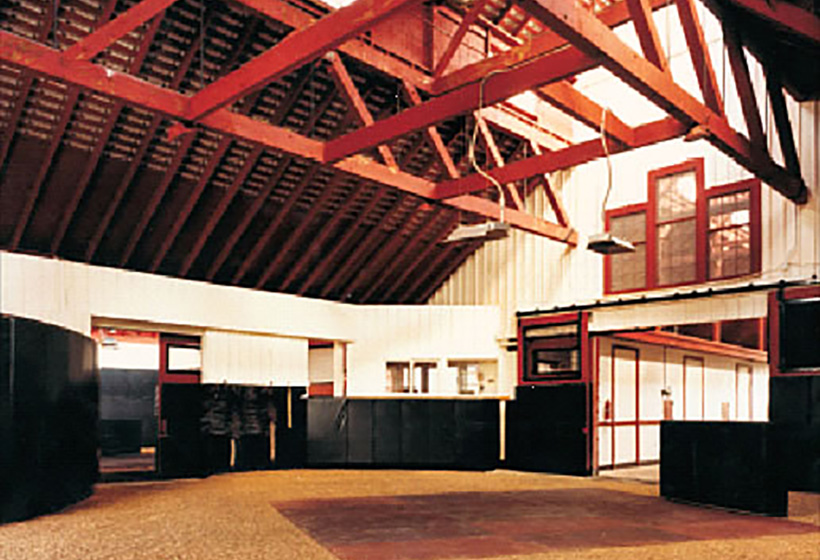
Fibar engineered wood fiber footing in an equine breeding shed

How Fibar protects hooves and legs

Constant moisture is a hoof's enemy. Fibar points out that horses standing in mud are susceptible to White Line Disease, thrush, abscesses, scratches, and sole bruising, and that soft, wet hoof walls are far more likely to throw shoes. A dry, springy Fibar surface keeps hooves out of standing water while its resilient give cushions concussion on joints and tendons. On tracks and gallops, the company positions the footing as a way to deliver fewer and less severe injuries to racehorses compared with harder, less forgiving ground.

Where Fibar footing earns its keep

Fibar serves the full range of equine workspaces: indoor arenas where poor surfaces damage legs and feet, outdoor arenas favored by competitive trainers, training tracks and gallops, hot walkers, shed rows, and breeding sheds. In fact, Fibar reports that many of the finest breeding sheds in Kentucky horse country have chosen its footing, where sure traction and a clean, dust-free surface matter for both mares and handlers. Maintenance is minimal: occasional light misting keeps dust down, with far less upkeep than gravel, dirt, or sawdust.

How to get Fibar for your facility

The Fibar Group, LLC is headquartered at 80 Business Park Drive, Armonk, NY 10504, and can be reached at (800) 342-2721. The company offers application-specific installation documentation and a national sales network to spec the right base, drainage, and surface depth for your indoor arena, outdoor ring, track, or breeding shed. Reach out to discuss a footing plan engineered for your climate and discipline.

Share This Solution
The Solution Section (FAQ)
How Long Does Fibar Last?
This is a difficult question to answer because each installation is subject to different amounts of usage. As a rule of thumb, arenas and tracks will need a top-off after the first three years, and thereafter a top-off every two or three. Fibar does not rot, but is broken down mechanically by the pounding of the horses hooves. Lightly used private arenas and tracks can last longer between top-offs.
But What If I Have An Outdoor Arena Subject To The Weather?
We guarantee it. No more mud! If there wasn t something special about our product, our name might be Clay s Dirt or The Hard Way Crushed Stone Company. But the name Fibar stands for something very special: selected wood fibers that have been scientifically engineered and manufactured to provide a soft, dust-free footing horse people can count on in all kinds of weather.
What Is An All Weather Riding Surface?
Fibar uses an integrated drainage system under the entire arena or track. No matter how severe the rainstorm, the riding surface will be totally unaffected. In fact, many customers say the more rain it gets, the better the Fibar surface.
What Kind Of Horse People Are Benefiting From Fibar?
The Spanish Riding School recently selected Fibar for it s recent U.S. Tour and several Olympic Riders use Fibar. In addition, performance-oriented owners and trainers through out the USA and Canada are switching to Fibar riding surfaces.
What is Fibar horse footing made of?
Fibar is made of selected wood fibers that have been scientifically engineered and manufactured into a footing material called Engineered Wood Fiber (EWF). It is not raw sawdust or wood chips; the fibers are processed to create a soft, springy, dust-free, rock-free surface for horses. This engineered consistency is what The Fibar Group markets as 'The Most Consistent Footing on Earth.'
Who makes Fibar footing?
Fibar is made by The Fibar Group, LLC, headquartered at 80 Business Park Drive, Armonk, NY 10504. The company was founded in 1979 and is now one of the leading surfacing suppliers in North America, with over 100,000 installations. Its equestrian footing line is the original product that launched the business.
How did Fibar get started?
Fibar began in 1979 when founder Robert Heath, an avid horseman, wondered whether shredded wood fibers would make a better horse training surface than dirt or sand. He developed and branded the Engineered Wood Fiber answer 'Fibar,' and within five years the company was profitable and supplying thousands of equestrian facilities across the U.S. and Canada. In 1986 the same impact-absorbing material was adapted for playground safety surfacing.
How is a Fibar horse arena installed?
Fibar recommends a three-layer arena floor. The bottom is a clay subfloor that is sloped to shed water and prevent puddles, the middle is a base of roughly 6 to 10 inches of crushed rock such as limestone, and the top is the engineered wood fiber surface manufactured specifically for horses. The company provides dedicated installation guides for indoor, outdoor, track and gallop, and breeding shed applications.
Does Fibar work in all kinds of weather?
Yes. Fibar is engineered to perform in rain, snow, sleet, and wind, delivering no rocks, no puddles, no ice, no dust, and no slop. The drainage-first arena construction, with a sloped clay subfloor and crushed-rock base beneath the wood fiber, lets the surface stay rideable when dirt or sand arenas turn to mud or freeze. That all-weather reliability is central to Fibar's value for trainers who need consistent footing year-round.
Is Fibar dusty?
No, Fibar is designed to be a dust-free footing. The engineered wood fibers resist breaking down into fine dust the way dirt and some sands do, and occasional light misting keeps any dust suppressed. A dust-free surface is healthier for both horses' respiratory systems and the people working in the arena.
How does Fibar protect a horse's hooves?
Constant moisture and mud make horses susceptible to White Line Disease, thrush, abscesses, scratches, and sole bruising, and wet, softened hoof walls are more likely to lose shoes. A dry, springy Fibar surface keeps hooves out of standing water and mud, helping maintain healthier hoof walls. This reduces both infection risk and the frequency of thrown shoes.
Is Fibar good for a horse's joints and legs?
Yes. Fibar's resilient, springy structure cushions concussion as the hoof strikes the ground, helping absorb impact on joints, tendons, and ligaments compared with hard or inconsistent surfaces. In indoor arenas, the company notes that poor footing can damage legs and feet, while a properly built Fibar surface provides a forgiving but supportive base. On tracks, Fibar is positioned to help produce fewer and less severe injuries in racehorses.
What can Fibar be used for besides arenas?
Beyond indoor and outdoor arenas, Fibar is used for training tracks and gallops, breeding sheds, hot walkers, and shed rows. The footing is sized and installed differently for each application, which is why Fibar publishes separate installation guides for indoor, outdoor, track and gallop, and breeding shed builds. This versatility lets a facility use a consistent surface across multiple work areas.
Do professional horse facilities use Fibar?
Yes. Fibar reports that its outdoor arena footing is favored by performance-oriented owners and trainers, and that many of the finest breeding sheds in Kentucky horse country have chosen Fibar. Within five years of its 1979 founding the company was already supplying thousands of equestrian facilities across the U.S. and Canada. Its long track record in competitive and breeding operations speaks to its professional acceptance.
How much maintenance does Fibar require?
Fibar requires only minimal upkeep compared with gravel, dirt, or sawdust surfaces. Occasional light misting keeps the surface dust-free, and routine leveling keeps it even. Because the engineered fibers and drainage base resist puddling and washouts, you spend far less time repairing the footing after bad weather.
How is Fibar different from sand footing?
Unlike loose sand, which can shift, hold moisture, and create deep or inconsistent spots, Fibar's engineered wood fibers knit together into a more uniform, resilient, springy surface. Fibar is also dust-free and rock-free, and its drainage-based construction prevents the puddling and packing that affect sand. The result is the consistent footing Fibar emphasizes as a key advantage over sand and dirt.
How is Fibar different from regular wood chips or sawdust?
Fibar is engineered wood fiber, meaning the wood is processed and manufactured to a specific specification rather than being raw chips or sawdust. This engineering makes it more resilient, longer-lasting, and consistent, and it produces far less dust than sawdust. Raw sawdust breaks down quickly, packs, and gets dusty, whereas Fibar is built to stay springy and dust-free with minimal upkeep.
Why is good footing so important for horses?
Footing affects a horse's hooves, joints, soundness, and the consistency of its training. Mud and constant moisture invite hoof infections like thrush and White Line Disease and cause lost shoes, while hard or uneven surfaces concuss joints and risk slips and falls. Fibar's position is that the right engineered surface protects the animal's long-term health while letting work continue safely in any weather.
Does Fibar help prevent slips and falls?
Yes. Because Fibar drains and stays dry rather than turning slick with mud or ice, it provides reliable traction in wet conditions where dirt and sand arenas become hazardous. Better traction reduces the risk of slips, falls, and the injuries that follow, for both horse and rider. This is a key reason performance trainers value the surface for consistent, safe work.
How do I contact Fibar or get a quote?
You can reach The Fibar Group, LLC at (800) 342-2721, or write to them at 80 Business Park Drive, Armonk, NY 10504. The company offers application-specific installation documentation and a national sales network to help spec the right base, drainage, and surface for your facility. Contact them to plan footing engineered for your climate, discipline, and arena type.
Is Fibar suitable for breeding sheds?
Yes. Fibar makes a dedicated breeding shed footing and reports that many of the finest breeding sheds in Kentucky horse country use it. The sure traction and clean, dust-free surface are valuable for the safety of mares, stallions, and handlers in that environment. Fibar provides a specific breeding shed installation guide to ensure the surface is built correctly for that use.
Call Email
Ann Pruitt
Contact Ann Pruitt
InfoHorse.com