

Safe and Healthy Horse Pastures: More Than Just a Pretty Field
Healthy Grass, Safer Horses and Better Horsekeeping Start at Ground Level
Walk through almost any feed store and you will see horse owners studying feed tags, comparing supplements, asking about protein levels and worrying about whether their hay is good enough. We pay attention to what goes into the bucket because we understand that nutrition affects the health of our horses.
Then many of us go home, open the gate and turn those same horses out into a pasture without giving nearly as much thought to what is growing there.
That pasture may provide a horse with food for many hours every day. It is also where he exercises, socializes, drinks, rests and, in many cases, spends the majority of his life.
A horse pasture deserves every bit as much attention as the feed room.
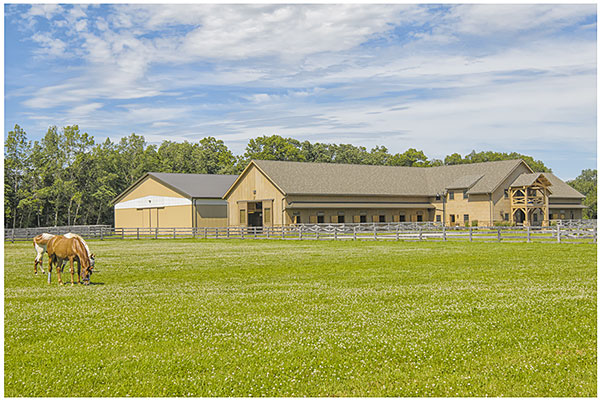
A healthy horse pasture isn't simply a field that happens to be green. It is a living system involving the soil underneath it, the grasses growing from it, rainfall and irrigation, drainage, weeds, manure, fencing, grazing pressure and the horses themselves.
Managing all of those pieces doesn't require owning a thousand-acre ranch or becoming an agronomist. It does require looking at pasture differently.
The goal is not necessarily to have the prettiest field in the neighborhood.
The goal is to create a pasture that is safe, productive and appropriate for the horses using it.
Start With What Is Under the Grass
When a pasture begins looking poor, the first reaction is often, "It needs fertilizer."
Maybe it does.
But what kind?
How much?
Does it need nitrogen, phosphorus or potassium? Is the soil too acidic? Would lime help? Is there already plenty of a particular nutrient in the soil?
Without testing, we are guessing.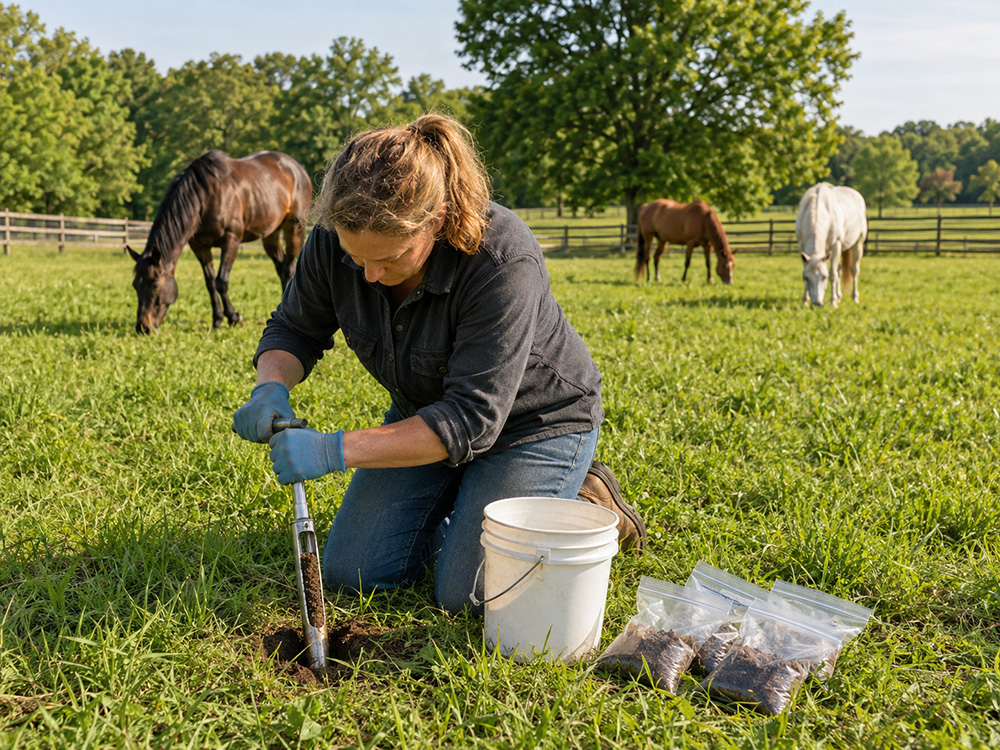
A soil test is one of the least glamorous jobs on a horse farm, but it may be one of the smartest. Soil testing can tell you about nutrient levels, pH and what amendments may actually be necessary. University of Minnesota Extension recommends testing horse-pasture soil periodically and basing fertilizer decisions on those results rather than applying products simply because grass looks poor.
That makes sense to me.
If we wouldn't randomly pour supplements into a horse's feed without knowing why he needs them, why would we randomly put fertilizer on several acres of ground?
Your local Cooperative Extension office can often help with soil sampling and interpretation. There are also private laboratories, agricultural suppliers and soil-management companies that can provide testing and recommendations.
For horse owners, this is an area worth learning more about. For the equine industry, it is also an area that deserves more attention.
Soil testing, lime, soil amendments and pasture conditioners are every bit as much a part of horse care as the grass we eventually see above ground.
Fertilizer: Feed the Pasture Wisely
Properly fertilized grass can grow thicker, withstand grazing better and compete more successfully with weeds. But fertilizer should be applied because your pasture needs it—not simply because spring arrived.
Different soils and different grasses have different requirements. Climate, rainfall, previous fertilizer applications, manure and grazing all play a role.
Horse owners should also pay close attention to product directions.
If a fertilizer, herbicide or combination pasture product is being used where horses graze, read the complete label and follow the manufacturer's instructions concerning application rates, weather conditions and when animals may safely return to the pasture.
Don't assume that all products have the same grazing restrictions.
Some products are marketed specifically for use around grazing livestock. Other products may require animals to remain off treated acreage for a specific period. And whatever product you use, more is not automatically better.
This is an area where the horse industry needs good companies and good education.
There should be an easy place for horse owners to find fertilizers developed or labeled for grazing pastures, soil amendments, lime products, organic soil-management products and knowledgeable companies that understand horse properties.
A healthy pasture begins with healthy soil, but healthy soil comes from knowing what it actually needs.
Plant Grass for Your Horses—not Your ZIP Code Alone
One of the questions horse owners frequently ask is:
What is the best grass for horses?
The problem is that there isn't one answer.
The grass that performs beautifully in Minnesota may not be the best choice for Texas. What thrives in Florida may struggle in Colorado. Rainfall, temperature, soil type, drainage, irrigation and growing season all matter.
Even the horses themselves matter.
A property supporting hard-working horses may have different nutritional goals from a farm full of easy keepers. A broodmare operation may have different needs than a retirement farm. Some owners need a productive grazing pasture. Others are primarily interested in establishing durable ground cover that can survive horse traffic while grazing is carefully controlled.
That is why buying "grass seed" isn't quite enough.
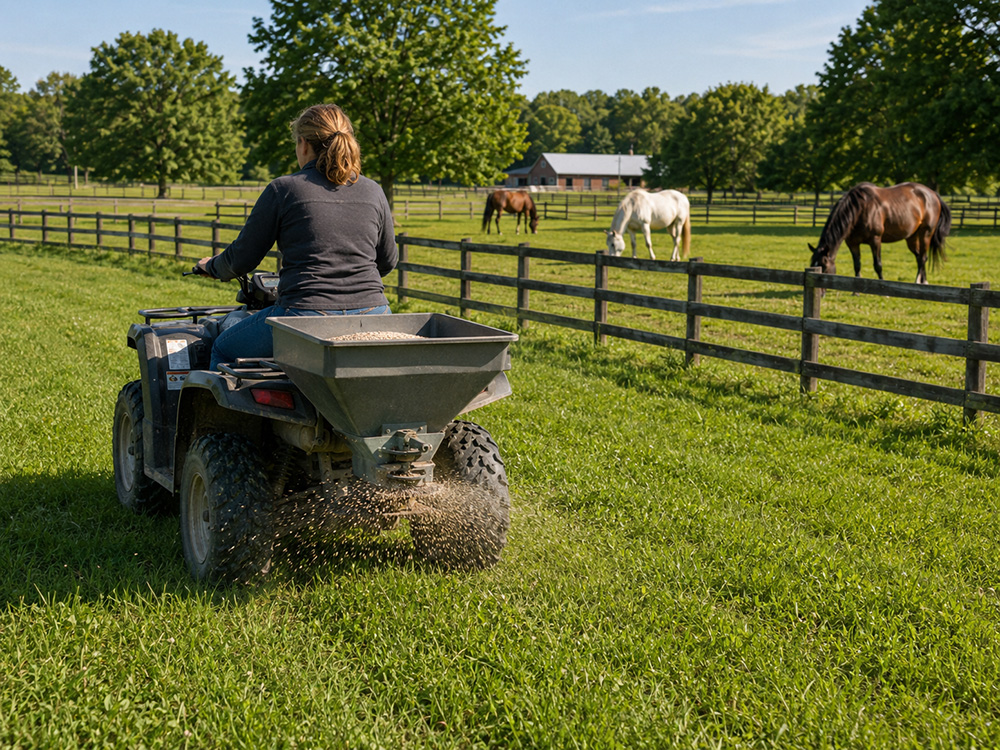
Horse owners should be looking for pasture seed appropriate for horses and appropriate for their region.
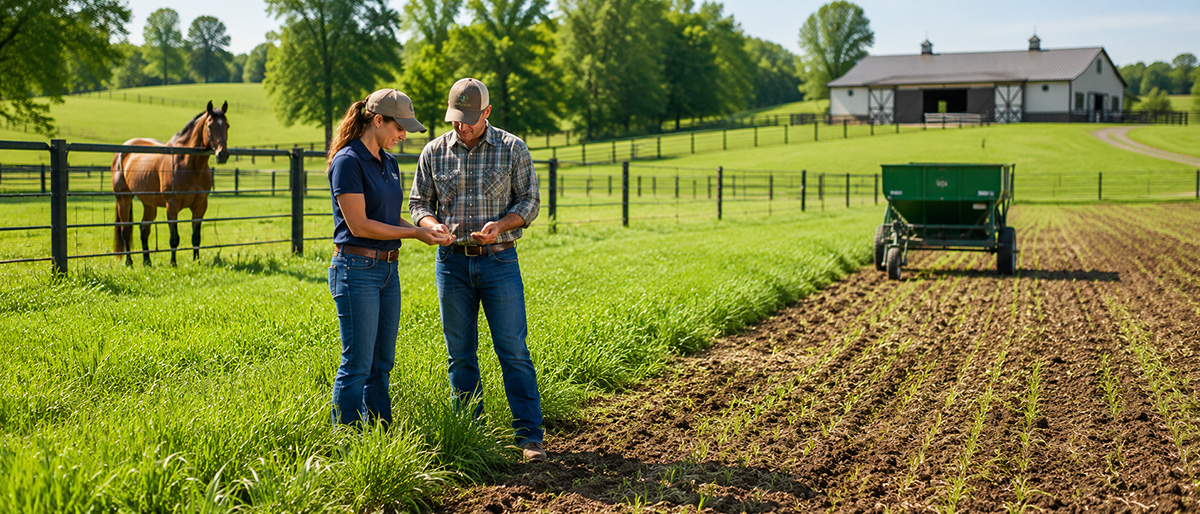
Good seed companies can help customers understand the difference between cool-season and warm-season grasses, recommended seeding rates, planting seasons, soil preparation and whether a particular mixture is suitable for the intended livestock.
This may be one of the most overlooked areas of horse-property management.
We have saddle experts, feed experts, hoof-care experts and trailer experts.
We need more horse owners talking to pasture-seed experts.
If you are establishing a new pasture or trying to rescue a tired one, don't simply grab several bags of seed based on the picture on the front. Find out what grows well where you live and what is appropriate for horses.
The right seed is relatively inexpensive compared with years of fighting a pasture that was poorly established in the first place.
Horses Are Hard on Grass
Here is something horses rarely receive enough credit for:
They are remarkably efficient pasture-destroying machines.
They don't graze like lawnmowers.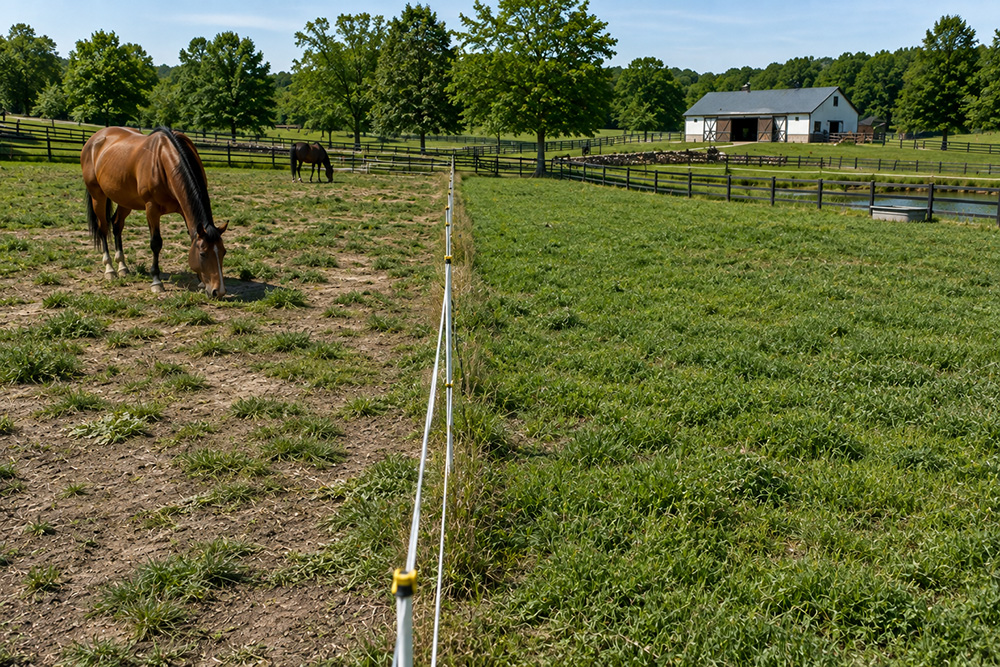
Horses are selective grazers. They return again and again to plants they prefer, sometimes biting those areas very close to the ground while ignoring other sections of the pasture.
Eventually the favorite grass becomes weakened. Bare areas appear. Less desirable plants take advantage of the empty space. Weeds move in.
Then the owner looks across the fence and says, "Why is half my pasture tall and the other half eaten to dirt?"
Because the horses have been managing it.
And they aren't very good pasture managers.
One of the best answers is rotational grazing.
Instead of giving horses permanent access to all available acreage, a property can be divided into smaller grazing areas. Horses graze one section while other sections are allowed to rest and regrow.
University of Maryland's equine rotational-grazing program uses forage height to help determine when horses enter and leave grazing areas, moving horses before plants are grazed too closely and allowing previously grazed areas time to recover.
The exact heights and timing will vary with grass species, season and location, but the principle is simple:
Grass needs time without horses on it.
If your pasture looks like a putting green because the horses have eaten it to the ground, it isn't being rested enough.
Rotational grazing can also create opportunities to mow, reseed, fertilize or address weeds while horses are somewhere else.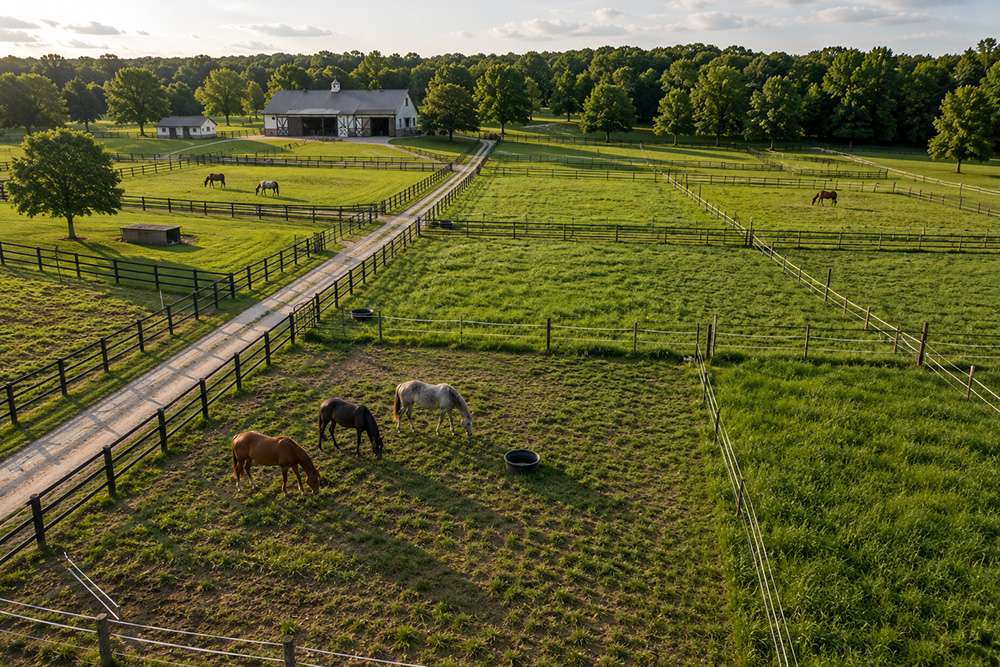
Portable fencing, electric fencing, gates and flexible watering systems can make rotational grazing possible even on properties that were never designed for it.
You don't necessarily need more land.
Sometimes you simply need to manage the land you already have differently.
Every Horse Farm Needs Somewhere That Isn't Pasture
A sacrifice area may have one of the least attractive names in horsekeeping, but it can be one of the most useful areas on the farm.
You may also hear it called a dry lot, loafing lot or all-weather paddock.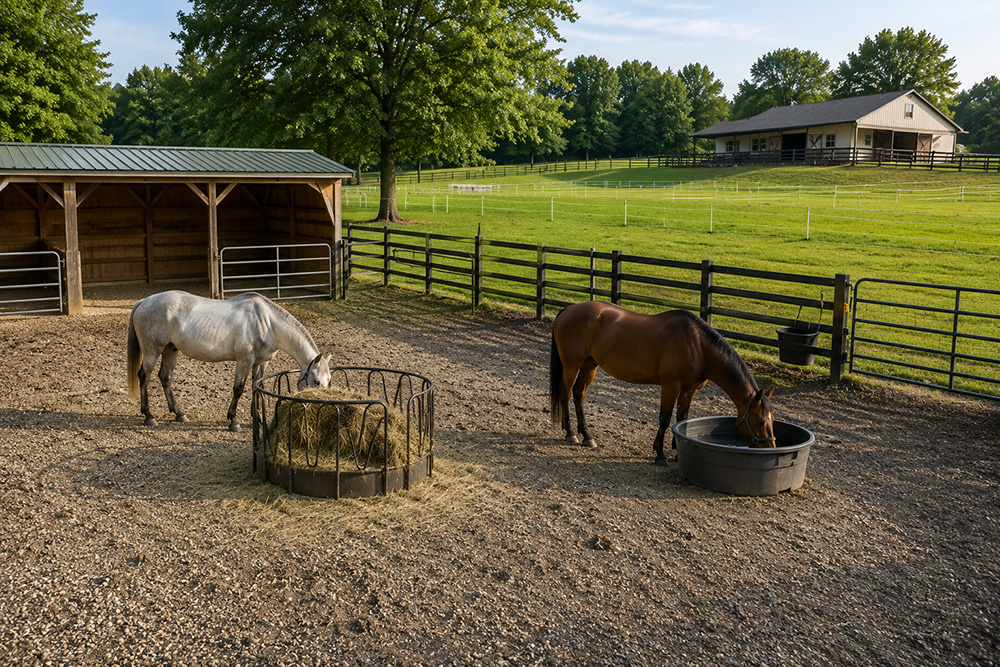
The idea is simple: there are times when horses should not be on the grass.
Perhaps the pasture is too wet.
Perhaps it has been grazed down and needs time to recover.
Perhaps there is a drought.
Maybe grass is growing so quickly that certain horses need their intake restricted.
Rather than sacrificing the entire pasture, you temporarily sacrifice a smaller designated area.
University Extension pasture-management programs recommend having a sacrifice area available so horses can be removed from grazing areas when fields need rest or weather conditions make grazing damaging to the land.
A properly designed dry lot is more than a dirt pen.
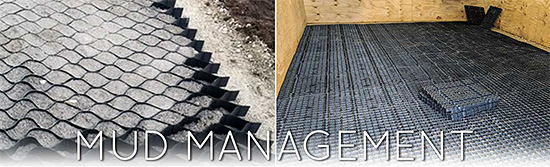
Drainage matters. Footing matters. Mud management matters. Horses still need water, forage, shelter or shade where appropriate, and enough room to move comfortably.
This is another area where horse owners have many choices that weren't commonly available years ago: geotextile fabrics, stabilization grids, aggregate systems, specialized paddock footing and drainage products.
A good sacrifice area protects the pasture.
More importantly, it gives the horse owner another option besides opening the gate because there is nowhere else for the horses to go.
Mud Is Telling You Something
Almost every horse owner has fought mud.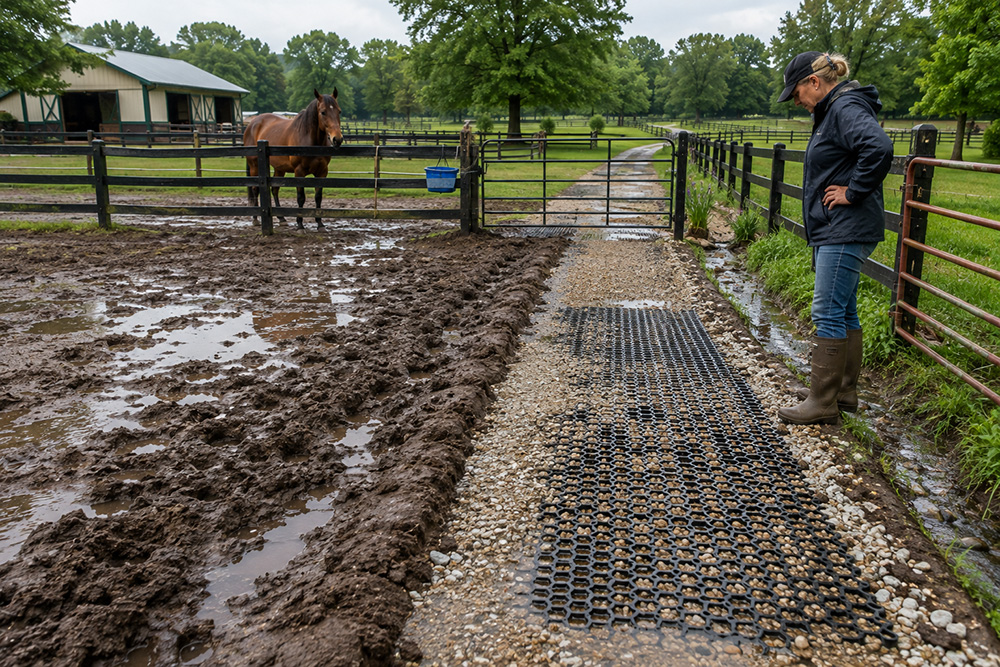
We curse it, scrape it off boots, pull blankets through it and occasionally lose a shoe in it.
But persistent mud is also information.
Why is water collecting there?
Is runoff coming from a barn roof?
Is the water trough overflowing?
Is that the lowest spot in the field?
Are horses traveling through the same narrow gateway dozens of times each day?
Are round bales always placed in one location?
Has hoof traffic destroyed the vegetation?
The answer isn't always dumping another load of material on top.
Sometimes it requires redirecting water, installing drainage, stabilizing high-traffic areas, moving feeders, improving gutters, changing gates or giving the area a chance to recover.
And while too much water creates one problem, too little creates another.
Across much of the country, irrigation can mean the difference between actively growing pasture and dormant ground during part of the year. Portable irrigation systems and pasture sprinklers can make irrigation practical on horse properties where permanent agricultural systems aren't feasible.
Water belongs on the pasture.
It simply needs to be in the right places.
Manure Is Part of Pasture Management
One horse produces a remarkable amount of manure.
Put several horses on limited acreage and it doesn't take long before manure management becomes pasture management.
Horses also tend to establish favorite bathroom areas. Those areas can become nutrient-heavy while other parts of the pasture receive very little benefit.
Manure can be collected, composted, spread or managed in various ways depending on acreage, stocking density and local conditions.
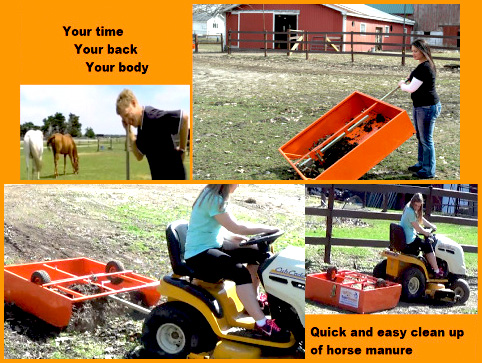
Equipment has improved tremendously. Horse-property owners can now choose from manure vacuums, sweepers, collectors, spreaders and other equipment designed for jobs that once required a pitchfork, wheelbarrow and a lot of time.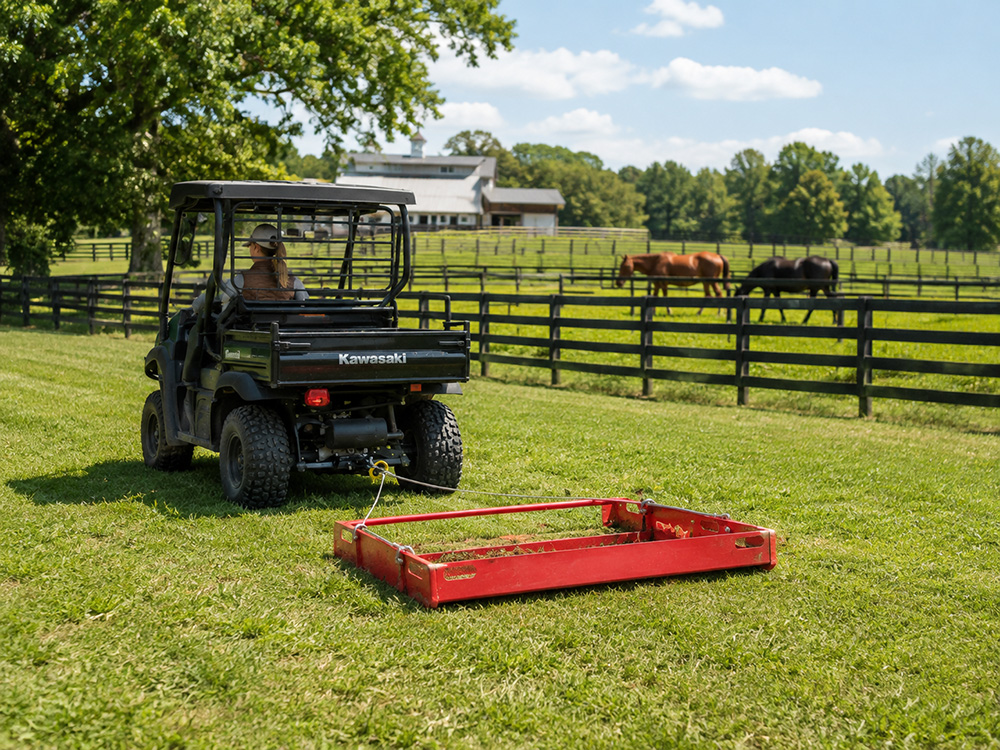
Whatever method you choose, don't ignore manure simply because it is sitting outdoors instead of inside a stall.
Excessive accumulation affects pasture quality and can contribute to parasite-management concerns.
Talk with your veterinarian about an appropriate parasite-control program for your horses. Dragging or spreading manure isn't automatically beneficial under every condition; temperature, moisture, stocking density and management practices all matter.
The bigger lesson is simple:
What comes out of the horse matters to the pasture just as much as what goes into him.
Not Everything Green Is Horse Food
A pasture can be beautifully green and still contain plants you don't want a horse eating.
Horse owners should learn to identify the common toxic plants in their region, including dangerous weeds, trees and ornamental plants around pasture boundaries.
Penn State Extension notes that hundreds of North American plants can be poisonous to horses, and the risk becomes greater when desirable forage is limited by overgrazing, drought or seasonal conditions. Maintaining adequate forage and a healthy stand of grass helps reduce the chance that horses will consume undesirable plants.
That last point is important.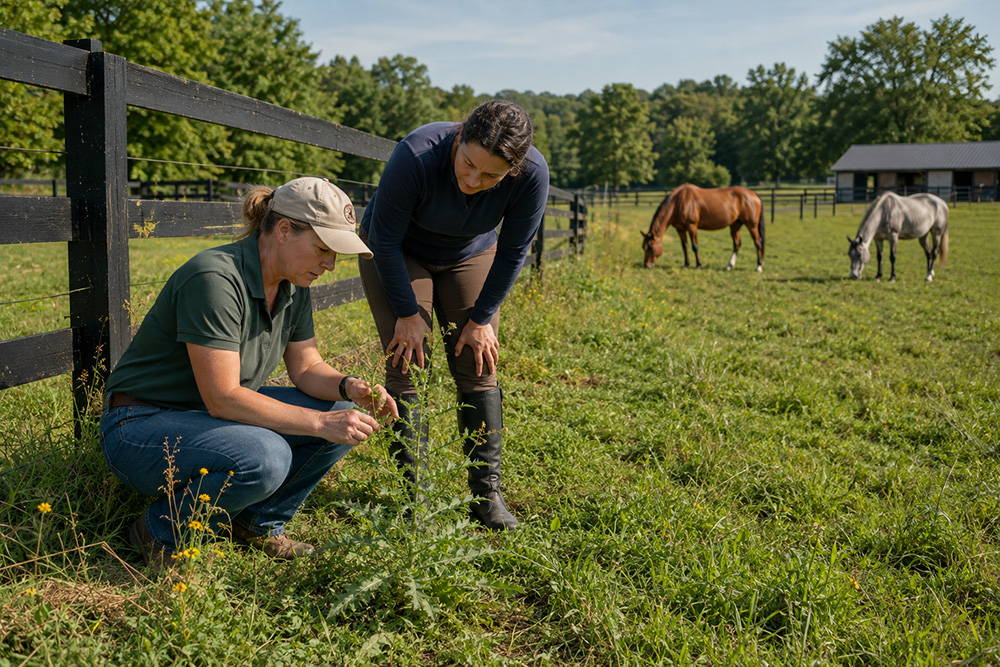
Most weed problems are not simply weed problems.
Sometimes they are grass problems.
When healthy pasture plants are thick and vigorous, they compete for sunlight, water and space. When grass is weakened by overgrazing, poor soil fertility or drought, opportunistic weeds have an opening.
Good pasture management is therefore part of weed control.
Mowing can help manage certain weeds. Other situations may require mechanical removal or herbicides. If herbicides are used, follow the label exactly and pay particular attention to livestock grazing instructions.
Never assume a plant is harmless because you've seen horses standing beside it for years.
Learn what grows on your property.
Walk the fence lines.
Look under trees.
Inspect areas horses normally don't graze.
And don't throw lawn or garden clippings over the pasture fence. Penn State specifically warns against doing this because ornamental and yard plants may be toxic to horses.
Where Horses Eat and Drink Can Change the Entire Field
Watch a pasture for a few weeks and patterns begin to appear.
Horses follow the same gate.
Stand beneath the same tree.
Gather around the same water trough.
Eat around the same hay feeder.
Every one of those areas receives concentrated hoof traffic.
That means pasture equipment should be viewed as part of pasture management—not merely something sitting in the pasture.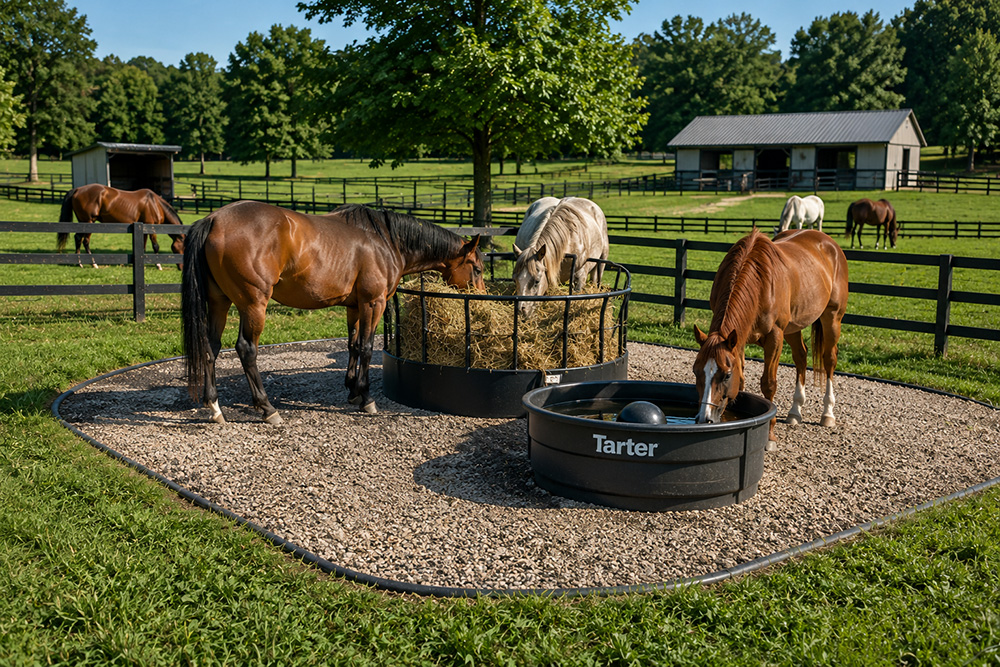
A well-designed waterer helps provide reliable access to clean water. A properly managed hay feeder can help reduce waste and keep forage from being trampled into mud. Slow-feeding systems may help owners manage how supplemental forage is offered.
Where practical, moving feeders can spread traffic rather than destroying one location.
High-use areas around gates, shelters, troughs and feeders may need additional footing or drainage.
There is a tendency in the horse world to separate everything into categories: this is a feeder, that is a waterer, this is fencing, that is drainage.
The horse doesn't see it that way.
Neither does the pasture.
Everything affects everything else.
The Fence Is Part of Pasture Health Too
Safe fencing is obviously about keeping horses contained, but fencing can also determine whether good pasture management is possible.
Permanent perimeter fencing provides the main boundary. Interior fencing can create smaller paddocks for rotational grazing. Temporary systems can allow horse owners to alter grazing areas as conditions change.
Whatever system you use, it needs to be visible, maintained and appropriate for horses.
Walk your fence lines periodically rather than waiting until something breaks.
Look for loose wire, leaning posts, broken boards, damaged insulators, protruding hardware and vegetation interfering with electric fencing.
Also look beyond the fence.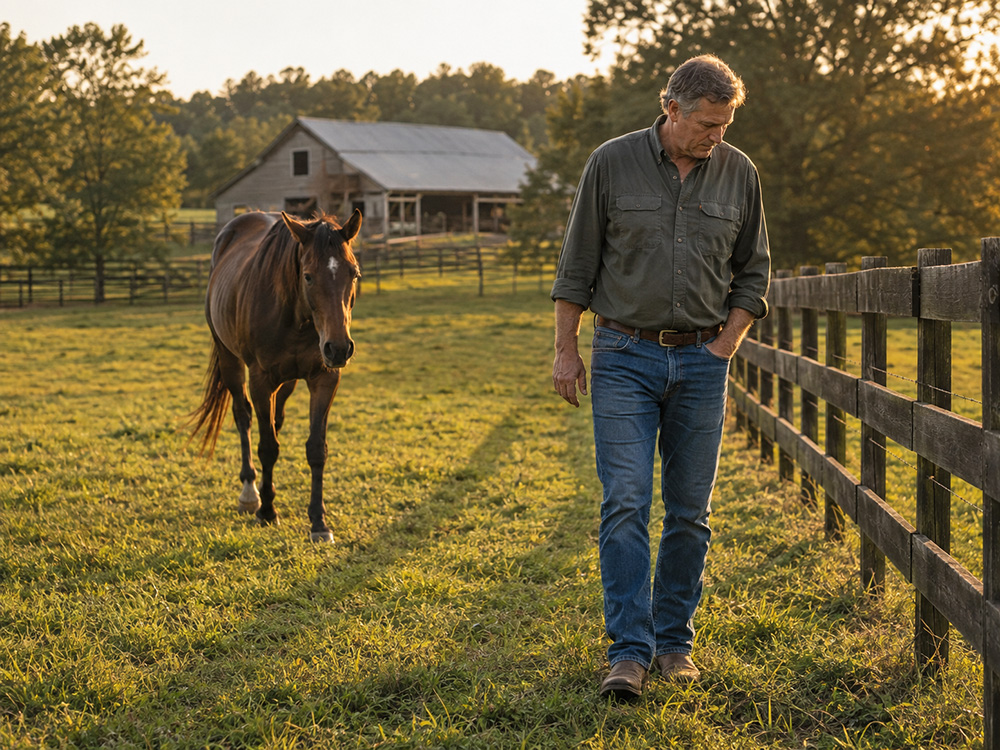
Are tree limbs likely to fall into the pasture?
Is neighboring vegetation encroaching?
Could runoff from an adjoining property enter your field?
Pasture safety doesn't end exactly where your grass does.
Walk Your Pasture Like You Walk Your Barn
Most horse owners would never knowingly leave a protruding nail in a stall.
We would fix a broken latch.
We would notice a leaking automatic waterer.
We would remove baling twine from a stall immediately.
Yet because pastures are large, familiar and outdoors, hazards can become invisible.
At least periodically, walk the pasture instead of looking at it from the truck or barn.
The Pasture Walk: 15 Things to Check
- Broken boards, loose wire or damaged fence posts
- Holes, erosion or dangerously uneven footing
- Toxic or unfamiliar plants
- Dead or damaged tree limbs
- Bare and overgrazed areas
- Mud around gates, feeders and water troughs
- Standing water or poor drainage
- Manure concentration
- Excessive weeds
- Areas where grass is being grazed too short
- Water trough cleanliness and function
- Hay and feeder areas for wasted or spoiled forage
- Trash, wire, twine or foreign objects
- Evidence that irrigation or runoff is causing erosion
- Overall grass density and whether the pasture needs rest
You'll probably find something.
I usually do.
That doesn't mean you're a poor horse owner. It means a horse property is always changing.
A Pasture Is Never Finished
One of the mistakes we make with horse properties is believing we can finish the pasture.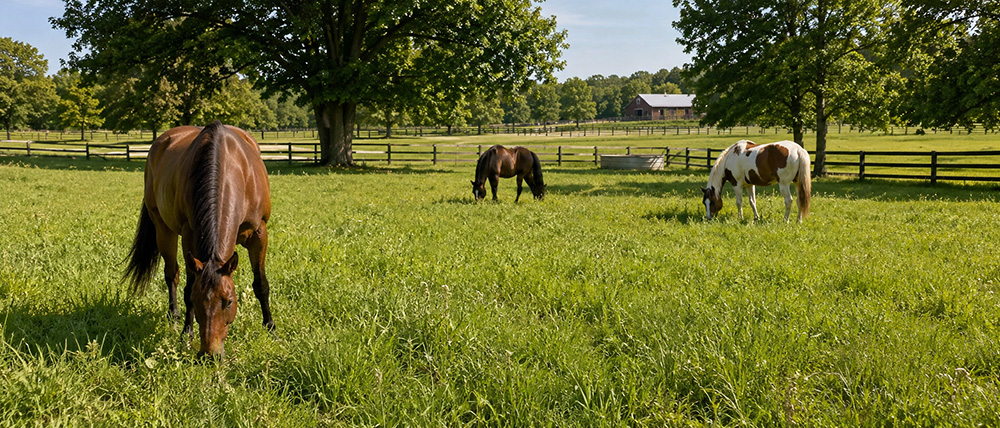
Plant it.
Fence it.
Fertilize it.
Done.
Pastures don't work that way.
Weather changes them.
Horses change them.
Drought changes them.
Heavy rain changes them.
A new horse may graze differently from the one before him. A year with little rainfall may require completely different decisions from a wet year.
Pasture management is an ongoing process of looking, adjusting and improving.
Some years that might mean soil testing and fertilizer.
Another year you may need to reseed bare areas.
You might discover that rotational grazing allows you to grow considerably more forage without adding acreage.
Perhaps drainage around one gate eliminates a mud problem you have fought for ten years.
Maybe a better feeder reduces wasted hay and prevents one section of pasture from becoming a muddy feeding lot.
Or perhaps identifying one plant you never noticed before keeps a horse from eating something dangerous.
Those are improvements worth making.
Better Pastures Don't Have to Happen All at Once
If you are reading this while looking at a pasture that is mostly weeds, mud and good intentions, don't become discouraged.
Start with one thing.
Test the soil.
Identify what is growing.
Fix the drainage problem.
Give one overgrazed section a rest.
Create a small sacrifice area.
Reseed a bare spot.
Move the feeder.
Repair the fence.
Ask a regional seed company which pasture grass is appropriate for your location.
Talk to your Cooperative Extension office.
Find companies that understand horse properties rather than assuming every agricultural product or recommendation applies equally well to horses.
Then do the next thing.
Horse owners spend enormous amounts of time and money trying to keep our horses healthy. We research feeds. We buy good hay. We schedule dental work. We call the farrier. We worry about saddles, supplements, joints, hooves and digestive health.
The ground beneath our horses deserves a place on that list.
A safe, healthy pasture can provide nutrition, exercise, social interaction and something horses were designed to do for much of every day: put their heads down and graze.
It is not just landscaping.
It isn't simply acreage.
And it certainly isn't just whatever happens to grow behind the fence.
Your pasture is part of your horse-care program.
Take care of it accordingly.
Learn More About Horse Pasture Care
InfoHorse.com's Pasture Care — Healthy Grazing for Horse Properties section is designed to help horse owners find educational information and companies providing products for healthier, safer and more productive horse properties.
Explore pasture watering and irrigation, manure management, pasture feeders, waterers, grazing management and other pasture-care resources—and watch this section as we continue adding information and companies covering horse pasture seed, soil testing, fertilizer and soil amendments, weed management, rotational grazing, mud and drainage control, pasture equipment and other products designed to help horse owners take better care of the ground beneath their horses.
Healthy grass. Safer fields. Happier horses. That is pasture care.