

Large animal veterinarians are disappearing while horses still colic at midnight. Here is what horse owners can do before that night arrives.
We lost a Thoroughbred at the barn where our horses are kept. He colicked, and he was in real pain for hours. A veterinarian did finally come and did the only kind thing left to do by then. I am not going to describe it. Anybody who has stood in that aisle already knows, and anybody who hasn't does not need the picture painted for them.
I want to be clear about something right away. That veterinarian was not the villain in the story. Neither was the barn. That horse suffered the way he did because, on that particular night, in that particular county, there were not enough large animal veterinarians within reach. That is not simply bad luck. That is a shortage, and a shortage has causes.
Causes can be worked on.
We have lived where it was different.
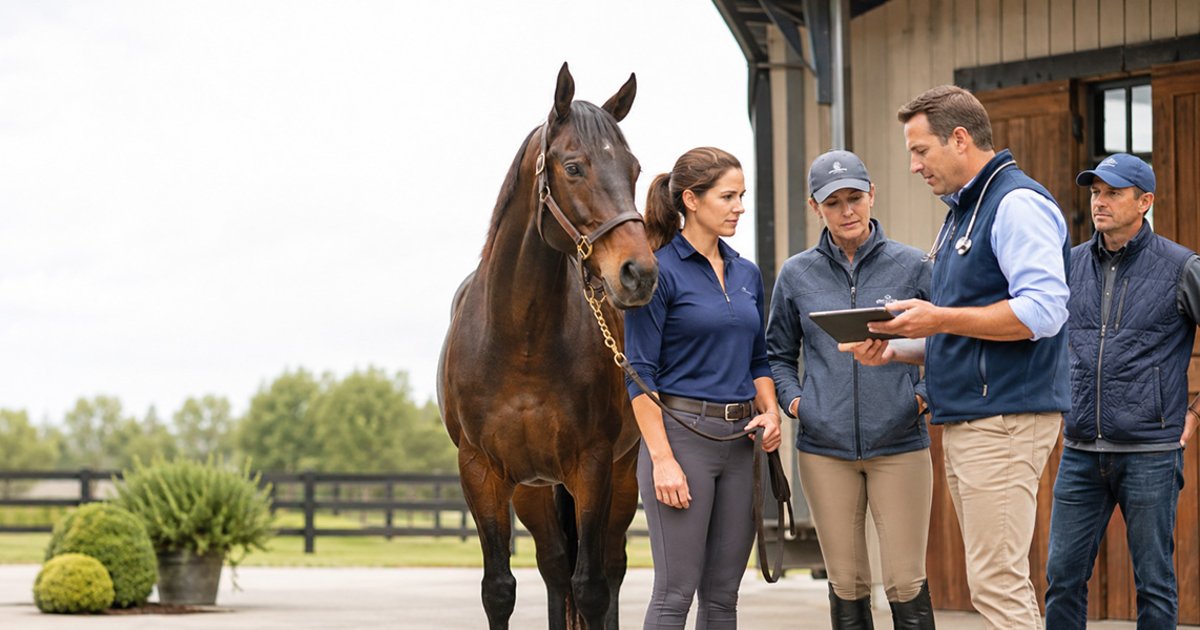
In southwest Florida, we were clients of the Van Roekel group out of North Fort Myers, and they were as good as it gets. Experienced large animal veterinarians, mobile units carrying real diagnostic equipment out to your barn, and people who showed up when we needed them. We called them in emergencies and they came. I want horse owners to understand that this level of service exists, because if you have never had it, you may believe that what you are getting is simply how it is.
It is not how it is. It is how it is where you are.
Our horses are near Weatherford, Texas now, which calls itself the Cutting Horse Capital of the World, and the veterinary care in this pocket of the country is outstanding. There are specialized equine hospitals here and veterinarians who work on horses worth more than most houses. We benefit from that, and I am grateful for it. But I am not confused about why it exists. It exists because the horses here are worth a great deal of money and there are a lot of them concentrated in a relatively small area.
Drive out of that pocket and the picture changes fast. That is the honest shape of this problem. Veterinary care tends to concentrate where the horse money concentrates, and most horses in this country are not owned by people with performance-horse money.
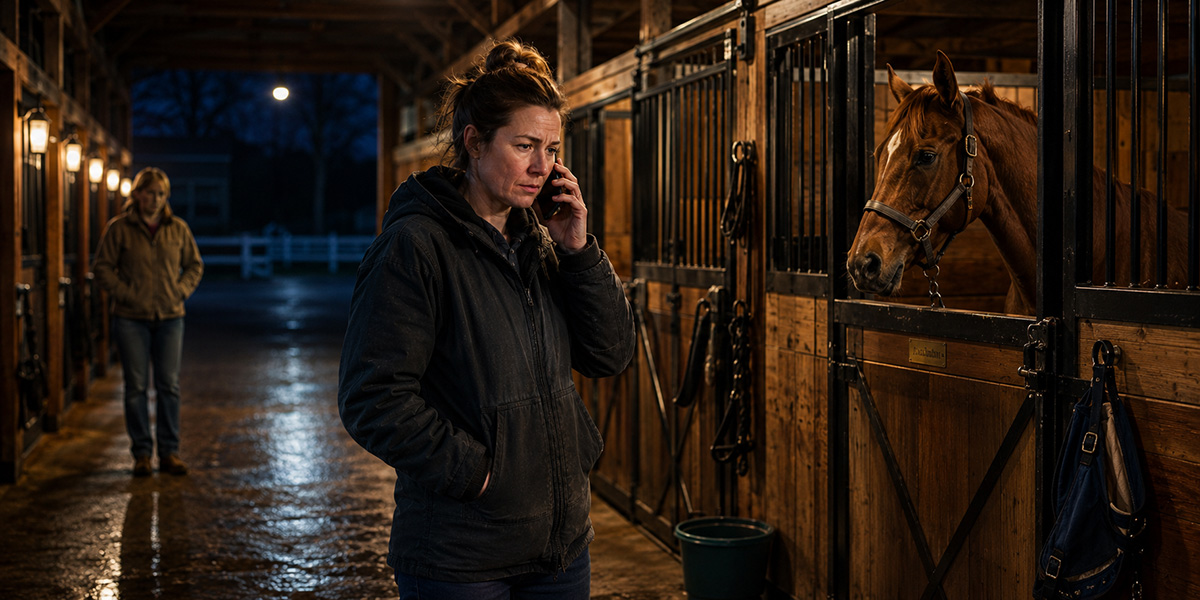
I have managed boarding stables here, and I have made the calls. A horse is down, biting at his sides, rolling, thrashing, and I am on the phone. More than once, the answer has been that the veterinarian cannot get out until sometime the next day. Other times, the answer is to bring the horse in.
Bring the horse in.
Think hard about what that sentence actually asks of a person.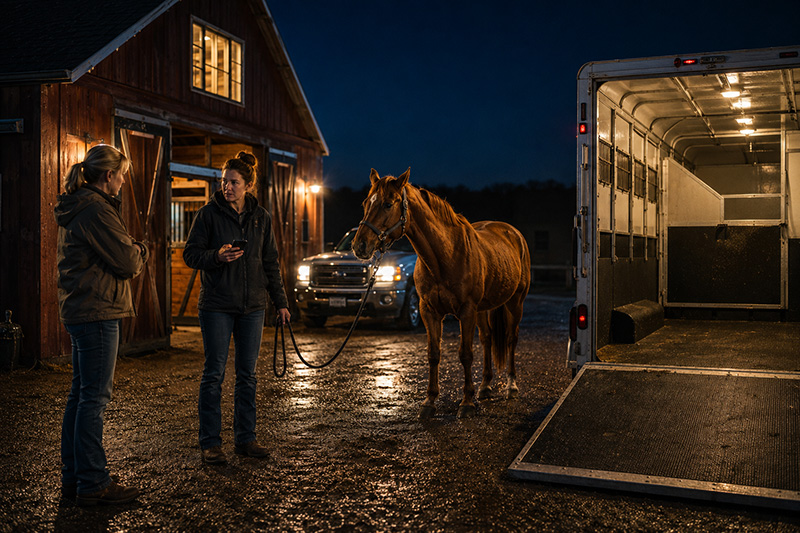
A horse in serious colic may be the single hardest horse on the property to load. He is in pain. He is not thinking clearly. He goes down, gets back up, and goes down again. Getting him into a trailer and asking him to stand quietly in a box can be dangerous for him and dangerous for whoever is trying to help him. Plenty of horses that need to be hauled simply cannot be hauled safely. And a great many single-horse owners do not own a trailer in the first place. They have a horse, a shed, a fence, and a phone.
So what has quietly happened over the last several years is that much of the burden of transportation has shifted from the veterinarian to the owner, and nobody ever sat horse owners down and told them so. Most of us find out the night we need to know.
The reason for all this is not mysterious.
Very few veterinary students choose equine practice. Research cited by the Virginia-Maryland College of Veterinary Medicine puts it at barely more than one percent going directly into equine private practice after graduation, with a few percent more taking an equine internship first. And of those who do go into horse work, roughly half leave within five years for small animal practice or leave the profession entirely.
You cannot blame them for it. Emergency work is brutal on a life. The American Association of Equine Practitioners surveyed its own members and found that a large share of equine veterinarians make no additional money at all from emergency calls. So the reward for driving out at midnight to a colic, in the dark, in the mud, alone, with a client who may or may not pay, is that you get up the next morning and start your regular appointments on time.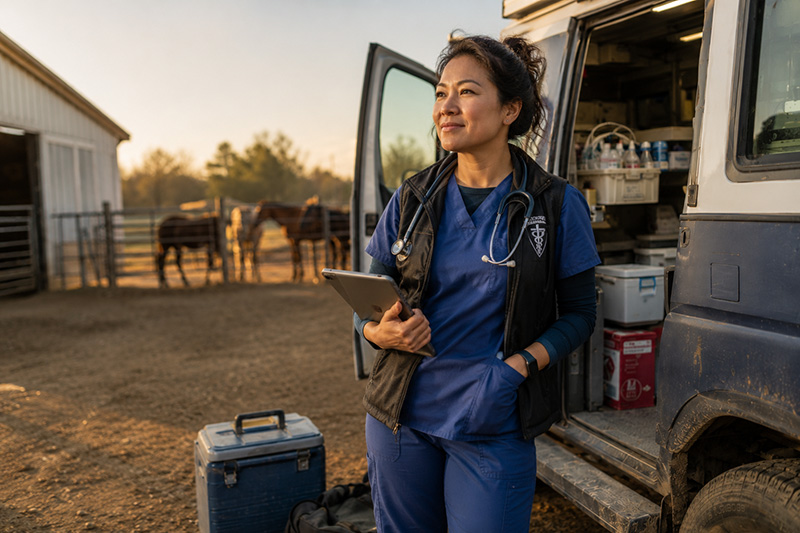
Small animal medicine generally pays better, offers better hours, and does not ask you to work under a horse in a field.
The United States Department of Agriculture has identified the rural large animal shortage as a national concern and has expanded programs aimed at helping veterinarians who commit to shortage areas. That is real progress and it will help. But it will also take years to show up in your barn aisle. The veterinarians who are retiring are retiring now.
So let us talk about what horse owners can actually do, because complaining about the shortage does not get a horse through the night.
What You Can Do for Your Own Horse
Become a client before you are an emergency.
This may be the single most important thing in this article. Many practices will no longer take an emergency call from someone who is not already a client because they simply do not have the staff to serve everyone who calls.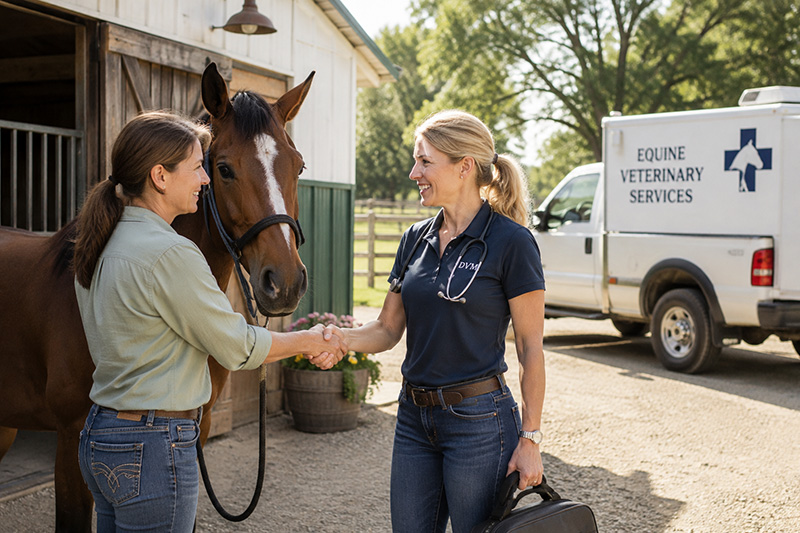
If your horse has never been seen by a veterinarian, you may not really have a veterinarian. Get a wellness exam. Get your Coggins done. Get your horse's teeth floated. Get on the books. Being a known client with an established relationship and an account in good standing greatly improves your chances of getting help when you call at two in the morning.
Learn what normal looks like on your own horse.
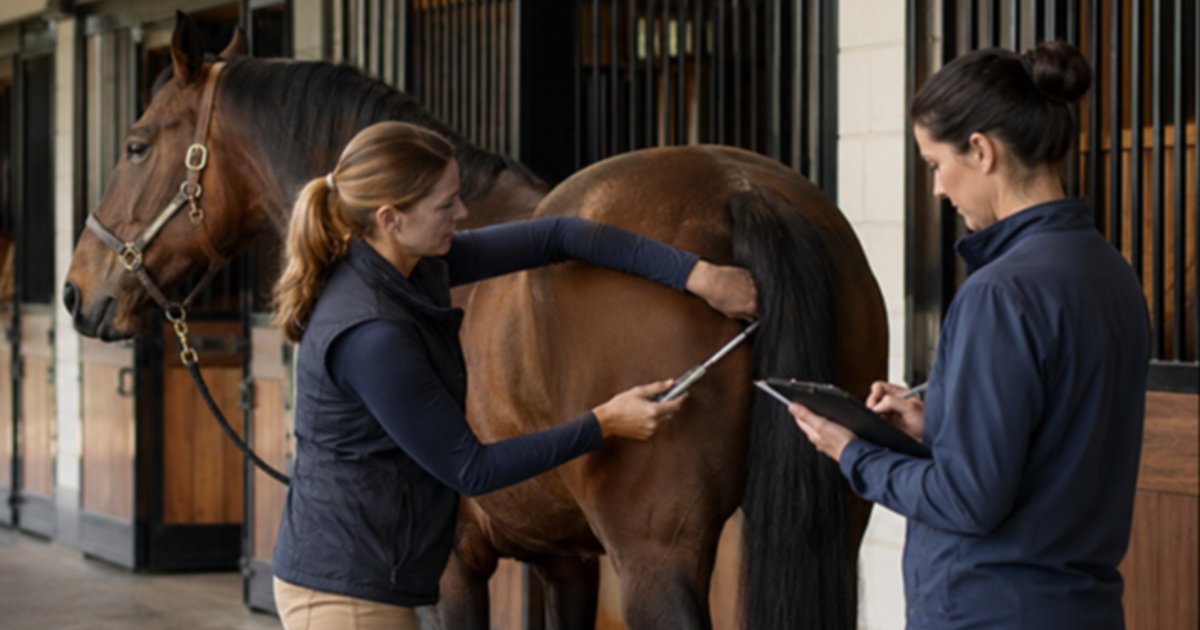
Temperature, pulse, respiration, gut sounds, gum color and capillary refill. Take these when your horse is healthy, more than once, and write them down somewhere you can find them.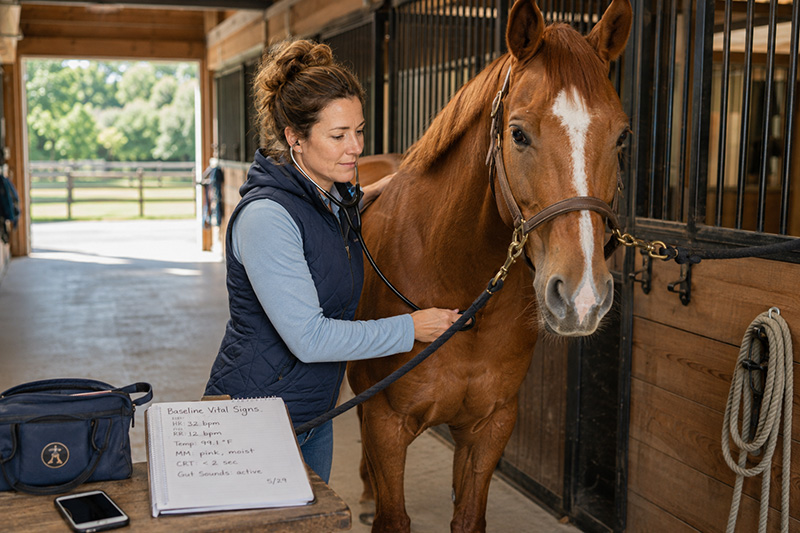
When you make that emergency call, there is a huge difference between saying, "My horse looks bad," and being able to say, "His temperature is this, his pulse is this, his gums look like this, and here is what has changed." That gives the veterinarian something useful for triage. It may also help determine how urgently your horse needs to be seen.
Solve the trailer question now, on paper, with a name and a phone number. If you do not own a trailer, you need a standing arrangement with somebody who does and who will answer at night. Not a vague understanding. An actual agreement with an actual person who knows they are the one you will call.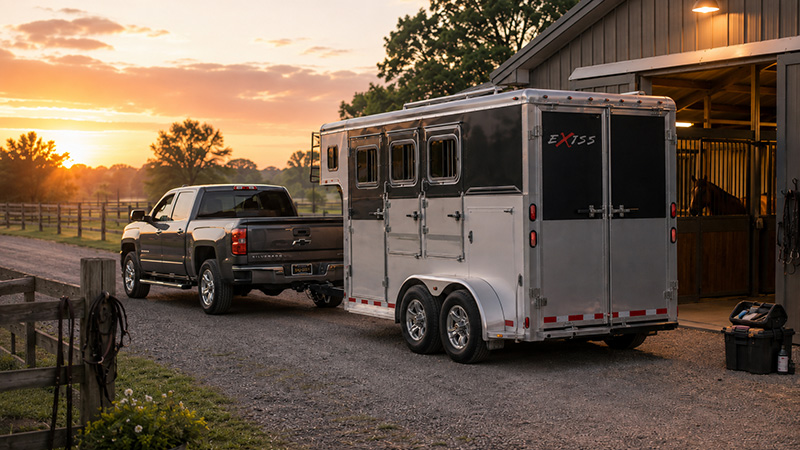
If you do own a trailer, keep it roadworthy. Check the tires, lights, floor and hitch regularly, and keep it where you can hook up quickly in the dark. A trailer with a flat tire and a truck with a dead battery are not an emergency plan.
Know the road before you need it.
Find out which referral hospital you would use, call and ask about their emergency policies, and then drive the route once. Time it. Learn where the turns are. You do not want to be trying to read a map for the first time with a horse in trouble behind you.
Get the money question settled ahead of time, because otherwise it will get settled at the worst possible moment. Equine major medical and surgical coverage is often purchased in conjunction with a mortality policy. Whether insurance makes sense for your horse and your situation is your decision, but make that decision while everyone is healthy.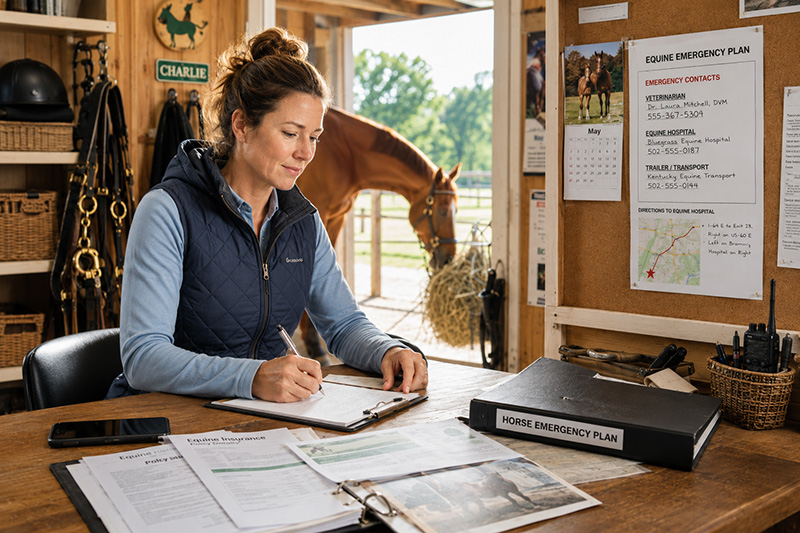
If insurance is not the answer for you, consider a dedicated emergency savings account. Colic surgery is not a small number.
Be the client your veterinarian can afford to keep.
Do not call after hours for things that can safely wait until morning. Accept the on-call veterinarian when your regular veterinarian is not available, just as you would accept whoever is on duty in a human emergency room.
Have your horse caught and haltered and the area lit before the veterinarian pulls in. Have another capable person there if possible. Pay your bill.
None of this is simply about manners. Every equine veterinarian who burns out and moves to small animal practice is one less veterinarian available to your horse and your neighbor's horse. How we treat the veterinarians we have is part of whether they stay.
Make the mercy decision in advance.
Nobody wants to think about it, and everybody should.
Know who in your area can perform emergency euthanasia and how quickly they can reach you. Know how the body would be handled afterward and what the options cost. Those questions can stop people cold at exactly the wrong moment.
Having them answered ahead of time is not morbid.
It is the last kindness you can plan for.
What We Can Do for the Profession
The real long-term fix is more young people choosing large animals, and horse owners are closer to that pipeline than they realize.
Support the kids who are already headed in that direction. 4-H, Future Farmers of America and youth horse programs are full of young people who love animals and may have no idea that large animal veterinary medicine could become their life's work. Tell them it can.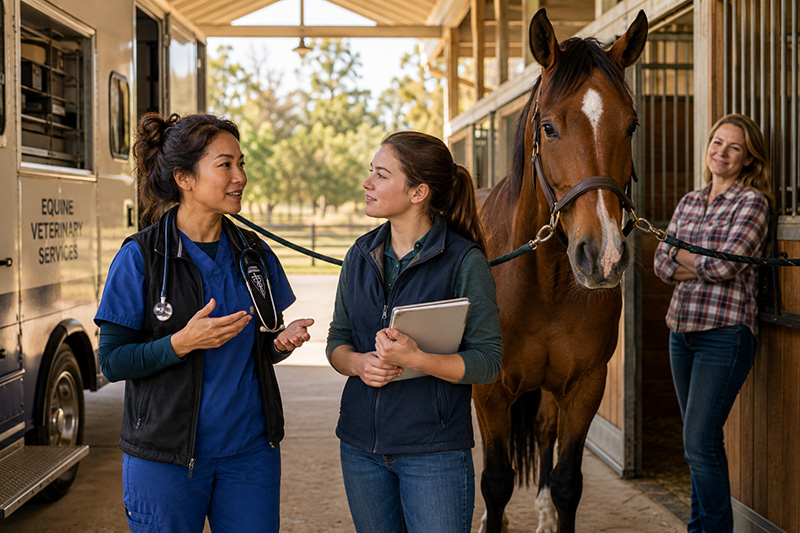
If your barn and your veterinarian allow it, encourage a serious high school or college student to observe or ride along on farm calls. Almost every large animal veterinarian I have ever known can name somebody who first opened that door for them.
Support scholarships and loan repayment programs, and support veterinary schools that maintain strong equine and large animal programs. A veterinary education costs an enormous amount of money, and a graduate carrying that debt is under very real pressure to choose the kind of practice that pays enough to support it.
That is not a character flaw.
It is arithmetic.
And it is the arithmetic we have to change.
Speak up locally, too. When your county or state is deciding where rural veterinary support goes, horse owners are often one of the quietest groups in the room.
Show up.
Here is where I have landed after fifty years of this.
The veterinarian who pulls into your driveway at midnight was somebody's kid at a 4-H meeting once, and somebody let them come along on a call. Somebody encouraged them. Somebody showed them that this could be a life.
That is where large animal veterinarians come from.
There is no other source.
We cannot fix this by next weekend. But we can be ready by next weekend, and we can quit assuming that somebody will always answer the phone.
That Thoroughbred deserved better than he got. And the truth is that many of the decisions that might have given him a better chance were available months before he ever got sick.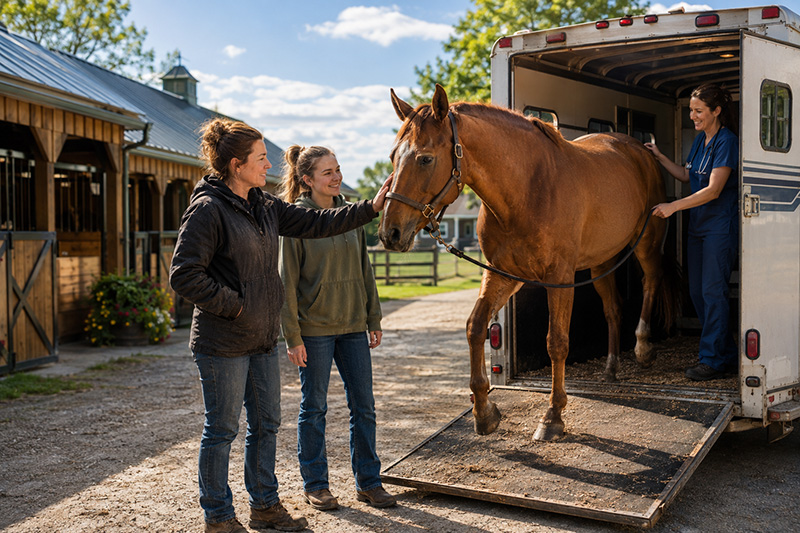
Make yours now, while your horse is out there sound and bored and perfectly fine.