


Article brought to you by Cowboy Magic Family of Horse Grooming Products
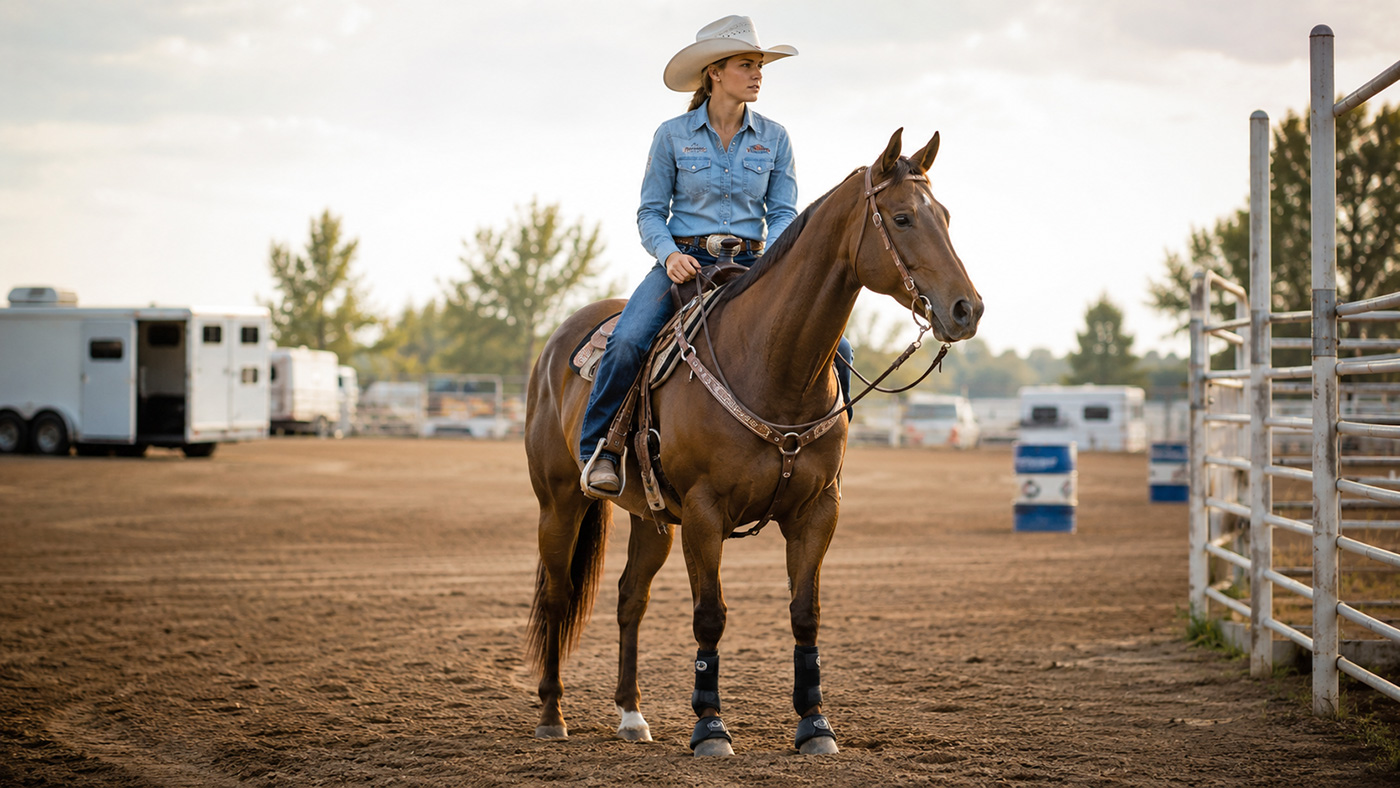
There is a truth in this sport that took me a long time to say out loud, and here it is. The horse does not know what level you are riding at.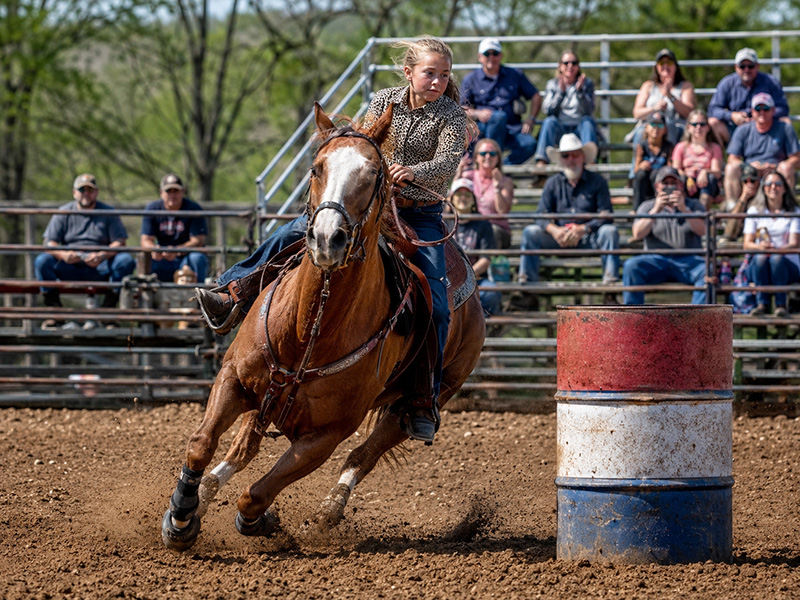
She does not know whether the entry fee was ten dollars or ten thousand. She does not know whether there are forty people in the stands or four thousand. She knows the trailer ride, the strange water, the ground under her feet, and how her body feels when you ask her to set up and turn. That is the whole world from where she stands.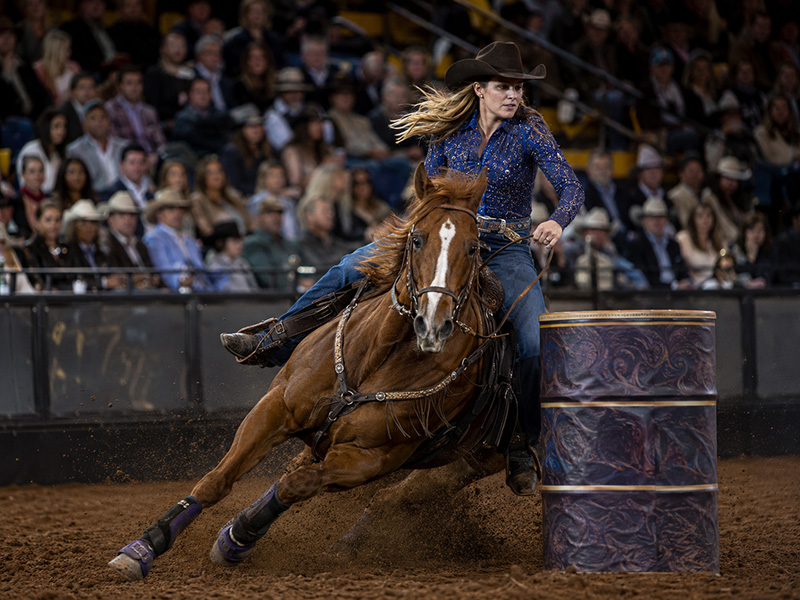
So the care list does not change as you climb. It is the same list at a Saturday playday as it is at the biggest arena in the country. What changes is how hard you lean on it, how often, and how fast you find out when you skipped something.
Let me walk you through it.
Start with the gut, because that is where the trouble starts.
A barrel horse lives a life almost designed to upset a stomach. She gets hauled. She stands tied to the side of a trailer for hours. She eats on somebody else's schedule instead of her own. And because we want run, we tend to reach for the grain scoop.
A horse's stomach is built to have something in it nearly all the time. Forage is what keeps it that way. Hay in front of her in the trailer, hay at the trailer when you get there, hay when you get home. Not a flake thrown at her twice a day with eight hours of empty in between.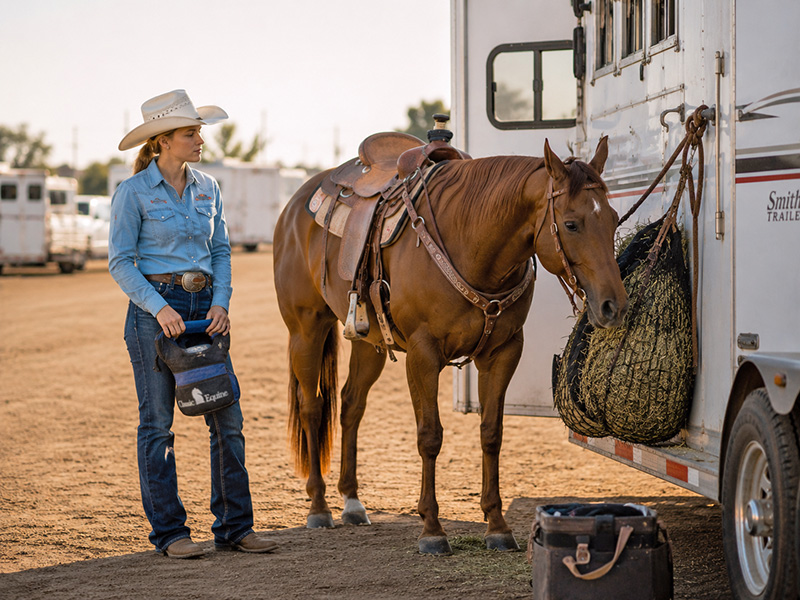
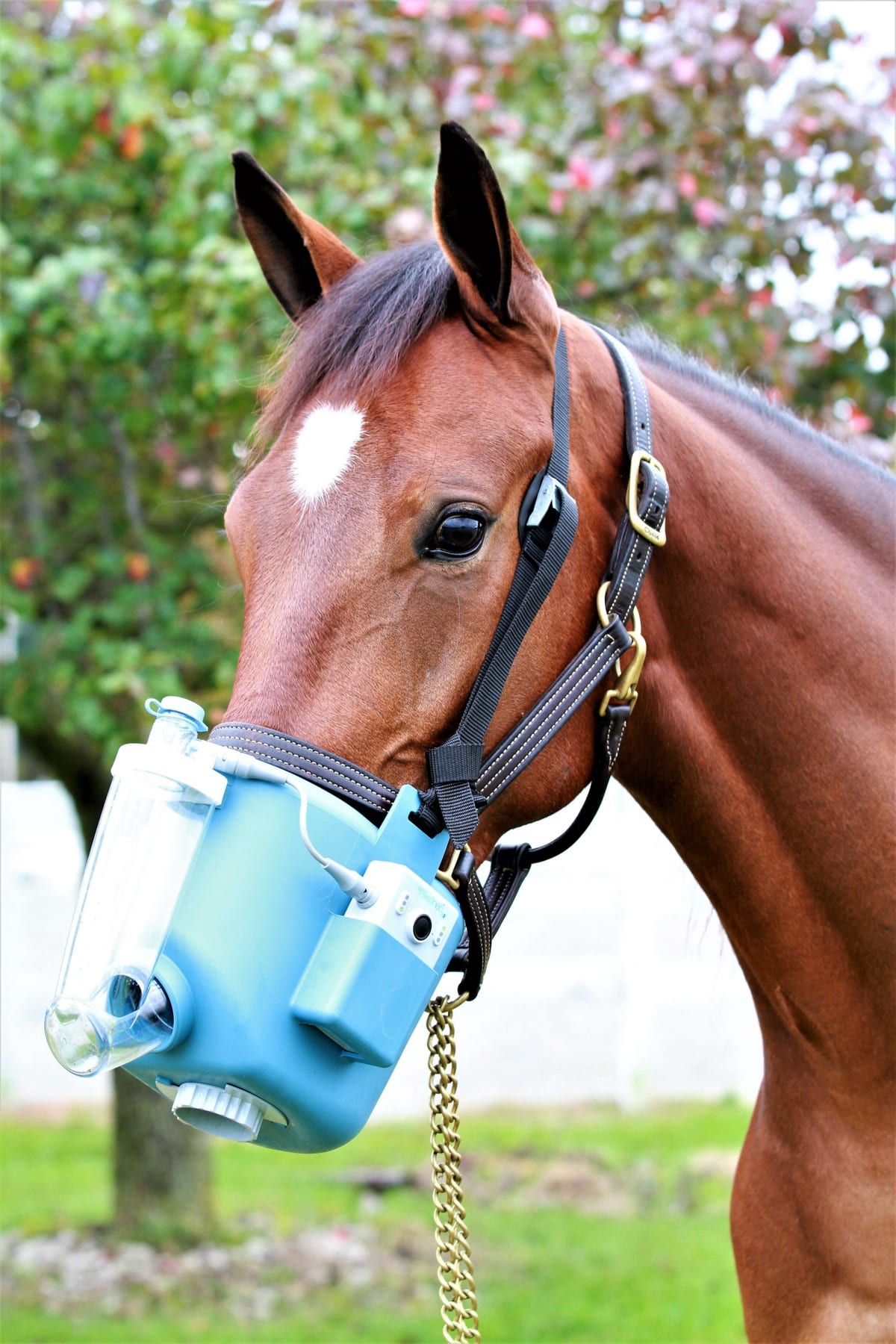
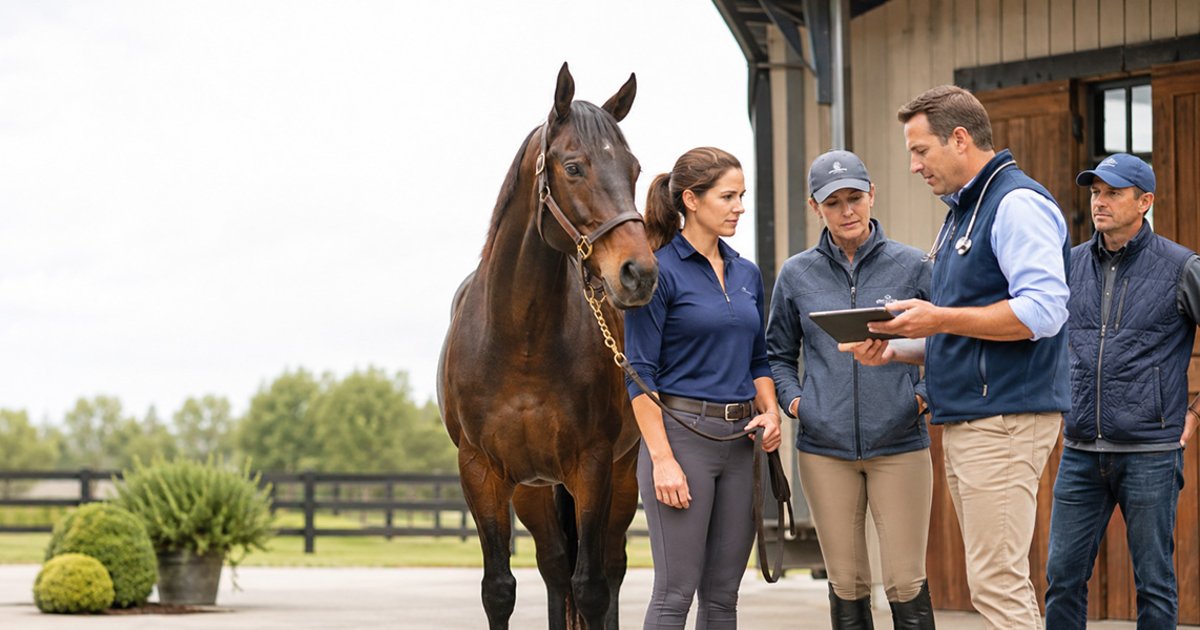
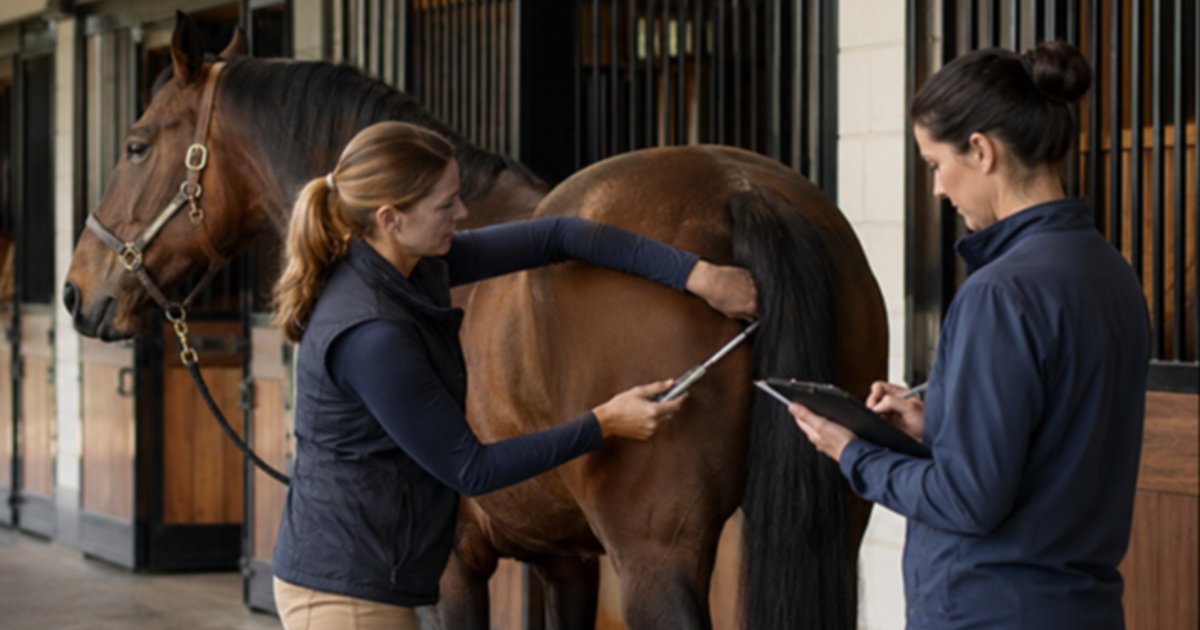
If your horse has gone off her feed, turned cranky about being cinched, started grinding her teeth, or lost condition you cannot explain, talk to your veterinarian about scoping her. Scoping is the only way anybody knows for certain what is going on in there. Everything else is guessing, and guessing is expensive.
Water is the problem nobody solves until it costs them.
Plenty of horses will not drink strange water. They will stand next to a full bucket at a show and refuse it, and a rider who does not know that about her horse will haul home a dehydrated animal and never understand why the second run felt flat.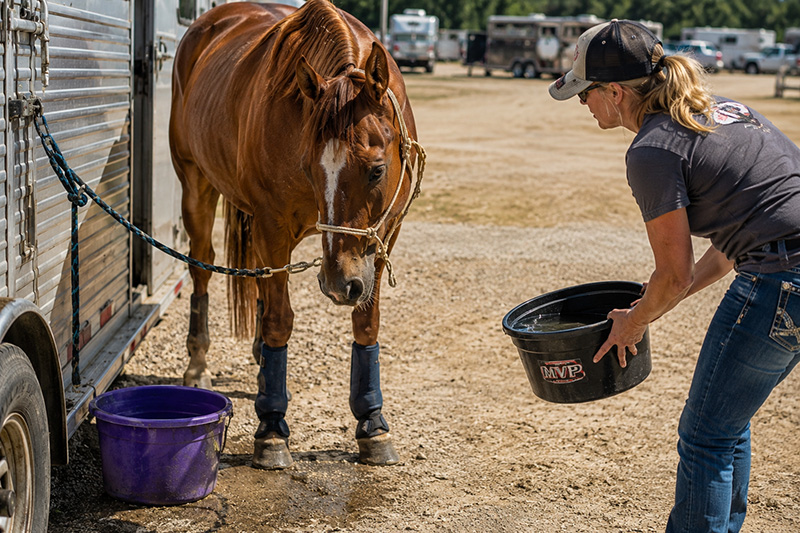
You solve this at home, weeks ahead, not in the parking lot. Some people haul their own water from the well the horse already drinks. Some teach the horse to accept water with something added to the taste, so that the flavor travels even when the water does not. Soaking feed and wetting hay puts water into a horse who will not take it from a bucket.
Find out which one works for your horse in your own barn, on a day when nothing is at stake. Then it is a tool instead of an emergency.
Feet carry every turn you ever ask for.
The turn is the whole event, and the turn loads the front end hard. That load goes down the leg and into the foot, over and over, all season.
Get on a shoeing schedule and hold it like an appointment you cannot move. A horse who is two weeks past due is a horse riding on a changed angle, and changed angles travel upward into everything above them. If your farrier says wait, wait. If the entry deadline says run, and the foot says wait, the foot wins. It always wins eventually. You just get to choose whether it wins on your terms or hers.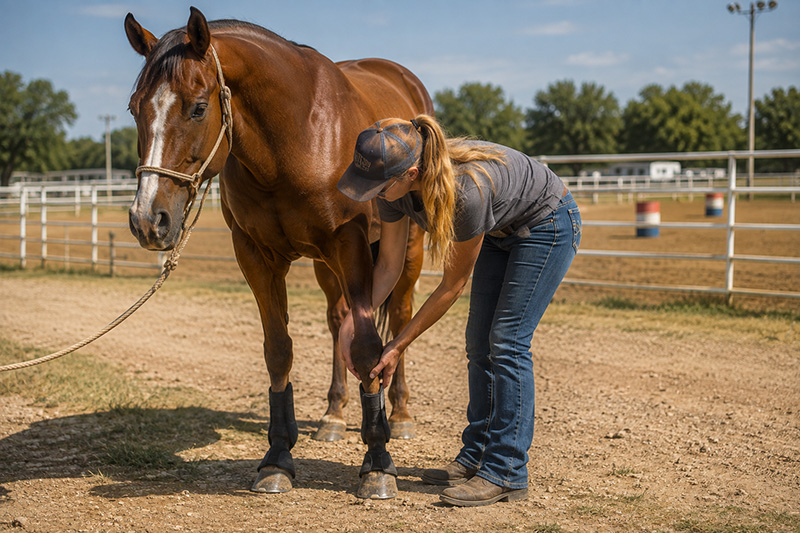
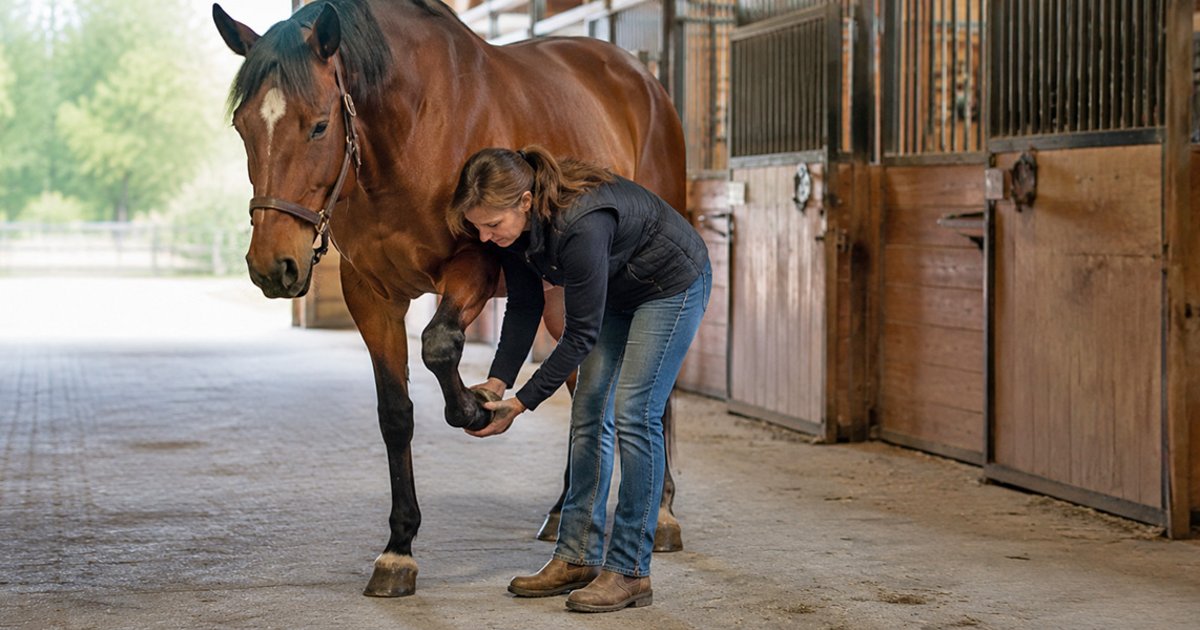
Learn your horse's legs with your hands, every day.
Here is a thing I believe as strongly as anything in horsemanship. You cannot find a change if you do not know the baseline.
Run your hands down her legs when nothing is wrong. Feel the tendons cool and quiet. Learn what her ankles feel like at rest, what her hocks look like from behind, how much fill she carries after a hard weekend and how fast it goes away. Do that for a month and your hands will tell you things no camera will catch.
Then the morning something is different, you will know it in about four seconds. That is worth more than any product on any shelf, and it costs nothing but attention.
Soreness talks before it limps.
This is the one I most want you to take with you.
A sore barrel horse rarely starts by hobbling out of the stall. She starts by knocking a barrel she used to turn clean. She starts by dropping her shoulder to one side and not the other. She starts by hesitating on the approach, or pinning her ears when the cinch comes up, or fighting a turn she has made a thousand times without complaint.
And what happens next is the sad part. The rider calls it a training problem and drills harder. She runs the pattern again and again to fix an attitude that was never an attitude. A horse in pain gets asked to do more of the thing that hurts.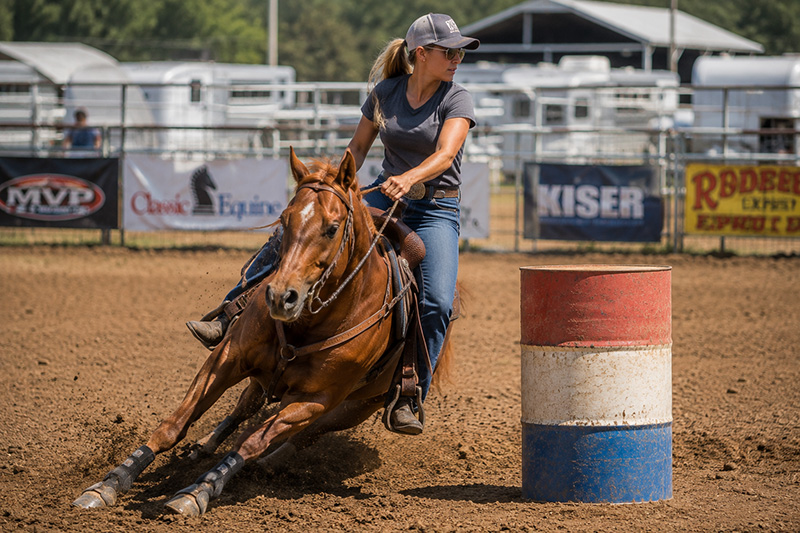
When your horse's performance changes and you did not change anything, look at her body first and her training second. Have your veterinarian look. Most of the time you will find something small, caught early, that is cheap to fix. That is the whole reason to look.
Speed work is not conditioning.
A horse who only ever works the pattern is not fit. She is practiced. Those are different things.
Fitness is built with long slow miles. Trail riding, hill work, walking and trotting for real distance, the unglamorous hours that build a heart and lungs and legs capable of handling a full-speed run without falling apart afterward. The run is fifteen or twenty seconds. The fitness that carries it safely takes months.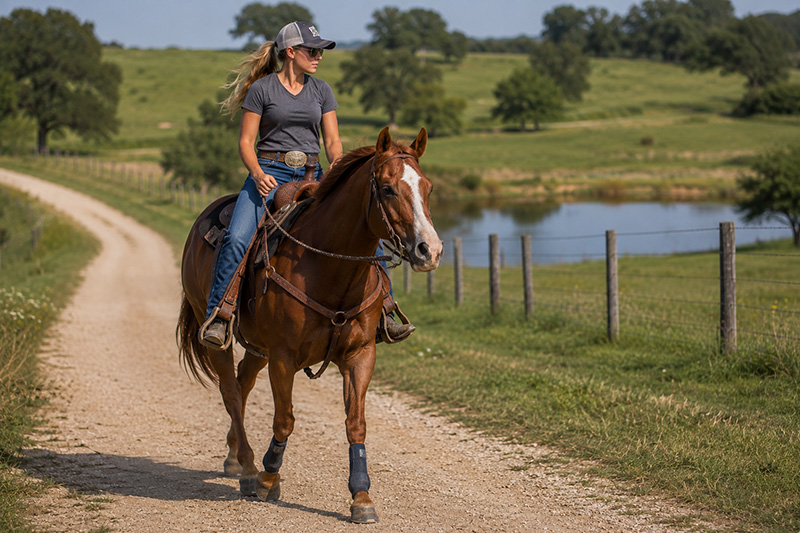
Drilling the pattern at speed does the opposite of conditioning. It sours a horse, it hurts her joints, and it teaches her to anticipate instead of listen. Most good barrel horses I have known ran the full pattern at speed rarely at home. They walked it, they trotted it, they worked pieces of it, and they saved the running for when it counted.
Recovery is part of the run, not a break from it.
Cool her out properly. Let her drink. Get her legs looked after in whatever way you and your veterinarian have decided suits her. Give her turnout and give her days where nobody asks her for anything.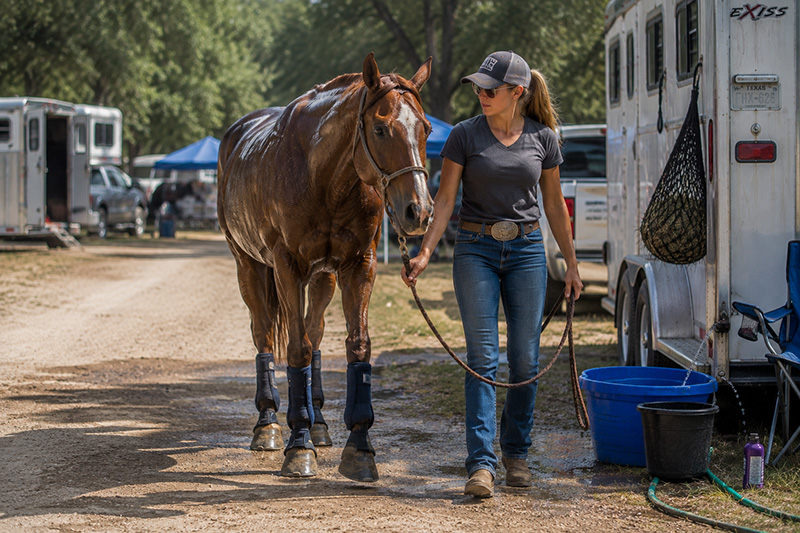
A horse standing in a stall between hauls is not resting. She is just standing. Movement is what keeps a body loose and a mind reasonable.
Now here is how the load climbs, while the list stays the same.
At a playday, the entry fee is small and the competition is broken down by age. Ribbons, trophies, halters, and buckles get handed out. It is amateur, it is local, and it is the best on-ramp into horses this country has. It is also where load sneaks up on people. A family horse runs barrels, then poles, then flags, then a stake race, all in one afternoon, after standing in a pasture doing nothing all week. Four hard efforts on an unconditioned horse is real work. Count the runs, not the ribbons.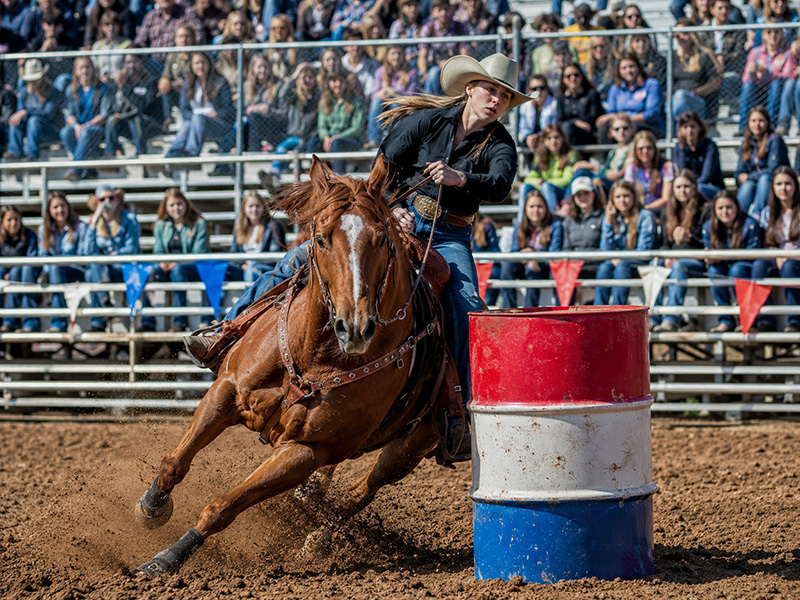
High school rodeo is where it gets serious and where nobody is watching closely enough. Now there are real miles, real entry fees, a school schedule stacked on top, and a young rider who has become the person actually responsible for the horse's care. The habits set here. A teenager who learns to feel legs every morning and hold a shoeing schedule becomes a horsewoman for life. One who learns to run a sore horse because there is a rodeo Friday learns that too.
Local open and amateur competition adds runs, adds miles, adds horses. Now you may haul two, and both need everything on that list, and the weekend is longer.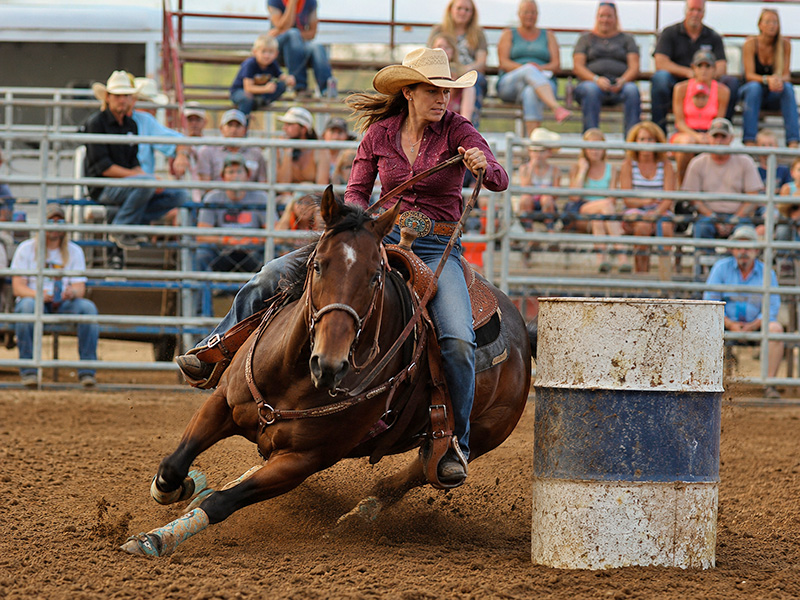
At the top, the money gets large and the schedule gets brutal. The horses who last at that level are cared for like professional athletes, because that is what they are. And if you look at what those programs actually do, you will not find a secret. You will find the same list, done relentlessly, by people who never skip it.
That is the point. The list does not get more sophisticated as you climb. It gets more expensive to ignore.
What winning actually looks like.
I want to say this plainly, because the word win is in the title and I do not want it misunderstood.
The rider who wins over a season is not the one with the fastest single run in April. It is the one whose horse is still sound and still willing in October. Anybody can be fast once. Staying fast, year after year, on a horse who still runs to the first barrel with her ears up, is the real accomplishment in this sport.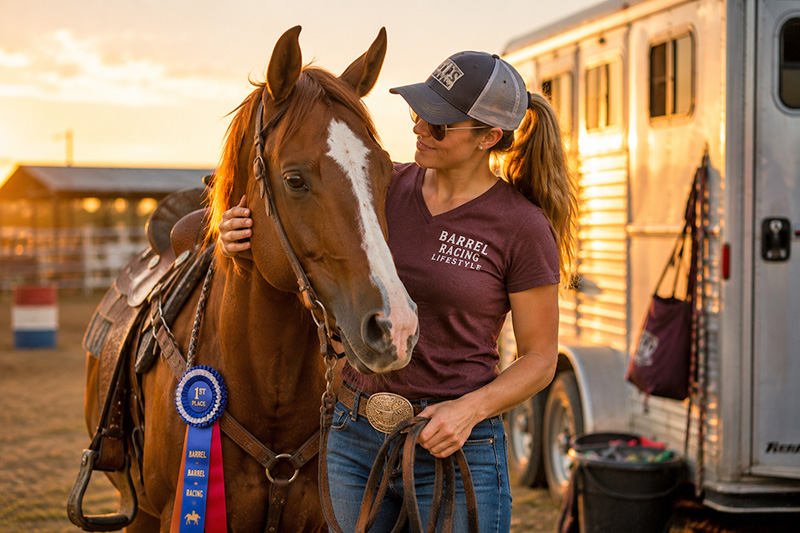
You get that by taking care of her. Not by finding an edge. Not by buying the thing everybody at the trailer is talking about. By feeding forage, watching water, holding the shoeing schedule, knowing her legs by feel, listening when her behavior changes, conditioning her properly, and letting her recover.
She gives you everything she has in those seconds between the timer lines. The rest of the week belongs to her.
Questions Barrel Racers Ask
Does my playday horse really need the same care as a professional barrel horse?
Yes. The needs are identical. What differs is the workload. A horse hauled twice a month and a horse hauled twice a week both need forage, water, sound feet, and recovery. The heavily hauled horse simply shows the consequences of missed care faster.
How do I know if my barrel horse is sore?
Watch for changes in performance and behavior before you look for a limp. Knocking barrels she used to turn clean, refusing a turn to one side, hesitating on the approach, or objecting to the cinch are all worth investigating. Ask your veterinarian to examine her rather than assuming it is a training issue.
Why will my horse not drink water at shows?
Many horses refuse water that tastes unfamiliar. Solve it at home by hauling water from your own source, teaching her to accept flavored water well before you need it, or putting water into her through soaked feed and wet hay.
How often should I run the full pattern at home?
Rarely at speed. Walking and trotting the pattern, working individual turns, and building fitness through long slow miles will do more for her than repeated full-speed runs, which sour a horse and stress her joints.
What kind of conditioning does a barrel horse need?
Distance work at slower gaits, hill work, and consistent time under saddle. Speed work sharpens a horse who is already fit. It does not make her fit.
Should my barrel horse be scoped for ulcers?
Talk to your veterinarian. Scoping is the only way to know for certain whether ulcers are present. It is worth discussing if your horse has gone off her feed, lost condition, become cinchy, or changed in attitude without explanation.