Helping Horse Owners Make Informed Decisions
Downunder Horsemanship — Trainers (Ian Francis is a nationally acclaimed Australian horse trainer, two-time…)

Downunder Horsemanship

Ian Francis is a nationally acclaimed Australian horse trainer, two-time National Reining Horse

Want a horsemanship method proven on world-champion reining and cutting horses?

Downunder Horsemanship — Trainers (Ian Francis is a nationally acclaimed Australian horse trainer, two-time…)

Ian Francis is a nationally acclaimed Australian horse trainer, two-time National Reining Horse Futurity Champion, National Cutting Horse Futurity Champion, and five-time national High Point Reining Horse Trainer. Clinton worked steadily with Ian for six months, until Ian became ill and scaled his operation down for a period of time.

Clinton Anderson "Down Under Horsemanship" TM
The methods I use work for people and horses at all level and stages.

Clinton started his training apprenticeship full time at age 15 with Gordon McKinlay.He lived at the facility and worked for room and board only. During the next two years, he broke and trained over 600 horses under Gordon McKinlay's expert apprenticeship. Downunder Horsemanship ™ clinics in September 1998. Downunder Horsemanship 2001 Tour. Common interests draw horse enthusiasts from all disciplines to popular expositions such as Equine Affaire, Carolina Classic Horse Expo, Midwest Horse Fair, Equifest Horse Expo, Western States Horse Expo, Equitana USA, and events like the Super Clinics at Ride With The Stars.

At age 17, Clinton left Gordon McKinlay and began working for Ian Francis in Gymtie, Queensland. Ian Francis is a nationally acclaimed Australian horse trainer, two-time National Reining Horse Futurity Champion, National Cutting Horse Futurity Champion, and five-time national High Point Reining Horse Trainer.

Clinton worked steadily with Ian for six months, until Ian became ill and scaled his operation down for a period of time. At that point, Clinton used his knowledge and expertise to begin his own training facility in Rock Hampton, Queensland.

Clinton continued his own training clinics and horse training until coming to the U.S. in 1996 for a short apprenticeship with Al Dunning, winner of multiple AQHA World Championships, in Scottsdale, Arizona. Clinton met and married his wife Beth and returned to Australia where he continued with his business, Clinton Anderson Training Stables. At this time, Clinton began reining competition and placed third at the Australian National Reining Futurity in 1997.

Clinton was winner of the first go-round, and placed third in the finals - with only 1 point separating the top three winning horses. In October of 1997, Clinton and Beth returned permanently to the U.S. here Clinton began training for a California facility. He trained until he began conducting his own

Clinton is the newest and brightest horse trainer seizing the attention of crowds at the industry's top events and his

Clinton is the newest and brightest horse trainer seizing the attention of crowds at the industry's top events and his

These events offer horse owners, trainers and breeders the opportunity to see an impressive array of trainers, products and people on the cutting edge of the horse industry. Clinton has recently been recognized as one of the industry's top ten "Super Clinicians" by Horse Illustrated and Horse & Rider magazines.

In April 2001, Clinton became the only nationally recognized equine clinician to broadcast a weekly half-hour training show on television. Spectators at Clinton Anderson's demonstrations are impressed and pleased with his knowledge of horses and humane training methods, as well as his unique ability to teach his methods to others.

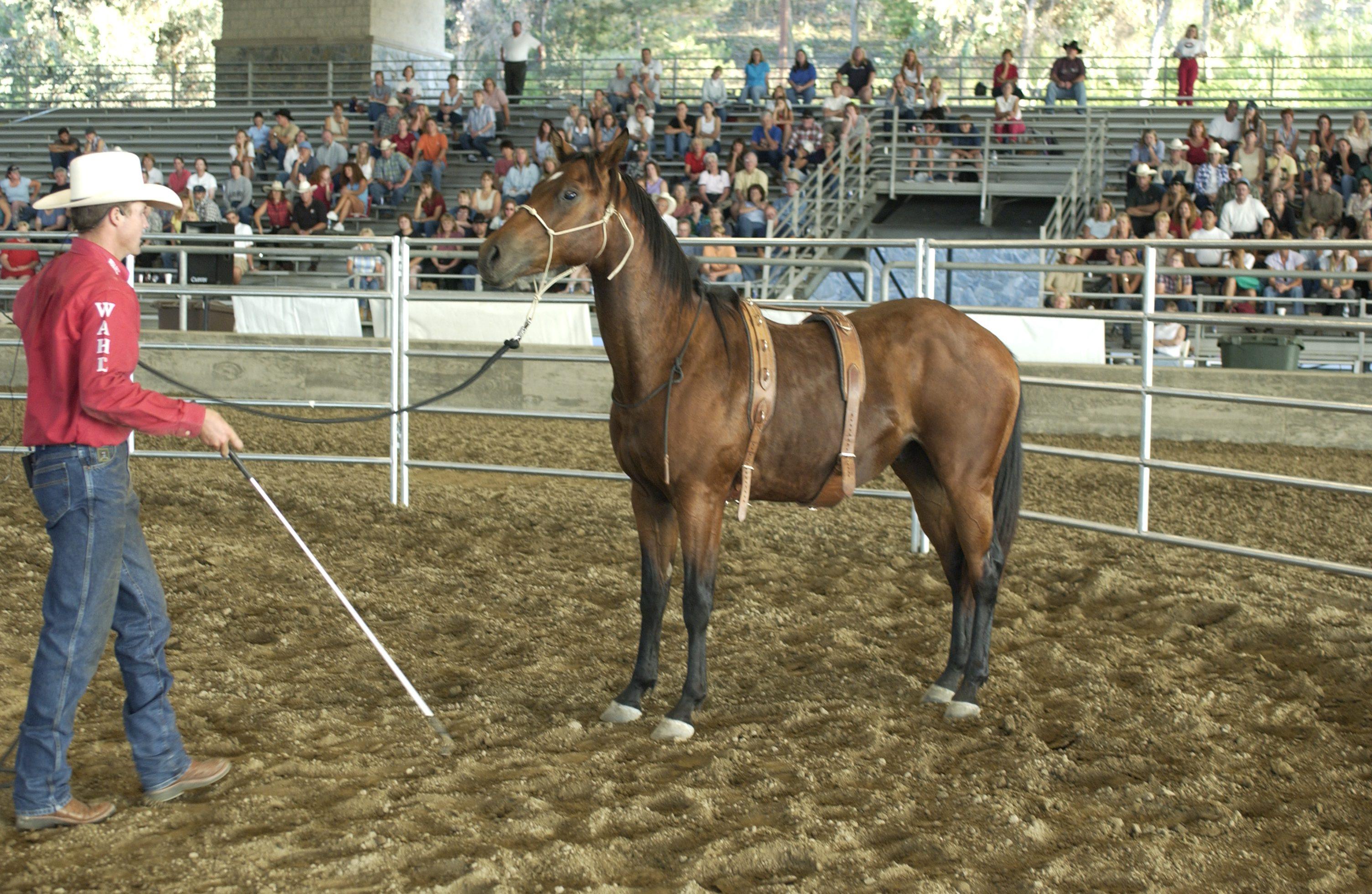
Demonstration horses running the gamut of training problems spotlight Clinton's talents, and the issues he deals with range from horses that want to buck, rear, balk or bolt, to those who refuse to trailer load. Selection of demonstration horses is restricted to horses with which Clinton has no prior contact. He demonstrates only with problem horses because people want to see real problems resolved.

An important aspect of each demonstration is the involvement of the horse owner. Clinton's methods prove themselves as each owner experiences the success of asking for and getting soft, willing responses from horse who were previously uncooperative, often to the point of being dangerous.

When asked why he uses only problem horses, Clinton replies...

"People may be impressed watching a finished horse go through its paces, but the experience won't help them deal with their own horses. When they go home and don't know were or how to begin, they quickly lose inspiration.

The methods I use work for people and horses at all level and stages. For a program to work, it has to work equally as well for the person at home alone as it does for me demonstrating in front of a thousand people.

Some people may be looking for a magic trick, but the truth is, there is no magic.

The methods I teach will work on any horse because they are honest. It doesn't take a professional either, anyone willing to put forth the necessary effort can obtain the same results."

The truth of Clinton's words is reflected in the obvious progress that each owner experiences with their horses during one of his clinics. One only has to watch to see that Clinton has the uncommon ability to bridge the communication gap between people and their horses.

DOWNUNDER HORSEMANSHIP™ TV

Clinton Anderson's Downunder Horsemanship™ weekly television programming opens new and exciting learning opportunities for the equine community.

Downunder Horsemanship ™ V began airing April 3, 2001 on Horse-TV programming on RFD-TV, Channel 9409 on Dish Network™. Clinton Anderson is the first nationally recognized horse Trainer/clinician to provide weekly television programming. Clinton's programs do not consist of excerpts from his video training collection. Weekly half-hour shows contain all new, never-before-seen footage, featuring the training techniques for which Clinton is quickly becoming known in the equine community. Downunder Horsemanship™training video, the information will be even more extensive.

Clinton holds nothing back, as evidenced by his new Groundwork Series video sets, each containing three tapes. Downunder Horsemanship™ TV shows nine times each week. Viewers may check the RFD-TV website at www.rfdtv.com for complete shedules.

Clinton's television shows deal with a variety of situations and problems faced by average horse owners every day, and each week viewers can get real solutions to those problems. After only two weeks of airing, the shows have received remarkable response from viewers.

Show topics for the first 13-week schedule include a variety of lessons for groundwork and riding problems. Clinton always uses untrained or problem horses in his demonstrations, so horse owners can see what they might expect when dealing with their own horses at home. His shows include information on common mistakes in handling horses, and how to avoid making those mistakes. Clinton takes great care to explain each exercise; it's object and the intended result. This level of training is not often provided, especially for the novice horse owner, even on training videos.

However, viewers can rest assured that if they purchase a

Many of the horses used in Clinton's weekly shows will have a particular problem, or be untrained, in one of the following areas:

Catching Your Horse
Handling Legs and Feet
Resistance to Bathing, Worming and Clipping
Flexing to the Halter
Dropping the Head for Bridling
Buddy or Barn Sour Behavior
Dealing with Spooky Objects
Shying Under Saddle
Disengaging the Hindquarters
Moving Front Around the Rear
Controlling the 5 Body Parts
Resistance to Fly Spraying
Gaining Respect and Control thru Lungeing Exercises

Horse owners are invited to watch Clinton each week, with new shows airing Tuesdays at 4:00 pm, 9:00 pm, Midnight and 4:00 am Eastern Standard Time.

RFD-TV currently airs


The Solution Section
Who is Clinton Anderson — and how did Downunder Horsemanship™ come to be?

Per Equi-Management Group: Clinton Anderson started his training apprenticeship full-time at age 15 with Gordon McKinlay. He lived at the facility and worked for room and board only. During the next two years, he broke and trained over 600 horses under Gordon McKinlay's expert apprenticeship.

At age 17, Clinton left Gordon McKinlay and worked for Ian Francis in Gymtie, Queensland — a nationally acclaimed Australian horse trainer who is a two-time National Reining Horse Futurity Champion, National Cutting Horse Futurity Champion, and five-time national High Point Reining Horse Trainer. After Ian's operation scaled down due to illness, Clinton opened his own training facility in Rock Hampton, Queensland.

How did Clinton Anderson come to the United States?

Per Equi-Management Group: Clinton came to the U.S. in 1996 for a short apprenticeship with Al Dunning (winner of multiple AQHA World Championships) in Scottsdale, Arizona. There he met and married his wife Beth, then returned to Australia and continued his business, Clinton Anderson Training Stables. He began reining competition and placed third at the Australian National Reining Futurity in 1997 — winner of the first go-round, third in the finals with only 1 point separating the top three. In October 1997, Clinton and Beth returned permanently to the U.S. He launched Downunder Horsemanship™ clinics in September 1998, followed by the Downunder Horsemanship 2001 Tour.

What recognition has Clinton Anderson received?

Per Equi-Management Group: Clinton has been recognized as one of the industry's top ten "Super Clinicians" by Horse Illustrated and Horse & Rider magazines. He's a regular at the industry's top events including Equine Affaire, Carolina Classic Horse Expo, Midwest Horse Fair, Equifest Horse Expo, Western States Horse Expo, Equitana USA, and Super Clinics at Ride With The Stars. In April 2001, Clinton became the only nationally recognized equine clinician to broadcast a weekly half-hour training show on television.

Why does Clinton Anderson only demonstrate with problem horses?

Per Clinton Anderson: "People may be impressed watching a finished horse go through its paces, but the experience won't help them deal with their own horses. When they go home and don't know where or how to begin, they quickly lose inspiration. The methods I use work for people and horses at all levels and stages." Selection of demonstration horses is restricted to horses Clinton has had no prior contact with — addressing real problems including bucking, rearing, balking, bolting, and refusal to trailer load. Per Clinton: "For a program to work, it has to work equally as well for the person at home alone as it does for me demonstrating in front of a thousand people."

What does "no magic, just honest methods" mean in Clinton's training philosophy?

Per Clinton Anderson: "Some people may be looking for a magic trick, but the truth is, there is no magic. The methods I teach will work on any horse because they are honest. It doesn't take a professional either — anyone willing to put forth the necessary effort can obtain the same results." An important aspect of each clinic demonstration: the owner is involved. Each owner experiences the success of asking for and getting soft, willing responses from horses that were previously uncooperative — often to the point of being dangerous.

What is Downunder Horsemanship™ TV — and where can I watch?

Per Equi-Management Group, Downunder Horsemanship™ TV began airing April 3, 2001 on Horse-TV programming on RFD-TV, Channel 9409 on DISH Network™. Clinton is the first nationally recognized horse trainer/clinician to provide weekly television programming.

Per the company: shows do NOT consist of excerpts from the video training collection. Weekly half-hour shows contain all new, never-before-seen footage. Downunder Horsemanship™ TV shows nine times each week. New shows air Tuesdays at 4:00 PM, 9:00 PM, Midnight, and 4:00 AM Eastern Standard Time. Check the RFD-TV website at www.rfdtv.com for complete schedules.

What groundwork and riding problems does the TV show cover?

Per Equi-Management Group, the TV show topics for the first 13-week schedule include groundwork and riding problems on:

  • Catching your horse
  • Handling legs and feet
  • Resistance to bathing, worming, and clipping
  • Flexing to the halter
  • Dropping the head for bridling
  • Buddy or Barn Sour behavior
  • Dealing with spooky objects
  • Shying under saddle
  • Disengaging the hindquarters
  • Moving front around the rear
  • Controlling the 5 body parts
  • Resistance to fly spraying
  • Gaining respect and control through lungeing exercises

Per the company: Clinton always uses untrained or problem horses, so horse owners can see what they might expect with their own horses at home. He explains each exercise — its object and intended result — at a level not often provided, especially for the novice owner, even on training videos.

What about the Groundwork Series video sets — and how do I order?

Per Equi-Management Group: per Clinton, "Clinton holds nothing back, as evidenced by his new Groundwork Series video sets, each containing three tapes." The video collection complements (does not duplicate) the TV programming.

To order or learn more: Equi-Management Group at 888-371-6744 or 573-238-4005, email equimgmt@excite.com. Address: RR 4 Box 1775, Marble Hill (state info appears truncated in source — confirm directly when ordering). Pricing varies by video set, clinic, and event; pricing as quoted is subject to change due to economic factors — confirm current pricing with Equi-Management Group directly when ordering.

Contact Downunder Horsemanship

Call Website Email
Ann Pruitt
Contact Ann Pruitt
InfoHorse.com