

How to Host a Successful Horse Clinic
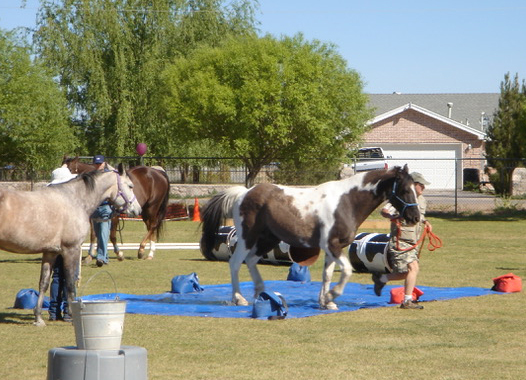
Hosting a successful horse clinic begins with deliberate planning long before event day—start by choosing a meaningful theme, then give full effort to logistics like boarding, turn-out, and adequate safe space for every horse attending. Test your audio equipment at least a week ahead, check safety gear twice, and handle release forms during registration. Success isn’t measured by attendance numbers but by what each attendee gains and puts to immediate use afterward.
Article by Barb Paulsen & C.M. Brown, Jr. Horse clinics can be a fun and educational way to improve your skills, learn more about your horse/make a better connection with your horse, and make connections with others that share your love and appreciation for our equine partners.
This article provides perspectives on a range of related topics from a venue owner, a clinician, a venue owner/clinician, and a horse trainer – each knowledgeable and reputable in their fields having held many successful clinics. I have participated in their clinics and worked with the respondents to provide a glimpse of the rationale for holding horse clinics, and a set of best practices when planning and executing a successful event.
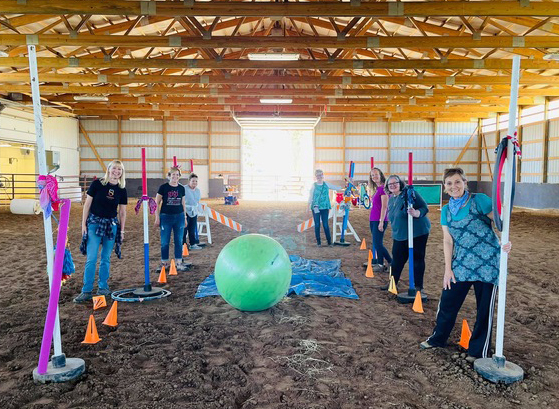
While we may have different views on what a successful clinic looks like, what it takes to host a successful clinic, and how we measure our success, we all share a passion for horses and a commitment to the trade. There are many components to a “successful” horse clinic. Keep in mind, a successful clinic doesn’t start the day of your event; a truly successful clinic is the result of a deliberate planning process.
As such, this article will address the following components: Preparation: Location & Logistics: Accommodations, Meals, Equipment & Safety; Choosing a Theme: Speakers/Clinicians/Trainers; The Registration Process: Legal requirements; Welcome; Demonstrations: Hands-On Training, Q&A, and Auditing; Farewell; and Follow-up.
In preparing for your clinic, the first step is to identify your Theme. The topic/theme should always be meaningful and impactful! How do you determine the theme? To be meaningful, you must have a working knowledge of the goals and/or concerns expressed by your target community. This can be ascertained through conversations with fellow boarders, online blogs, or industry publications.
Or your theme could revolve around something as simple as an issue or pain point you have encountered through your travels/journeys. The good news is there is a plethora of topics to choose from – Proper Horse Care, Connection, Health & Nutrition, Safety, for instance – and a range of skill levels (Basic/Beginner/Advanced) to which we can tailor our messaging.
What is the most important component to hosting a successful horse clinic? Angele Misna is venue owner and operator of Snapdragon Farm & Stables in Mt Horeb, Wisconsin and hosts several clinics annually. Additionally, Angele runs a summer program for children with limited exposure to horses. Angele states, “the most important component to hosting a clinic from the perspective of a venue owner is giving 100% [effort] to planning the logistics for the event – boarding, turn-out, round pen and arena – and determining that you have adequate ‘safe` space for every horse participating in the event.”
Noah Tillman-Young is a renowned horse trainer at
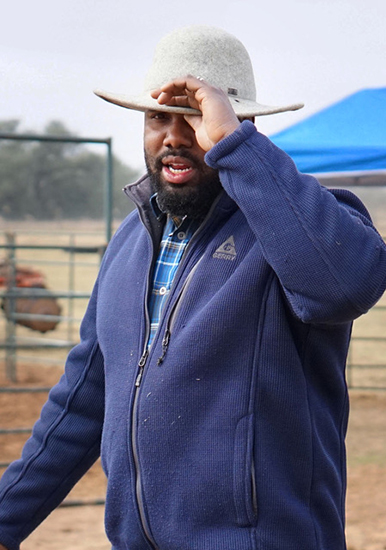
Steady Horse in Floresville, Texas – I also consider Noah an expert “people trainer” who understands the importance of developing the necessary skills to truly connect with your horses. According to Noah, “the most important component in hosting a horse clinic is the environment. The environment sets the tone. Care must be taken in preparing the physical space – the set-up and utility – as it must be conducive to the type of clinic you are hosting.” Noah always puts safety first!
Katharine Chrisley-Schreiber, NHC, RMT of Dharmahorse Equine Sanctuary in Las Cruses, New Mexico says “the most important consideration in preparing for a clinic is footing and facility. The facility layout is important because a clinician must be able to stretch the horse/rider pair during instructional phases. Relatedly, good footing and protection from the elements – both when riding and when listening to lectures – make it possible to do their (our) best.”
Elaine Davis, Founder of Unbridled Faith in Mankato, Minnesota tells us “the most important component of hosting a horse clinic is addressing the needs and wants of my clients. Honoring God first and honoring the client.” These seasoned owners and operators have given us a mental framework for thinking about key areas to consider during the preparatory stages. But always remember, the safety of your attendees should always be the priority.
Additionally, location, logistics, and accommodations are of the utmost importance for your clients. Is the location easily accessible? Will you have adequate parking? Does the venue provide stalls, round pens and pastures for turn-out? Have directions been clearly communicated? Maps? Will this clinic be more than one day where sleeping quarters are required? What accommodations are available for overnight stays?
Some venues provide bunkhouse style accommodations while others rely on the local market (hotel/motels, Bed & Breakfast venues, and Airbnb). Meals should be provided, either at cost or factored into the overall cost of attendance. I prefer including meal costs in the overall cost of attendance because this model allows attendees to focus on the clinic content while avoiding the daily accounting of out-of-pocket cost during the event.
Further, I encourage attendees to remain on site for meals. I’ve found that sharing meals together in this setting provides an opportunity to connect with other attendees, share past experiences, discuss impressions of the clinic, and develop life-long friendships.
If the clinic spans several days, consider providing a range of voluntary evening activities for your attendees. Movie nights, equine poetry, industry trivia, and crafting are examples of activities that have added an element of camaraderie to overnight experiences. However, there is no shortage of clever ideas in this category, the key is to be creative.
Last but certainly not of least importance in preparing for your clinic is your equipment. Always check your safety equipment – and after you’ve checked it, check it again. A critical outcome of running a successful clinic is your clients’ interest in coming back and/or providing positive testimonials about the experience. The damage done by even the mildest injury to a client could not only traumatize your attendees – depending on theme/age group/experience level – but could also impede your ability to continue operations and could potentially carry legal and/or insurance implications.
Secondly, test audio equipment no less than a week prior to your event. If your audience can’t hear you, you’ve failed them. Your attendees need to hear you loud and clear. Shouting at your audience/attendees isn’t the appropriate way to host this type of event, and the end result?
Your instructor trainer/clinician walks away without a voice. The problem may be as simple as a missing cable , but it’s also possible that a critter has managed to find their way into your system if not properly housed/stored. After accounting for every part of your audio system, you need to turn the system on to ensure the integrity of the system and its clarity for your audience through a series of soundchecks.
Katharine stresses that “apart from good footing and
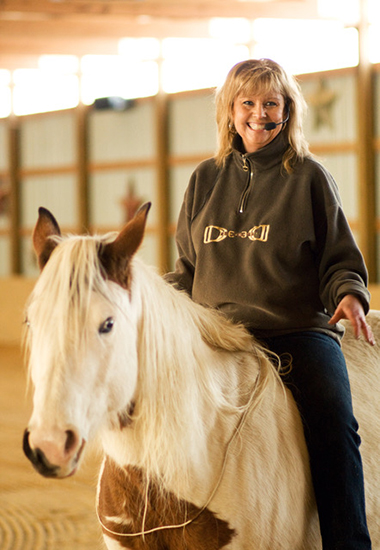
preparation for questionable weather, your sound system for the instructor is essential. In private lessons, earbuds and a microphone can connect rider and teacher, but clinics have auditors who pay close attention to every detail. More importantly, your participants like to watch other riders and it helps to be able to hear the instructions so they can actively follow along. I have taught many clinics with my own megaphone, so I always take it, just in case.” While you may get a stray comment from an interested – or disinterested – neighbor, it’s always advisable to alert your neighbors about an upcoming event.
The Registration Process In addition to signing up for your event/clinic, the registration process provides an opportunity to learn more about your attendees. What do they hope to accomplish? What are their levels of horsemanship? Have they attended similar clinics? At this juncture you’ll likely want to provide the necessary legal paperwork and release forms associated with running your specific clinic. Noah suggests leveraging this step to send pre-training materials prior to the clinic.
This allows the attendees to better understand the clinic’s goals and focal points, and it also helps set expectations from both sides. “Attendees will feel better equipped and prepared to learn and will feel more comfortable and more confident prior to their arrival.” Venue Owner Role & Responsibilities in Accepting a Client Often overlooked is the synergy between the venue location and a hosting client.
There needs to be a shared philosophy or baseline. Angele requires no less than three face-to-face meetings (or Zoom) prior to accepting a potential client. The clients must be in alignment with the principles of the venue. Level-setting expectations and getting on the same page helps to prevent negative discourse during the clinic, and disappointment after the fact.
Welcome You never get a second chance to make a first impression. Greeting your attendees with a smile and a warm welcome is essential – and as always, safety first! Always provide a standalone Emergency Procedures document (with an associated site orientation map identifying key locations – restrooms, water points, fire extinguishers) that covers necessary contingencies. Does your region experience tornadoes/hurricanes/wildfires/flooding?
Here is where you’ll instruct your attendees of what to do in the event of an emergency. And always verify your attendees’ insurance! Importantly, this is where you ensure all paperwork has been completed with appropriate signatures. Additionally, you’ll want to provide a complete itinerary that describes the program schedule in detail. Perhaps your welcome package has a tumbler with the hosts’ name? Water? A trail mix bar? Chapstick? Be creative!
The Clinic/Demonstrations
Safety First! Meaningful and impactful engagement for all! “Some attendees may feel a tad nervous or arrive with anxiety, often concerned with how they or their horse will perform.” Noah reminds us that it is the job of the trainer to alleviate these concerns. This can often be managed through storytelling; sharing mistakes that you have made may help your attendees alleviate stress and avoid similar pitfalls. Remember, regardless of experience level, everyone is here to learn and have fun. “We learn at our best when your community is cheering you on!” And never forget to “make sure all attendees are being kind to their horses and to each other.”
Remember to praise your attendees for tasks done well. If there are challenges, deliver your critiques in a productive and positive manner that serves to build their confidence, not tear them down. This is critical. As the host, your attendees will take cues from you, so your demeanor will play a significant role in shaping the attendees’ perception of the experience. Communication is critical. Clarity is critical. And kindness must be the rule of the day – your horses will pick up on micro-expressions of anxiety/discomfort and will react in kind.
Offering an option to audit your events is important for several reasons. It’s highly possible that given our current climate, many cannot afford clinic costs. While auditing a clinic may not come with all the benefits of full participation, the option to audit provides another avenue (at cost) for attendees to benefit from the clinic’s subject matter. Second, an auditor that walks away with a favorable impression of the clinic, the venue and clinicians may want to attend an upcoming session as a full participant.
The Largest Challenge
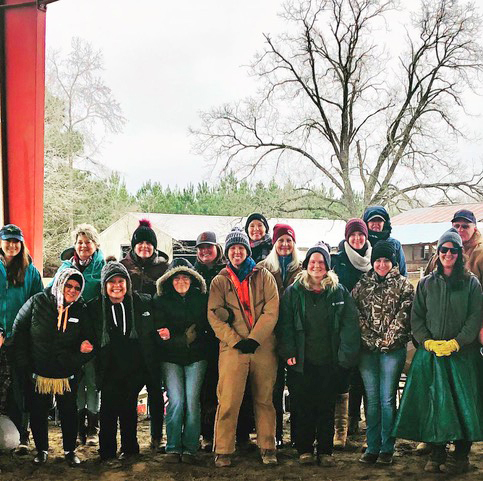
Our experienced owners and operators have all commented on the largest challenge of running a successful clinic. According to Angele, striving to meet the needs of a diverse group of attendees and clearly communicating the venue’s offerings. For Noah, the biggest challenge is managing attendee expectations around the goals and boundaries – the goal is not to be perfect, but to focus on establishing a connection with your horse, earning your horse’s trust, and building your horse’s confidence in you.
Elaine shares that “the biggest challenge I face is being sure that I have provided clarity to my team, a clarity of vision – this can be done via aligning the vision with the mission statement.” Hosting an event that does not represent the “heart” of Unbridled Faith and her walk with God is a non-starter for Elaine. She is laser-focused on “ensuring excellence in all that we do – maintaining our ethics. Providing a well-trained team and ensuring that the team shares the vision.”
The Best Advice Noah advises “have a good to great team behind you! Be welcoming and upbeat, and your attendees will reciprocate. Making your attendees feel welcome and special – and handling the paperwork – will put them in the best frame of mind.” And he reminds us that “simple gestures of thoughtfulness and caring go a very long way.” Farewell End your clinic with a show of appreciation.
A questionnaire covering pros/cons, the most enjoyable event, favorite exercise, most helpful instruction will help you gather information for your next clinic. Wink! Make it a memorable experience from beginning to end. Depending on the location, a departing bonfire may be considered. An intentions bonfire – write down what it is you’re leaving behind, cast it into the flames. Then, set your intentions for what you hope to continue building. Do you provide a certificate of completion?
If you provide awards/ribbons, everyone should receive something. There should be no losers, everyone wins at your clinic, even the horses! Yet another opportunity to be creative. Your attendees always leave with a small memento!
Follow-Up This is an often-missed opportunity to re-connect with your attendees.
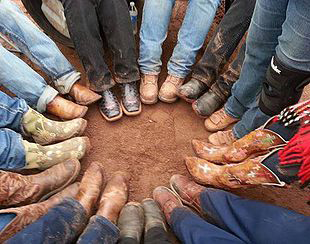
If you by-passed the questionnaire upon completion of the clinic, here’s your second chance. Again, include a “thank you” for attending. Perhaps sending a group photograph of all attendees will serve as a reminder of the awesome experience and could be the impetus for attending a clinic in the future.
Never miss an opportunity to express gratitude for their attendance. Measuring Success A successful horse clinic is not based on the number of attendees but what each attendee has been able to gain from your program and put to immediate use following the clinic. Success is not measured by the financial outcome but in knowing you have helped someone(s) reach a goal, making the world a better place.
Angele reminds us that “the reward you receive for giving back is priceless.” Katharine notes that the “clinics I have taught [I feel] were successful when riders hung around to watch, asked lots of questions, and had measurable improvement in their riding and/or their horses. In hosting clinics, I felt [we achieved] success when attendees asked when the next one would be and when the clinician was eager to come again.” For Elaine, “our success is measured by the `AH HA!’ moments, through the tears and laughter that your clients have felt loved.
”
Why We Clinic Since the dawn of man, horses have lent their regal majesty to our domain for various purposes – some benevolent, some less so. Regardless of realm, most agree that human engagement with horses has enriched our lives in infinite ways, often resulting in “mini-miracles” that form the foundation for life-long relationships. That said, a recent story shared by Elaine Davis (Unbridled Faith) captured my heart in ways difficult to describe without tears. In many ways this story represents the love, joy, and power we see in our horses. While succinct, this powerful anecdote clearly and eloquently describes why we clinic. --
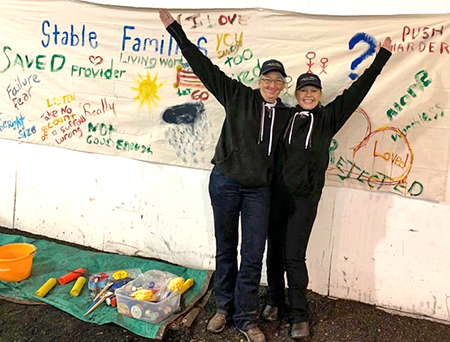
The mother of a twelve-year old girl who suffered from panic attacks brought her child to a farm to experience the tranquility of the horse community. After this one session, the young girl was thoroughly taken with the herd. Remember - horses, like service dogs, can detect the onset of an attack or seizure. One of the horses was able to identify the onset of a panic attack, allowing the mother to take her child to a safe, quiet place.
Upon leaving, the child turned to her mother and said that for the first time in her life she heard the voice of GOD, saying she is going to be okay. Within two weeks the girl had been relieved of her need for the prescription drugs she previously used to manage her condition. -- “When we learn to listen for the voice of GOD, miracles happen!” Elaine Davis
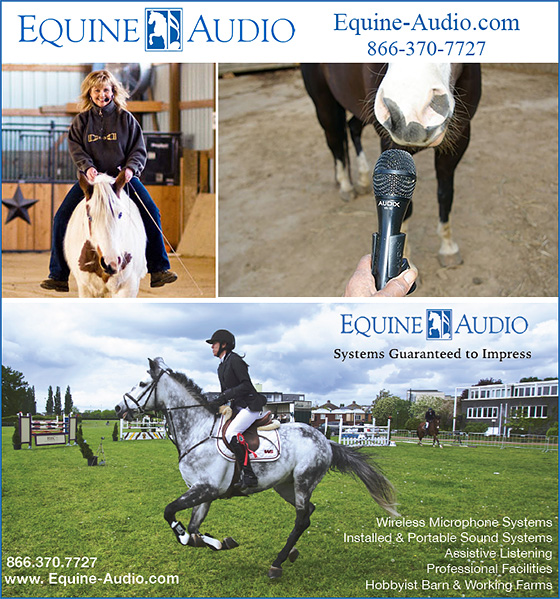
Equine Audio, Inc., is the recognized leader in the design and installation of professional audio system solutions for the equine industry. Whether yours is a professional equine facility – providing equestrian training, boarding and event staging; a working farm or hobbyist barn, we will design a complete solution for any size project. Equine Audio is dedicated to providing high performance sound solutions from the simple to the sublime; our experienced team will recommend a wireless microphone system; configure a clinician/trainer portable system; or design a professional sound system. We are only limited by your imagination!
Resources: Angele Mlsna, Venue Owner & Founder, Snapdragon Farm & Stables, Mt Horeb, WI. Elaine Davis, Founder, Faith Based Equine Assisted Philosophy, Unbridled Faith, Mankato, MN. Katharine Chrisley-Schreiber, NHC, RMT, Founder Dharmahorse Equine Sanctuary, Las Cruces, NM. Noah Tillman-Young, Horse and People Trainer, Owner & Founder, Steady Horse, Floresville, TX.