Per Bob Jeffreys & Suzanne Sheppard: practice volume should match the horse's age, condition, and lesson stage.
Young minds are sponges—need lots of repetition with abundant praise.
Older broke horses are like seasoned workers—they want adult treatment, not endless drilling.
Quit at the first correct answer if you've just installed a new concept.
Returning the next day to confirm retention beats overdrilling on day one.
Horse Training Lessons, How Much Is Too Much?
The right amount of practice depends on your horse’s age, condition, and current level of training, along with the difficulty of the lesson itself. Trainers Bob Jeffreys and Suzanne Sheppard teach demanding lessons a little at a time—perhaps ten or fifteen minutes before moving on—while easy basics such as giving to the bit can be worked on much longer. Their three-part test for a truly learned lesson is to get it, get it consistently, then get it pretty, meaning an immediate response to minimal cueing—and once a horse reaches that stage, stop drilling and simply check the cue once in a while.
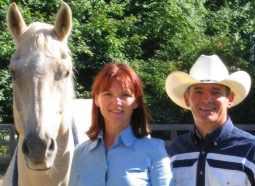
By Bob Jeffreys & Suzanne Sheppard A subject that is often raised by our clinic participants is how to determine the amount of practice time that should be spent with our horses.
What is the difference between getting the repetitions necessary to teach a cue or master a movement, and overdrilling our horses?
Should we quit teaching as soon as the horse gets it right?
Once he does get it right, does he really know it? How do we tell when he has truly learned a lesson?
These are really good questions and those of you who have been wondering about this subject are to be congratulated because even thinking about such things shows you care about your relationship with your horse and brings you one step further on the path to true horsemanship.
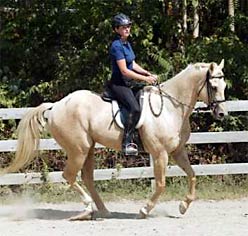
The answer, of course, depends on a variety of factors such as the horse’s age, condition, and current level of training, along with the actual lesson you are teaching. For example, the 5 year old horse that has been taught all the basics of walk, trot, canter on cue, who knows steering backing and lateral work is going to be handled differently than the young two year old who is just beginning basic under saddle training.
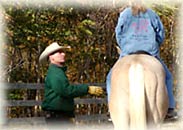
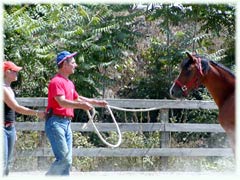
Young minds are like a sponge ready to soak up new information and just like our children when they first start in school, will need lots of repetition and praise. The older already broke horse is more like a seasoned worker who wishes to be treated like an adult, and takes the “show me how and then just let me do it” approach. the task or lesson itself is also crucial in determining practice time. Difficult lessons or physically demanding lessons must be taught a little bit at a time, ten or fifteen minutes perhaps, before moving on to something else. Basic movements such as giving to the bit (suppling) or teaching the cue to move forward can be worked on for hours at a time because these are not demanding and are physically easy on the horse. As for the question of when does the horse really know a lesson, it’s usually not when we think they do. We as teachers are always sure of the lesson we wish to teach and that lesson is usually a lot clearer to us than it is to our equine student. When we think he’s got it , he usually doesn’t. It may even be that he’ll think he learned something and we’ll think we taught something but it may not be the same thing. This fact is proven over and over again in an exercise we do in our clinics where participants will role play riders and horses. The “riders” are given specific tasks to teach the “horses” and afterwards we discuss the results. The catch? No talking is allowed – the lesson must be taught with body language, the same way we teach horses. In almost every case what the “riders” knew they had taught was quite different from what the “horses” learned.
So here’s our 3 part criteria for teaching, practicing and knowing when a horse has learned something: 1.Get it. 2.Get it consistently. 3.Get it pretty. First just get it. Show the horse what you want. Let’s use the example of teaching lateral work, a first step slightly to the side rather than straight forward. We should soften our horse (have him giving) push with our leg, adjust our seat, lean a little, add some rein pressure and anything else we can do in order to get that lateral step.
When he gives it to us release all rein, leg and body cues and praise the horse. By repeating this request and release procedure often enough, our horse will ultimately figure out that the lateral step is what gained the pressure release and praise.
The next step is to practice the movement until we get it consistently. That is every time you ask, you can get the movement. This is where most people quit, but we should continue to practice the movement (not necessarily in one day) until we get it “pretty”. What we mean here is that we get an immediate response from our horse with minimal cueing. In the case of the aforementioned lateral work a light push with our calf should be all we need for the lateral movement to occur work (no pressure on the reins and no leaning of our body).
Once we have reached this “pretty” level we should move on to teach something else. Don’t drill the lesson once your horse has gone thru the three stages. Simply check every once in a while to see that your horse moves laterally on a subtle cue. If he doesn’t, then practice again until the response meets your expectation. Enjoy the journey!
Bob Jeffreys & Suzanne Sheppard
💬Questions Readers Commonly Ask (FAQ)
How much repetition does a young horse need?
Per Bob Jeffreys & Suzanne Sheppard: lots—just like children starting school. Young minds soak up information when paired with praise and clear release. Don't worry about over-repeating in foundation work; worry instead about the timing of release on each correct answer.
Is it okay to stop after one correct answer?
Per Bob Jeffreys & Suzanne Sheppard: yes, especially when introducing a new concept. The horse remembers "I did this and pressure released." That's the lesson—don't dilute it by drilling it ten more times the same day. Return tomorrow to confirm retention.
What's the risk of overdrilling?
Per Bob Jeffreys & Suzanne Sheppard: bored, resentful horses; sore muscles; loss of mental engagement; behavioral pushback. A horse who learned a cue ten reps ago and is still being asked for it stops viewing the work as a conversation. Quality and timing beat raw quantity.
How do I know my horse really learned something?
Per Bob Jeffreys & Suzanne Sheppard: by his response on day two. If he answers immediately and willingly the next day, the lesson stuck. If he's confused, you ended yesterday's session at the wrong moment or didn't give clear release. Adjust today's practice and try again.
Should I treat older horses differently?
Per Bob Jeffreys & Suzanne Sheppard: yes—older broke horses already know most basics. Treat them like adult workers; ask once, expect a willing response. Drilling a 15-year-old broke horse on a beginner exercise insults his experience and erodes the partnership.
📋
Recommended Products
Curated picks from across InfoHorse.com — most relevant first