

Automatic Horse Waterers, or The Bucket – What Do You Do?
Whether you rely on a bucket, a trough, or an automatic waterer, the goal is the same—a horse’s body is about 70% water, and a 1200-pound horse needs roughly 4 to 8 gallons of clean water every day to maintain it. Horses drink most when water stays between 36 and 50 degrees Fahrenheit, so a system that keeps water fresh and at a consistent temperature encourages better intake than standing water, which can grow algae, breed mosquitoes, or freeze. When a horse doesn’t drink enough, his system pulls moisture from the digestive tract, and the risk of impaction colic rises dramatically.
Written by Dave Anderson owner Bar-Bar-A Horse Drinker One of the most important ingredients to your horse’s health is also one of the- cheapest and most prevalent components - Water!
Even so, getting water into your horse’s system often presents some problems. “Water availability can’t be left to chance. Frozen stock tanks, cold water that discourages drinking, fouled water troughs, malfunctioning automatic systems, contaminated natural sources, too-small water buckers or those not filled frequently enough can result in a serious water shortage for your horse.”
(Holly Endersby, Western Horseman, March , 04) Because of these problems, many horses do not receive adequate amounts of water or water that is clean and free from toxins. Before selecting the proper watering system that is right for you consider some of the problems that hinder proper water nutrition and then find the system that best offers solutions to the problems.
Standing Water Problems
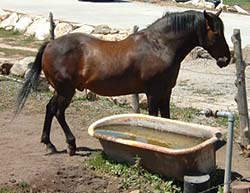
Standing water is also a breeding ground for mosquitoes and can be a source of water for rodents. Bees and hornets are also encouraged to multiply with water open to the environment.
Standing water is heated or cooled by outside air temperature. If the water is too cold or too hot intake can be restricted. Imagine your own discomfort in drinking hot water in the summer or icy-cold water in the winter. Horses prefer water temperatures that range between 36 and 50 degrees Fahrenheit. A horse will drink more water between those temperatures which will discourage dehydration and the health problems that go with it.
Electricity
Another factor that may keep your horse from drinking proper amounts of water is electricity. Horses are super-sensitive to electricity and even the weakest short in the system can gently shock a horse and keep them from drinking enough water or any at all.
Why is Water So Important?
Lack of water can cause problems to the overall stability of your horse. Quoting Robert Van Saun, D.V.M., M.S., PhD. extension veterinarian, at Penn. State, he says: “Water is the most essential nutrient. Water is necessary for all physiological functions. It regulates body temperature, lubricates joints, removes toxins through sweat and urine, promotes skin tone, is essential for digestion and maintains a normal blood supply”.
(ibid.) Water is crucial for digestion. When a horse is not receiving the proper amount of water his system pulls water from the digestive track to try and maintain balance. If this trend continues for days or weeks, the potential for impact-colic complications increase dramatically.
Intake & Outtake Your horse’s body consists of about 70% water. In order to keep this water percentage consistent, intake must equal the amount going out. In other words water consumption should be equal to the amount of liquid excretion. Water consumption can come from drinking liquids and from the feed source. Excretions leave the body in different ways: urine, feces, sweating, breathing, and milk lactating.
How Much Water Does Your Horse Need?
Here is a quick guide to the amount of water your horse will need each day to sustain proper water nutrition. It is divided into the weight of the horse and the minimum to maximum amounts of water needed.
Weight
Minimum
Average
Maximum
900 lbs.
3 gallons
4.5 gallons
6 gallons
1200 lbs.
4 gallons
6 gallons
8 gallons
1500 lbs.
5 gallons
8 gallons
10 gallons
1800 lbs.
6 gallons
9.5 gallons
12 gallons
Activities That Consume More Water
Some activities will require more liquid for your horse. Working your horse in the arena or on a trail can double or even triple the needs for water. If you have a lactating mare the need for liquids will be significant. If the weather is hot, water needs can increase considerably. Studies have indicated that at 100 degrees Fahrenheit, water needs can increase to 4 – 6 times of normal water requirements. In hot weather a horse in extreme training can excrete as much as 7 gallons of liquid per day.
Quick Tests to Determine Your Horse’s Immediate Condition
Here are some quick ways to test your horse’s immediate situation. Skin Pinch Test: Pinch your horse’s skin (on the shoulder, over the eye, or on the neck). Gently twist the skin and clock the time it takes for the skin to return to its normal position. If it takes longer than 2 seconds it could be a sign of dehydration. Dropping Check: With a stick probe the dropping. For proper consistency the dropping should be moist and hold shape.
If it is hard and dry this could be a sign of a problem with water intake. Urination: When urinating visually take note to see if your horse is urinating regularly with normal amounts. Feed Consumption: Is your horse eating enough? If your horse is not drinking enough water he will often decrease or stop feed consumption.
Fighting For Water: If your horses are fighting each other for water access it can be a sign that water availability is limited.
Choosing the Right Watering System
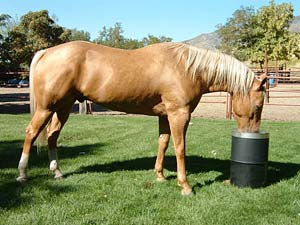
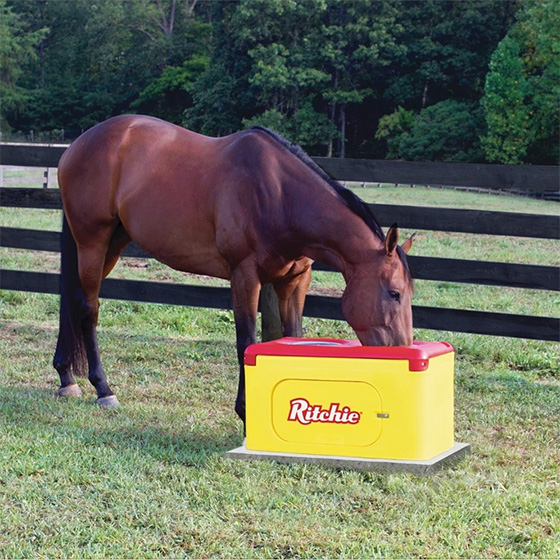
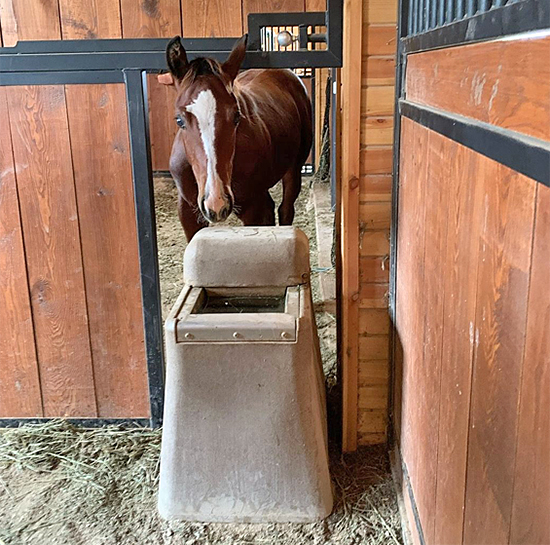
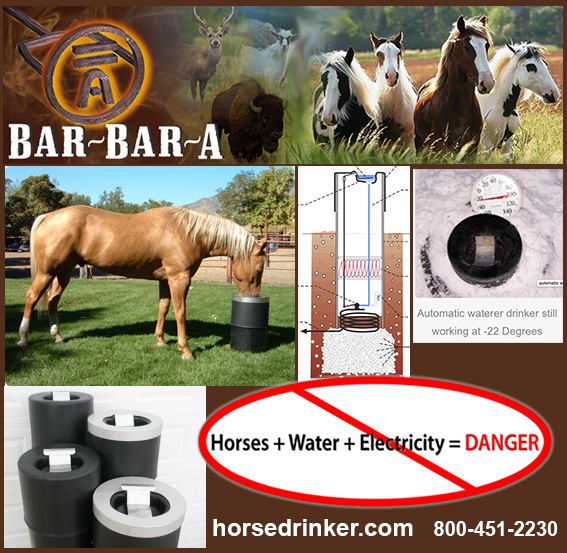
Here at the Bar-Bar-A we don’t claim that our automatic horse waterers have all the answers but we have most of them. Our goal is to address each of the above problems and offer real solutions. Here are some of the solutions that come with owning a Bar-Bar-A Horse Drinker:
- No standing water- No algae and no weekly cleaning - Self-cleaning- Healthier Horses (horses drink more) - Consistent water temperature 360 days a year- Clean, fresh, water with every drink - No electricity- Fully Automatic - Non-Freezing- West Nile Virus resistant
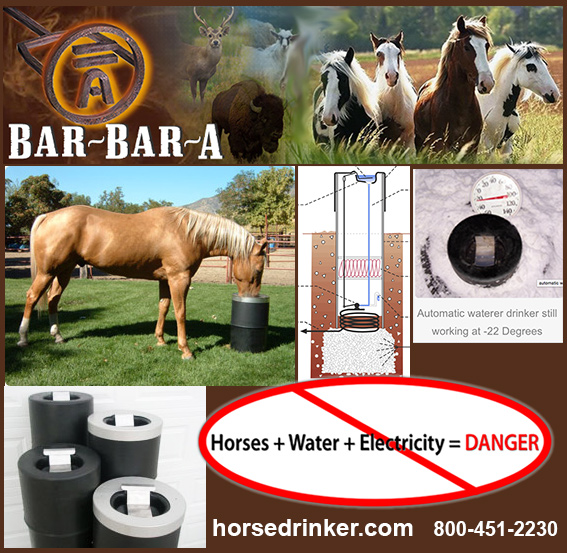
Happy watering and if you get a chance, visit us on our website. We’d like to get to know you. www.HorseDrinker.com Dave Anderson Owner of the Bar-Bar-A Horse Drinker